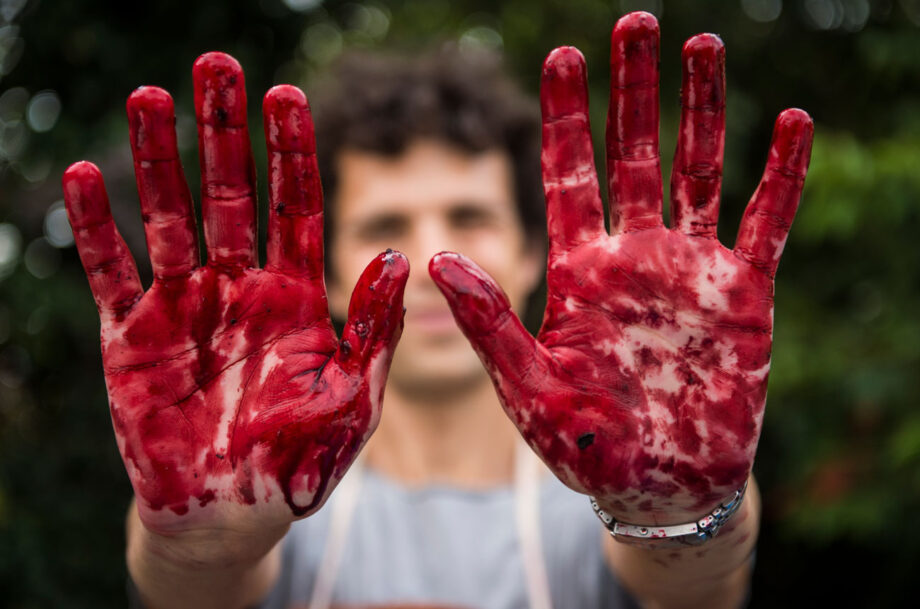
Barney Wilczak inspects medlar fruits by hand, simply paying attention and noticing. Medlars taste similar to Medjool dates, with a floral perfume – though to look at, the fruits appear spoiled. This is due to bletting, or softening, a process of breakdown where tannins give way to sugars, contributing intense aromatic potential. Fruits that aren’t ready are placed into an empty crate to be assessed the following day, it feels meditative in the calmness of the afternoon winter sun.
These decisions are vital as they impact overall flavour later down the line. Each fruit is assessed daily by hand until the specific softness is felt, which machines cannot detect. It takes time to understand this feeling – it requires patience and quiet attention. The observation of the moment, when the fruit delivers the optimal expression of itself, the growing season and surrounding environment.
There is a beautiful simplicity to making eaux-de-vie this way. Each moment is realised as an opportunity to maximise flavour; producing drinks with personality that capture the full expression of the plant.
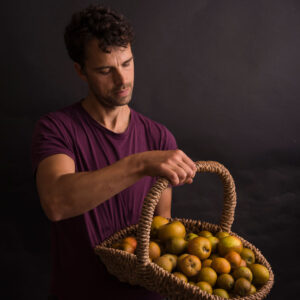
Barney Wilczak Credit: Capreolus Distillery
The observer
Wilczak is the distiller and owner of Capreolous Distillery, in the Cotswolds, England. In childhood he was taken by the natural world, collecting spiders in the garden, interested in minutiae and curious about how things worked. This early inclination for patience, study and observation was the first pull of the thread.
Initially wanting to be a biologist, the natural world lured him out of the laboratory and into the field – as a conservation photojournalist. It allowed him to continue to observe plants, and without ever reaching a terminal point of knowledge, the thread kept being pulled.
An appreciation of wine and fascination with fruit first led to making traditional-method ciders, working with wild fruit and learning about different varieties of apples and the flavour difference outside of grapes. At this point Wilczak realised he was standing at the edge of a ‘rabbit hole’ and embarked upon life as an independent distiller.
Distilling emerged as the continuation of observing and recording the natural world. The intention was not to simply capture the smell of the fruit, but as he explains: ‘to distil things that smell like the plants they come from and the environment they’re growing’. In this way Caprelous Distillery rejects the conventional approach to distilling eaux-de-vie.
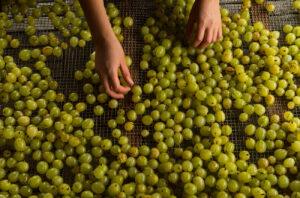
Making gooseberry eau-de-vie Credit: Barney Wilczak / Capreolus Distillery
Radical distilling
‘We’re working not to create alcohol. We’re working to explore and respect the plants,’ explains Wilczak. In tune with the seasonal rhythm, fruit is picked by hand at peak ripeness, then graded, sorted and washed by hand. The physical connection of hand and fruit is quietly radical.
‘There was that choice between being happy and worrying about the commercials,’ he says. ‘We’re going to be happy.’ Making a finished litre of eaux-de-vie requires 45kg of fruit. Wild fermentation, afforded as much time as is required, allows the expression of each fruit to develop slowly.
Working in this way is about making a choice to focus on precision and removing what obscures. This is demonstrated in the precision of the distilling, which is not focused on a one dimensional articulation of fruit. The goal is stripping back noisy elements; ‘all we have to do is trample our egos’.
This means Caprelous Distillery retains only the heart of distillation, rejecting heads and tails totalling 55-60% of initial alcohol – neither of which are redistilled. By operating with extremely tight cut points Wilczak retains contact with evolution of flavour development, resulting in eaux-de-vie with clarity and presence.
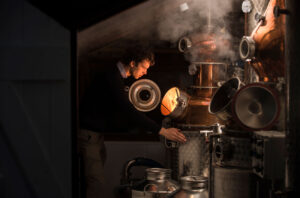
Barney Wilczak checks the still at Capreolus Distillery
Pure expression
As a drinks category, English eaux-de-vie is under-defined in the UK, compared to mainland Europe. While people might assume they know what it is, Caprelous Distillery is walking its own path, which embraces breaking away from the conventional approach to distilling.
Wilczak wants to capture not only the base notes of the fruit, but to document the essence of the entire plant including steam, leaf and seeds – as well as the growing season. ‘It doesn’t smell like the fruit. It smells like standing under 300-year-old trees,’ he says of his eaux-de-vie. They have depth, texture and complexity; engaging drinkers both intellectually and emotionally.
In this way Caprelous is reimagining what eaux-de-vie has the potential to be. Indeed its approach is far closer to how a vineyard operates. Fruit is cherished as an expression of terroir and each vintage represents a record of that season’s harvest.
These eaux-de-vie are unique expressions and can be enjoyed, unhurried, at room temperature, in a narrow glass. Wilczak’s approach preserves the human connection to the land. It is at its heart a simple way of working. Time is treated as an essential ingredient, rather than something to flatten for efficiency. In turn that patience is rewarded with flavours that have always existed but were never previously expressed.
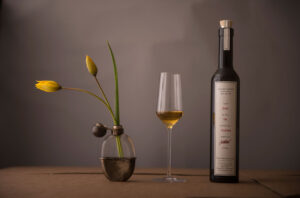
Capreolus Distillery Chestnut Barrel Aged Apple Eau-de-Vie 2018 Credit: Barney Wilczak / Capreolus Distillery
English eaux-de-vie to try
Blackcurrant Eau-de-Vie 2022
£138/375ml, Capreolus Distillery
The berries were grown within 57km of the distillery. Rich notes of cassis and blackcurrant compote are supported by herbaceous blackcurrant leaf notes. The palate shows sumac spice with citrus, plus gentle smoke, before clove, strawberry, mint and fresh tobacco lead to a long finish. Alcohol 43%
Chestnut Barrel Aged Apple Eau-de-Vie 2018
£69.50/375ml, Capreolus Distillery
An apple eau-de-vie aged in chestnut barrels that add tannins without obscuring the fruit. Made with Harry Masters Jersey apples. White apple flesh and tart apple skins give way to apple seed and grape skins. The palate opens to flakey pastry with vanilla, caramel and tannins providing structure. Alc 43%
Gooseberry Eau-de-Vie 2023
£138/375ml, Capreolus Distillery
Made in tiny quantities, with 22kg of hand-picked berries used to produce one litre of eaux-de-vie and a total of 1,500kg of fruit per batch run. An intriguing underlying smokiness, reminiscent of mezcal. Blossom floral notes are balanced with tart gooseberry fruit. The palate is structured and full with nutmeg, peppers and herbaceous leaf. Lasting savoury finish. Alc 43%
Raspberry Eau-de-Vie 2024
£138/375ml, Capreolus Distillery
Contains around 1kg of raspberries per 25ml measure. Immediately engaging with floral notes of geranium and rose that build before notes of lightly toasted hazelnuts, leading to fresh raspberries, waxy leaf and seed. Hint of lemon and mint, concluding with a floral uplift. Alc 43%