
A most curious variety: Roussanne around the world
Up for a challenge? For winemakers as much as wine drinkers, getting a handle on a grape as mercurial as Roussanne isn’t easy. But wherever it’s grown in the world, when the balance is right, it truly repays the effort.


Trying to get a handle on Roussanne is like trying to grasp a cloud. Just when you think you’ve got it – pouf! – it slips through your fingers. It doesn’t help that it’s often blended with more assertive grapes. To shine a light on it, I pulled together 90 Roussanne wines from around the world. The ensuing tasting gave up some unexpected secrets.
One of Roussanne’s most unusual attributes is that it can make exceptional wine in cool climates, hot climates – and everything in between. How many other white grapes can do that? It made for an interesting outcome: many of the top wines are stylistically totally unlike one another.
Scroll down to see notes and scores for 15 startlingly good Roussanne wines from both hemispheres
Pierre-Jean Villa (pictured, below) regularly makes one of the finest varietal Roussannes in the Rhône’s St-Joseph appellation, and even he describes it as ‘totally unpredictable… a baffling variety’. So for winemakers and drinkers alike, it’s not one for beginners. But persevere, because the results can be truly fascinating.
The beautiful redhead
Roussanne either takes its name from the French word ‘rousse’ (the feminine form of ‘redhead’) or ‘tâches des rousseur‘ (‘freckles’), which refers to the speckled, russet-gold colouring that the grapes develop as they ripen.
It originates from the northern Rhône valley, and from here it travelled to Châteauneuf-du-Pape and eventually dispersed throughout the southern Rhône. It’s comfortable in the heat, and now plantings in the south far outweigh those in the north.
There is a little Roussanne planted in the Languedoc, too, but its other main French residence is cool Savoie, where it’s known as Bergeron. Outside Europe, small amounts are found in South Africa, Australia, California, Washington, Oregon and Canada. Although it’s growing in popularity, it still represents less than 1% of global plantings.
Generalising about the style of wine it produces is difficult; a Roussanne from Châteauneuf is very different to one made in Savoie. So it’s always worth knowing the wine’s origin, and reading any tasting notes, as best food matches and drinking occasions will differ from one example to another.

Northern Rhône
In the northern Rhône, Roussanne is often blended with Marsanne and it can contribute to all the white wines south of Condrieu: Hermitage, Crozes-Hermitage, St-Joseph and St-Péray. Marsanne, however, is much more common, with the latest planting data from Inter Rhône recording 450ha compared to Roussanne’s 146ha.
The varieties share a family resemblance – a similar weighty profile and palate richness – and both have moderate acidity at best. But they have their own distinct characters.
Marsanne conjures yellow-fleshed fruits, like apricot and mango, whereas Roussanne’s fruit allusions are white fleshed: pear and lychee. While both can be floral, Marsanne smells of honeysuckle; Roussanne of white blossoms. But while pure Marsanne is common, pure Roussanne is rare.
There’s a reason the locals favour Marsanne: Roussanne is notoriously tricky to grow. ‘I call it capricious,’ says Villa. ‘It does exactly what it wants.’ In 2023, he lost half of his Roussanne crop to heat and drought. But in 2021, when frost decimated the region, it performed brilliantly. ‘It’s so hard to predict,’ he says. It’s also prone to powdery mildew and rot.
Once harvested, the challenges continue. ‘It’s both reductive and oxidative,’ says Villa – respectively, in the absence of oxygen it’s prone to developing odorous sulphur compounds; and in the presence of oxygen prone to reacting, causing the loss of colour and flavour – so handling the grape requires a delicate touch. ‘It’s my enfant terrible!’ he says. ‘But I love it – to guide it, to understand it. When it’s good, it’s precise, with aromatic detail and minerality.’
But he doesn’t shy away from its potential pitfalls. ‘It doesn’t have much acidity and can take on heaviness and alcohol,’ he says. ‘You need to be hyper-precise with the picking date.’ Even then, some pure Roussannes can feel a bit one-dimensional – but a handful of the northern Rhône examples grown on granite really shine.

Châteauneuf-du-Pape
The Châteauneuf-du-Pape appellation is famously liberal when it comes to grape varieties, with 18 different varieties permitted. Given that Roussanne is one of them – and Marsanne and Viognier are not – it suggests that Roussanne ventured south before the other two.
The results are very different to a typical St-Joseph. Grow any grape in Châteauneuf and it’s like when a character eats a mushroom in Super Mario Bros – it becomes a bigger, more powerful version of itself – Roussanne into Super-Roussanne. It develops a more opulent texture, becomes even more concentrated and structured, often with riper flavours, ranging from Williams pear to quince to pineapple.
César Perrin, head winemaker at Château de Beaucastel, is the master of Châteauneuf Roussanne. He agrees with Villa that the key is choosing the right moment to pick. ‘It goes very quickly from green to overripe,’ he says, adding that there’s a frighteningly narrow 24- to 48-hour window in which to harvest.
Pick too early and the wine will lack complexity and display a bitter, abrasive finish. But wait too long and the alcohol can shoot up. Perrin believes this might be the reason why Roussanne hasn’t developed more worldwide popularity.
It’s a variety that takes well to barrel ageing. This requires some expertise, as in the wrong hands, or the wrong wood, it can make for heavy wines that lack drinkability. When mastered, however, oak can further accentuate Roussanne’s luxurious texture and rich flavour profile, adding spice to its poached-pear fruits and providing welcome structure.

Southern Rhône
Roussanne’s popularity has now spread throughout the entire Rhône valley and, says Inter Rhône, in the central Côtes du Rhône growing area it’s the fourth most widely planted grape after Grenache Blanc, Viognier and Clairette. Though it tends to be richer and riper in style than the northern Rhône examples, it rarely takes on the plus-size dimensions of Châteauneuf-du-Pape.
It may be that the Châteauneuf wines garnered some of the highest scores in this tasting, but the quality throughout the rest of the southern Rhône was actually more consistent, thanks to a lighter touch in the cellar. The best of these wines came from appellations with mountain influence: Ventoux, Luberon, Séguret. These higher-altitude sites tend to bring out Roussanne’s lighter, floral side, which is further underscored by a little bit more natural acidity.
Savoie
The mountainous Savoie is situated to the east of Lyon towards the border with Italy. The most commonly planted grape here, according to Vin de Savoie, is Jacquère with 800ha under vine, but there is also 100ha of Roussanne – a little less than the northern Rhône. Here it’s known as Bergeron, and it’s only permitted in one of the 20 AP Vin de Savoie sub-regions: Chignin-Bergeron.
The climate here is significantly cooler than the northern Rhône – let alone Châteauneuf-du-Pape – so it may be surprising that Roussanne has been adopted here. Gilles Berlioz is one of the most proficient exponents of Chignin-Bergeron and he explains that ‘it’s the warmest part of Savoie… it’s a microclimate at the crossing of two valleys and it’s the southernmost commune of the Massif des Bauges, so it’s protected from the wind’.
Chignin-Bergeron might be relatively rich, therefore, compared with a classic Jacquère, but it’s the lightest style of Roussanne – reliably fresh, even if the acidity is only moderate. The best have a spellbinding mineral crispness, the very essence of freshness, that you don’t find in Roussanne anywhere else. It clearly thrives in the mountains, and transmits a sense of alpine brightness, mountain air, cold streams and meadows.
‘Often the problem with Roussanne is that it can get a bit too heavy, a bit too flabby,’ says Berlioz. ‘Here we can keep a lot of freshness and balance – wines with tension.’
Despite their lightness, they age surprisingly well. ‘We’ve had them at 20 years and they’ve been very good,’ says Berlioz. ‘So you can keep them for a long time. But it’s very much connected to the work of the winemaker.’
This equals the ageability of Châteauneuf-du-Pape Roussanne, but while Châteauneuf examples rest on their power, depth and concentration, Chignin-Bergerons glide forwards on their freshness and tension.
Australia, South Africa and the USA

Roussanne has been slow to catch on elsewhere, but the impressive quality of some wines from outside Europe shows its potential. Samantha O’Keefe (above) is owner of the Lismore estate in South Africa, situated high in the mountains, 45km inland from coastal Hermanus. She has long been known for the quality of her Syrah and Viognier, and she planted Roussanne and Marsanne in 2016 after a pilgrimage to the northern Rhône.
It remains relatively rare in coastal South Africa, however – commercially speaking, it makes more sense to grow Chardonnay and Sauvignon Blanc, which are easier to sell. When her estate was devastated by fire in 2019, ‘the Roussanne came back with vigour’, she says – ‘it really wants to be here’. Her Roussanne-dominant Cuvée Blanc shows that it belongs.
Breedekloof, west of Worcester, is further inland and has a warmer climate than Lismore. Producer Olifantsberg proves that, as in France, Roussanne can perform across a range of climates here, too.
It’s a variety that also shows its impressive range in the US, with richer styles such as Tablas Creek’s from Paso Robles to more measured examples such as Truchard’s from Carneros; both excellent.
Australia, too, is producing some exceptionally fine examples. Peter Fraser of Yangarra (below) has planted nearly all of Châteauneuf-du-Pape’s grape varieties in McLaren Vale, and while he’s rightly famed for the quality of his Grenache, he deserves equal praise for his pure Roussanne cuvée Roux Beauté, an example of what perfect balance looks like with this tricky variety.

Between genius and madness
Roussanne’s unique climatic adaptability makes it a bit of a chameleon. It strongly reflects where it’s grown, from the Alpine slopes of Savoie to the hot stones of Châteauneuf-du-Pape.
But it retains some commonalities: white-fleshed fruits, white flowers and a distinct textural grip and grain. It’s not a crowdpleaser; it’s a wine for wine lovers.
Perhaps it will gain in popularity as winemakers look to alternative varieties to cope with our increasingly chaotic climate. But they’ll have to be up for a challenge – it can be a maddening variety to work with. Even for wine lovers, it’s not an easy grape to get to know.
‘That’s the problem – and the magic – of Roussanne,’ says Perrin. ‘My father always said that the great whites of Beaucastel are always between genius and madness. They can be exceptional, they can be a bit crazy – but that’s Roussanne.’
Walls’ pick: 15 to begin your Roussanne journey
Related articles
- A place in the sun: The Rhône’s white grapes take root in Australia
- The sommelier suggests… Roussanne by Evan Goldstein MS
- Rhône ranging: The evolution of Australia’s red Rhône varieties
Château de Beaucastel, Roussanne Vieilles Vignes, Châteauneuf-du-Pape, Rhône, France, 2020
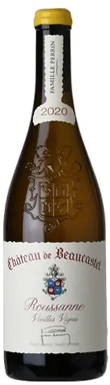

A little more reticent on the nose for now compared to other recent vintages – it's possibly entering a closed phase, in which case leave...
2020
Château de BeaucastelChâteauneuf-du-Pape

Yangarra, Roux Beauté Roussanne, McLaren Vale, South Australia, Australia, 2015
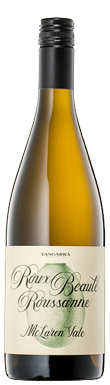
At nine years old, this has taken on some pale gold colouring. Gorgeous aromas of lanolin, really exciting with layers of nuts and lime flower....
2015
YangarraMcLaren Vale
Château de Vaudieu, Les Vieilles Roussanne, Châteauneuf-du-Pape, Rhône, France, 2023
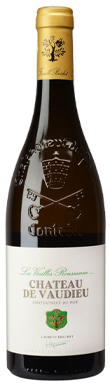
More colour than most pure Roussannes, and plenty of intensity from the ripe fruit and generous oak ageing. Full and opulent with a rich pear...
2023
Château de VaudieuChâteauneuf-du-Pape
Domaine La Boutinière, Grande Réserve, Châteauneuf-du-Pape, Rhône, France, 2022
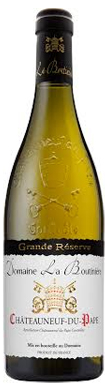
A floral style with delicate apple blossom aromas – lifted, enticing and fresh. Don't let the old-fashioned label put you off: it’s silky, rounded and...
2022
Domaine La BoutinièreChâteauneuf-du-Pape
Domaine Partagé, Les Filles, Chignin-Bergeron, Savoie, France, 2022
This smells like wildflowers, and there's a subtle touch of dried orange rind and red apple. It has an inner sweetness of fruit, but is...
2022
Domaine PartagéChignin-Bergeron
Truchard, Roussanne, Carneros, California, USA, 2023
A full-bodied, ripe and powerful style with dried pear and honey flavours. It has a good sense of freshness and detail, however, and finishes long,...
2023
TruchardCarneros
Château le Devay, Sous les Etoiles, Collines Rhodaniennes, Rhône, France, 2022
This needs some time to come alive. Great energy and tension on the palate, lovely intensity and no excess fat. Certainly silky and generous, however,...
2022
Château le DevayCollines Rhodaniennes
Eric Texier, Les Chailles, Vin de France, Rhône, France, 2022
An enticing smoky hint among the honeysuckle and pear, and a real sense of verve and focus. The acidity is low, but it has energy...
2022
Eric TexierVin de France
Lismore, Estate Reserve Cuvée Blanc, Greyton, Overberg, South Africa, 2022
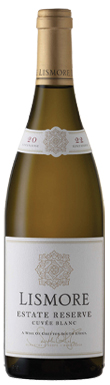
Immediately satisfying nose draws you in with its honeysuckle, spice and ripe Conference pear. Full-bodied with real freshness and detail. By far the most convincing...
2022
LismoreGreyton
Michael Hall, Roussanne, Barossa, South Australia, Australia, 2022
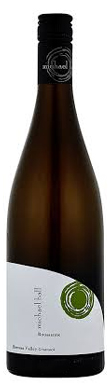
A full-bodied wine that’s richly textured and slightly oily. Harmonious and well balanced, this has mild pear-like acidity and a touch of tobacco oak which...
2022
Michael HallBarossa
Clos Bellane, Comme un Saphir, Côtes du Rhône Villages, Valréas, Rhône, France, 2023
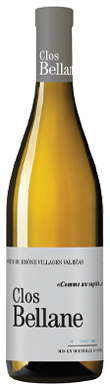
A full-bodied and generous style with real intensity and extract. Grapefruit, lemon and pear; a very southern Rhône feel, thanks to its concentration and generosity....
2023
Clos BellaneCôtes du Rhône Villages
Jean-François Quénard, Chez Les Béroux, Chignin-Bergeron, Savoie, France, 2021
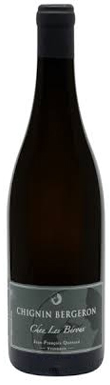
A fresh impression of alpine air on the nose. Silky and light, it caresses the palate. With its good acidity and a fine, tapered finish,...
2021
Jean-François QuénardChignin-Bergeron
Pierre Jean Villa, Saut de l'Ange, St-Joseph, Rhône, France, 2021
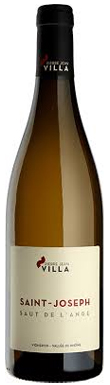
Creamy, soft pear and melon fruit but with ample acidity to bring a sense of drinkability. Good energy and tension. From organically farmed 10-year-old vines...
2021
Pierre Jean VillaSt-Joseph
Domaine de la Coquillade, Coquillade Blanc, Ventoux, Rhône, France, 2023
A fresh, soft, floral and easygoing style of Roussanne (with 5% Clairette), showing the pretty and delicate side of the grape with light pear, red...
2023
Domaine de la CoquilladeVentoux
Domaine des Trinités, L'Imaginaire, Vin de France, Languedoc-Roussillon, France, 2020
With a lovely sense of freshness, this Vin de France has a cut-pear scent and honeysuckle headiness, ending light and clean. Surprisingly long, you brush...
2020
Domaine des TrinitésVin de France
