
Anson: Lafleur 2018 and the battle against climate change
Jane Anson brings you more Bordeaux 2018 in-bottle tasting notes, including Figeac, Lafleur, Latour and Carmes Haut-Brion, and reports on how this vintage has thrown up fresh questions about the ways châteaux are adapting to climate change.


The last round-up of Bordeaux 2018 wines covers some of the most interesting names of the region, including the recently bottled Lafleur 2018, as well as Latour, Carmes Haut-Brion, Figeac and Le Dôme.
Scroll down to see Jane Anson’s new tasting notes for Lafleur 2018, plus Figeac, Carmes Haut-Brion and more…
These are all estates that show clever approaches to handling a Bordeaux 2018 vintage that was extremely wet in the first half of the season, and extremely dry in the second part.
The conditions meant close attention was needed in the vineyard but also in the cellar.
It was a vintage that asked again what is needed to combat a changing climate?
‘A crazy season’
The newly-approved Bordeaux grape varieties allowed as of January this year get most of the headlines, but the real work of adaptation has been ongoing for some time.
Commenting on Bordeaux 2018, Château Lafleur estate manager Omri Ram says, ‘It would not have been easy to make great wine in this crazy kind of season even a decade ago – with the vines receiving an excess of water at first, then the valve being abruptly turned off.
‘It means the plant goes from comfort to discomfort extremely quickly, and you have to be there to help it adapt.
‘But years with such contrasts have become more common recently, and now we know how to make great wines from them, as long as our attention is 150% in the vineyard.’
He adds, ‘In 2018, the rain of the first half of the season meant lots of green growth of shoots and leaves, and we therefore had to be careful with the canopy size.
‘When the sun comes out that canopy becomes a sugar machine and therefore has an impact on alcohol levels, so you have to reduce the canopy very quickly to ensure the leaves don’t take up all the energy and nutrients, and that the sugar levels in the grapes don’t go too high.
‘The clay of Pomerol gives you more of a buffer against drought than sandy or gravel soils, but once it dries up it is extremely unforgiving.’
Ram continues, ‘The regularity of the dry seasons that we are seeing now mean that I expect irrigation to become widely used in Bordeaux within the next decade.
‘The problem is that it can be used as an easy shortcut without thinking about the plant and how best to work with it.’
Lafleur is quietly undertaking some of the most interesting vineyard work in Bordeaux, much of which is driven by the need to ensure a vineyard that is robust and sustainable.
Lafleur research in the vineyard
Its massal selection of old Cabernet Franc vines – they refer to them under the older name of Bouchet – has been under way since 2009.
It has now been extended into Merlot and Sauvignon Blanc, planted across their estates in Pomerol, as well as in Château Grand Village, Les Champs Libres and Les Perrières in the Fronsac region.
The team today count more than 65 different genetic variations of Bouchet alone, all of which are tracked at every stage of evolution for differences in growth and ripening, and in aromatic and taste expression in the final wine.
For the Sauvignon Blanc the team has massal selection Sancerre, massal selection Bordeaux from their oldest vines, and clones.
‘But we have only just begun working on Bordeaux massal selection for Sauvignon Blanc, and we expect to take another 10 years before we really have any answers,’ says Ram.
‘Whole bunch’ at Carmes Haut-Brion
At Carmes Haut-Brion, another form of adaptation to climate change is seen in the cellars, where whole bunch fermentation has been gradually climbing over the past five years.
The 2018 vintage retasted here saw 53% whole bunch fermentation.
‘It allows us to drop the alcohol by around 1% in the final wine and helps develop salinity,’ says estate director Guillaume Pouthier.
‘But you have to be careful. We are able to do this because our vineyard site at Carmes Haut-Brion is warm, as we are so close to the city centre of Bordeaux and have the thermal impact of this location.
‘It means that the stalks get extremely ripe, turning from green to brown and red, and therefore are not loaded with harsh tannins.
‘Even so we sort them out very carefully before use, and we are also careful to use mainly Cabernet Franc and Merlot vines. I have found less success with Cabernet Sauvignon.’
Both of these estates are interesting to follow right now – and are part of a growing number of properties looking at intelligent ways to combat changing conditions without the drastic step of introducing entirely new grape varieties.
See Jane Anson’s latest tasting notes and scores, including Figeac, Carmes-Haut Brion and Lafleur 2018 in the bottle
NB: Château Latour 2018 has not yet been released.
You may also like
Anson: A Château Cos d’Estournel tasting masterclassAnson: The brilliance of 1996 Pauillac winesAnson: How the 1985 Bordeaux first growths taste nowAnson: How the 1990 Bordeaux first growths taste nowAnson: Tasting the celebrated Sauternes 2001 vintage
Château Lafleur, Pomerol, Bordeaux, France, 2018
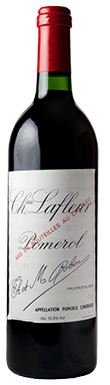

This is an extremely impressive wine, expressing both an earthiness and a tingle of slate minerality and mouthwatering salinity that is more unusual in Pomerol...
2018
Château LafleurPomerol

Château Lafleur, Les Pensées de Lafleur, Pomerol, Bordeaux, France, 2018
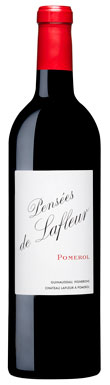
This is showing a more open aromatic profile at this stage than the Perrières with evident creaminess to the berry fruits and a softness to...
2018
Château LafleurPomerol
Château Les Carmes Haut-Brion, Pessac-Léognan, Bordeaux, France, 2018
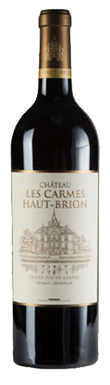
The combination of silky-soft texture and powerful intensity of flavour is completely seductive. Violet aromas and deep, black fruit flavours dominate now. Whole-bunch fermentation for...
2018
Château Les Carmes Haut-BrionPessac-Léognan
Château Les Carmes Haut-Brion, C de Carmes, Pessac-Léognan, Bordeaux, France, 2018
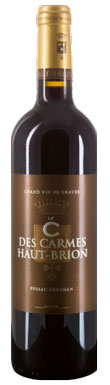
This is an excellent wine, in keeping with the growing confidence of the grand vin but from vines that are located in a separate part...
2018
Château Les Carmes Haut-BrionPessac-Léognan
Château Latour, Pauillac, 1er Cru Classé, Bordeaux, France, 2018
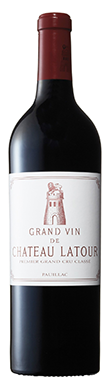
The Latour tannins are showing their confident intent and need time to unwind in the glass - and clearly need another six to eight years...
2018
Château LatourPauillac
Château Latour, Les Forts de Latour, Pauillac, Bordeaux, France, 2018
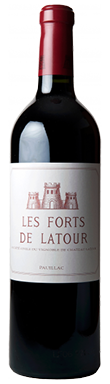
Richly perfumed on the nose, so aromatic and scented in a heady way - ripe strawberries and blackcurrants. A bit more subdued than I was...
2018
Château LatourPauillac
Château Latour, Pauillac de Latour, Pauillac, Bordeaux, France, 2018
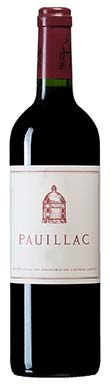
Still knitted down but this has flexible tannins with a real whoosh of freshness underneath. There is a feeling of sinew through the wine, and...
2018
Château LatourPauillac
Château Figeac, St-Émilion, 1er Grand Cru Classé B, Bordeaux, France, 2018
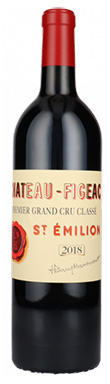
This still exudes the freshness and exuberance that the wine had during the primeur stage with its scents of blackcurrant, raspberry, and crushed strawberry along...
2018
Château FigeacSt-Émilion
Château Figeac, Petit Figeac, St-Émilion, Bordeaux, France, 2018
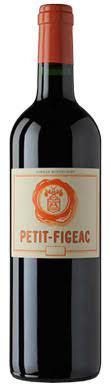
Ripe black cherry fruit straight away on the first nose, this is a brilliant Petit Figeac, yet more proof of the brilliance of 2018 in...
2018
Château FigeacSt-Émilion
Château L'Eglise-Clinet, Pomerol, Bordeaux, France, 2018
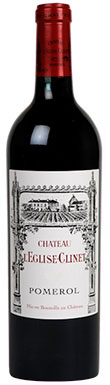
This is plush, with touches of chocolate shavings, olive paste, clove, rosemary and sage right from the opening beats. Blackberry and raspberry layer up flavours...
2018
Château L'Eglise-ClinetPomerol
Le Dôme, St-Émilion, Grand Cru, Bordeaux, France, 2018
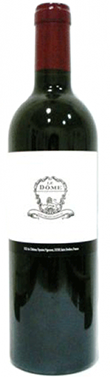
High toned and very ripe on the nose - really heady and perfumed black, jammy fruits. Big and dense, but more in the flavours rather...
2018
Le DômeSt-Émilion
Vieux Château Mazerat, St-Émilion, Grand Cru, Bordeaux, France, 2018
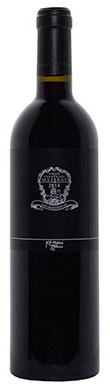
Plum and raspberry-scented aromatics from the first pouring, this is muscular and closed, but already showing some of what it will become, with violet curls...
2018
Vieux Château MazeratSt-Émilion
