My South African wine highlights of 2025
From social empowerment projects to high-altitude plantings and old vines, the Cape’s dynamic wine scene offers so much for wine lovers to explore. South Africa editor Julie Sheppard picks her highlights from a year of travels, tastings and events – and recommends her favourite bottles to try.
Get our daily fine wine reviews, latest wine ratings, news and travel guides delivered straight to your inbox.
You are now subscribed
Your newsletter sign-up was successful
It may look like I have the best job in the world: writing about wine. But sometimes that job is very hard; for example when it comes to choosing just a few highlights from a year of exploring South Africa’s vibrant wine scene.
I genuinely could have written a book…
My year kicked off with a visit to the Cape in January, hosted by PIWOSA producers Journey’s End, Graham Beck and Klein Constantia. This collective of premium independent wineries has spent over a decade promoting top South African wines around the globe.
And their wines are undoubtedly world-class. From Klein Constantia’s historic Vin de Constance to the stylish Bordeaux blends of Journey’s End in Stellenbosch – which we shared with readers in the first-ever South African Decanter Presents… masterclass in May.
Change for the better
But it was the work these wineries are doing at home that had a profound impact on me and makes my first annual highlight.
For so many South African producers sustainability – of their workers and local communities, as well as vineyards, natural habitats and Cape Floral Kingdom – is a vital part of what they do. It’s why buying a bottle of South African wine genuinely makes a difference and creates positive change.
The Journey’s End Foundation (JEF) was set up in 2020 to bring together various projects the winery was running in the local community in Sir Lowry’s Pass village, as well as tackling the very immediate problems of hardship caused by the Covid-19 pandemic.
Get our daily fine wine reviews, latest wine ratings, news and travel guides delivered straight to your inbox.
The initial goal was to provide 10,000 meals a week for those who couldn’t afford to feed themselves and their families.
Food for thought
To date the Foundation has provided over six million meals via a network of six soup kitchens – and its work is ongoing. I visited a kitchen to help serve up some of the 30,000 nutritious meals made every week by a team of local volunteers, funded by JEF.
I met the inspirational and indomitable Joyce, who heads up the kitchen and began her work in 1992 in response to the devastating impact of the HIV/AIDS pandemic.
With tears in her eyes she explained how, in the absence of government funding, support from JEF had transformed her work, enabling her to help so many more people.
Joyce’s kitchen is just one of many winery-led projects that are helping to feed, educate and empower local communities across the Cape. There are now 107 black-owned wine brands and 81 black-owned wine farms in South Africa.
They include Inzuzo, a community-focused company owned by the workers at Journey’s End and We The People, a collaboration with the Kleine Zalze Empowerment Trust. The change is tangible; look behind the labels of your favourite Cape brands and you’ll find many more transformative tales.
Going to ground
Sustainability was also high on the agenda during my Cape travels with Vinimark, distributor for over 60 brands including Boekenhoutskloof and The Chocolate Block. At Reyneke in the cool Polkadraai Hills, I walked the vineyards with Johan Reyneke, a pioneer of biodynamics in South Africa.
A philosophy graduate, he maintains: ‘There can be no greatness without goodness.’ It’s a mantra that permeates every aspect of his wine farm, from soil health to biodiversity; from vines and grapes to animals and people.
Johan has been farming regeneratively for 25 years, based on his dual principles of ‘land caring and land sharing’, establishing biodiversity corridors through the vineyards to create a flourishing ecosystem of native plant and insect life.
Importantly the changes make business sense: ‘Our yields are better than when we farmed conventionally,’ he says. The great new Reyneke Estate Range, launched in June, reflects this holistic philosophy. Seek it out.
Also flying the flag for regenerative agriculture is Wilhelm Joubert, viticulturist at Hartenberg. This historic Stellenbosch estate, founded in 1692, became the first wine farm in South Africa – and only the second in the world – to achieve verification for regenerative agriculture in January this year, under the Ecological Outcome Verification (EOV) framework.
‘We’re doing what is right for the land; the wine is a bonus,’ quips Joubert. Quips aside, its clear that South Africa is now a world-leader in this field.
New wave: 10 years on
From new to old… Various events in 2025 showcased older South African vintages, with verticals stretching back decades. But perhaps the best demonstration of ageability came with the brilliant South Africa’s New Wave: 10 Years On tasting organised by Victoria Mason MW, buyer at The Wine Society and Mark Dearing, buyer at Justerini & Brooks.
This deep dive into the 2015 vintage came 10 years after a pivotal tasting in London, spearheaded by Swartland producers. It thrust names such as Chris Alheit, Chris and Andrea Mullineux, Donovan Rall and Eben Sadie onto a global stage and – as I can remember from the buzz in the room – it perfectly captured the excitement of the New Wave revolution in Cape wine.
But a decade on, how were these wines performing? Mason and Dearing discussed this question during harvest in South Africa in 2024. ‘At the time I was buyer at Bordeaux Index and whenever I offered South African wines, how the wines would age (or would they age at all) was the first question I was asked,’ she says.
‘We wanted to have the ammunition to give collectors the confidence to buy and store these wines for the future. We felt strongly that they deserved to be taken seriously and assessed as robustly as their classic European counterparts.’
The fascinating tasting in May covered 12 flights of Syrah, Pinot Noir, red Bordeaux blends and Mediterranean varieties, plus Chenin Blanc, Chardonnay, Cape white blends and Sauvignon-Semillon blends.
Perhaps unsurprisingly, the Swartland was the top-performing region; Syrah and Chenin the top grapes. You can see my top wines in the notes below.
Cape Wine
The 10 Years On tasting gave concrete evidence that yes, South Africa’s new wave styles can age beautifully – several bottles clearly had more life ahead of them. More importantly, the price-to-quality ratio of these wines genuinely outclasses their European competitors.
In fact it’s hard to find better value for money anywhere else in the world.
That sentiment was reinforced at Cape Wine in September. This large three-day trade show is organised every three years in Cape Town by Wines of South Africa. Across a week where I tasted just under 300 bottles – at the show itself plus regional events – the quality shone out across the board.
It’s the reason why South Africa should be a go-to for every wine lover, however much they’re looking to spend.
I could have written another book just about my Cape Wine highlights, but as I have to choose – and only have so much space here – I’ll single out two topics that I’ll be expanding on with more in-depth articles in the new year.
Old vines
First is the incredible resource that is South Africa’s old vines. We’ve mentioned this before in Decanter, notably when viticulturist Rosa Kruger joined the Decanter Hall of Fame in 2022 – the first-ever South African to receive that honour. But it’s a message that bears repeating.
Kruger first became interested in old vines on a trip to Europe in 2001. From 2004 she started to track down old vine parcels in her home country, work that fed directly into the New Wave movement mentioned above, as she helped winemakers such as Adi Badenhorst, the Mullineuxs and Duncan Savage locate old vineyards to work with.
Seal of approval
In 2016 this passion was formalised with the creation of the Old Vine Project (OVP), which champions vineyards over 35 years of age. Throughout Cape Wine I tasted wines with a seal showing the age of the vineyard they were sourced from.
Speaking at a tasting jointly organised by the OVP and South Africa’s Chenin Blanc Association, Kruger explained that the role of those seals goes beyond catching people’s eyes on wine merchant shelves.
‘Part of the income from that seal goes to the upliftment and skills development of farm workers. We’ve done that now for a couple of years. It’s wonderful to see how people blossom and grow once they get educated,’ she says.
She added that the OVP isn’t just about preservation; it’s about looking ahead. ‘Our second aim was always to not only preserve old vineyards, but to plant for the future. To plant vineyards now that in 50 years time, your children can enjoy for the next generation.’
Aiming high
Also with an eye on the future, Cape winemakers are investigating high-altitude planting. ‘High-altitude viticulture is a new thing in South Africa and it costs a lot,’ explains Riannn van der Spuy, cellar master at Swartland Winery.
But in the face of climate change, cooler sites offer potential.
During a seminar at Cape Wine, I tasted wines from some of the Cape’s highest sites: Sutherland-Karoo (1,500m), Ceres Plateau (1,100m), Cederberg (1,036m), Elandskloof (980m), Piket-Bo-Berg (800m) and Piekenierskloof (700m).
I suspect these are names we’ll start to see popping up increasingly on wine labels in the future.
Looking ahead
A spirit of optimism for the future was the overriding impression that I took away from Cape Wine and my other visits to South Africa this year.
While the country’s industry was hit with a series of challenges in the past decade – including the Covid-19 pandemic and a three-year drought from 2015-2018 – there’s an irrepressible energy about the Cape’s winemaking scene.
Although there were milestones to be celebrated in 2025 – from the anniversary of South Africa’s signature grape Pinotage, to 50th birthdays for Meerlust and Hamilton Russell and a 100th birthday for Glenelly founder May-Eliane de Lenquesaing – the Cape has its eyes firmly fixed on the future.
Heading into 2026 I’m looking forward to discovering even more great new wines. But in the meantime, here are a few of my favourites from 2025.
Not necessarily my highest scoring wines of the year, these are the bottles that best demonstrate the innovation, energy and trends currently driving South Africa’s wine scene.
Julie’s South African highlights: 12 wines to try
Related content
South Africa newsletter: Sign up today!
From Pauillac to Stellenbosch: Celebrating May-Eliane de Lencquesaing at 100
Discovering the best of the Cape wine route: Your ultimate guide
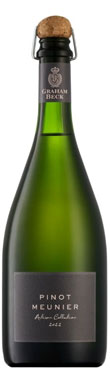
Graham Beck, Artisan Collection Pinot Meunier, Robertson, South Africa, 2022

This is the first commercially released 100% Pinot Meunier Cap Classique in South Africa, made with fruit from Robertson (70%) and cooler Elgin (30%). Sparkling...
2022
RobertsonSouth Africa
Graham Beck
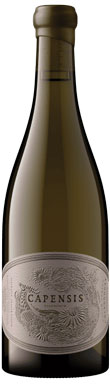
Capensis, Fijnbosch Chardonnay, Western Cape, South Africa, 2021

This wine is our deep-dive into terroir,' says winemaker Graham Weerts. Made from an 11ha plot of vines, planted at 600m, making it the highest...
2021
Western CapeSouth Africa
Capensis
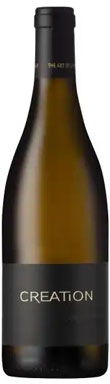
Creation, Glenn's Chardonnay, Hemel-en-Aarde Ridge, Walker Bay, South Africa, 2023

There's a keen Burgundian sensibility to JC Martin's wines from cool Hemel-en-Aarde Ridge, as demonstrated by this classy cuvée, made with his son Glenn. A...
2023
Walker BaySouth Africa
CreationHemel-en-Aarde Ridge
Ken Forrester, The FMC, Stellenbosch, South Africa, 2023
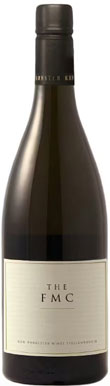
Chenin King' Ken Forrester makes 23 passes through the vineyard to pick grapes at perfect ripeness for his FMC. It's a labour of love that...
2023
StellenboschSouth Africa
Ken Forrester
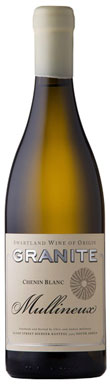
Mullineux, Granite Chenin Blanc, Swartland, South Africa, 2015

Made by Chris and Andrea Mullineux from two old-vine parcels planted on decomposed granite in the Paardeberg. Ten years down the line, it's tasting beautifully...
2015
SwartlandSouth Africa
Mullineux
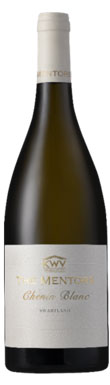
KWV, The Mentor's Chenin Blanc, Swartland, South Africa, 2023

KWV is a giant of South African wine, running the largest single winery in the whole southern hemisphere. But its excellent limited-release Mentor's range by...
2023
SwartlandSouth Africa
KWV
Boekenhoutskloof, Syrah, Swartland, South Africa, 2022
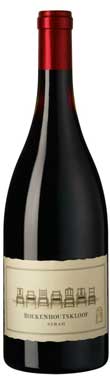
This serious – and seriously good – Syrah is made from Swartland fruit, grown on the schist-dominant soils of Porseleinberg estate (90%) and Goldmine estate (10%) near...
2022
SwartlandSouth Africa
Boekenhoutskloof
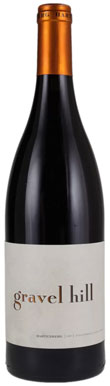
Hartenberg, Gravel Hill Syrah, Bottelary, Stellenbosch, South Africa, 2019

Historic Hartenberg was founded in 1692 but was the first wine farm in South Africa (and only the second in the world) to achieve verification...
2019
StellenboschSouth Africa
HartenbergBottelary
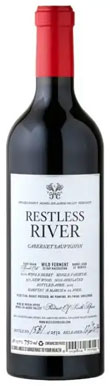
Restless River, Cabernet Sauvignon, Upper Hemel-en-Aarde Valley, Western Cape, South Africa, 2015

This still-youthful Cabernet from cool Upper Hemel-en-Aarde Valley blew me away in a blind tasting of the 2015 vintage of South Africa's New Wave wines....
2015
Western CapeSouth Africa
Restless RiverUpper Hemel-en-Aarde Valley
Ex Animo, De Keur Grenache, Durbanville, Ceres Plateau, Western Cape, South Africa, 2023

The second vintage of this high-altitude Grenache, made by Lukas van Loggerenberg using dry-grown fruit from the De Keur vineyard at 1,050m on the Ceres...
2023
Western CapeSouth Africa
Ex AnimoDurbanville
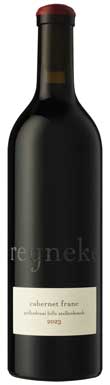
Reyneke, Estate Cabernet Franc, Stellenbosch, South Africa, 2023

Reyneke's new Estate Range showcases the best fruit from its Stellenbosch farm in more environmentally friendly packaging. This perfumed Cab Franc exudes energy with its...
2023
StellenboschSouth Africa
Reyneke
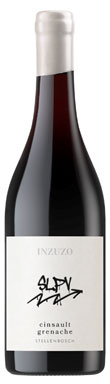
Inzuzo, SLPV Grenache-Cinsault, Western Cape, South Africa, 2024

Inzuzo Wine Co is an empowerment project owned by workers at Journey’s End. Profits raise funds for projects in nearby Sir Lowry’s Pass village, where...
2024
Western CapeSouth Africa
Inzuzo
Graham Beck, Artisan Collection Pinot Meunier, Robertson, South Africa, 2022

This is the first commercially released 100% Pinot Meunier Cap Classique in South Africa, made with fruit from Robertson (70%) and cooler Elgin (30%). Sparkling...
2022
RobertsonSouth Africa
Graham Beck
Capensis, Fijnbosch Chardonnay, Western Cape, South Africa, 2021

This wine is our deep-dive into terroir,' says winemaker Graham Weerts. Made from an 11ha plot of vines, planted at 600m, making it the highest...
2021
Western CapeSouth Africa
Capensis
Creation, Glenn's Chardonnay, Hemel-en-Aarde Ridge, Walker Bay, South Africa, 2023

There's a keen Burgundian sensibility to JC Martin's wines from cool Hemel-en-Aarde Ridge, as demonstrated by this classy cuvée, made with his son Glenn. A...
2023
Walker BaySouth Africa
CreationHemel-en-Aarde Ridge
Ken Forrester, The FMC, Stellenbosch, South Africa, 2023

Chenin King' Ken Forrester makes 23 passes through the vineyard to pick grapes at perfect ripeness for his FMC. It's a labour of love that...
2023
StellenboschSouth Africa
Ken Forrester
Mullineux, Granite Chenin Blanc, Swartland, South Africa, 2015

Made by Chris and Andrea Mullineux from two old-vine parcels planted on decomposed granite in the Paardeberg. Ten years down the line, it's tasting beautifully...
2015
SwartlandSouth Africa
Mullineux
KWV, The Mentor's Chenin Blanc, Swartland, South Africa, 2023

KWV is a giant of South African wine, running the largest single winery in the whole southern hemisphere. But its excellent limited-release Mentor's range by...
2023
SwartlandSouth Africa
KWV
Boekenhoutskloof, Syrah, Swartland, South Africa, 2022

This serious – and seriously good – Syrah is made from Swartland fruit, grown on the schist-dominant soils of Porseleinberg estate (90%) and Goldmine estate (10%) near...
2022
SwartlandSouth Africa
Boekenhoutskloof
Hartenberg, Gravel Hill Syrah, Bottelary, Stellenbosch, South Africa, 2019

Historic Hartenberg was founded in 1692 but was the first wine farm in South Africa (and only the second in the world) to achieve verification...
2019
StellenboschSouth Africa
HartenbergBottelary
Restless River, Cabernet Sauvignon, Upper Hemel-en-Aarde Valley, Western Cape, South Africa, 2015

This still-youthful Cabernet from cool Upper Hemel-en-Aarde Valley blew me away in a blind tasting of the 2015 vintage of South Africa's New Wave wines....
2015
Western CapeSouth Africa
Restless RiverUpper Hemel-en-Aarde Valley
Ex Animo, De Keur Grenache, Durbanville, Ceres Plateau, Western Cape, South Africa, 2023

The second vintage of this high-altitude Grenache, made by Lukas van Loggerenberg using dry-grown fruit from the De Keur vineyard at 1,050m on the Ceres...
2023
Western CapeSouth Africa
Ex AnimoDurbanville
Reyneke, Estate Cabernet Franc, Stellenbosch, South Africa, 2023

Reyneke's new Estate Range showcases the best fruit from its Stellenbosch farm in more environmentally friendly packaging. This perfumed Cab Franc exudes energy with its...
2023
StellenboschSouth Africa
Reyneke
Inzuzo, SLPV Grenache-Cinsault, Western Cape, South Africa, 2024

Inzuzo Wine Co is an empowerment project owned by workers at Journey’s End. Profits raise funds for projects in nearby Sir Lowry’s Pass village, where...
2024
Western CapeSouth Africa
Inzuzo

Julie Sheppard joined the Decanter team in 2018 and is Regional Editor for Australia, New Zealand and South Africa & Spirits Editor.
Before Decanter, she worked for a range of drinks and food titles, including as managing editor of both Imbibe and Square Meal, associate publisher of The Drinks Business, senior editor of the Octopus Publishing Group and Supplements editor of Harpers Wine & Spirit. As a contributor, she has over 20 years’ experience writing about food, drink and travel for a wide range of publications, including Condé Nast Traveller, Delicious, Waitrose Kitchen, Waitrose Drinks, Time Out and national newspapers including The Telegraph and The Sunday Times.
.