Get our daily fine wine reviews, latest wine ratings, news and travel guides delivered straight to your inbox.
You are now subscribed
Your newsletter sign-up was successful
An account already exists for this email address, please log in.
Pepe Raventós, the renegade traditionalist
A single-minded commitment to sustainability and terroir, combined with business acumen and first-class communication skills, have made Pepe Raventós one of the most interesting (and divisive) figures in Spanish wine. In the end, though, all he wants is for the land to speak through his wines.
The road to where Pepe Raventós is now is neither obvious nor straightforward. Born into one of Catalonia’s most storied wine families – linked to the very origin of the region’s sparkling wine tradition – he didn’t set out to become the heir of his family’s legacy.
But a combination of business challenges, a sense of duty and a late-found vocation brought him back to take the helm of Raventós i Blanc.
From a place of inevitability, defined by necessity, he built an idiosyncratic path, eventually becoming a brand himself – not least through much-touted collaborations with actor Cameron Diaz and chef and restaurateur José Andrés.
Today, ‘Pepe Raventós’ stands for stubborn advocacy of sustainability and down-to-earth sophistication. Behind the name, there’s a man who perhaps defied even the expectations he had for himself while embracing a lineage of innovative and entrepreneurial dissent.
Scroll down for five wines from Pepe Raventós
Groundbreaking ancestry
Having lived on the grounds of the Raventós estate of Can Codorníu, just outside Sant Sadurní d’Anoia (the epicentre of Spanish sparkling wine production), since at least 1497, the Raventós family is itself, arguably, part of the terroir of Penedès, so inextricably linked is it with the establishment and development of its viticultural identity.
The estate’s 90ha have been farmed for more than five centuries with the expected combination of Mediterranean crops – cereals, olive trees and of course grapes – amid woodland. However, a pivotal moment – for the family and the region – took place in 1872.
Following a trip to Champagne, Josep Raventós i Fatjó (1824-1885) decided to produce Spain’s first sparkling wine re-fermented in bottle, at Can Codorníu using the estate’s Xarel·lo grapes. This small step eventually led to the creation of the Cava powerhouse that took the name of the family’s homestead.
Decanter newsletter
Get our daily fine wine reviews, latest wine ratings, news and travel guides delivered straight to your inbox.
Josep’s grandson, Manuel Raventós i Fatjó (1893-1977), alongside his wife Montserrat Blanc, steered the company throughout the troubled first decades of the 20th century, laying the groundwork for their son’s momentous leadership.
With Josep Maria Raventós i Blanc (1922-1986; Pepe Raventós’ grandfather) at the helm, Codorníu expanded spectacularly during the 1960s and – largely thanks to his efforts, and with him as president of the Consell Regulador del Cava – the Cava DO was created in 1972.
Start of something new
However, disillusionment set in as the brand (and appellation) grew in volume and the connection with both terroir and the growers withered.
Raventós i Blanc eventually sold his share of Codorníu and, alongside son Manuel Raventós i Negra (b. 1947), founded Raventós i Blanc in 1986, hoping to give terroir and sustainable viticulture renewed prominence.
Josep died just a few days before his namesake winery opened, leaving the project solely in Manuel’s hands – until Pepe joined in 2001.
Father and son then became accomplices in a relentless quest to bring the sense of place of their sparkling wines to the fore, which culminated in the company’s desertion from the Cava DO and the creation of Conca del Riu Anoia – a proposed new DO of which Raventós i Blanc remains the sole producer – in 2012.
Xarel·lo vines in the Viña del Prat vineyard, which is part of the Raventós i Blanc estate just outside Sant Sadurní d’Anoia.
(Image credit: Raventós i Blanc)
Unintended heir
Growing up, it wasn’t Pepe Raventós’ intention to join his father at the family estate. As the 21st generation of one of Catalonia’s foremost wine families, he wasn’t sure what made him tick. He went on to study business administration at Esade in Barcelona, ‘because that’s what those who don’t know what they want [to do] study’, Pepe says.
After completing a Masters in international management in the US, Raventós joined Catalonian residential care company Grupo SAR, overseeing marketing and sales. Although this allowed him to combine his academic training with a passion for social work, the family legacy came knocking.
Both his father and the business were going through a difficult period (which had already forced the sale in 1989 of Château La Fleur d’Aiguilhe – renamed Château d’Aiguilhe following the sale – a sister estate in the Côtes de Bordeaux), and Pepe was asked to step in – and up.
The rest, as they say, is history. Pepe sought the improvement of his wine knowledge, first with a two-year sommelier course at Barcelona’s hospitality school, then a Masters in viticulture and oenology at Universidad Complutense de Madrid.
Internships with the likes of Loire maverick Didier Dagueneau, Hubert Lamy (St-Aubin, Burgundy) and Gaston Chiquet in Champagne followed.
These experiences lit the flame he’d been missing in his earlier years – and allowed him to develop a personal ‘philosophy’ through learning, untethered to inherited assumptions. ‘It’s a journey to produce ever-better wines that started back then and continues,’ he says. ‘It’s an ongoing process of learning and discovery.’
Clarification at Raventós i Blanc is carried out manually, ‘the same method as our ancestors’.
(Image credit: Raventós i Blanc)
Back to basics
Carving his own place and persona upon his return to the Raventós estate – where he now oversees all aspects of the business – was informed both by his family’s indelible and complex legacy and his own unorthodox path.
‘Everything is evolution. The way of understanding our land and history and how to interpret the potential of our soils, varieties – all this has evolved since I joined,’ Pepe explains. ‘But the [Raventós i Blanc] project rested, from its inception, on two pillars: quality and activism.
When my grandfather left Codorníu and my father built the winery at our historical estate, the goal was always quality, based on the belief that we have a terroir [for sparkling winemaking] that is as good if not better than Champagne’s.’
At Raventós i Blanc, Pepe took his father’s focus on sustainability several steps further, championing biodynamic practices and regenerative agriculture. ‘What I’ve done is to overcome a period of “confusion” [in the Spanish wine industry] focused merely on productivity, and bring us back to the ancestral way of working and understanding our land.
‘To live and work in harmony with nature, seeking a balance between animals, plants and man. That’s ultimately what I’m trying to achieve. You might label it as biodynamic, regenerative… ultimately, it is ancestral knowledge,’ he concludes.
Horsepower
He evokes childhood memories as important reference points: ‘I remember my father had eight horses that ploughed all of the estate. We pioneered the [re]introduction of animal traction and are currently working 8ha solely with horses. My goal is to have five or six horses working the entire farm, supported only by an electric tractor.’
His convictions are reflected in the focus and unapologetic minerality that the sparkling wines of Raventós i Blanc – all vintage releases, produced with local varieties, certified organic and aged for a minimum of 18 months sur lie (on the lees) – have become known for, and in his unwavering belief that Conca del Riu Anoia deserves to be championed as a leading appellation for sparkling winemaking.
Some might consider Pepe’s demeanour to spring from hubris, others from a much-needed self-confidence and determination that many Spanish producers should use as inspiration.
Pepe sows cover crops in one of the vineyards using a horse-drawn seeder.
(Image credit: Raventós i Blanc)
Embracing challenges
Viticulture and winemaking aren’t the only areas Pepe has tended to – his leadership has also been about strengthening the brand and commercial viability of the business. ‘When I joined my father, the business was in ruins. I had to start making still wines to save it and stop losing money.’
Not one to leave challenges unmet or opportunities missed, Pepe came across and bought an abandoned property – Can Sumoi – that now serves as the production base for still wines.
The 400ha estate has also become a case study of sorts – a way for Pepe to apply his farming philosophy and sustainability practices holistically and at scale.
Further to Raventós i Blanc and Can Sumoi, Pepe also produces experimental releases under the Vins Pepe Raventós label.
‘These are wines I make in the garage, very low-intervention and very low volumes. It’s my lab of mistakes,’ he says. ‘All we learn from them then informs our work at Raventós i Blanc and Can Sumoi.’
Pepe quotes Che Guevara to justify his relentlessness: ‘Be realistic, dream the impossible.’ It is indeed at the crossroads of pragmatic efficiency and poetic rebelliousness that Pepe emerges as such an interesting figure. ‘The older I get, the more passionate I am about what we do.’
The demands imposed by climate change seem to further justify his efforts: ‘What these changes are telling us is that we need to rediscover and really focus on indigenous varieties. And to pay more attention to what happens in the vineyard as part of a complex [eco]system.’
Pepe Raventós’ quest is perhaps more the construction of an ethos – and a particularly interesting journey of self-discovery – than the development of a winemaking programme. The wines he produces might simply be a fortunate byproduct of an attempt to discover the meaning of ‘the good life’.
Contemporary and historic: Five from Pepe Raventós
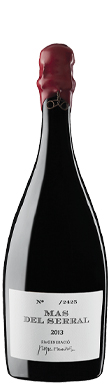
Vins Pepe Raventós, Mas del Serral Brut Nature, Conca del Riu Anoia, Catalonia, Spain 2013
My wines
Pepe Raventós' most personal sparkling – and de facto tête de cuvée – hailing from Clos del Serral, a north- and northwest-facing,1.71ha vineyard, planted in...
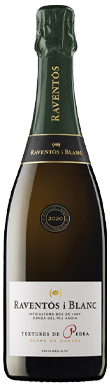
Raventós i Blanc, Textures de Pedra Blanc de Negres Brut Nature, Conca del Riu Anoia, Catalonia, Spain 2020
My wines
True to its name, this is an unapologetically textural and mineral wine, with a pointed zestiness softened by the creamy, lively mousse. Pink grapefruit, blood...
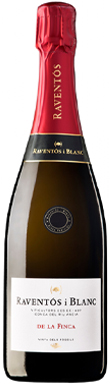
Raventós i Blanc, De la Finca Brut Nature, Conca del Riu Anoia, Catalonia, Spain 2021
My wines
Lovely precision and focus built around a framework of filigree minerality. Subtle nose, with oyster shell and lemon zest topped with hints of rose and...
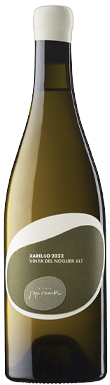
Vins Pepe Raventós, Vinya del Noguer Alt Xarel·lo, Catalonia, Spain 2022
My wines
Energy and textural complexity in this Xarel·lo partially fermented in foudre, amphora and barrel, with eight months' ageing on the lees prior to bottling (not...
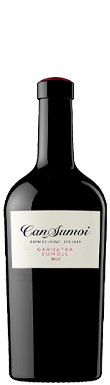
The intense florality of Garnacha is woven into Sumoll's intense earthiness in this equal blend of the two grape varieties. Parma violets and crushed rose...
Ines is Decanter’s regional editor for Spain, Portugal and South America. Born and raised in Lisbon, Portugal, she grew up chasing her grandfather among his vines in Ribatejo and thus her love for all things wine began. After completing her Masters Degree in Architecture, Ines worked as a project manager while writing about wine and doing cellar consulting on the side. After moving to London in 2015, she decided to dedicate herself fully to the wine industry and joined the sommelier team at Michelin-starred Spring, Somerset House. Stints at Noble Rot and The Laughing Heart followed, while completing her WSET Diploma in Wines and Spirits. Her work as a judge and writer eventually became her full time commitment and she joined Decanter in 2019 as wine database editor.