A new multi-million dollar research winery claimed as the most environmentally sensitive in the world has opened its doors at University of California, Davis.
The US$20m, 34,000sq ft research complex, which also includes a brewery and food processing facilities, is designed to become self-sustainable in water and energy use once all its features are operational.
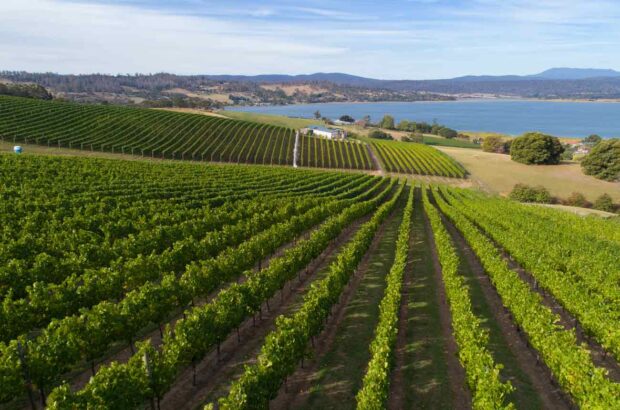
The winery, part of the Robert Mondavi Institute for Wine and Food Science, is adjacent to a new 12-acre research vineyard and is designed to be a testing ground for new, environmentally friendly production processes and techniques.
It claims to have the world’s first wireless fermentation system, including automated temperature and pump-over controls on its 152 fermentation tanks, as well as sensors to measure sugar concentrations every 15 minutes and to a precision of 0.25 brix.
Other features include solar power generation and a large-capacity system for capturing rainwater and conserving process water, with a planned expanded system targeting the reuse of 90% of captured rainwater volume.
‘We want to demonstrate a self-sufficiency model that is applicable to any business with limited water,’ said Roger Boulton, winery engineering expert and chair in enology at UC Davis.
The winery is also designed to capture carbon dioxide emissions during the fermentation process via a port in each of the fermentation tanks, removing the gas and reducing the need to use energy to improve air quality and temperature control.
In time, it is hoped that the carbon dioxide will be captured and stored, with no effect on global warming.
‘The goal is for the facility to be not just carbon neutral, but carbon zero, in terms of its carbon emissions,’ said Boulton.
Written by Richard Woodard