
Coteaux Champenois: Champagne’s next big thing or still a work in progress?
It's Champagne's true historical style, but, as growers increasingly attempt to resurrect the region's still wines Tom Hewson wonders if a clear vision for this renewed Coteaux Champenois has yet emerged.


There are two Champagnes: Le Champagne, the sparkling wine, and La Champagne, the region.
Le Champagne is known the world over, but La Champagne, and indeed the strictly delimited vine-growing area called La Champagne Viticole, doesn’t just produce bubbles.
Scroll down to see Tom Hewson’s tasting notes and scores for Coteaux Champenois
Still wine in Champagne
‘Forty years ago, the balance wasn’t there for Coteaux Champenois wines,’ says Jean-Paul Hébrart of Champagne Marc Hébrart in Mareuil-sur-Aÿ, who started making still Chardonnay from his walled vineyard, Clos Le Léon.
It is a warm, south-facing plot just above the canal that bypasses the sharp hairpins of the Marne river as it flows past the Montagne de Reims towards Paris.
Jean-Baptiste Lécaillon, cellar master at Louis Roederer, agrees: ‘Fifty years ago the grapes were not ripe enough’.
A different picture emerges, though, if we look further back in history, to a time before the yield-driven agriculture of the second half of the 20th century. Before phylloxera, the world wars and the economic turmoil of the early 1900s. Or indeed before the sparkling wine boom of the preceding century.
Moët et Chandon successfully painted the monk Dom Pérignon as the father of Champagne at the start of the 18th century, but were the cloisters of the Abbey of Hautvillers really echoing with the sounds of popping corks and frothing mousse?
It turns out, only occasionally. That’s because sparkling Champagne was largely a novelty until the early 19th century. The celebrated wines of Champagne were almost all still.
Often they were light red wines (or vin gris, gently coloured white wines) mainly from Pinot Noir grapes.
In the Maison Rustique, a 16th-century French farming manual that lists many of the country’s notable vineyard areas, the wines of Aÿ are described as ‘claret and tawny coloured, subtle, delicate and of a very agreeable flavour, and for these reasons are desired for the mouths of Kings, Princes and great Lords.’
What is relatively new is the ambition to step up to a more contemporary, internationally referenced style of still Chardonnay and Pinot Noir, beyond the lighter historic styles.
A resurgence of still Champagne
In June 2024, the village of Bouzy, long one of Champagne’s warmest terroirs with a historic production of red wine, played host to a full day of tasting from many of Champagne’s top Coteaux producers.
The reds show good potential, ranging from bright, crunchy and lightly extracted styles to surprisingly dark, brooding Pinots.
The Chardonnays are more uneven, with many seeming closer to base wines (still wines made for sparkling Champagne) in their austerity, acidity and body. Some had seen oak usage, which was sometimes perfectly pitched, but sometimes awkward.
Lécaillon is deep into a Coteaux Champenois project at Louis Roederer using both Chardonnay from Le Mesnil-sur-Oger in the Côte des Blancs and Pinot Noir from Dizy and Mareuil-sur-Aÿ in the Grande Vallée of the Marne river.
Lécaillon believes it is important to define a style for Coteaux Champenois wines: ‘If we don’t establish a style, we won’t exist’.
‘What is the DNA of Coteaux Champenois?’ he asks. ‘That should be our first question. Is it lightness, salinity, fruit power, drinkability?’
Yet given the diversity of styles currently on offer, he may be waiting in vain for some kind of unity.
A wealth of winemaking talent

Bouzy’s reputation as a red-wine village certainly seems justified, especially in the hands of Georges Remy, who produces an astonishingly complete, concentrated and layered red Pinot from a single plot in a village called Chapeau de Fer. Production is laughably small, however – just 147 bottles of the 2020 were made.
Neighbours Antoine and Quentin Paillard are some of the most inquisitive red-wine producers in the region, and they’ve realised that they can’t simply copy vinification styles from other regions: ‘We’re not in Alsace, we’re not in the Loire,’ says Quentin.
Francis Egly, winemaker at Egly-Ouriet, makes one of Champagne’s most celebrated red wines from the village of Ambonnay. He was particularly satisfied with the 2023 vintage, which theoretically produced low ripeness, yet it was also surprisingly good at Pierre Paillard.
Those in search of ‘unicorn wines’ can even find red wines from Champagne’s specialist grape variety, Pinot Meunier. In June, Benoît Déhu showed a haunting, fragrant version from the 2013 vintage, harvested from his Rue des Noyers plot in Fossoy in the Marne Valley.
Newcomer Fabien Bergeronnau also has a remarkable still red Meunier from a plot of vines affected by fan-leaf virus (which concentrates the grapes) in Trigny, and Bonnet-Ponson has a funky, modern and naturally styled vin de soif from Chamery.
This grape, often thought of as Pinot Noir’s country cousin, is clearly claiming its place in the conversation.
Further surprises have emerged at Piper-Heidsieck, where cellar master Émilien Boutillat (pictured above) has created a Coteaux Champenois with a distinctly local flavour, in the form of a blanc de noirs.
‘It’s our tribute to Pinot Noir, a white wine from red grapes,’ says Boutillat.
Dedication to the cause
Not content with this bold step alone, Bouillat remained true to the house’s ethos by fermenting only in stainless steel, with no oak whatsoever: ‘we want to respect each terroir,’ he says. The wine is bottled under screwcap, despite the French market’s suspicion of this type of closure.
One thing that unites the top producers is that their viticulture is dedicated to Coteaux Champenois wines.
Lécaillon believes that simply choosing ‘the old vines, from the grandparents,’ or searching for higher degrees of ripeness from vines originally destined for sparkling Champagne, can make good but simple, easy-drinking wine.
But why bother if you aren’t able to create something deeper, rounder, richer and different?’
Whether Coteaux Champenois wines do always need to be deeper, richer and rounder might be open to debate, especially when lighter wine styles are back in vogue.
Another barrier remains: these wines are often the same price (or higher) than sparkling Champagnes, due to their miniscule, labour-intensive production.
There may not yet be many wines to buy purely on pound-for-pound value in the international pantheon of Pinot and Chardonnay, yet the wines listed below offer surprising, rewarding and imaginative tastes of Champagne’s individual terroirs.
Coteaux Champenois: Tasting notes and scores
Related articles
Introducing Coteaux Champneois: Champagne’s Still wines
Greener wine travel: Champagne by train
Champagne: Latest autumn releases tasted
Louis Roederer, Hommage à Camille, Coteaux Champenois, Champagne, France, 2022
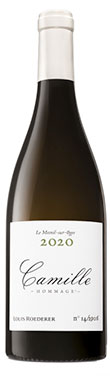

While Roederer's red Coteaux are clearly at the forefront of the style, it is the Chardonnay, from the plot Volibarts in Le Mesnil-sur-Oger, that is...
2022
Louis RoedererCoteaux Champenois

Coessens, Largillier Vendange Entière, Coteaux Champenois, Champagne, France, 2019
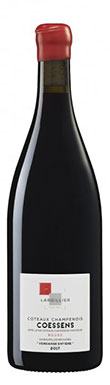
Jéroôe Coessens makes two red Coteaux from the Largillier monopole in Ville-sur-Arce in the Côte des Bar. Égrappé uses destemmed berries, and the other, Entière,...
2019
CoessensCoteaux Champenois
Benoît Déhu, La Rue des Noyers, Coteaux Champenois, Champagne, France, 2013
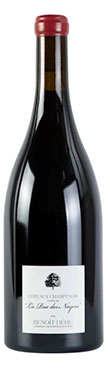
That Meunier specialist Benoît Déhu had the foresight to keep a little red wine back a decade shows just how much belief he has in...
2013
Benoît DéhuCoteaux Champenois
Egly-Ouriet, Cuvée des Grands Côtés Ambonnay, Coteaux Champenois, Champagne, France, 2018
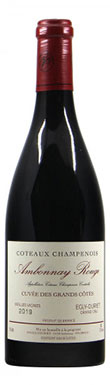
Tasted in magnum, the 2018 Ambonnay rouge from Egly-Ouriet is imperious stuff from this sunny vintage where yield reduction was necessary to find concentration. Even...
2018
Egly-OurietCoteaux Champenois
Piper-Heidsieck, Hors-Série Blanc de Noirs Aÿ, Coteaux Champenois, Champagne, France, 2022
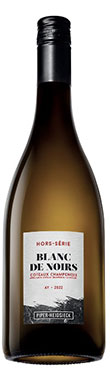
From a single northeast-facing plot of Pinot Noir in chalky, intense Aÿ comes this individual Coteaux Champenois, a white wine from whole-bunch pressed Pinot Noir,...
2022
Piper-HeidsieckCoteaux Champenois
Georges Remy, Bouzy Chapeau de Fer, Coteaux Champenois, Champagne, France, 2020
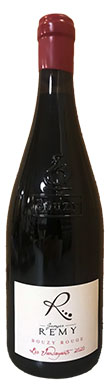
Heady, extraordinary red Pinot from one of Bouzy’s renewed names. This miniscule parcel, which yields just a half barrel of wine per year, is as...
2020
Georges RemyCoteaux Champenois
Pierre Gerbais, Coteaux Champenois, Champagne, France, 2020
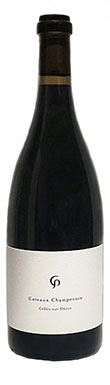
Aurélien Gerbais makes one of Champagne's most unique red wines from Celles-sur-Ource in the Côte des Bar, entirely fermented in stainless steel tanks. This extra-protective,...
2020
Pierre GerbaisCoteaux Champenois
Brice, Bouzy, Coteaux Champenois, Champagne, France, 2022
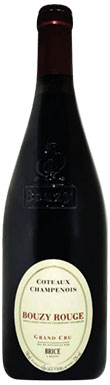
Christophe Constant has been quietly at work in Bouzy elevating the wines of this promising small house, and the red Coteaux has impressed. It’s a...
2022
BriceCoteaux Champenois
Doyard, Aÿ, Coteaux Champenois, Champagne, France, 2020
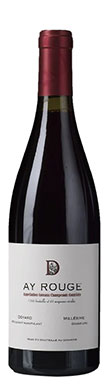
Although better known for its blanc de blancs, Doyard makes a small amount of vivid, juicy red Coteaux from a parcel of Pinot Noir near...
2020
DoyardCoteaux Champenois
Fabrice Bergeronneau, Chevillevy, Coteaux Champenois, Champagne, France, 2020
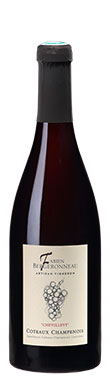
From a single plot of Meunier on the sandy soils of Trigny comes this remarkable red Coteaux Champenois. The vines are affected by the court-noué...
2020
Fabrice BergeronneauCoteaux Champenois
Domaine Les Monts Fournois, Coteaux Champenois, Champagne, France, 2022
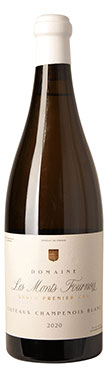
From the hot, dry 2022 vintage, this is a white Coteaux that offers a little more breadth and substance than some. There’s a touch of...
2022
Domaine Les Monts FournoisCoteaux Champenois
Etienne Calsac, Coteaux Champenois, Champagne, France, 2020
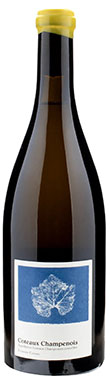
Avize’s Etienne Calsac is one of the region’s champions of Petit Meslier, the historic grape variety that is seeing a quiet revival in interest. In...
2020
Etienne CalsacCoteaux Champenois
R Pouillon, Mareuil Blanc Les Blanchiens, Coteaux Champenois, Champagne, France, 2022
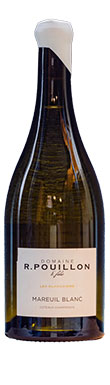
Fascinating and characteristically individual Coteaux from Fabrice Pouillon in Mareuil-sur-Aÿ. Pouillon’s Coteaux is, contrary to fashion, essentially a blended Champagne base wine that will be...
2022
R PouillonCoteaux Champenois
