Niepoort: Producer profile and 10 top wines to try
Once an obscure Port house, family-run Niepoort is now one of the most prestigious names in the wine world. Sarah Ahmed uncovers the history of this innovative Portuguese winery, talks to Dirk van de Niepoort and recommends wines to try.


‘Do little stupid things’ may not sound like a recipe for success. Nor, for that matter, the best fatherly advice for Daniel Niepoort on becoming Niepoort’s sixth-generation head of winemaking in 2021. However, the open-minded attitude and logic behind it – ‘because you learn the most’ – are what enabled Dirk van der Niepoort to transform a relatively obscure Port house, founded by his great-great-grandfather in 1842, into one of the best known and most influential Portuguese wine and Port producers in the world.
Keeping it in the family
It was doing ‘little stupid things’ that cultivated Dirk’s ‘enfant terrible’ status, adding to Niepoort’s enviable reputation as a cutting-edge niche player. The economics graduate joined his late father Rolf in the family business in 1987. He had developed a taste for fine French wine during his internship at Mövenpick Wein and while working the vintage at Cuvaison Estate in Napa Valley. It was never going to be business as usual.
The likes of Château Petrus and Guigal – as well as a passion for Burgundy and Mosel Riesling – inspired him. But they were not the only reference points for this most cerebral but sensory of self-taught winemakers.
Dirk has profound respect for his predecessors, especially his grandfather, Eduard Marius. He made Niepoort’s revered 1945 Vintage Port and an everyday ‘light’ (unfortified) red wine for his workers labelled Vinho de Consumo 1938. Both, I can attest, are still remarkably fresh and intense. However, it was the modest Vinho de Consumo that ‘changed my life,’ says Niepoort’s president.

A path less trodden
It encouraged Dirk to pursue a different path to his predecessors, producing Douro DOC wines for sale in addition to Port. This move was in contrast to his fellow Douro DOC pioneers, at the height of the so-called ‘Parkerisation’ phenomenon. ‘I wanted concentration, but not showing it in thickness, sweetness, fatness. I wanted intensity,’ he explains.
By the time Dirk took over from his father in 1997, Redoma Tinto Douro DOC, which Niepoort first made in 1991, had placed him at the forefront of Douro winemaking. It’s a position the company has maintained ever since. That’s thanks to other ‘little stupid things’ such as: Charme, effectively a saignée from early-picked ‘green Port’; Coche, the fine Burgundy-vaunting white that sells out before release; Turris and Museu dos Lagares, Niepoort’s ‘grand cru’ top-tier single-parcel reds.
Stubborn success
A recent vertical of Niepoort’s classic Douro reds (Redoma, Batuta and Charme) from the 1990s to the present day revealed a journey that has not been without its challenges, given the Douro’s extremes of heat and drought-prone climate. Thankfully, possessed of a curious and stubborn nature, Dirk and his talented team have been more than equal to the challenges.
The company has tracked down vineyards that are naturally buffered against the Douro’s worst excesses thanks to old field-blend plantings, less sunny aspects and tempering elevation. Becoming a grower as well as a négociant, Niepoort’s biodynamically cultivated Douro vineyards now total almost 70ha.
Reflecting on the brand’s marked shift (from around 2013) towards a lighter, less extracted style, Dirk says: ‘In the past we picked the grapes and then decided what to do. Now we know in advance which vineyards go where, so we’re picking with specific wines in mind. And we have learned that, after two years, wines really grow in bottle.’
Rigorous sourcing combined with earlier picking and an increasingly gentle hand in the winery has culminated in wines that now dance like a butterfly, but sting like a bee in their intensity and precision. Do not come to Niepoort expecting opulent, full-bodied Douro wines.
Port potential
While its Ports are naturally full-bodied, since 2005 or thereabouts Niepoort has excluded overripe grapes and, latterly, picked earlier. ‘For us, natural acidity and a green component – doing “the wrong thing” for Port – adds complexity,’ explains Dirk.
In the old days, Niepoort’s three growers each had one vat of ‘vintage potential’ Port. But in 2011 Niepoort had 50 vats – ‘all better than any from the past,’ says Dirk. ‘Before, we couldn’t define what we wanted our vintage Port to be from such a narrow selection. Now we can choose the direction.’
His approach has paid off handsomely. The sensational 2017 Vintage Port won perfect scores, as did a commemorative Lalique bottling of Niepoort’s 1863 Garrafeira. It became the most expensive Port sold at auction in 2019, burnishing Niepoort’s longstanding reputation for wood-aged Ports. At around £2,000 per bottle, a new single-parcel Vintage Port – Vinha da Pisca 2017 – seeks to elevate a category which, according to Dirk, ‘is one of the world’s most special things.’
Beyond the Douro
Dirk’s quest for ever fresher, more elegant wines has also extended the boundaries of Niepoort’s Portuguese empire beyond the Douro to more temperate climes. Niepoort acquired Quinta de Baixo (20ha) in Bairrada in 2012 and Quinta da Lomba (15ha) in Dâo in 2013. The company also makes wines from grower grapes in Vinho Verde, the Azores and Alentejo’s cool Portalegre sub-region.

Then there are the overseas collaborations behind Niepoort’s project wines – one-offs or short runs. These include tie-ins with leading Spanish winemakers Telmo Rodríguez, Raúl Pérez and Equipo Navazos. ‘I didn’t study winemaking from a scientific point of view, so my knowledge comes from drinking and talking about good wine; partnership for me is a learning process,’ explains Dirk.
Rodríguez discouraged him from extracting, while he and Pérez together refined the art of working with stems. A link-up with Equipo Navazos in Jerez has since seen Niepoort create Ururabo, a Douro white that’s aged under flor like Sherry.
Niepoort: a speeding train
Fio, an avant-garde Mosel Riesling label, represents the acme of freshness. Founded in 2016 by Niepoort and Piesport winemaker Philipp Kettern, it has been home to Dirk’s Germany-based sons Daniel and Marco – though, in early 2020, Daniel (the eldest) transferred to Niepoort. Contrasting the size and scope of Niepoort’s current operation with the ‘peaceful’ Port house he joined in 1987, Dirk likens Daniel’s move to ‘jumping onto a train going at 290kph’.
All told, Niepoort now produces around 2.2 million bottles per year, of which around 85% is wine, 15% Port. Annual production of Fabelhaft – the brand’s entry-level label – exceeds 1.5 million litres. Although Daniel ‘wanted to be in the vineyards and didn’t want to work somewhere so big’, discussing Fabelhaft with his father persuaded him otherwise.
Launched in 2004 with a bespoke, culturally resonant name and label for each market, Dirk explains that Fabelhaft – ‘a good glass of Douro wine’ – had opened doors for Niepoort and put Portugal on the map. ‘I realised that if we can make more well, we can have an impact,’ says Daniel.
Since joining the company, Daniel has overseen Niepoort’s Nat Cool project. This is an umbrella label for ‘a movement around the world’, uniting Portuguese and international producers. ‘With similar views on lower extraction, lower alcohol and wines in a “natural wine” direction without being fundamentalist, we want to make something cool for a younger generation,’ explains the 30-year-old. German, French and Argentinian producers are already on board, ’but we are only just beginning’, he enthuses.

The journey continues
Standing back – ‘I’m looking at the whole wood, not just the trees,’ says Dirk – he explains that he has confidence in Daniel because his son has listened more than he has talked. ‘Now it’s time to input his ideas because there’s no room for two Dirks.’
So, what’s in the pipeline? For Port, it’s ‘still the roots.’ Daniel plans to build stocks ‘to sell the right amount at the right time to the right people.’ After a three-year struggle with grape-loving wild boars, the young winemaker now has a new top-tier single-vineyard Douro wine from plantings in the middle of a forest. As for Niepoort’s Douro growers, Daniel is encouraging them to cultivate vineyards sustainably – thus nurturing his love of viticulture.
In the Dão, Daniel is working intently on the profile of Quinta da Lomba’s range. ‘We are still finding our identity and can experiment here,’ he explains. However, the new head of winemaking concludes: ‘I’m very happy with Niepoort’s profile. The goal is to stay authentic and find excuses to do what I like and care about, because otherwise, you won’t do a good job.’
Hence the garden Daniel created during the pandemic, which sells vegetables to chefs, and – watch this space – his minimal intervention, ‘just prune it and press it’ olive oil from the trees growing in and around the company’s old vineyards. Rest assured, ‘the little stupid things’ look set to continue at Niepoort.
Top Niepoort wines to try
Related articles
- Portugal’s iconic wines: top bottles from the Douro
- Top 20 Portuguese Atlantic whites from Portugal
- Rare museum wines from Portuguese icon producers
Niepoort, Redoma Branco Reserva, Douro Valley, Portugal, 2021
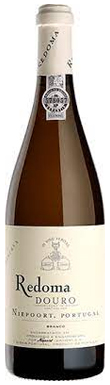

A flinty, tightly wound nose and palate with refreshing Sencha green tea, citrus and al dente stone fruit intensity, alongside enticing notes of vanilla custard cream and lemon-puff biscuit oak. Sourced from vineyards which are over 80 years old and planted at 600m, this was aged for just nine months in French oak barriques. An elegant, intense field blend which will captivate Burgundy drinkers.
2021
Niepoort

Niepoort, Conciso Branco, Dão, Portugal, 2019
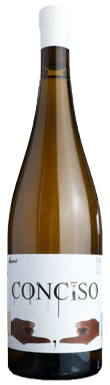
Smoked almond and saline, Fino-like notes, and a pithy, vegetal, flavoursome palate. A firm backbone of lemony acidity, chalky minerality and nutty, savoury oak and lees influence make for a long, layered, textural delivery. Sourced from Quinta da Lomba’s exceptionally old field blend vineyards, which are planted predominantly to Bical, Encruzado and Malvasia. Fermented old-school style in granite lagares.
2019
Niepoort
Niepoort, Batuta, Douro Valley, Portugal, 2018
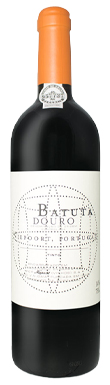
Batuta means 'conductor’s baton'; the maker’s intention – lightness of being – is carefully orchestrated. Initially reserved, with air it reveals scents of tobacco, rock rose and China ink. Lacy cedar and graphite-inflected tannins alongside cleansing acidity make for a finely-honed palate with well-defined, animated blackberry, cherry and subtle, earthy undertones. Comes from two old vineyards with different altitudes and aspects. After 80 days of skin contact, it is aged in French barriques, 50% new.
2018
Niepoort
Niepoort, Redoma Tinto, Douro Valley, Portugal, 2019
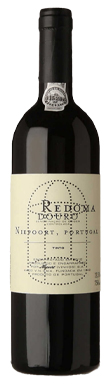
Heady, lilting lily and rose florals to both nose and the persistent palate. Fresh undertow of acidity to the blueberry, sweet raspberry and kirsch fruit. Chamois tannins – a gently savoury foil – reflect a short maceration with whole bunches (100%) and ageing in old wooden barrels. Sourced primarily from vines in excess of 70 years old and located in Quinta de Nápoles and Pinhão Valley. Harvested between early August and late September.
2019
Niepoort
Niepoort, Charme, Douro Valley, Portugal, 2017
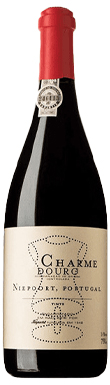
Relatively pale, with suggestions of damp earth and mushroom. In the mouth, crunchy, bright blackcurrant and red berry fruit is animated by refreshing acidity which, together with fine and pithy tannins, maintains line and length. Principally fermented in French oak barrels (10% new) after an intense but brief period of treading whole bunches by foot in lagares. The fruit comes from 70+-year old vineyards in the Vale de Mendiz, Pinhão Valley.
2017
Niepoort
Niepoort, Lagar de Baixo, Bairrada, Portugal, 2020
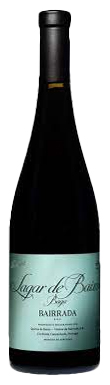
Delicately scented as it is fruited, revealing pine needle, resin, sandalwood and sooty, chalky clay riffs to its racy redcurrant, fresh blackcurrant and earthier beetroot. Having aged for 19 months in large barrels, the tannins are fine and dusty. A medium-bodied style of Baga, fermented in stainless steel lagares with carbonic maceration and whole-bunch influence.
2020
Niepoort
Niepoort, Voyeur, Douro Valley, Portugal, 2020
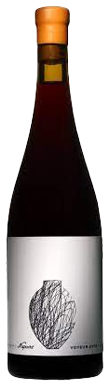
Sluiced with translucent cranberry, redcurrant and cherry fruit, this crunchy, sapid, peppery red has fresh, grapefruity acidity and subtle, spicy phenolic tension, having been fermented and macerated in 1,000-litre clay amphorae for approximately six months. True to the Nat Cool philosophy, this minimal intervention, low alcohol, dangerously drinkable yet provocative light Douro red comes by the litre-bottle. Gently chill and enjoy like a vin de soif or rosé.
2020
Niepoort
Niepoort, Drink Me/Twisted Tinto, Douro Valley, Portugal, 2020
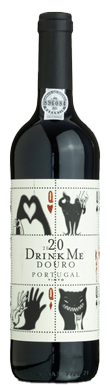
Niepoort’s entry-level label has a classical demeanour. Medium-bodied with cedar-edged sweet plum, red and black fruits before a graphite finish. Hints of pepper, pine needle and esteva add sense of place. Fine, dark chocolate tannins and persistent acidity make for approachability and flow. Made from destemmed fruit which was fermented in temperature-controlled stainless steel tanks and a portion of which matured in French oak barriques. As it says on the label, Drink Me.
2020
Niepoort
Niepoort, Colheita, Port, Douro Valley, Portugal, 2004
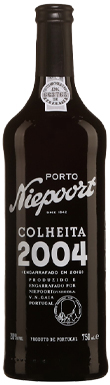
With its honey, praline and cedar nose, and ruddy, conker-sheen hue, this single-vintage Tawny thoroughly beguiles. Sweet gingerbread, caramelised orange, lightly peppery pear skin and fine dark chocolate bring nuance and depth to this most balanced of Ports. Mellifluous, controlled, never broad, it is ever so lingering. Aged in in old Port pipes until 2018, it was bottled long after the minimum Colheita ageing period of seven years.
2004
NiepoortPort
Niepoort, LBV, Port, Douro Valley, Portugal, 2018
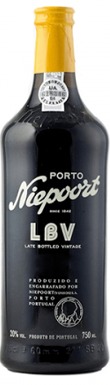
Characterful, luscious and deftly balanced, this terrific, unfiltered LBV – 'the little brother of Vintage Port,' says Dirk Niepoort – is irresistible now but will age brilliantly. Black pepper, esteva, bitter chocolate and spicy gingerbread bring lift and layer to the velvety sweet plum, cherry frangipane and kirsch palate. Ruffled tannins make for a long, controlled finish. Bottled with a driven cork after four- to six-years in large wooden vats.
2018
NiepoortPort
