Is this the world’s best winemaker? Pedro Ballesteros Torres MW investigates...
With family roots firmly in Spain’s remote northwestern Bierzo region, Raúl Pérez’s minimal-intervention methods and their extraordinary results have rapidly propelled him to the status of global champion.
There are three kinds of winemaking genius. First, the classicists: those who excel in applying what they have learned from their masters and reaching higher levels of refinement. They are behind the great classic wines.
Then, the innovators, who discover or develop new winemaking approaches, master new technologies, reveal unknown grape varieties, in ways that are easily replicable. We have them to thank for many new wine styles and new regions.
Scroll down to see our experts’ top wines from Raúl Pérez
The third group are those rare geniuses who act upon intuition. One cannot classify their wines; they are simply inimitable, because those wines have somehow encrypted in their tasting profile the unique combination of their terroir’s message, along with the personality of their creator. Intuitive geniuses are transmitters of feelings and visions. Raúl Pérez is the archetype of the intuitive winemaking genius.
Pérez wanted to be a medical doctor, but his family needed him to keep the winery afloat. Times were not good in Bierzo; most wine was sold in bulk and growers struggled to make a living. Pérez decided to study viticulture and oenology, then started working in the family business.
He swiftly introduced many commonsense changes: improved hygiene in the winery, parcel selection, vinification by small batches, cleaner viticulture. It was just the beginning, but such changes would prove crucial to revealing the quality potential in this family’s old-vine Mencía vineyards.
Decanter newsletter
Get our daily fine wine reviews, latest wine ratings, news and travel guides delivered straight to your inbox.
Raúl Pérez at a glance
Born 2 April 1972
Eduction Masters in oenology and viticulture, Requena; agriculture technician, Lugo
Family Single
Hobbies Travelling and meeting friends
Nature’s lead
After these initial improvements, Pérez was making steady progress, but something was missing. he needed help from outside. Then a stroke of luck saw Alvaro Palacios and his nephew, Ricardo Pérez Palacios, arrive in the region. In a few years, they put Bierzo on the world map of quality wines.
Not only that, as Pérez says: ‘Alvaro Palacios brought much more than world recognition for the wines of Bierzo; he also catalysed a huge increase in the self-esteem and confidence of the region’s growers, at a crucial time.’
Many Bierzo wineries simply copied the Palacios style. Not Pérez. He was driven by his curiosity and an open-minded attitude, rather than a desire to make good wines according to a blueprint for commercial success. For his top wines, he chose not to follow any model, instead endeavouring to produce wines with unique personality.
Pérez particularly valued very old vines in selected sites, favouring viticulture that was respectful of the soils. He learned not to wait for the grapes to achieve maximum ripeness (or even overripeness, as others do), but to harvest at a time when there is a subtle, delicate balance between sugar content and phenolic maturity, while the grapes retain their precious acidity. In the same way that he values balanced vines, he values balanced grapes.
The hillsides around Valtuille de Abajo, viewed from Raúl Pérez’s vineyards at La Vizcaína.
Success arrived in a sudden explosion. Pérez was invited to produce wine both in other Spanish regions and other countries. This wasn’t a problem. While he is deeply rooted in his Bierzo homeland, Pérez is willing to explore the world and to work with people with whom he feels an affinity.
He adores travelling the world, explaining: ‘It’s escaping and learning at the same time; I need that.’ Travel also entails some solitude, but Pérez is convinced that ‘loneliness makes you stronger’. He also feels that what he learns from his travels is beneficial for his own land: ‘I have brought so many good things home from my trips.’
Some people would label Pérez a flying winemaker, but he represents something very different. A flying winemaker is somebody who applies his or her skills and methodologies to wines made in different places. Normally, their wines are made with the consumer in mind, and share a personal signature style. Pérez has an intuitive, open-minded, non-judgemental character, and much curiosity. He accepts and tries to understand complexity in vines and wines, and enjoys working with people he likes. Rather than developing his own personal signature in the wines, he encourages them to interpret the people and the places where they come from.
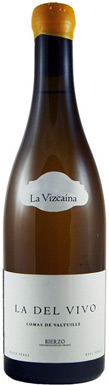
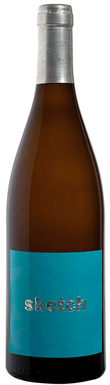
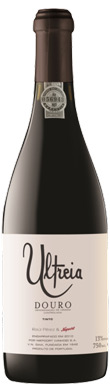
Because of that approach, Pérez currently makes a staggering 76 wines in many places – and consults for a number of others. The wine profiles could hardly be more diverse, to mention just a few made beyond his core region of Bierzo: in Portugal, a sinewy Baga from Bairrada and a most delicate Douro wine made with Dirk Niepoort; in South Africa, a filigree, old-vine Mourvèdre-Syrah from Swartland (working with Eben Sadie); the saline, slender Albariño Sketch in Rías Baixas; a rounded Alicante Bouschet at Almansa; fresh mountain Garnacha at Cebreros; parsimoniously complex Fondillón selection from Alicante; precise, unique Ribeira Sacra styles…
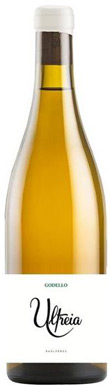
In Bierzo itself, Pérez identifies at least three distinctive sub-regions. The wines he produces here range from charming basic bottles to the precious single-vineyard selections. He also creates appealing whites from native varieties such as Godello or Doña Blanca. ‘Bierzo is also a land with the potential to deliver top white wines,’ he declares.
The art of discretion
It’s not because of their concentration that Pérez’s wines stand out; rather, they conquer your palate in an unassuming way, gradually displaying unequalled elegance and discreet persistence. The winemaker knows that this complexity comes from harmony rather than from abundance. However, there is not a ‘Raúl Pérez style’. The only traits common to all his wines are an understated delicacy and subtle balance, together with a feeling of identity.
Pérez allows his vines and wines to be alive. He is strict about hygiene, but does not like aseptic winemaking. He likes biodiversity in his vineyards and in his winery, and puts his trust in microbes in the wine to conduct fermentations positively – providing that the initial conditions are good. His customary attitude is a kind of reflexive hands-off.
‘To be too interventionist in your winemaking approach goes against wine identity, in the same way that some children are unbalanced because of their parent’s obsession to try to control everything they do. Wines and children need their space and their free time to develop themselves,’ he says.
Some of his winemaking decisions may seem surprising at first, but they are plain common sense. If a winemaker has enough experience of tasting grapes and the ability to anticipate the style of wines those grapes will result in, that’s all the knowledge needed to decide picking dates. Similarly, healthy and ripe (never overripe) grapes from pesticide-free single vineyards can spontaneously ferment in small vats with no need for temperature control.
Most winemakers use sulphites early in order to capture the sensorial image of the wine while the fruit is still there. But, says Pérez: ‘I do not like fruity wines’. Instead, he looks for the wine’s identity, allowing the recently fermented wine to lose part of the fruit and to become itself, avoiding such intervention. Besides, by allowing the development of a yeasty protective flor in the vat or barrel, even for red wines, those wines can develop their complexity through ageing, without the use of sulphur dioxide.
Individual paths
Pérez has an element of self-confidence that is difficult to describe: something inextricably associated with intuition. He smiles while reflecting how some winemaking problems give him as much concern as experience. But he also confesses that, despite his 20 years of experience, he sometimes feels a chill in his spine when he has to make difficult winemaking decisions. He does not tolerate errors and is adamant on this point: ‘There is no excuse for faulty wines.’
Ultimately, Pérez only considers his wines a success if they are capable of ageing graciously. ‘I do not conceive of a wine that does not age,’ he explains. He will not tolerate any shortcomings in the balance and stability of his final wines, nor any oxidisation.
Pérez uses no manual; there is no formula for his wines. Everything is pure intuition. Each winemaking decision is based upon observation, reflection, a sense of the present and a vision of future development. One year’s decisions will not necessarily be the same as the next year’s, because as he explains: ‘There are wines that I do not understand; I need to learn much more.’ His thirst for learning is a never-ending process, and probably a sine qua non condition for excellence.
Perhaps his most amazing and inspiring feature is his reluctance to tell anybody what they should do. Understandably, many younger winemakers admire him; and although he is very generous in offering them help – you’ll often see him passing on advice in the spirit of friendship – he is not attempting to win converts to his winemaking style. His best lesson is: ‘Do not do what I do! Follow your own intuition!’ It works. Each one of his accomplished apprentices develops his or her own way of doing things.
Pérez is still very young, probably not yet at his peak, but he is already a memory maker, in the hearts and the minds of those who love making and drinking wines that have an inimitable identity.
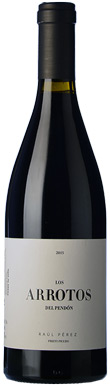
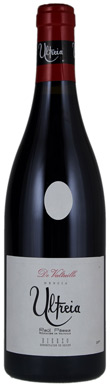
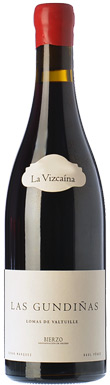
Top wines from Raúl Pérez
Tasted by Pedro Ballesteros Torres MW and Sarah Jane Evans MW
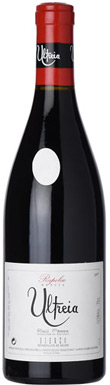
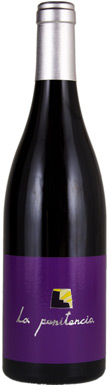
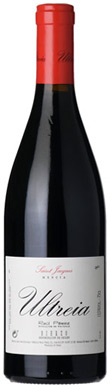
This is a Mencia field blend with Caino, Alicante Bouschet, Bastardo and Brancellao. It's from Ribeira Sacra and made at the Guimaro property there, but...
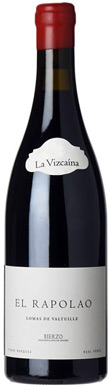
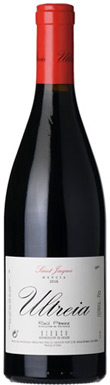
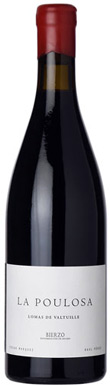
This east-facing, sunny site on clay soils was planted between 1930 and 1936, during the Second Republic. The wine it produces, another Mencia field blend,...
Decanter Premium, Decanter Magazine and DWWA 2019 Regional Chair for Spain
Pedro Ballesteros Torres MW is a Decanter contributor and joint Regional Chair for Spain at the Decanter World Wine Awards 2019 alongside Ferran Centelles. He has studied around the world, including Spain, France, USA and Germany. He holds a degree in agro-food engineering and a masters in viticulture and oenology among his qualifications. A columnist for magazines in Spain and Belgium, he works in four languages. He sits at the governing board of the Unión Española de Catadores (the Spanish wine tasters’ union), the board of the International Federation of Wine and Spirit Journalists and Writers, the wine committee of the Basque Culinary Centre, and acts as expert at the OIV (International Organisation of Vine and Wine). He is a VIA Certified Italian Wine Ambassador, a member of Gran Orden de Caballeros del Vino, and has been awarded the Spanish Command Order of Agricultural Merit.