
The different shades of Cahors: The region’s Malbec rebirth and 12 recommendations
If the name of this picturesque corner of southwest France conjures up the rustic ‘black wines’ of tradition, then look again: times have been changing in Cahors, and wine styles with them, in the homeland of Malbec.


Cahors is undergoing a quiet revolution.
This beautiful part of southwest France – renowned in the past for sturdy, traditional, long-lived, dark-coloured red wines – is benefiting from a new wave of independent winemakers who are applying the latest approaches to viticulture and vinification to the complex geology of the Lot valley.
Rustic tannins and the heavy use of oak have been replaced with a defter touch, and alternative maturation vessels such as amphorae, acacia wood and limestone tanks are now much more in evidence.
Scroll down to see Andy Howard MW’s notes and scores for 12 very special Cahors wines
Cahors’ double-edged sword

Cahors is unusual for a French wine region, given its reliance on a single appellation and wine style (dry red), combined with the dominance of Malbec, known locally as Côt, or Auxerrois or Pessac.
By whichever name, the grape is perhaps Cahors’ greatest strength, yet also a major weakness.
Driven by the popularity of weighty, deep-coloured, fruit-driven wines from Mendoza in Argentina, ‘Brand Malbec’ is now so strong that it’s understandable that many consumers expect the wines of Cahors to be similar in style.
Although a few estates in Cahors have attempted to mimic the Mendoza Malbec style, the complexity of geology, soil types and winemaking philosophies is now resulting in a diversity of exciting, vibrant and good-value wines.
A recent blind tasting (see recommendations, below) revealed that it would be far too simplistic to label a particular estate as ‘traditional’ or ‘modern’.
Many produce a range of wines that display the full breadth of styles that the Côt of Cahors can provide.
A question of terroir

The Cahors region is located on the southwestern edge of the Massif Central, lying to the east of the greater Bordeaux region.
The dominant geological features here are the alluvial terraces of the meandering Lot valley, and the limestone plateau that rises on either side of this river valley.
The evolution of the latter’s many graceful curves has resulted in a variety of soil types.
The first terrace, lying closest to the river, is home to young, fertile soils, often dominated by sand, which promote fruity, early-drinking wines.
The second terrace, composed of shallower soils with pebbles and clay, produces wines with more intensity; while the third terrace combines clay-silica soil with a higher proportion of limestone as elevations increase.
The terraces range from 90m to 250m; above them (up to 350m) lie the vineyards on the limestone plateau (causse).
Here, a greater proportion of Kimmeridgian clay marls results in wines that show freshness and minerality, while pockets of iron-rich clay add power and weight.
Yet the blind tasting also showed that it’s misleading to pigeonhole a wine simply on the basis of soil type.
It’s the complex interplay of the different elements of terroir that generates the wide variety that Cahors offers.
Red sands
Sébastien Bernède (above, vice president of the Cahors wine syndicate, as well as winemaker at the substantial 100ha estate Clos La Coutale) proudly highlights some of his vineyards situated on red sand.
‘These are soils from the Massif Central, just like those of Château Rayas [in Châteauneuf-du-Pape in the southern Rhône],’ he says. ‘Like Rayas, you can make great wines here on sand.’
While Clos La Coutale is a relatively traditional estate, a striking contrast is provided by the youthful figure of Fabien Jouves at Mas del Périé (pictured, below). His estate is located high on the limestone plateau southwest of the town of Cahors.
Jouves is viewed as a champion of natural wines, but even this label is far too simplistic. Mas del Périé produces wines with immediacy and freshness, combined with depth of colour and lingering purity.
One of the lightest wines tasted (Jouves’ Les Acacias; see recommendations) comes from 40-year-old Côt vines on limestone-rich soil interspersed with deposits of iron, and combines power with drinkability, yet is only 11.5% alcohol.
Historical presence

Cahors has been a significant wine-producing region since the Middle Ages, often commanding a higher reputation for its wines than those of Bordeaux.
Deep in colour, the wines were revered in the UK, as well as by Pope John XXII – a native of the Lot.
Subsequently, Cahors became associated with the name ‘black wine’ – a reference to a time when grapes were baked in ovens for concentration, before being blended to bolster paler, lighter wines.
The region prospered for several centuries before increasing commercial pressure from Bordeaux merchants and cheaper wines from the Midi region compromised the wine trade.
In the late 19th century, phylloxera ravaged the region, a calamity from which it didn’t recover for 100 years.
What could have been the final straw came with the great frost of February 1956, which almost completely destroyed what was left of the vines. In the subsequent replanting, Côt’s dominance increased.
Following the granting of AP status in 1971, Cahors maintained its reputation for structured, sturdy, long-lived red wines that spend considerable time in oak and require lengthy bottle ageing.
Under the AP rules, wines must be made from at least 70% Côt; Merlot and Tannat are also permitted, the latter adding further concentration.
Today, most of the top wines are 100% Côt, still with plenty of depth of colour, a violet-driven perfume and flavours of blackberry and cherry.
The change-bringers

Initially driven by inspirational producers such as Jean-Luc Baldès of Clos Triguedina, as well as significant investment from outsiders such as Alain-Dominique Perrin (Château Lagrézette), the quality of Cahors has been on a steep upward curve for several decades.
This process has been accelerated with the arrival of a new wave of winemakers. Benoît Aymard (pictured, above) is a typical example.
Since taking over as the third generation at the 14ha Domaine Clos d’Audhuy in 2014 he has transformed the estate’s approach in terms of viticulture, winemaking and marketing. In 2018, a new gravity-fed winery was installed.
Aymard says: ‘The old Côt clones were high-yielding and lower in quality. Since 2015, we’ve planted six new clones with more open bunches, small berries, lower yields and higher quality.’
His focus is on individual parcel vinification, the estate’s varied terroir and low intervention.
Clos d’Audhuy’s La-O (see recommendations) stands out, with its intense, linear palate demonstrating the high limestone content of this vineyard. Cuvée Clos d’Audhuy displays a more traditional approach, with two years maturation in barrel.
Meanwhile, On a Pris le Temps combines the best parcels from both, producing a rich yet serious Côt on a par with the region’s best.
Cahors at a glance
Planted area: 3,323ha (2020, Vins de Cahors)
Producers: 220 independent winegrowers, one cooperative
Classification: Became an AP in 1971
Restrictions: Only red wine permitted; minimum 70% Côt (aka Auxerrois/ Pessac/Malbec), with up to 30% Merlot/Tannat; maximum yield 50hl/ha
Average annual rainfall: About 750mm
Newer arrivals
At Château Famaey and Château les Croisille, a younger generation is in charge, albeit with fewer traditional winemaking links to the Cahors region.
In 2007, Belgian Maarten Luyckx (pictured, below) took over from his father Luc at Château Famaey in Puy l’Evêque, where he creates a range of styles.
‘We are focused on sustainability – respect for the vines and nature is at the core of what we do,’ says Luyckx.
Famaey’s Cuvée F is aged in ovoid vats, allowing further micro-oxygenation to promote fruit characters. Cuvée X – a 2023 DWWA Platinum medal winner with its 2022 vintage, produced from the same plots – spends two years in new oak barrels.
Le Grez is aged in clay amphorae to emphasise the imprint of the clay-rich vineyards.
From plots on the pebbly second terrace, L’Impression is unoaked – it’s aged for 12 months in concrete vats ‘to emphasise fruit and silkiness’, says Luyckx.
Château les Croisille is located north of the Lot, on the causse. The Croisille family started as grape-growers in 1979 before creating an estate that produces its own wines.
Brothers Germain and Simon are now pushing the estate to greater heights.
Cuvée Silice (from silica-rich clay-iron soils, see recommendations) is aged in concrete, which contrasts with Calcaire, which is aged in foudres for 15 months.
Divin is a blend from the best plots of the estate’s sand, clay and limestone soils, and Le Grain is a micro-cuvée aged in demi-muids for two years.
Both are complex, ageworthy Côts that would more than hold their own against the best of Argentina’s Malbecs.

Modern outlook
The iconic Clos Triguedina estate – which lays claim to being the first to produce an AP Cahors from 100% Malbec – continues to be a standard bearer.
In 2023, Jean-Luc and Sabine Baldès passed the baton to their daughter Juliette (pictured, below) after she trained in New Zealand, Spain, Argentina and Italy.
She’s focused on a better understanding of Triguedina’s complex geology, soil types and the influence of elevation, while continuing the estate’s drive to respect both nature and tradition.
Triguedina’s top wine is Probus (see recommendations), paying homage to the eponymous Roman Emperor who replanted vines in the Quercy region during the 3rd century.
Produced from 100-year-old vines on the third terraces, this is a selection from the best parcels and continues to set a benchmark for AP Cahors.
Intriguingly, within a red wine-only appellation, Triguedina is making an elegant white wine (labelled under IGP Comté Tolosan) from Viognier and Chardonnay planted on the highest terraces.
There’s also a fine rosé (aged in acacia barrels), while its New Black Wine is a clever reference to the wines produced several centuries ago, using a disused prune oven to gently heat and dry some of the grapes, yet delivering a much more sophisticated wine than its historical counterpart.
The wines of Cahors are certainly changing.
A new generation is at play, producing the full gamut of wines, from fruit-driven to structured. New oak is being toned down with increased use of larger oak casks, amphorae and alternative maturation vessels.
Combine all this with the complex geology of the Lot valley, together with many keenly priced wines, and Cahors looks to be a very exciting source of fine Côt/Malbec wines.

If you want to better understand the terroirs and topography of Cahors, there’s an excellent video on the Vins de Cahors website
Cahors to the fore: Howard’s pick of 12 to try
Related articles
- The wines of Southwest France: a buyer’s guide
- France newsletter: Sign up today
- The star producers from Sancerre and the Centre-Loire you need to know about
Clos d'Audhuy, La-O, Cahors, Southwest France, France, 2022
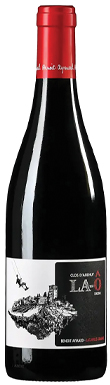

Youthful Benoit Aymard is really driving this 14ha family estate in Lacapelle-Cabanac forward. Aged 10 months in older 225-litre barrels, La-O shows ripe, weighty, fleshy...
2022
Clos d'AudhuyCahors

Clos Triguedina, Probus, Cahors, Southwest France, France, 2023
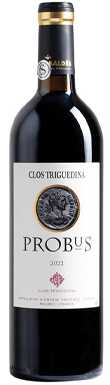
A fragrant, complex nose with hints of spice and wood, and floral notes as well. Plenty of weight and ripeness to the fruit, with black...
2023
Clos TriguedinaCahors
Château Famaey, Cuvée X, Cahors, Southwest France, France, 2022
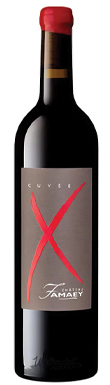
Lovely balance between generosity of fruit and ageing in wood (24 months in new oak barrels). Many elements, all working in harmony. Dark cherry and...
2022
Château FamaeyCahors
Clos la Coutale, La Griotte Malbec, Cahors, Southwest France, France, 2023
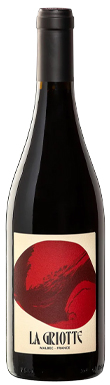
Lifted, floral notes on the nose with a fresh, brambly edge adding an extra layer. Luxurious and voluptuous on both nose and palate, with black...
2023
Clos la CoutaleCahors
Domaine La Bérangeraie, La Gorgée de Mathis Bacchus, Cahors, Southwest France, France, 2022
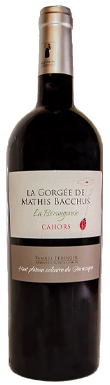
Powerful, weighty, concentrated and fleshy, this was aged for 30 months in new oak barrels. Dark berry and plum fruits are to the fore, with...
2022
Domaine La BérangeraieCahors
Château la Croisille, Silice Malbec, Cahors, Southwest France, France, 2022
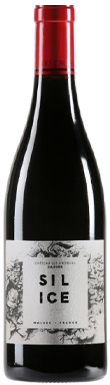
Classic Cahors Malbec nose: dark berry fruits with a touch of violet and rose petal, and a hint of spiciness (balsam) as well. Generous, mouthfilling...
2022
Château la CroisilleCahors
Château Lamartine, Cuvée Particulière, Cahors, Southwest France, France, 2022
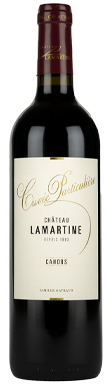
A cool, elegant and fresh nose. Dark fruit characters with generosity and ripeness. There’s a mineral edge to the finish and lots of purity and...
2022
Château LamartineCahors
Le Clos d'un Jour, Un Jour sur Terre, Cahors, Southwest France, France, 2022
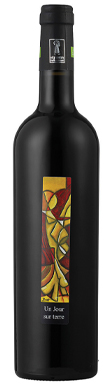
A more serious style with quite a nod towards Bordeaux structure. The Malbec has floral notes reminiscent of a red from the Madiran region. Intense,...
2022
Le Clos d'un JourCahors
Domaine la Calmette, Trespotz, Cahors, Southwest France, France, 2023
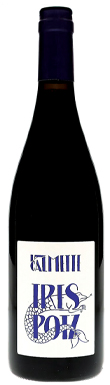
Appealing, complex and layered nose with floral characters combined with a touch of spice and red/black fruits. Palate marries elegance with fresh, vibrant acidity, smooth,...
2023
Domaine la CalmetteCahors
Mas del Périé, Les Acacias, Cahors, Southwest France, France, 2022
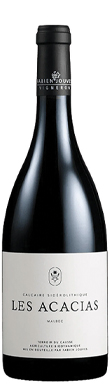
Complex nose: a melange of dark fruit, a hint of wood and spice notes. Doesn’t possess the fleshiness of some, yet has excellent freshness and...
2022
Mas del PériéCahors
Stéphane Revel, Amphora, Cahors, Southwest France, France, 2023
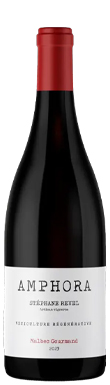
Dark cherry notes dominate the nose. Some conserve-like characters. Cool. fresh palate but the tannins are ripe and luxurious. Intriguing. There’s something a little different...
2023
Stéphane RevelCahors
Vinovalie, Paradis, Cahors, Southwest France, France, 2022
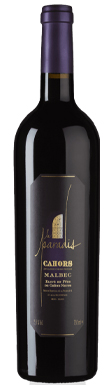
Approachable, enticing nose showing dark cherry and berry fruit, and a floral lift, with notes of violets to the fore. Plump, plush and fleshy on...
2022
VinovalieCahors
