C yril Henschke took the extraordinary step in 1952 of citing the source vineyard on a wine label: Mount Edelstone Shiraz.
It was unheard of in Australia at the time, but Henschke realised that this 16ha site in South Australia’s Eden Valley produced Shiraz grapes that stood apart from its neighbours and deserved to be celebrated as a unique entity.
Mount Edelstone Shiraz, which celebrates 70 vintages in 2026, provides an important landmark for Australian wine by identifying site and terroir as a defining feature.
While other famous wines capture a distinctive Australian character through multi-regional or multi-variety blends – such as Penfolds’ Grange, Yalumba’s The Signature, Hardy’s Eileen Hardy and Wendouree’s wines – the action that Cyril Henschke took to highlight a single vineyard introduced a new, rarefied Australian fine wine story.
Within two years, Henschke had issued a second single-vineyard Shiraz – from the 4ha Hill of Grace Vineyard, planted in 1860 – which commanded a higher price because of its extremely limited production.
It declared a powerful statement that linked prestige to place. By the early 1980s, key vineyards that provided integral components to famous brands were being mentioned on the labels of a number of elite Australian wines – including Orlando’s St Hugo (from Coonawarra), Centenary Hill and Steingarten (both from Barossa), and St Hallett’s Old Block Shiraz (also from Barossa).
It placed great value on a league of century-old vineyards and their specific characteristics.
Decanter newsletter
Get our daily fine wine reviews, latest wine ratings, news and travel guides delivered straight to your inbox.
Singing their praises
Tolpuddle Vineyard, Tasmania
(Image credit: Jessica Clark)
By the 2010s, more Australian winemakers believed these deserved to be vinified and issued as single-site wines, rather than being labelled as ‘Reserve’ wines – a movement that underlined growing ambition to earn more plaudits on the world stage.
Talent and ideas matched this ambition, signalling the emergence of a ‘grand cru’ status in Australian wine – an important refocusing on specific sites that highlights the continuing maturity of Australian winemaking and wine marketing.
Recent historical tastings reveal the distinct personalities of superior locations – most notably Yangarra’s examination of all 15 vintages of its High Sands Grenache, vindicating the winery’s decision to reserve this extraordinary parcel, which defines the best of elite Australian Grenache.
Plenty of flagbearers are capturing specific aspects of the best old vineyards to produce wines of specific character.
Beyond the 10 sites listed here, Cullen’s 1971-planted Margaret River vineyard stands as a leading light of biodynamic viticulture. Brokenwood’s Graveyard Vineyard Shiraz provides a definitive Hunter Valley wine expression.
And also in Margaret River, the Vasse Felix home vineyard Cabernet Sauvignon and Malbec produce the exemplary Tom Cullity.
Sites in the spotlight
Florita Vineyard
(Image credit: Don Brice Photography)
More winemakers are being inspired to pursue single-site expressions of excellence, and to place renewed focus on historic sites in prime locations.
Toby Bekkers spent five years reviving a Clarendon vineyard (planted between 1842 and 1848) that had been the initial poster-site of South Australian wine, but since the 1970s had become derelict through neglect.
Now Bekkers Wines is producing single-site Clarendon Vineyard Shiraz, Cabernet Sauvignon and Grenache of outstanding quality.
Sites are flourishing after careful research to maximise the potential of superior terroir. Shaw & Smith’s Lenswood Vineyard introduced intensive vine planting (about 4,800 vines per hectare) to naturally reduce crop load, resulting in exceptional Chardonnay.
In Western Australia’s Franklin River region, Swinney’s bush-vine Mourvedre is planted alongside Grenache and Shiraz on an ironstone gravel hilltop at the family’s Powderbark vineyard – and winemaker Rob Mann is producing three single-variety wines of extraordinary finesse.
Such celebrated outcomes don’t happen by accident. Meticulous, intelligent viticulture and vine health and soil restoration programs ensure these vines continue to produce extraordinary fruit that sits in idyllic balance – many in better shape now than ever.
The best is probably still ahead of us.
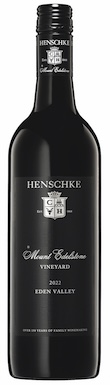
Henschke Mount Edelstone Vineyard
(Image credit: Henschke)
Eden Valley, South Australia
The 16ha Mount Edelstone Vineyard was an anomaly when pastoralist Ronald Angas planted only Shiraz vines on its rocky red loam soils in 1912, rather than follow the Barossa tradition of mixing several varieties.
His neighbour Cyril Henschke recognised the unique characteristics of this east-facing, 400m-high site when he started making wine from these grapes in the 1950s, and purchased the vineyard in 1974.
Now, viticulturist Prue Henschke nurtures the network of 1,300 old vines with biodynamic practices that have dramatically improved fruit quality from its 11 blocks – with Blocks G and H in the lower southeast portion of the vineyard being the winemakers’ favourite parcels.
From 1989, Prue introduced an upright trellis system to allow more even light onto ripening fruit.
‘This had an immediate effect on the wines,’ she says. ‘It amplified colour and brought great clarity and purity to the fruit flavours and subtle aromas. Vineyard attention led to sharper wine definition.’
This ensures great acid retention in the grapes and promotes an earthy savouriness to the palate, evident during Henschke’s February 2026 tasting event, hosted at the historic cellars in Keyneton, Eden Valley to examine key Mount Edelstone vintages between 1952 and 2022.
Highlights included the sprightly, lean 1958, sustained by the Mount Edelstone vineyard’s characteristic gentle tannins; and the recurring terroir hallmarks that showed off the vineyard’s twin personalities, with warmer vintages showing red earth and red spice as prominent features, and cooler vintages revealing lively sage and bay leaf herbal aromas over lush blackberry and black pepper.
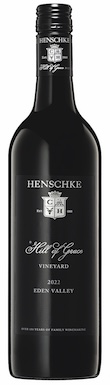
Henschke Hill of Grace
(Image credit: Henschke)
Barossa, South Australia
Success for Mount Edelstone Shiraz inspired Cyril Henschke to elevate another single-site wine, this one produced from an even more precious vineyard resource – the small Hill of Grace Vineyard, with its gnarled Shiraz vines from the 1860s.
Planted on original rootstock, these fragile sentinels are among few surviving ancient relics to have avoided the impact of the destructive vine-root louse phylloxera – and they produce fruit of extraordinary intensity and unique character.
Dry-grown on clay-rich alluvial soils overlain by a layer of fine, sandy-silty loam, Shiraz from a 4ha portion of the Hill of Grace vineyard is treated with reverential care, benefiting from careful organic composting and mulching to ensure maximum microbial activity in the soil and optimal vine health.
Each portion of the vineyard is handpicked at different times around the full moon at Easter (significantly later than neighbouring Eden Valley and Barossa vineyards), yielding only about 2.5 tonnes of tiny berries per hectare, compared to 4 tonnes or so at Jim Barry’s Armagh vineyard, one of South Australia’s elite Shiraz sites.
It provides coiled power in a dark, inky wine that unfurls slowly over time in the cellar to scale monumental peaks.
These include the phenomenal 2010 and 2015 vintages, which best capture characteristic Hill of Grace signatures of dried sage, Chinese five spice and black pepper notes atop vibrant blackberry, dark plum and juicy cranberry.
Tolpuddle Vineyard
Martin Shaw and Michael Hill-Smith MW
(Image credit: Jessica Clark)
Coal River Valley, Tasmania
Soon after Tolpuddle Vineyard in Tasmania’s Coal River Valley was planted to Chardonnay and Pinot Noir vines in 1988, it was commanding respect as one of Australia’s elite cool-climate sites, yet Michael Hill Smith MW and Martin Shaw saw potential to do a whole lot more when they purchased the vineyard in 2011.
‘It has that special something,’ says Hill Smith, who is also one of the five Co-Chairs at the Decanter World Wine Awards.
‘Tolpuddle has very deliberate focus – but we felt it could be significantly better.’
The revitalisation programme saw a dam installed to help manage frost, ripping of the soil between vine rows to alleviate compaction of the silica-rich, stony ground, and new clones introduced within more intensive vine plantings to increase diversity and complexity of grape flavours and textures.
Through this focused attention to detail, Tolpuddle Chardonnay won immediate acclaim, but careful patience has also seen Pinot Noir flourish, as the influence of clonal diversity from new vines across the site has reached maturity.
‘Pinot Noir is capricious,’ says Shaw. ‘It reacts so sensitively to vintage and yield differences that it took time for Tolpuddle Pinot Noir to show site familiarity, but we have now arrived at a very strong place.’
Distinctive, prominent acidity comes as a consequence of the site’s typically very cold, very dry ripening season – an asset that gives these wines sharp flavour definition and extraordinary longevity.
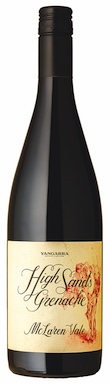
Yangarra High Sands
Grenache vines in Yangarra’s High Sands Vineyard in autumn
(Image credit: Milton Wordley)
McLaren Vale, South Australia
When Yangarra winemaker, the late Peter Fraser, identified as a result of the 2010 vintage that the specific terroir of this site – with Grenache bush vines planted in 1946 on a 1.7ha block of deep, ancient sand at Blewett Springs – produced a parcel of exceptional fruit with unusual delicacy and intensity, he boldly argued that it should be vinified separately and promoted as an elite, single-location Grenache expression.
No one else in Australia at that time had considered elevating Grenache to such a lofty pedestal, but Fraser’s astute observation set in place a movement that has rightly brought a league of superb McLaren Vale Grenache to international attention.
Yangarra High Sands remains the standard bearer for elite Australian Grenache, and a 15-vintage retrospective tasting demonstrated that its fragile beauty captures vintage variation with keen subtlety.
‘I always knew this block was very special. I had something that everyone else wanted, so I gave it my very best attention,’ said Fraser at the tasting.
The site provides fruit of exquisite purity, but minimal-intervention winemaking deserves praise for exercising poise and bringing every component into ideal balance – a talent amplified in more recent vintages, especially the magnificent 2024 High Sands Grenache.
It’s easy to be immediately seduced by its waft of wild herbs framed by fresh plum and wild raspberry, but it’s the lean muscle of a complex mid-palate that marries beauty with power, with its fine-boned frame carrying extraordinary persistence of pure flavours.
Alkina Estate Vineyard
Amelia Nolan, Alkina general manager and winemaker, with Chilean terroir specialist Dr Pedro Parra.
(Image credit: Jesse Castle)
Barossa, South Australia
When Chilean soil expert Dr Pedro Parra examined Alkina vineyard in the Barossa’s Greenock subregion, soon after Argentina’s Alejandro Bulgheroni bought the site in 2015, he confirmed its excellent pedigree – but also dug pits that identified a series of different soil outcrops within the 43ha vineyard.
These ‘polygons’ became the source of tiny fruit parcels that have been vinified separately and delicately in concrete vessels, with no oak influence, to accentuate their different character.
Polygon 1 Shiraz – sourced from a mere six rows of 70-year-old vines planted in granite-flecked schist and iron-rich clay over limestone – shows Barossa Shiraz in a dazzling fresh light, slender and nimble, yet supported by subtle, supple tannins and a lick of savoury minerality that guides a long palate line of rare finesse and purity.
Polygon 1 shows but one facet of Alkina’s studied Shiraz and Grenache output, as there are now 20 polygons defined within the vineyard’s Old Quarter – and more new sections are being identified to produce a suite of exemplary ‘polygon’ wines.
‘These are all significant micro-sites, all with significantly different geologies that introduce vastly different characteristics in the wine,’ explains Parra, ‘and it would be a crime if they were not identified individually and celebrated.’
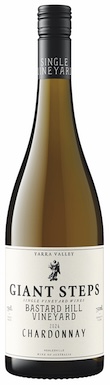
Bastard Hill Vineyard
Melanie Chester, Giant Steps’ winemaker
(Image credit: Annika Kafcaloudis)
Yarra Valley, Victoria
Surrounded by dense temperate rainforest in the remote upper reaches of Victoria’s Yarra Valley, the 13ha Bastard Hill vineyard earned its harsh nickname from the workers who toiled in the especially difficult terrain.
Planted in the 1980s by the region’s leading cool-climate viticulturist, Ray Guerin, this was regarded as one of the great Chardonnay sites in Australia, being a source for Eileen Hardy Chardonnay.
The clearing is flanked by towering eucalyptus trees and giant tree ferns, and scales up from 300m to 400m above sea level.
With vines planted on gradients of up to 32%, riding farm machinery here is fraught with danger. Such difficulty and high labour expenses saw previous owner Accolade lose interest in maintaining such a gnarly site to the highest standards.
When Giant Steps Wine, owned by Jackson Family Wines, purchased the vineyard in August 2022, extensive vineyard restoration work commenced.
Winemaker Melanie Chester didn’t expect the neglected Bastard Hill site to respond immediately to viticultural attention and produce fruit of a standard befitting Giant Steps’ esteemed suite of single-vineyard wines.
But an exceptional 2023 Bastard Hill Chardonnay won immediate accolades, and the quality keeps improving.
A key factor is a rare soil type – rich red basalt that points back to the region’s volcanic activity of 500 million years ago – which produces fruit with an exciting concentration of flavours without sacrificing strident natural acidity.
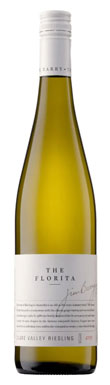
Jim Barry Wines Florita Vineyard
Peter Barry
(Image credit: Matt Turner)
Clare Valley, South Australia
Racy, citrus-driven Clare Riesling is now a globally recognised style, built on the historical success of the famed Florita Vineyard.
Pioneer wine merchant Leo Buring bought land at Watervale in 1946 and called the site Florita (Spanish for ‘little flower’) because he initially planted Palomino and Pedro Ximénez grapes to make fino-style ‘sherry’.
He then planted Riesling vines in 1962 and his winemaker John Vickery created a benchmark style, winning 50 trophies and 400 gold medals over subsequent decades.
Jim Barry Wines purchased the 32ha Florita site from corporate owner Philip Morris in 1986, but although the Barrys immediately began making superior wines with this stellar resource, they couldn’t use the trademarked Florita name for another 18 years.
‘It was maddening that we couldn’t use the name for so long, because we wanted to shout from the rooftops that we had the most famous Riesling vineyard in Australia,’ says retired managing director Peter Barry.
Jim Barry Wines finally issued its own Florita Riesling in 2004. In this wine, the site’s shallow, loamy soils provide a delicate floral beauty coupled with a rich citrus line, firm acidity promoting sharp, clean flavours with unusual length and persistence.
It boasts the unusual dichotomy of being both pretty and fragile, yet resolute and sturdy – factors that amplify with age.
To highlight this, Jim Barry has been issuing a 10-year-old cellar release of Florita, with the recently reissued 2015 showing gorgeous, developed honeysuckle, toasted cashew and lime marmalade characteristics, without sacrificing the primary citrus zestiness that defines Watervale Riesling.
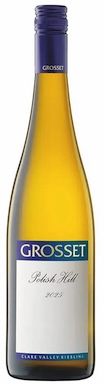
Grosset Polish Hill River Vineyard
Jeffrey Grosset in the Polish Hill River Vineyard
(Image credit: Grosset)
Clare Valley, South Australia
The single-minded pursuit of purity in Riesling expression is Jeffrey Grosset’s winemaking obsession, which led him to plant three different Riesling clones (two German and one rare local variety) on an 8ha vineyard in the stony, austere Polish Hill River region of Clare in 1996.
The site’s 500 million-year-old bedrock of blue slate produced a distinctive type of Riesling wrapped in dark, pensive flavour tones and spiky minerality – far removed from the neighbouring Watervale district’s lively lemon-lime characteristics.
Its austere personality reflects the struggle endured by such close-planted vines on tough soils, with each producing just two bottles of wine per vine.
‘I saw such particular attributes in the fruit from each site that I saw no point blending them together. I wanted people to see them side by side, so I just went ahead and bottled the Rieslings from both sub-regions separately,’ says Grosset.
This started a new, serious conversation about Riesling in Australia, which Grosset escalated as he honed more fine-chiselled flavour profiles after adopting organic viticulture principles, then achieving biodynamic certification in 2019.
Pursuit of this painstaking vineyard-care model has seen Grosset applauded as an early adopter of sustainability practices, but he simply points to the finished wine, and its extraordinary cellaring life, as his raison d’etre.
‘Quality over quantity,’ he says with an earnest stare, ‘is always the answer.’
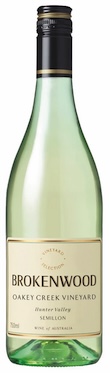
Brokenwood Oakey Creek Vineyard
Stuart Hordern, chief winemaker at Brokenwood Wines
(Image credit: Brokenwood Wines)
Hunter Valley, New South Wales
Semillon from the Hunter Valley carries unique characteristics that relate directly to site.
As Australia’s most northerly fine wine location, within a sub-tropical zone but also influenced by coastal breezes, the Hunter has produced Semillon for almost 200 years.
Its modern-day expressions of this grape variety combine seemingly disparate elements of bright, citrus-driven fruitiness with steely acidity that allows flavours to develop over time in bottle.
Semillon has thrived thanks to being planted in exactly the right locations – and Oakey Creek Vineyard, from which Brokenwood has sourced Semillon grapes since the early 1990s, ranks among the best.
In 2021 Brokenwood moved decisively to purchase the vineyard from the Drayton family, who planted it in 1982 on free-draining but fertile alluvial soils located close to the creek.
This vineyard is a primary source for Brokenwood’s elite ILR Reserve Semillon (first produced from the 1992 vintage, and released after six years of bottle age) – yet incredibly Brokenwood had never owned a Semillon vineyard.
‘We had always relied on local growers, so to take control of such an important vineyard gives us an opportunity to improve and invest in the vineyard’s future,’ explains chief winemaker Stuart Hordern.
He believes the importance of this vineyard will be more vigorously promoted, suggesting ILR will be labelled as a single-source wine, in addition to the Oakey Creek Semillon as a current-vintage expression.
‘It’s unmistakable where this wine comes from – and that’s rare.’
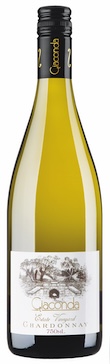
Giaconda Estate Vineyard
Giaconda Estate Vineyard, with the curved rows of Shiraz that form the north-facing amphitheatre block to the right and some of the south-facing Chardonnay vines on the left.
(Image credit: Giaconda)
Beechworth, Victoria
The emergence of Giaconda, with its distinctive mineral-driven personality, proved pivotal in shaping the understanding that the best Australian Chardonnay should be defined by site rather than style.
When winemaker Rick Kinzbrunner left Brown Brothers Wines in 1981, he chose to plant his own vineyard on a tiny outcrop of 450 million-year-old granitic loam over clay and decomposed gravel near Beechworth in northern Victoria’s elevated sub-alpine region.
He had a specific goal – to produce rich but balanced Chardonnay in a powerful Burgundian style – but he needed to locate the right geological site. He found exactly what he wanted.
Chardonnay is planted on a relatively cool south-facing slope at more than 400m, providing a slow ripening period, enhanced flavour complexity and elevated natural acid levels.
It provides Giaconda Chardonnay with a robust frame, yet also unique poise and dignity.
Kinzbrunner remains a staunch advocate for a low-intervention winemaking style – pressing the grapes in a basket press, fermenting the must in oak, using no cultured yeasts, and not fining or filtering before bottling.
He believes this ensures the most accurate and authentic representation of his organically managed vineyard.
This supports a confident wine style that hasn’t changed with fashion, showing its personality with pride.
10 great Australian wines from 10 great Australian sites
Giaconda, Estate Vineyard Chardonnay, Beechworth, Victoria, Australia 2024
My wines
This doesn’t follow familiar Australian Chardonnay fashion, coming on strong with a confident display of robust, intense flavours that demand close attention. It leads with...
Grosset, Polish Hill Riesling, Clare Valley, Polish Hill River Valley, South Australia 2025
My wines
A vintage that supported quality over quantity has produced fragrances of profound intensity – heady citrus blossom and lime zest in lock-step with sharp, minerally...
Jim Barry, Florita Riesling, Clare Valley, Watervale, South Australia 2025
My wines
Paradoxically, this fierce beauty straddles the high-wire line between heady romance and firm discipline, embracing both the delicate floral perfume of a citrus orchard in...
Yangarra, High Sands Grenache, McLaren Vale, Blewitt Springs, South Australia 2024
My wines
This energetic, finely sculpted Grenache represents the high-water mark of what Yangarra’s late winemaker Peter Fraser strived to capture from this unique 1.7 hectare block...
Henschke, Hill of Grace Shiraz, Barossa, South Australia 2022
My wines
Arriving in the wake of the esteemed 2021 vintage, the 2022 Hill of Grace is another proud, forthright wine that deserves the highest praise. Familiar...
Henschke, Mt Edelstone Shiraz, Barossa, South Australia 2022
My wines
The vineyard triumphs yet again, with the 2022 vintage showing distinctive savoury Eden Valley character wrapped in lean, sinewy muscle. An especially complex nose shows...
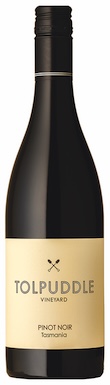
Tolpuddle Vineyard, Pinot Noir, Coal River Valley, Tasmania, Australia 2024
My wines
Serious pursuit of excellence in the vineyard has brought out finely-drawn vinous features rarely captured in Australian Pinot Noir. The complex aromas are beguiling –...
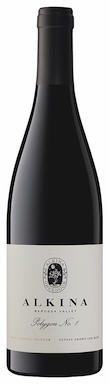
Alkina, Polygon 1 Shiraz, Barossa, South Australia 2024
My wines
Presenting Shiraz from the Barossa in a disarming, captivating new light, this micro-block offering is lean, sinewy, laced with mineral bite and showing almost translucent...
After 30 years in journalism, Australian freelance writer, author and editor David Sly has been fortunate enough to indulge his passions in print. Based in Adelaide, South Australia, David has moved from newspapers to specialise in food and wine writing, being published in national and international magazines, from Gourmet Traveller to Decanter, and is Food & Wine Editor of SA Life magazine. He has focused intently on the specialised regional produce and wines of South Australia, winning national awards, and is a graduate of the University of Adelaide/ Le Cordon Bleu Gastronomy course.