Get our daily fine wine reviews, latest wine ratings, news and travel guides delivered straight to your inbox.
You are now subscribed
Your newsletter sign-up was successful
An account already exists for this email address, please log in.
Inert vessels: The path to unadulterated wine nirvana?
As winemakers seek clarity of expression, the use of more neutral vessels such as glass, ceramic and stoneware is becoming an increasingly popular choice.
In September 2024, I was in Joško Gravner’s cellar near Gorizia in Italy’s Collio region when, after passing rows of clay qvevri and amphorae, I came across something wholly unexpected: a square glass vessel that looked as though it had come from the future.
Despite the fact that humans have been making glass for roughly two millennia longer than they have been using oak, the former’s use in winemaking is a surprisingly recent development.
The 10,000-litre EnoKube – designed for its properties of thermal inertia and resistance – entered Gravner’s vinification process months later.
‘We consider glass to be an inert and pure material that can contribute to the proper maturation of wine,’ estate director Mateja Gravner (pictured, above) explains.
It’s now used to complete a cycle that begins with fermentation in qvevri, continues in large barrels (up to 7,000-litre) and ends in the bottle, ‘which is nothing other than smaller glass’.
A year earlier, when I was interviewing Frank Cornelissen about his move away from skin-contact whites, he drew a careful distinction between Gravner’s use of oak and extended maceration, and his own shift toward neutral vessels in pursuit of purer terroir expression.
Standing before the EnoKube, the connection felt oddly circular, prompting a broader question about the role of glass in shaping wine.
Decanter newsletter
Get our daily fine wine reviews, latest wine ratings, news and travel guides delivered straight to your inbox.
For Mateja, the move comes within a broader context.
‘For a couple of decades, there has been a return to less invasive winemaking,’ she says, ‘where the container takes on the role of service – that is, of “connecting” – much more than [directly] influencing the flavour and development of the content.
Clear case
One of Charles Lachaux’s sandstone ceramic vessels
(Image credit: Charles Lachaux)
Pre-dating Gravner’s EnoKube are 220-litre glass Wineglobes, produced in Bordeaux by the Paetzold family from 2015, after an initial request from Burgundy producer Arnaud Ente in 2014.
CEO Marie Paetzold says Ente ‘wanted a material that cannot transfer any metals inside the wine’, in contrast to cement and terracotta. ‘They impact the taste.’
What surprised them, Paetzold explains, was the absence of expected reduction (the introduction, in the absence of oxygen during fermentation, of unwelcome sulphury aromas that suppress fruit character).
By convention, limiting oxygen should have pushed wines in that direction. Instead, those ageing in Wineglobes stayed open.
‘It evolved during the ageing process,’ she says. ‘We were surprised by the liveliness and the purity in the glass.’
The aim was not only preservation, but expression: ‘We keep 100% of the potential of the grapes,’ she says, ‘but we still wanted the result of a great wine, with the polish, the harmony you expect from oak.’
The difference lay in the glass itself. Tinted versions, requiring added metals, produced tighter, more austere wines more prone to reduction.
Fully transparent glass, free of metals, behaved differently altogether, yielding ‘purity, liveliness, energy, vibrancy’, she says. ‘It was important to protect, but also to express the wine during the ageing process.’
Other advantages of Wineglobes (and other glass vessels) include the durability (they last forever in theory); the ability, thanks to glass being easier to clean, to reduce the amount of sulphur used to one third of what would be expected in a wooden barrel; and that, unlike wooden barrels, you don’t lose liquid to evaporation.
‘We were surprised by the liveliness and the purity in the glass’
Marie Paetzold, Wineglobe
Assessing the options
Frank Cornelissen
(Image credit: Frank Cornelissen)
In Etna, Sicily, Frank Cornelissen (pictured, above) uses fibreglass epoxy tanks with a similar aim.
‘They bring whatever the grape brings,’ he explains. ‘They are basically tubes and you mould the bottom, you reinforce it to be able to hold the pressure and whatever else.’
Large tanks are used – 5,000, 8,000, even 10,000 litres – round in shape, so the lees can float freely and easily into suspension in the tank when the seasons change.
The trade-off is cellar space efficiency, but for Cornelissen it’s preferable to the alternatives.
‘Stainless steel has an issue with reduction. In other words, steel tanks suffocate the wine, causing unpleasant odours, and the metal surfaces disrupt its natural, living chemistry.’
Cornelissen traces his early attraction to amphorae to a purely logical thought process: because vines grow in soil, clay buried back into the earth felt like the most coherent expression of place – ‘the perfect intellectual way of making wine’, he says.
In practice, consistency proved elusive.
Differences in the clay and its firing meant that results varied from batch to batch, eventually leading to liners and then a gradual shift towards fibreglass.
Georgian qvevri offered a historical precedent, but their beeswax coating left a persistent honeyed note, incompatible with wines aimed at purity and precision.
‘Other materials, like ceramic, I like,’ Cornelissen adds. ‘But they do have an openness, so there is an exchange of oxygen that is a little bit more evolved than, for example, with the fibreglass tanks’.
For him, such vessels can work where fruit is more robust, but in terroirs such as Burgundy and Etna they are less appropriate.
‘That needs to be put into perspective,’ he says. ‘Suppose I had chosen Burgundy [as opposed to Etna] as the area to go and produce wines – there, oak does have a historical logic to it. And so then it becomes much more complex just to skip a historical ingredient.’
Still, he qualifies: ‘I think you can also make great Burgundy in fibreglass tanks.’
Not set in stone
Charles Lachaux
(Image credit: Antoine Martel Photographe)
Arnaud Ente was the first big name in Burgundy to head in that direction, having adopted Wineglobes for all vinification and ageing in 2023 (he started with white premier cru wines and reds in 2019).
Another Burgundy producer moving away from oak – with similar aims, but a different choice of vessel, is Charles Lachaux (pictured, above).
His wines have also been held in greater esteem by critics since he switched production to sandstone tanks, with ageing upped to 36 months.
‘I didn’t want to use glass because glass doesn’t breathe,’ Lachaux told me over the phone just before the new year, as he was about to bottle the 2022 vintage.
‘Since the [sandstone] ceramic vessel still allows oxygen to go through, it’s not completely hermetic – it still has a certain porosity. And it’s neutral compared to concrete.’
The vessels are ‘only sandstone and water, there is nothing else’, he adds, ‘so it’s pure and there is no conductivity’.
He also prefers them to clay amphorae, which ‘still let some oxygen breathe in’, and this ‘doesn’t suit the fragility of Pinot Noir; even more so for long élevage’. He compares the ceramic vessels to low-temperature cooking, which you feel in the wines.
‘They’re more accomplished, more defined, but they are raw at the same time, which is quite particular.’
This is something he was looking for, because ‘it’s a way to be more transparent to the vintage, appellation and terroir’
‘The sandstone ceramic vessel still allows oxygen to go through – it’s not completely hermetic’
Charles Lachaux
Pros and cons
Vino di Anna’s Grecanico fermenting in a Wineglobe
(Image credit: Vino di Anna)
Other producers express a similar scepticism about the ability of wines to breathe in glass vessels.
‘I like the purity of it,’ says Eric Narioo, producer with his wife Anna Martens of Vino di Anna in Etna, but the problem is ‘it doesn’t breathe at all.’
What this means for him is a slower fermentation, and more reductive notes than you would get if using wooden containers.
They produce Vigna Pirao, a red field blend of pre-phylloxera, ungrafted Nerello Mascalese (and other varieties) – and one of 13 cuvées – in glass demijohns, but to counter the reduction problem, the wine settles in 600-litre chestnut barrels for six weeks.
‘There, it kind of recomposes itself, and then the wine is happier,’ Narioo says. ‘It does breathe before going back into the bottle.’
But the reasons for not adopting Wineglobes aren’t always technical.
For Rajat Parr in the US, using them became financially untenable. After producing his pink-skinned Chardonnay grown on Phelan Farm in San Luis Obispo Coast, California, for three straight vintages (2021-2023), he reversed course.
‘I loved it because the maceration was really even. The [Wineglobe] opening was small. And ageing it was great… It was completely pure.’
What he didn’t like was the turbidity, which meant the wines needed more time to settle – he was ageing them in the Wineglobe for just one year, but it would have taken two to three years to reach his preferred level of clarity, he says.
This, in the end, led him to sell his Wineglobe. ‘If I had a lot of money, I would have bought more of them and figured out a way to settle the wines longer.’
All in the mix
Antoine Arraou, Château Lafitte
(Image credit: Romain Forquy)
Still, winemakers are increasingly turning towards glass – and other neutral vessels – to create purer expressions of terroir.
Many, like Gravner, see them as part of a broader cellar, which doesn’t necessitate abandoning oak entirely.
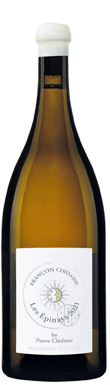
At Domaine François Chidaine in the Loire, for instance, Pierre Chidaine makes a Chenin Blanc from an even mix of oak and Wineglobes (his mother Manuéla insisted that 100% glass would be too much of a stylistic shift).
What is clear is that the search for neutrality – containers that exercise little or no influence on the wines during production – will increasingly come into play, even if producers don’t make a total switch.
Felix Gabillet, winemaker at England’s Hambledon Wine Estate, for instance, has recently brought in clay, ceramic and glass (Wineglobes) alongside the stainless steel and oak they already work with.
‘The main objective,’ he explains, ‘is to preserve the fruit and the minerality and salinity of the terroir, to bring maturity and complexity without masking the wine with oak.’
The Hambledon team did the first tasting post-fermentation of those vessels in November 2025, and they were very pleased with the results.
‘There is a difference in texture and volume already between them and in comparison with our standard tanks and oak barrels,’ he says. ‘Each of those vessels brings something very interesting.’
The future, it appears, is a greater mix of vessels in wine cellars.
For Antoine Arraou of Château Lafitte in Jurançon – who works with everything from stainless steel and oak barrels to concrete eggs, stoneware, terracotta and porcelain – the key is to find what works best for the raw material.
‘I don’t believe any grape variety is inherently meant for a particular vessel,’ he says.
Still: ‘True neutrality exists,’ he insists, ‘at least, the form of neutrality that best respects the grape.’
Rajat Parr, Phelan Farm
(Image credit: Phelan Farm)
Hart’s pick: 10 varied and fascinating wines made using alternative vessels
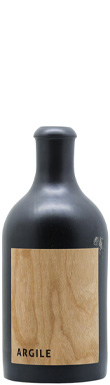
Château Lafitte, Argile, Jurançon, Southwest France, France 2020
My wines
Opens on apricot, yellow plum and mandarin peel, with stem ginger, stony minerals and Mediterranean herbs. With air, spiced apple deepens into toffee apple, caramel...
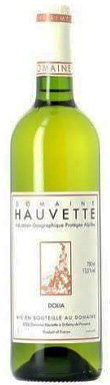
Domaine Hauvette, Dolia, Alpilles, Provence, France 2018
My wines
Strongly reductive at first – charred lemon, flint and peach skin, with lemon curd beneath, opening into candied rosemary, beeswax, acacia, camomile flowers and Meyer...
Floral and stone fruit aromas – lavender, geranium, apricot, nectarine, a touch of honey – with lifted sage notes. The palate is impressive, with broad...
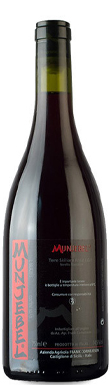
Frank Cornelissen, Munjebel Rosso, Etna, Sicily, Italy 2021
My wines
Pristine aromas of wild strawberry and fennel, a gentle smokiness and a savoury edge – bresaola, roasted thyme and rosemary – alongside orange zest, crushed...
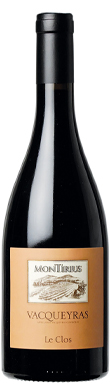
Montirius, Le Clos, Vacqueyras, Rhône, France 2018
My wines
Plush, juicy nose, opening on cherry compote and a Black Forest gateau richness, layered with violets, blueberries and a touch of savoury smoke, like coppa...
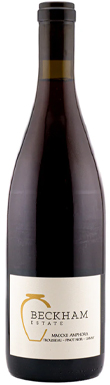
Beckham Estate, Amphora Noir Trousseau-Pinot Noir-Gamay, Willamette Valley, Oregon, USA 2024
My wines
Immediately appealing, full of fresh, juicy berries – raspberry, cherry, blackcurrant – with a clear gravelly, stony mineral note and a hint of hibiscus. Light-bodied,...
Vino di Anna, Vigna Pirao Rosso, Etna, Sicily, Italy 2022
My wines
Lifted and wild, with strawberry and dried cherry, wild fennel, dried garrigue herbs, plus blood orange and pepper. Light- to medium-bodied palate. Sappy fruit –...
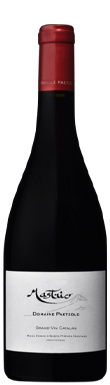
Domaine Paetzold, Mastrio, Côtes Catalanes, Languedoc-Roussillon, France 2017
My wines
The nose opens on cured meat, peppery salami, followed by cherry, raspberry and black plum, with sweet baking spices – cinnamon especially – and, with...
Joel Hart is a freelance writer, anthropologist and culture journalist who mainly focuses on restaurants, wine, food and gastronomic travel. His work has appeared in the FT Weekend, The Observer, The Telegraph, Club Oenologique and Time Out, among others.