Petrol smell in Riesling 'a mistake': Chapoutier
- Tuesday 10 May 2011
- Comments (37)
The renowned Rhone producer, showing his new range of Alsace wines at Decanter, said ‘Riesling should never smell of petrol. That is a result of a mistake during winemaking.’
Comparing the debate over petrol aromas in Riesling to the issue of brettanomyces, Chapoutier said It is absurd that ‘historical defects in wine should be accepted as part of the character of the wine’.
Chapoutier said that the petrol characteristic, which is often prized amongst Riesling aficionados, is a result of decomposition of the veins within the grape. These veins become more fragile as the grape matures.
The vital aspect of Riesling vinification is the gentlest of pressings, often taking 12 hours, Chapoutier said, so as to avoid breakdown of the vascular structure within the grape.
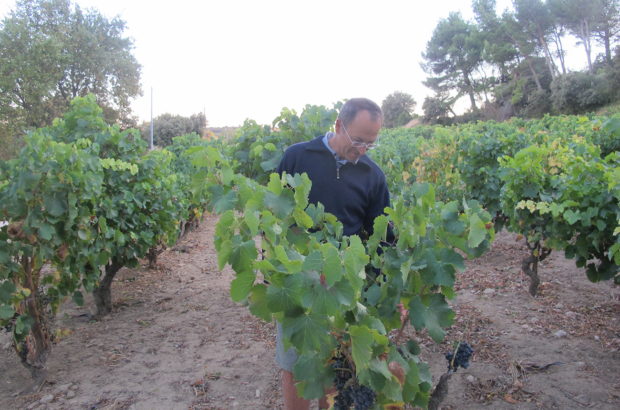
Chapoutier was showing seven wines: five Rieslings, a Pinot Gris and a Sylvaner, from a 5ha domaine in Bernardvillé that he runs as a joint venture with four friends, none of whom are wine professionals.
The wines – the range is called Schieferkopf (literally, slate topped) – are all 2009s and consist of a Pinot Gris and a Sylvaner, Riesling 2009, Alsace Grand Cru Wiebelsberg 2009, Alsace Grand Cru Kastelberg 2009, Alsace Lieu-Dit Buehl 2009 (Selection Parcellaire), and Alsace Lieu-Dit Fels 2009 (Selection Parcellaire).
As well as his Rhone properties Chapoutier has winemaking projects in Victoria, Australia - Domaine Terlato & Chapoutier in the Pyrenees, Jasper Hill, a joint venture with Ron Laughton in Heathcote and Giaconda in Beechworth - Roussillon and Portugal.
Decanter World Wine Awards


Have your say!
Tom M.
November 17 22:04
Well what did they taste like? The proof is in the pudding.
Joseph Stafford
May 19 23:39
"Of course its a mistake in the wine-making process blah blah"... man some winemakers make me laugh how they validate their linear view of what "they" constitute as an enjoyable wine. What next? Maybe convey to the drinker the optimum feeling one should endure pissing at the completion of the bottle?
Mr Riesling
May 16 14:22
a lot of interesting comments to read! Just returned from the States, and "petrol" was also a topic. I referred to the nicer German word Firne for older, mature Riesling, and distinguish Firne between a wine either still alive (great) or dead ("over the hill"). However, we should not want youngsters to show "petroly" notes, but when is a Riesling no longer a youngster? A 10 year old Saar Riesling is usually still a youngster.....
Robin
May 16 08:39
The petrol notes come from the carrotinoids produced on the berry of the skin when having a sunburn. These carrotinoids are transformed during the fermentation or maturing on the bottle to a substance giving of the petrol note. In warmer years you will have a more intense petrol nose. You can also initiate a sunburn to the skin by deleafing the grape zone alot later. The skin didnt produce enough wax yet to protect itself from the sun, the result is ofcourse a sunburn, carrotinoids. By the way, carrotinoids are clour pigments rangeing from yellow to orange. Those are just facts. Ofcourse the petrol nose is more intense if the wines are more concentrated. Hince, massive yield reduction. Down to 30 to 50 hl per ha. And thats quality work ofcourse. M.C. was referring to yound Rieseling wines. I am talking about old Riesling wines from the Rhinegau, Mosel, Nahe and Middle Rhine. Im more careful when I open a bottle of 2010 Riesling and I have the petrol note. Its way to early. And frankly, 2010 was a difficult year in Germany. But like I said, you can have a petrol nose in yound wines as you deleaf really late during the ripining stage, inducing a sunburn. There we go. Those are my two cents. Greetings from Rheingau,Germany