
Cap Classique: South Africa’s sparkling wine success story
Many of South Africa’s top-range sparkling wines have been frustratingly out of reach to wine lovers on UK shores, but thankfully that’s changing. Here we present the results from our expert’s recent comprehensive tasting across the category.


Traditional-method sparkling wine from South Africa, known as Cap Classique, has transformed itself. Both established and emerging producers now represent an effervescent, dynamic and ambitious sparkling wine scene that pulls every register in the vineyard and cellar to deliver quality. At long last, the best of these wines are making it to our shores, ready to make you sit up and take notice.
Scroll down to see tasting notes and scores for 20 top Cap Classique sparkling wines
In recent years, Cap Classique has been one of South Africa’s fastest-growing wine categories – a striking achievement for a country where vineyard hectarage is shrinking (from more than 100,000ha in 2012, falling steadily to 89,384ha in 2022, according to data from SA Wine Industry Information and Systems).
Admittedly buoyed at home by so-called ‘Nectar’ styles that come with dosage levels between 12-35g/L (making them off-dry to medium), the turbo- charged success of South African sparkling wine is a lone positive story that flies in the face of well-documented political and economic instability and ongoing operational challenges.
It shows a transformation that is in tune with both an international trend towards lighter wines and a domestic reassessment of how to communicate quality by adding a luxury tier. That this quality can be tasted – from improvements at entry-level all the way to premium cuvées – is the key factor for this relatively young wine category.

Theoretically, Cap Classique is 52 years old. The late Frans Malan of Simonsig made South Africa’s first traditional-method sparkling wine, called Kaapse Vonkel – or Cape Sparkle – in 1971. Practically, however, sparkling wine took years to gain momentum. The Cap Classique Producers Association (CCPA) was not founded until 1992, with just 14 members.
Being served at the inauguration of Nelson Mandela as South Africa’s President in 1994 and for US President Barack Obama’s acceptance speech in 2008 marked milestones for Cap Classique, but it is the past decade that really represents the tipping point. Today, says the CCPA, there are more than 100 members making 9.25 million bottles of Cap Classique a year. Of these, almost 864,000 bottles made their way to the UK in 2022 – double the amount of 2019.
Defining Cap Classique
What is unusual is that producers ensure that quality keeps pace with the growing quantity. Widely distributed entry-level Cap Classiques benefit as ever more top wines emerge. Philip Jonker, owner and winemaker at Weltevrede, encapsulates the current spirit: ‘The fact that in 1992 we decided not to just call it sparkling wine but defined it as Cap Classique made it clear to everyone that the goal was to make something of international standard: the selection of vines, learning from the best – all of that followed from the decision to define Cap Classique.’

This is in huge part due to the collaborative and ambitious spirit within the CCPA and its technical committee. A key person in this development is association chairman Pieter Ferreira, formerly long-time cellar master and now chief operating officer at Graham Beck, one of the country’s most important Cap Classique producers. Ferreira has shaped this spirit by constantly pushing for improvement, fostering exchange with Champagne and other sparkling wine regions, applying for funding and delivering research and data to back legal changes.
While much of what defines sparkling wine quality is not mandated by law, CCPA members naturally employ whole-bunch pressing (mandatory as of the 2023 harvest), as well as other exacting practices such as only using the first 450 litres of juice from 1,000kg of grapes to make the finest cuvées, and up to 600 litres for simpler Cap Classique.
As of 2021, a minimum of 12 months’ lees ageing has been a legal requirement for Cap Classique – a real point of difference and a statement of intent, pitching it between the nine months’ legal minimum for crémant in France or Cava in Spain and the 15 months for non-vintage Champagne. But as in all these regions, the top wines are invariably left to age much longer.
Yet there is even more ambition. ‘We will develop a category for wines that age three years and longer on the lees,’ Ferreira says, matching that of the three-year minimum requirement for vintage Champagnes. The aim, clearly, is to make the top tier of prestige wines stand out and position them as fine wines.
Speaking about sharing knowledge in the technical committee and formalising a prestige category over the coming years, Pierre de Klerk, cellar master at Graham Beck since January 2022, says: ‘We pave the way for those who are truly serious about Cap Classique. I really believe it will be super-advantageous for the entire category.’
Sunshine, limestone & Chardonnay
You may think that there is an elephant in the room, namely climate. How do you achieve the tension, freshness and essential light-footedness required for quality sparkling wines in such a sunny country?
The answer lies in soils, oceanic influence and farming. Viticultural decisions – such as vineyard layouts that favour exposure to the cooler morning sun, exploiting altitude or south-facing slopes, training vine canopies to provide shade for grapes, and night-harvesting during cooler temperatures to achieve less oxidation and easier extraction of juice – are crucial for the quality of base wines and have a huge influence on pre- and post-disgorgement ageing. This is where the biggest collective strides have been made.

While Cap Classique is produced from fruit across the Cape winelands, Robertson is a key region and Chardonnay the key grape. Robertson is prized for its calcrete soils, formations of hardened limestone that lend much elegance and definition to the wines. While Robertson lies inland, it is framed diagonally by the Langeberg and Riviersonderend mountains, north and south respectively, that funnel cool air from the ocean.
‘We do appreciate our natural acidity,’ says Jonker, based in Bonnievale, a sub-region of Robertson. ‘We are definitely not cool-climate, but geology overrides the climate here. We are arid and chalky, and have an extreme diurnal swing.’ This means that temperatures of 8°C in the morning can turn into 30°C by the afternoon. Ideal pH levels of 3.0-3.1 in the grape must are achieved when yields and ripening are calibrated.
But other cooler areas are also prominent. Elgin, Overberg, Walker Bay, Darling, Durbanville and Plettenberg Bay all benefit from cooling ocean influences and often supply the Pinot Noir that is used in Cap Classique blends alongside Chardonnay. The wines have the expressive fruit that goes hand in hand with sunshine, but they have freshness, too.
Currently there is no varietal restriction for Cap Classique. Chenin Blanc, South Africa’s most-planted white variety, carries its apple and wax flavours into the wines, but only one made it into my line-up of top recommendations. It is clear that most of Cap Classique’s success is down to well-farmed Chardonnay, with Pinot Noir in second place, far ahead of other varieties.
Stylistic diversity
Big producers have long led the way, such as Graham Beck with its long-aged, super-smart top cuvées, or Krone, a label from the Twee Jonge Gezellen estate, which debuted South Africa’s first single vineyard-designated Cap Classique in 2021. Inspired by the individuality of grower Champagnes, the 2016 vintage Blanc de Blancs was from Kaaimansgat, a Chardonnay vineyard at 700m elevation on sandstone soils. Today, Krone boasts three single-vineyard wines, each with its own distinct personality.

Away from the big names, the industry is immensely enriched by the emergence of numerous small Cap Classique specialists using various techniques to hone individual styles. These include: fermenting in stainless steel, barriques, foudres and amphorae to tease out different textures; creating perpetual reserves (keeping aside a portion of a harvest for use in future blends) to lend depth; blending wines from various origins to achieve both ripeness and linearity, or creating exciting expressions of single regions, sites and sources.
See notes and scores for all 50 Cap Classique recommendations from Anne Krebiehl MW
This equals thrilling stylistic diversity and a number of outstanding small-production wines which are absolutely ready to take their place in international line-ups. All these boutique specialists age their wines for extended periods, and it is ageing rather than vintage-dating that denotes quality.
Enduring freshness and ageability seems to have been the test of many Cap Classiques. Some still show signs of premature evolution – a golden colour and intensely mature notes just a year or two after disgorgement – which may have prevented some fizz lovers from laying these South African sparklings down. But all the wines in my recommendations passed with flying colours.
The wines I’ve highlighted below are among the best of the current releases. They showcase the diversity and quality of Cap Classique, and all represent excellent value. The industry is ripe with ambition, as these wines demonstrate – seek them out.

Krebiehl’s pick: top Cap Classique sparklers to enjoy
Related articles
Graham Beck, Cuvée Clive Brut, Western Cape, South Africa, 2017
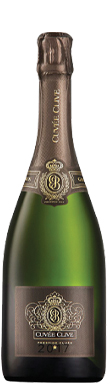

Graham Beck's absolute prestige bottling is not made to a recipe. The 2017 iteration is from a special block of estate Chardonnay which was oak...
2017
Graham Beck

Le Lude, Vintage Cuvée Brut, Western Cape, South Africa, 2013
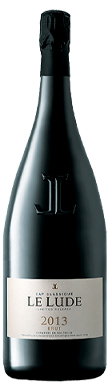
Aged for nine years on lees and disgorged in November 2022 with just 3.5g/L of dosage, this is a supremely elegant and fine-boned wine. Just...
2013
Le Lude
Pieter Ferreira, Blanc de Blancs Extra Brut, Robertson, South Africa, 2017
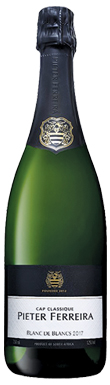
An immediate hit of wet chalk on the nose is accompanied by a herbal, mossy savour. Sourced solely from Robertson, the wine spent five and...
2017
Pieter Ferreira
Charles Fox, Cipher Blanc de Noirs Brut, Elgin, South Africa, 2017
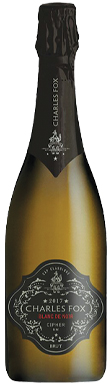
Made from a blend of Pinot Noir and Meunier, this 64-month-aged wine opens with hints of green citrus on the nose. The palate is wonderfully...
2017
Charles Fox
Silverthorn, Jewel Box Cuvée Kappa Crucis Brut, Robertson, South Africa, 2018
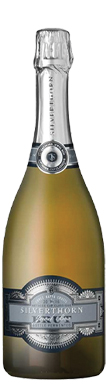
Initially shy, but a little air soon reveals aroma notes of almond paste and subtle oak spice. The Pinot Noir portion of the blend makes...
2018
Silverthorn
Silverthorn, The Green Man Blanc de Blancs Brut, Robertson, South Africa, 2017
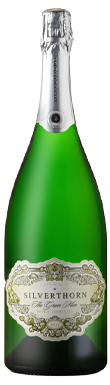
Fresh grapefruit flesh, tart white currant and green apple are vividly bright on the nose of this wine served from magnum. Green apple also plays...
2017
Silverthorn
Twee Jonge Gezellen, Krone Kaaimansgat Blanc de Blancs Brut, Elandskloof, South Africa, 2020
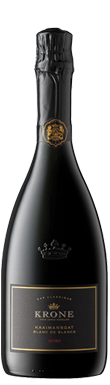
Krone Kaaimansgat was the first-ever single-vineyard designated Cap Classique in South Africa, first made in 2016. The Chardonnay is from a steeply sloping, east-facing site...
2020
Twee Jonge Gezellen
Charles Fox, Reserve Gold, Elgin, South Africa
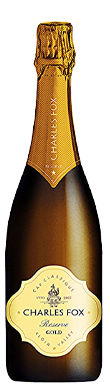
Sitting in the extra dry category range, with its 17g/L of residual sweetness, but blocked malolactic fermentation means that this wine strikes a most unusual...
Charles Fox
Colmant, Blanc de Blancs Brut, Western Cape, South Africa
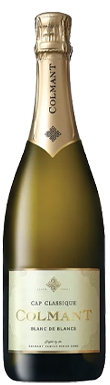
Chardonnay is sourced from Robertson, Bonnievale, Elgin and Franschhoek and malolactic fermentation is avoided. The wine gains extra depth from 18% of reserve wine from...
Colmant
Laborie, Blanc de Blancs Brut, Western Cape, South Africa, 2018
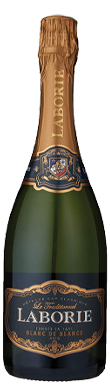
A classy and sleek wine of simply outstanding value. This current release spent 60 months on lees, lending it much finesse and very fine, creamy...
2018
Laborie
Pieter Ferreira, Birdsong Extra Brut, Western Cape, South Africa, 2018
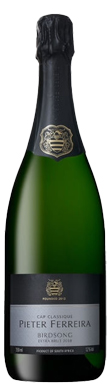
Made from Pinot Noir sourced in Durbanville and Elgin, and Chardonnay from Robertson and Darling, this spent four and a half years on lees. Just...
2018
Pieter Ferreira
Boschendal, Grande Cuvée Brut, Elgin, South Africa, 2016
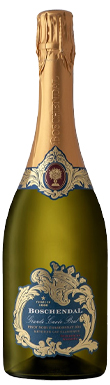
This 2016 spent six years on its lees, five of which 'sur pointe', meaning that it was riddled so that the yeasts collected in the...
2016
Boschendal
Domaine Des Dieux, Claudia Brut, Cape South Coast, South Africa, 2016
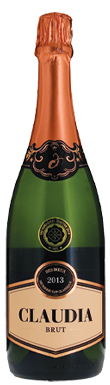
The honour of having been the first Cap Classique producer in the Hemel-en Aarde Valley goes to Domaine des Dieux. The golden colour suggests evolution...
2016
Domaine Des Dieux
Kleine Zalze, Vintage Cuvée Brut, Western Cape, South Africa, 2015
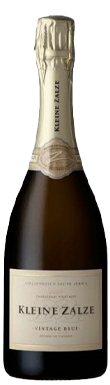
Kleine Zalze only makes a vintage-dated Cap Classique in great years and allows it to age for three years on lees. The fruit was sourced...
2015
Kleine Zalze
Le Lude, Reserve Brut, Western Cape, South Africa
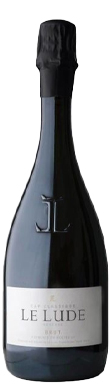
Made from fruit sourced in Robertson, Elgin and some coastal vineyards, this very pale wine opens with a subtle hint of Viennoiserie, followed by lemon,...
Le Lude
Babylonstoren, Sprankel Brut, Paarl, South Africa, 2017
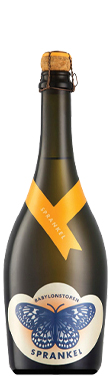
Sprankel means ‘sparkle’, and this Chardonnay-dominated blend with 55 months of lees ageing came from various parcels in the granite and sandstone soils of the...
2017
Babylonstoren
De Grendel, Brut, Cape Town, South Africa, 2018
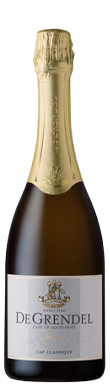
Made from 80% Chardonnay and 20% Pinot Noir grown on the shale soils of the slopes of the Tygerberg overlooking the Atlantic, this has overtones...
2018
De Grendel
De Morgenzon, Vintage Cuvée Brut, Stellenbosch, South Africa, 2019
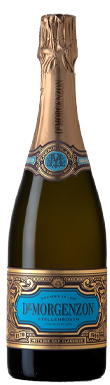
De Morgenzon is a specialist in Chenin Blanc, hence this Cap Classique is one of the few made exclusively from this variety. It ferments partially...
2019
De Morgenzon
Bon Courage, Jacques Bruére Cuvée Rosé Brut, Robertson, South Africa, 2012
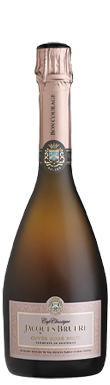
This five-year-aged pink Cap Classique is a picture of pristine Pinot Noir with its notions of Red Delicious apple and tangerine peel, highlighted with lemon...
2012
Bon Courage
Graham Beck, Pinot Noir Rosé Brut, Western Cape, South Africa, 2018
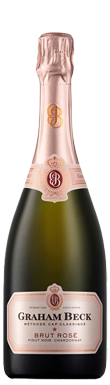
Pinot Noir and Chardonnay were pressed together, fermented in stainless steel and aged on the gross lees before spending four and a half years on...
2018
Graham Beck
