It's the wine-maker’s equivalent of magical realism in fiction. Andrew Jefford explores the reasoning behind the success of biodynamics.
I recently spent a week exploring the Rhône valley with fifteen wine consumers whose backgrounds differed widely.
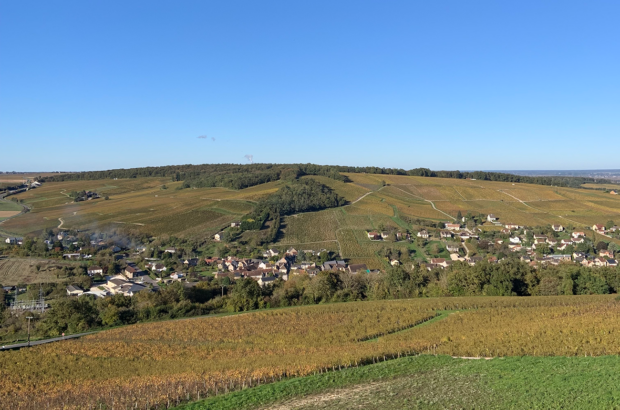
After a cold, wet winter and a very warm spring, the rangy, ridge-like hill of Hermitage and the broad, stony terraces under Sablet and Séguret beckoned enticingly. Fresh leaves swayed in the luminous air; the inflorescences, like soft green hand-grenades, looked ready to explode into flower and fruit. A recurrent topic among our party was biodynamics, not least because one of the highlights of the week was a visit to Europe’s largest biodynamic wine enterprise, that of Chapoutier.
Other producers we visited (like Domaine Cristia in Châteauneuf) had come close to biodynamics but backed away, because of the practical difficulties involved in confining particular activities to root days or flowers days. It’s hardly an option for co-operatives, while most of the rest of the producers we visited contented themselves with a minimum of conventional treatments.
Reactions to this subject always vary widely. Those with a scientific background often find it irritating, and bite their lips when producers rhapsodise about the memory of stones, about planetary forces streaming earthwards, or about the virtues of ‘dynamisation’.
I have some sympathy with their scepticism, since the theoretical assertions of biodynamics (including those of Rudolf Steiner himself in the Koberwitz lectures published as Agriculture) strain credulity beyond breaking point.
Efforts to find some kind of scientific validation for the genuine improvements brought by biodynamic practices (like Ehrenfried Pfeiffer’s much-touted ‘sensitive crystallisations’) have all the intellectual rigour of an episode of Teletubbies. The recipes for the Steinerist preparations seem aleatory, and the biodynamic calendar itself as picturesque as any tabloid horoscope.
Yet great wines are produced in this way, and where practical taste trials comparing conventional and biodynamic approaches have been undertaken by producers contemplating the switch, the results make a strong case for biodynamics. How, then, do you explain it?
Biodynamics, it seems to me, is the wine-maker’s equivalent of magical realism in fiction. This literary technique (notably practiced by Colombian Nobel laureate Gabriel García Márquez) meshes the mundane and the ordinary with fantastic, unreal events and occurrences whose truths are principally poetic rather than literal.
The logic and language of biodynamics, too, is a poetic one, and its success has as much to do with the motivation, inspiration and focus of the vine-tenders as it does to do with cations, chelates and mycorrhizal fungi. It commands physical engagement, and bases that engagement on a radical chemical restraint which in turn imposes further physical engagement. It provides a value system with moral overtones, and it bonds the vine-tender not simply to his or her world but to his or her universe, too. The concept of terroir meshes felicitously with biodynamic ideals.
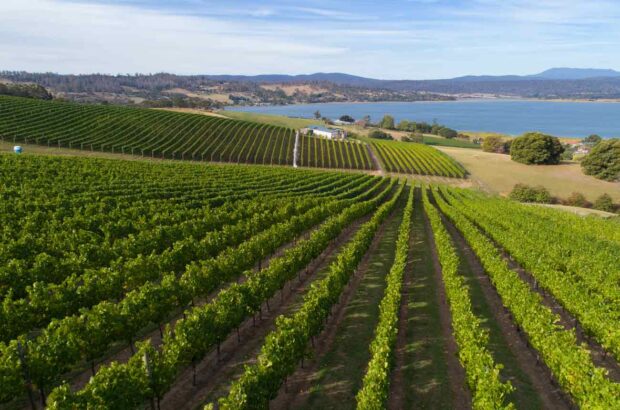
If there is a scientific basis for the success of biodynamics, it must surely be linked to the benefits of great compost, of hard physical work in the vines, and of close scrutiny paid to the health of both vines and the broader vineyard environment. The ideals of the balanced farm circuit, of biodiverse vineyards and rich microbial life in the soil should be universal ones; they imply, of course, the rejection of the artificial external inputs which characterise chemical agriculture. It is, in fact, common sense – provided you can afford it. The magical realism makes it fun.
Written by Andrew Jefford