My own view is that the prosperity of Bordeaux’s elite is, like most things in life, a matter of luck. At present, three very lucky strands have come together for the Bordelais.
“Bordeaux? They’re the world’s best marketers, for one thing.” I was chatting to one of Australia’s wisest winemakers, Rick Kinzbrunner of Giaconda; look out for the interview in the November edition of Decanter magazine. Rick and I agree on much, but this particular opinion (which I’ve heard from others, too) is not one I share. The en primeur prices for top Bordeaux in 2009 and 2010 may have left us all with eyes like dinner plates – but can that really be attributed to marketing?
“Yes,” said Rick. “1200 Australian dollars per bottle for the First Growths – it’s got to be good marketing to get those kind of prices. They produce in relatively large quantities, but they never flood the market. And they’re very good at generating hype, and keeping people talking about the wines.” I listened, but I still wasn’t convinced.
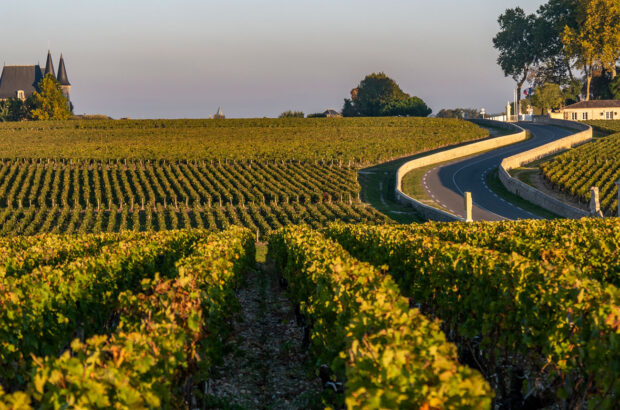
My own view is that the prosperity of Bordeaux’s elite is, like most things in life, a matter of luck. At present, three very lucky strands have come together for the Bordelais.
The first is that they are Bordelais – in other words, that they are the folk who happened to find themselves living on top of the greatest terroir in the world for structured, medium-to-full-bodied red wines capable of maturing at roughly the same rate at which adult human beings mature, and acquiring new and still more beautiful sensual attributes as they do so. In quantity: this makes the best parts of Bordeaux the wine world’s equivalent of Saudi Arabia’s Ghawar oilfield. Does anyone ever suggest that Saudi oil wealth is down to great marketing?
The second piece of luck is that the warmth of current climate patterns, whatever their cause, is producing an almost unprecedented run of tongue-dangling vintages. There is, indeed, a kind of critical consensus building to suggest that 2005, 2009 and 2010 constitutes the greatest trio in the region’s history. So far … but the run may not be over yet. According to John Gladstone’s recently published Wine, Terroir and Climate Change (Wakefield Press), there are likely to be plenty more ahead.
And the third piece of luck? The world’s most populous nation – one whose literary culture has long celebrated alcohol consumption, and whose tea culture provides a natural framework of understanding for both terroir and the subtleties of tasting – is enjoying recently acquired and historically unparalleled prosperity. It’s logical and even predictable that imported fine wines will, given this background, become a high-fashion item among the swelling ranks of fortune-favoured Chinese. For many reasons (history, colour, width of appeal, simplicity of comprehension and tradeable mass), Bordeaux just has to top the list.
How lucky can you get? Even inept marketing (of which Bordeaux has had plenty – remember all those silly bow-tie advertisements?) can’t destroy luck of that order. All that could destroy it would be a milking of the market by raised production levels, an industrial approach to winemaking, or price greediness.
Over-production and crass interventionism have both been tried and discarded by Bordeaux in the past. Greed is more of a threat – though the en primeur system, especially now that châteaux can afford to retain more stock, has evolved in order to tickle the market and gauge its response. Everyone in Bordeaux realises that the market has the last word, and that the market is speculative until corks are pulled and wines drunk.
The most successful properties in Bordeaux, in fact, barely seem to do any marketing at all. They produce the greatest wines nature and their own abilities permit, serene in the confidence that if the quality is there, the customers will queue. The existence of the Bordeaux place means, indeed, that they don’t have to have a sales strategy at all, other than a willingness to rocket around the world in business class, open bottles in inspiring architectural settings, talk about the last harvest to fawning merchants and journalists, and meet wealthy collectors in beautiful restaurants. I’m sure they all work very hard, but it’s the dream scenario for all that.
Is there a lesson for wine producers elsewhere? Probably not, since ‘be lucky’ is more insult than advice. If fortune is favouring you, though, remember that from that point onwards quality is all that matters. And if you’re struggling, quality offers the best chance of salvation. Oh, and what is quality in wine? Optimising what nature delivers, but never denaturing it.
Written by Andrew Jefford