
Best rosé wines beyond Provence
Rosé wines are often divided between pale and not pale, loosely translated as Provence-style or other. The reality is not quite so binary. Elizabeth Gabay MW picks out her top 20 from around the world.


With so much rosé around the world trying to emulate the Provence-style, by which most producers mean a pale pink dry wine, it can be difficult to evaluate what makes a rosé ‘not from Provence’ a good wine.
Should they be given a pat on the back for achieving a wine which is identical to those of Provence? Or should praise be given to rosés which achieve a sense of individual terroir and varietal identity?
The vast majority of rosés are made in much the same way: harvested a little earlier than the red wines, chilled, gently pressed and steel tank-fermented.
Cooler fermentation temperatures and a particular choice of yeasts determine a fruitier character, while more complexity can arise from warmer fermentation temperatures (18°C and over).
Bottling is often immediate, but a few months on the lees with varying amounts of batonnage will impart a soft roundness to the wine.
Scroll down to see 20 top rosés from around the world
A wealth of choice and style
A rise in quality in rosé production globally has given rise to more confident winemaking and greater exploration of their own individual style.
Cooler sites, higher altitudes (the Tibetan rosé is produced at 2,000m) and old vines (northern Spain in particular) are all important points of difference.
And while Grenache still dominates the statistics, producing rosés across southern France, northern Spain and parts of Italy, many more varieties, with their own taste profile, can be found.
Small-scale producers, their wines often found in smaller independent wine merchants, are liberated from the high volume commercial constraints of producing Provence-style, and are often highly imaginative in their interpretation of pink wine.

Is Portuguese rosé the next big thing?
Market demands are still dictating how many rosés are made, resulting in many producers making several, totally different, styles of rosé: one for the local market often made in a more traditional, fuller bodied, darker style; one for export – usually paler Provence-style – fresh, fruity and gastronomic, and some styles often oaked or with some age.
Increasingly, retailers are looking at moving all rosés from one shelf to displaying by region or separating styles.
Elevation and diversity
Raising the glass ceiling as far as pricing goes has certainly benefited the quality and diversity of rosé. With Sacha Lichine at Château d’Esclans in Provence and Gérard Bertrand at Clos du Temple both breaking the price barrier, the race is no longer confined to who can produce the best and cheapest pale pink wine.
Varieties once reserved for premium red wines are now being reconsidered for rosé. This has been helped by the market move towards lighter and fresher reds and darker, more robust rosé, with dark glass bottles increasingly being used as an indicator of serious rosés.
Expect a greater number of diverse and interesting rosés to increasingly appearing on the scene (there are large numbers of small volume experimental wines being produced such as the Agthoto from Kir Yiannis).
New generations of winemakers are also coming on the scene, eager to try out new ideas. Even in the rosé bastion of Provence there are young producers trying out different styles and methods.

Classics still exist. Longer macerated rosés from Tavel with their blend of numerous southern Rhône varieties, Grenache-based Navarre rosés and the Pinot Noir rosés from Rosé de Riceys.
Local varieties with the ability to deal well with hotter, drier summers are becoming increasingly attractive to winemakers. Corsica’s mineral-laden fresh rosés made with Niellucciu (Sangiovese) and Sciaccarellu varieties.
Negroamaro and Gropello in Puglia, Nerello Mascalese in Sicily, Xinomavro and Agiorgitiko in Greece, Tinta Cão and Rufete in the Douro (in fact Portugal has an over-abundance of interesting varieties), Teran in Istria, Wildbacher in Styria…
Rise of the barrel
More oxidative winemaking can make for richer and more complex rosé. Oak-aged rosé is not limited to Provence, although the use of oak does not guarantee a premium wine if it otherwise lacks extraction, ripeness and body.
When done well, oak-aged rosés are worth looking out for (and acacia barrels are also growing in popularity). Famous examples include high-altitude Reserva and Gran Reserva Rioja rosés (perhaps most famously the Viña Tondonia rosé from R López de Heredia), and Gerard Bertrand’s Clos du Temple in the Languedoc.
The use of amphora and cement is also increasing, giving texture without losing the fruit freshness.
The good news is that despite the growth in Provence-style rosés, there is also a growing number of exciting and different approaches to rosé just waiting to be discovered from around the world. The biggest obstacle, however, can be finding these wines…
Top tips for buying rosé
When it comes to drier rosés, be careful of suspiciously low-alcohol levels. This can indicate unripeness. The wines may have crunchy acidity, but the silky ripeness, like that present in Provence rosé, is rarely found under 13% alcohol in warm climates.
Don’t be afraid of dark rosés. They can indicate a wine with great character which can double up as a light summer red.
With so many different styles to choose from, rosé wines can make excellent matches for a range of dishes. For example, the sweet Loire rosés pair well with melon and Parma ham, goat’s cheese salad, and it’s one of the few wines that goes well with tomatoes.
Elizabeth Gabay MW’s 20 top rosés from around the world:
Related articles
- Provence rosé: this summer’s best buys
- Best rosé wines: 30 to try this summer
- Rediscovering Provence: 18 top-quality reds and whites
Allofme, Yunnan, China, 2023
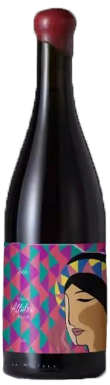

Proof, if needed, that rosé has become a global phenomenon, this pale coral rosé comes from vineyards planted at 2,000m altitude in Tibet. Aromas of...
2023
Allofme

Ampelaia, Toscana, Tuscany, Italy, 2022
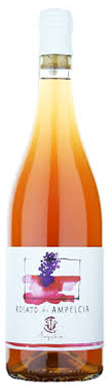
This biodynamic rosé, from the hills halfway between Bolgheri and Brunello di Montalcino, has the quirky complexity of an unfiltered, more natural rosé. Dark coral...
2022
AmpelaiaToscana
Domaine Alexandre Bonnet, La Forêt, Rosé des Riceys, Champagne, France, 2020
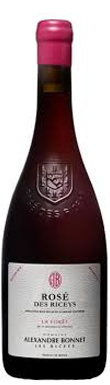
From the most southerly region of Champagne, strongly influenced by Burgundy, a small amount of rosé is made by a handful of producers in this...
2020
Domaine Alexandre BonnetRosé des Riceys
Kir Yianni, Agathoto, Naoussa, Macedonia, Greece, 2022
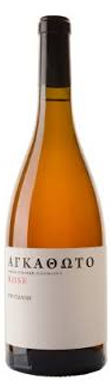
This comes from relatively young vines and a single parcel, it being the result of Kir Yianni exploring what Xinomavro on this terroir can express...
2022
Kir YianniNaoussa
Avignonesi, QX, Toscana, Tuscany, Italy, 2023
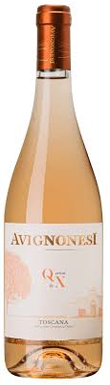
Tuscan Sangiovese shows great promise in producing stylish rosés. This pale pink with its honeyed floral blossom, yellow peach and a touch of raspberry initially...
2023
AvignonesiToscana
Domaine Claude Riffault, La Noue, Sancerre, Loire, France, 2023
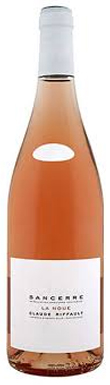
There are far too many Sancerre rosés trying to be Provençal, but this biodynamic Sancerre rosé has an almost Burgundian vibe. Single-parcel Pinot Noir is...
2023
Domaine Claude RiffaultSancerre
Domaine de la Rectorie, Coté Mer, Collioure, Languedoc-Roussillon, France, 2023
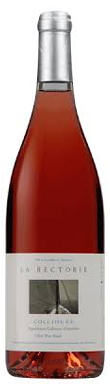
From coastal vineyards close to the border with Spain, where sweet fortified wines and big reds dominate, this rosé expresses local character and beautiful freshness....
2023
Domaine de la RectorieCollioure
Domaine du Castel, Razi'el, Judean Hills, Israel, 2021
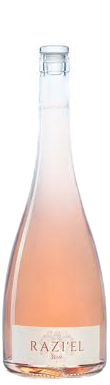
Evident oak on the nose, which shows smoky, dark and toasty aromas, alongside a touch of red berry fruit, spice, a hint of garrigue and...
2021
Domaine du Castel
Les Vignobles Foncalieu, Château Haut Gléon, Corbieres, Languedoc-Roussillon, France, 2023
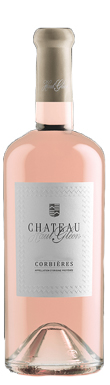
Soft, gentle, ripe peach and strawberry fruit aromas. This has a wonderful contrast between sweet ripe strawberries and salty minerality. Silky smooth with long, fresh...
2023
Les Vignobles FoncalieuCorbieres
Weingut Langmann, Ried Hochgrail Schilcher Reserve, Weststeiermark, Steiermark, Austria, 2022
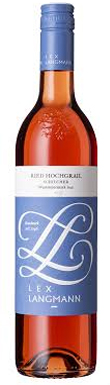
Once upon a time, Schilcher – also known as Blauer Wildbacher – from Styria was regarded as the gut-wrenching acidic wine to avoid. Here, old...
2022
Weingut LangmannWeststeiermark
Weinhof Waldschütz, Grande Cuvée 4 mal 5, Kamptal, Niederösterreich, Austria, 2023
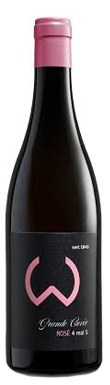
What to do when you inherit an old-vine vineyard of assorted varieties? You experiment. Ralph Waldschutz made small batches of wine to see what worked...
2023
Weinhof WaldschützKamptal
Dauvergne Ranvier, Domaine Liravel, Tavel, Rhône, France, 2023
Made with more Mourvèdre and Syrah than most Tavel, giving a lovely balance of ripe fruit and power. Delicate, bruised strawberry fruit aromas lead to...
2023
Dauvergne RanvierTavel
Les Vignerons de Tavel & Lirac, Cuvée Royale, Tavel, Rhône, France, 2023
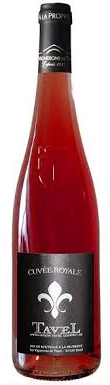
The cooperative in Tavel offers a range of three Tavels which illustrate three different terroirs and this one from the hotter sites with rolled river...
2023
Les Vignerons de Tavel & LiracTavel
Marco De Bartoli, DBE, Etna, Sicily, Italy, 2022
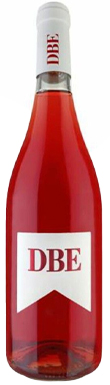
At a time when pale colour is chosen over flavour, the de Bertoli’s decided on extended maceration for 48 hours and spontaneous fermentation to allow...
2022
Marco De BartoliEtna
Senorio Sarria, Cinco, Navarra, Spain, 2023
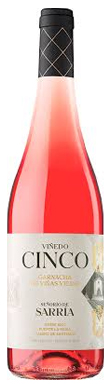
From old vines planted in the northern hills of Valdizarbe, the bright, vibrant pink colour is evidence of the longer maceration typical of Navarra rosés...
2023
Senorio Sarria
Domaine de l'Amauve, Le Rosé de Simone, Côtes du Rhône Villages, Séguret, Rhône, France, 2023
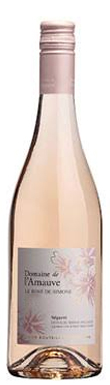
One of the joys of a good rosé is its beautiful delicacy and this classy wine from the red wine country of Séguret has oodles...
2023
Domaine de l'AmauveCôtes du Rhône Villages
Melitoni, Aleksandrouli, Khvanchkara, Racha-Lechkhumi, Georgia, 2023
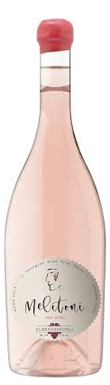
Made with an ancient Georgian red variety related to Muscat d’Alexandria, which is usually turned into big, slightly sweet red wines, this pale coral rosé...
2023
MelitoniKhvanchkara
Vina Laguna, Festigia, Istria, Coastal, Croatia, 2023
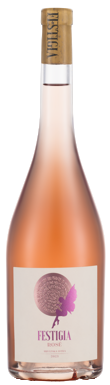
The dark purple-pigmented Teran gives intensely fruity reds with massively high acidity which need serious taming, and translates into vibrantly fruity rosé. Here the fruit...
2023
Vina Laguna
Ode, Alentejo, Portugal, 2023
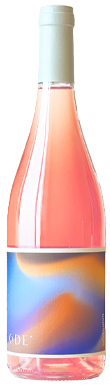
An Australian-Brazilian joint project has created a Portuguese rosé with a twist. Coral pink with intense and pretty aromas combining the red fruit of Touriga...
2023
Ode
Toro Loco, Utiel Requena, Spain, 2023
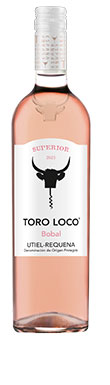
Bobal has for a long time been the foundation for many a cheap and cheerful rosé, but they're often entirely forgettable. This wine is both...
2023
Toro Loco
