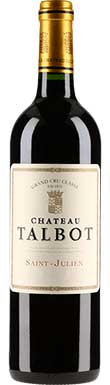
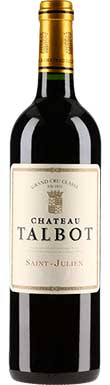
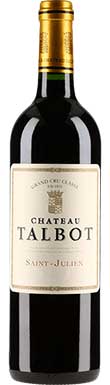
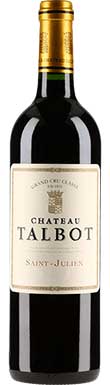
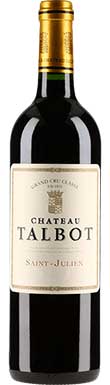
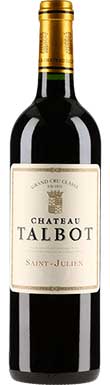
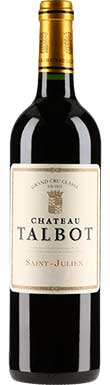
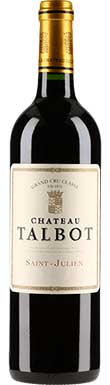
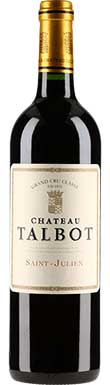
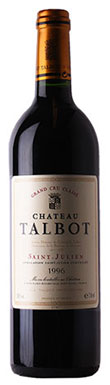
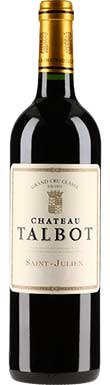
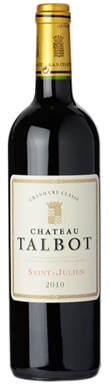
Château Talbot wines
Credit: www.chateau-talbot.com
(Image credit: www.chateau-talbot.com)

Starting with a 1919 vintage that is still holding its own and including a 1945 wine that remains 'full of flavour', Jane Anson has tasted a wine from each decade of Cordier family ownership at this St-Julien estate...

A Decanter reader asked me a few months ago about why the tasting notes for younger Bordeaux wines often display a narrower drinking window than the older ones.

The windows supplied for the younger wines are reflective of when they will be ready to begin drinking but will still have retained the plumpest fruit and be firmly on the plateau of drinking for most of us.


Scroll down to see Jane Anson’s Château Talbot tasting notes and scores


But in truth, Bordeaux often surpasses expectations of ageing, and many times you open a wine that is at its peak and clearly still stubbornly refusing to go away; or one that should be way past it and yet still giving huge pleasure even if the flavours are tertiary, with undergrowth, walnut and soft tobacco taking the place of the cassis fruits.

Even when the fruit has long been chased away, it’s hard to discount the pleasure that can be found in taffy, truffle and saffron spices.

I kept thinking about this as I was tasting through the 100 years of Château Talbot. It made a mockery, as verticals of this size often do, of how we normally approach Bordeaux, with our careful calibrations of a point here, a point there, and of a confident sweep of a drinking window.

These wines defied our windows and wrote their own rules. Any wine that can age like this and give such pleasure should be celebrated, independent of scores and timescales.

The Cordier family, under Désiré Cordier, bought Château Talbot in 1918, and today it is run by Nancy Bignon-Cordier and Jean-Paul Bignon. It is an estate that is often seen as steady-as-she-goes in the St-Julien firmament (although we are speaking relatively here); an 1855 4th Growth in an appellation where there is a clutch of more prestigious 2nd Growths.

And yet the consistency displayed here was remarkable, without a trace of heat in any vintage, beautiful balance and tons of St-Julien signature elegance and complexity. It was without question a wonderful way to see not only the evolution of Talbot, but also to note also its admirable consistency.

The estate picked one wine to show from each decade since the family arrived (with two others opened over lunch from the 1940s and 1980s), and served them slowly, one at a time, to allow for the story to unfold slowly with our full concentration.

We started out with a wine bottled in 1919, from the year that the Treaty of Versailles marked the final end of World War One, passed through the end of World War Two and the War in Algeria, and finished up a bottle that is just now approaching its 10th birthday with the 2010, the year of the Deepwater Horizon oil disaster and the Affordable Care Act was passed into law by President Barack Obama.

The wines gave us a window into each of those moments in history.

What a memorable way to finish 2018.


You may also like:

Jane Anson tastes 150 years of Lafite Rothschild wines

Château Talbot, St-Julien, 4ème Cru Classé, Bordeaux, France, 1919

My wines
Locked score

The weather conditions would be pronounced as exceptional today but would have been challenging then - a difficult start, with budding under rain but good weather from the end of May for flowering. Then a difficult July saw powdery mildew arrive, followed by a drought from August and through most of September, until rains just before harvest. This has the most beautiful oxidised sherry colour through the core, toffee-edged and tawny. There's toffee edging on the palate also, but the wine is actually savoury, displaying undergrowth, walnut and barely-there truffles. The fruit has been chased away but there's still flavour here, with some extremely gentle white pepper notes, and going back to it later the acidity seems more pronounced and those sherry and metallic notes more evident. I'm not sure this beautiful wine will be able to hold on much longer, and yet you still smile at its gently fragrant defiance. It's a wine that still has a beating heart, from the year that France and its allies signed the Treaty of Versailles in the Hall of Mirrors. Served in half bottle, reconditioned in 2007 by cellarmaster Mr Camin.

1919

BordeauxFrance

Château TalbotSt-Julien

Decanter Premium logo

Join Decanter Premium to unlock all our wines tastings and notes

Join Now

Château Talbot, St-Julien, 4ème Cru Classé, Bordeaux, France, 1926

My wines
Locked score

1926 was a year when there was mixed weather right through until June, meaning uneven flowering and poor fruit-set, and as in 1919 there was pressure from powdery mildew. A hot August reduced the size of the berries, and although in early September rain returned, things turned hot again from mid-September and remained so right through the harvest that took place largely in October. There were low yields as a result of all of this, which will have helped maintain intensity of flavour. This is significantly darker in colour than the 1919, but with a slight cloudiness. The nose has more depth to the fruit, but again the clarity of aromatics is less evident than in the older wine. This in fact has plenty of 'older wine' markers as you would expect - an almost strawberry sweetness to the palate, and touches of metal that suggest the fruit had some difficulties in reaching full or even ripeness. But the intensity of the flavour is quite remarkable, and there's still structure to the tannins, which I imagine were tough in their youth. Mel Brooks and Queen Elizabeth II were both born in this year. Served in magnum.

1926

BordeauxFrance

Château TalbotSt-Julien

Decanter Premium logo

Join Decanter Premium to unlock all our wines tastings and notes

Join Now

Château Talbot, St-Julien, 4ème Cru Classé, Bordeaux, France, 1934

My wines
Locked score

Budbreak and flowering were excellent, and July also saw excellent sunny conditions. The first half of August was cool and rainy, and in the end, it only really saw one week of exceptional weather, with double the average rainfall. But then September was perfect for harvest. It clearly worked for this wine because it's a standout. It has a similar muddied ruby colour to the 1926, while on the palate it's the best so far, quite magnificently full of flavour. You can discern fruit that is still not just clinging on, but pulsing forward: clear raspberry notes and brambled hedgerow are joined by tannins that are soft and integrated but still give shape and form to the palate. It's juicy and mouthwatering on the finish, with touches of minerality even, showing leather, soft spice, saffron and black pepper. Wonderful. Reconditioned in 2007, served in bottle. Brigitte Bardot was born in this year.

1934

BordeauxFrance

Château TalbotSt-Julien

Decanter Premium logo

Join Decanter Premium to unlock all our wines tastings and notes

Join Now

Château Talbot, St-Julien, 4ème Cru Classé, Bordeaux, France, 1945

My wines
Locked score

Just seeing the vintage 1945 on the label produces a shiver. In terms of weather, there was frost in May after a fine, hot April, meaning low volumes. This was followed by a heatwave in July, with serious fires in the Landes region to the south of Bordeaux. August had a mix of sun and rain, and harvest started around 7 September - less than a week after the end of the Second World War. The nose is a little less intense than the 1934, but it's full of clarity of expression, and the aromatics build throughout its time in the glass. On the palate it is full of flavour, surprising with its raspberry, undergrowth and bracken notes, accompanied by leather and tobacco. You're walking over crunchy leaves at autumn time. The complexity that still breathes through this wine is incredible, and it's pretty gulpable because there's both fruit and acidity here - life is crackling within it. Tasted blind, you might say this was a 1982, maybe a 1961, but certainly something exceptional. It's so remarkably young it seems to have almost closed up again when retasted an hour later, and those tannins are tenacious, almost rubbery in their ability to keep on bouncing through. A genuinely moving wine. You can somehow imagine all the 1945s that you have never been able to taste (Mouton for one, in my case) in the heart of what's happening here. Reconditioned in 2007, served in magnum.

1945

BordeauxFrance

Château TalbotSt-Julien

Decanter Premium logo

Join Decanter Premium to unlock all our wines tastings and notes

Join Now

Château Talbot, St-Julien, 4ème Cru Classé, Bordeaux, France, 1947

My wines
Locked score

The 1947 stands right next to the 1989 in this tasting, and its colour has almost the same inky depth. It tastes younger than the 1945 on the attack, but with the same sense of energy and life, helped no doubt by small yields giving concentration. On the palate it's soft appealing and delicate, with brambly blackberry fruit, grilled toffee and sweet cherry notes, a gourmet, patisserie side, soft aromatics and a salinity on the finish that lifts you up. The tannins are incredibly silky, floating on air, and yet you still feel their presence gently guiding the fruit. This and the 1945 are giants of vintages. I am tasting this, by the way, on my own in front of a fire, as I have to leave the estate before the lunch where the wine is being served to everyone. I just need to bring out my Murakami book and they may never be able to prise me out of this room. Reconditioned in 2015, served from bottle.

1947

BordeauxFrance

Château TalbotSt-Julien

Decanter Premium logo

Join Decanter Premium to unlock all our wines tastings and notes

Join Now

Château Talbot, St-Julien, 4ème Cru Classé, Bordeaux, France, 1953

My wines
Locked score

1955 was an exceptional vintage, with good weather pretty much throughout, and the rain in September was extremely useful as everything had got so dry by this point. Harvest eventually finished in mid-October, so this was a late year that favoured Cabernet Sauvignon. It's a wonderful wine, rich tawny in colour with a rich and welcoming nose, but with a little less clarity than the 1945. On the palate this is still generous, with a soft and sweet texture and flavours of blackberries and raspberries alongside cigar box notes. The tannins remain in play, and this feels full of promise. Tobacco notes emerge more clearly after five minutes in the glass. This has a long life ahead of it still, and I love it, but the 1945 pips it when you go back an hour later. 4% Cabernet Franc finishes the blend. Served in bottle, reconditioned in 2007.

1953

BordeauxFrance

Château TalbotSt-Julien

Decanter Premium logo

Join Decanter Premium to unlock all our wines tastings and notes

Join Now

Château Talbot, St-Julien, 4ème Cru Classé, Bordeaux, France, 1962

My wines
Locked score

This was a late year, with budding around three weeks behind schedule and hailstorms in May. In June, the weather improved and flowering was uneven but not disastrously so. August helped matters by being hot and dry, almost too much in some spots, as the vines began to suffer from drought. A hailstorm in late September affected some parts of St-Julien. A richer red colour is creeping into the body of the wine at this point, although the aromatics are less intense than the 1945 or the 1955. On the palate there is lovely juiciness, although the flavours are less sustained, and I would place this as slightly older than the 1955 if tasting blind, giving you an idea of just what a difference a great vintage can make to Cabernet Sauvignon. It absolutely holds its own, however, taking on a gentle power after a few moments in the glass. The tannins have held firm, but the acidity is less balanced than in the blow-you-away vintages. The Algerian war ended in March 1962, and Marilyn Monroe died in August ('under circumstances that are still unclear', says the Talbot booklet rather darkly). 2% Cabernet Franc and 1% Malbec finish the blend. Reconditioned in 1995, served in bottle.

1962

BordeauxFrance

Château TalbotSt-Julien

Decanter Premium logo

Join Decanter Premium to unlock all our wines tastings and notes

Join Now

Château Talbot, St-Julien, 4ème Cru Classé, Bordeaux, France, 1975

My wines
Locked score

Pretty much the best vintage out of the difficult decade of the 1970s, besides 1970 itself. An extremely mild start to the year - to the point that some leaves appeared in mid February - then turned cold again through to May, meaning relatively late flowering in mid-June under sunny conditions. An August heatwave got everyone excited, until one month's-worth of rain fell from 12-17 September and diluted the grapes. The weather held out for harvest, and alcohols were relatively high for the time at around 13%. The colour here is ruby red, as the wines in the lineup are getting younger. Tobacco notes abound, with very soft raspberry purée. This feels almost jarringly young after tasting the gentle older statesmen - the tannins are more apparent on your tongue, which was not the case with the older wines. It's still a good wine, but not as thrilling as some of the older examples. 3% Cabernet Franc makes up the blend. Reconditioned in 2012, served in magnum.

1975

BordeauxFrance

Château TalbotSt-Julien

Decanter Premium logo

Join Decanter Premium to unlock all our wines tastings and notes

Join Now

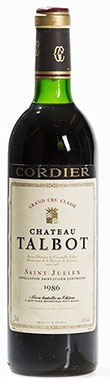
Château Talbot, St-Julien, 4ème Cru Classé, Bordeaux, France, 1986
My wines
Locked score

In a word, gorgeous. The ferocious tannins of the vintage have melted away but still linger in the background, providing structure to its plum-like fruitiness. Hints of cedar peek out. Despite being another bold expression of Talbot, it maintains a graceful profile. Fresh and youthful still, you’d never guess it’s 38 years old. 65% Cabernet Sauvignon, 28% Merlot, 5% Petit Verdot, 3% Cabernet Franc.

1986

BordeauxFrance

Château TalbotSt-Julien

Decanter Premium logo

Join Decanter Premium to unlock all our wines tastings and notes

Join Now

Château Talbot, St-Julien, 4ème Cru Classé, Bordeaux, France, 1989

My wines
Locked score

A wonderful wine, although I would pip the 1986 as just a touch more reflective of the estate. Lovely touches of iron on the attack lead into the most beautiful explosion of black fruits. It blossoms in the glass, showing more concentrated spice than many vintages, with liquorice and earthy, peaty flavours abounding through the palate. It has more stuffing and a little less elegance than the 1986, which gives it a definite appeal. Still extremely young. Served from magnum.

1989

BordeauxFrance

Château TalbotSt-Julien

Decanter Premium logo

Join Decanter Premium to unlock all our wines tastings and notes

Join Now

Château Talbot, St-Julien, 4ème Cru Classé, Bordeaux, France, 1996

My wines
Locked score

In terms of weather in this vintage, bud-break came on 25 March after a cold start to the year, followed by a mixed May then a heatwave in June that saw good flowering. July was cool and wet for the first half, hot and dry in the second half, then August alternated between rain and a heatwave. There was fine weather again in September and most of October. All in all, it was a very good vintage for the Médoc. At this stage the colour is firmly in the rich claret zone - ruby red, not overly intense but full of life. The wine is very enjoyable and has that lovely St-Julien signature of rich black fruits floating over a bed of air, as the acidity in the Cabernet takes flight. This gives it a sense of poise and confidence, and again the signature mouthwatering finish. It's not going for intensity and punch, but for complexity and elegance without sacrificing fruit - there are dark, spicy notes in here. It sits with you, dealing out slowly but surely the idea of balance. This wine is the epitome of why St-Julien is not Pauillac, and never will be. No Cabernet Franc in the blend here, nor in the younger wines tasted in this lineup. Served in bottle. In the wider world, François Mitterrand died in 1996, Bill Clinton was elected for his second, more scandal-hit term, and Dolly the sheep arrived in the world.

1996

BordeauxFrance

Château TalbotSt-Julien

Decanter Premium logo

Join Decanter Premium to unlock all our wines tastings and notes

Join Now

Château Talbot, St-Julien, 4ème Cru Classé, Bordeaux, France, 2005

My wines
Locked score

Once again the 2005 vintage works its magic, and this is a standout wine. Menthol and fresh mint leaf notes are set against liquorice and cassis, with beautifully integrated tannins that retain their bite. It's an absolutely delicious wine full of St-Julien balance and elegance, but also with real depth and concentration. Château Talbot is still a classic rather than an overly powerful St-Julien, even in this vintage. Aged in 50% new oak.

2005

BordeauxFrance

Château TalbotSt-Julien

Decanter Premium logo

Join Decanter Premium to unlock all our wines tastings and notes

Join Now

Château Talbot, St-Julien, 4ème Cru Classé, Bordeaux, France, 2010

My wines
Locked score

Rich, vibrant nose. Milk chocolate, cherries and soft floral scents. Bouncy and grippy. A lovely bright aspect but with quite a serious, streamlined core so you get cool, fresh blueberry and tangy raspberry fruit with high acidity married to lean, mineral-edged, straight tannins. Subtle weight and good structure. Flavour goes all the way to a long finish although it's marked by quite a mineral, salty, liquorice edge.

2010

BordeauxFrance

Château TalbotSt-Julien

Decanter Premium logo

Join Decanter Premium to unlock all our wines tastings and notes

Join Now
Jane Anson

Jane Anson was Decanter’s Bordeaux correspondent until 2021 and has lived in the region since 2003. She writes a monthly wine column for Hong Kong’s South China Morning Post, and is the author of Bordeaux Legends: The 1855 First Growth Wines (also published in French as Elixirs). In addition, she has contributed to the Michelin guide to the Wine Regions of France and was the Bordeaux and Southwest France author of The Wine Opus and 1000 Great Wines That Won’t Cost a Fortune. An accredited wine teacher at the Bordeaux École du Vin, Anson holds a masters in publishing from University College London, and a tasting diploma from the Bordeaux faculty of oenology.

Roederer awards 2016: International Feature Writer of the Year