It’s 110 years since the early pioneers of the Brajkovich family arrived in New Zealand from Croatia. Peter Richards MW spent some time with the family to uncover the secrets of growing world-class Chardonnay.
This profile has been published online for Decanter Premium members and includes recommendations on top Kumeu river wines to try.
Kumeu River at a glance
Location Kumeu, Auckland, New Zealand; founded in 1944
Owners Brajkovich family
Area 30ha own vineyards plus 10ha contract
Soils Mainly clay over a sandstone base
Production 250,000 bottles
Decanter newsletter
Get our daily fine wine reviews, latest wine ratings, news and travel guides delivered straight to your inbox.
Chardonnay cuvées Village, Estate, Coddington, Hunting Hill, Maté’s Vineyard
We are standing overlooking the iconic Maté’s and Hunting Hill vineyards under a scented, sultry Auckland sky.
Milan Brajkovich muses: ‘We’ve always just made wines we like to drink. New World wines with an Old World twist, for a fair price. We focus on what we do best: Chardonnay. Then we’ve gone out and found enough people who share our view. It’s taken a while, but it’s worked.’
It’s a wonderfully understated summary. Kumeu River is one of New Zealand’s most celebrated producers: wine nobility renowned primarily for world-class, Burgundian-style Chardonnay.Over the years, the winery has built up an enviable distribution network on the basis of personal relationships; about half of sales are domestic. It’s business on a human scale, within which the family ethos is all- important.Many wine producers the world over make a fuss of family ownership, yet here you get the sense that the personal touch is pervasive to a rare extent.
Scroll down for Peter Richards MW’s top five Kumeu River wines to try
The Brajkovich family originally came to New Zealand from Dalmatia (Croatia) in 1907 To dig Kauri gum (fossilised resin) – gruelling but profitable work.
They later moved into agriculture, buying an estate with a small vineyard in 1944 that was developed by Maté Brajkovich, subsequently supported by his wife Melba and four children Michael, Marijana, Milan and Paul.
Milan, Melba, Michael, Marijana and Paul Brajkovich in the family’s Kumeu River barrel room
(Image credit: Credit Unknown)
Though Maté died in 1992, the clan has continued his work in unison, with all four children involved in the estate and Melba as matriarch, often to be found holding court at the cellar door at the weekend. ‘Sometimes I feel outnumbered by my kids,’ grumbles a smiling Melba, as her tall progeny loom over her. ‘She loves it,’ whispers Milan, with a grin.
Surely 72 years of family business can make life difficult at times? ‘Not really,’ reflects Milan. ‘Mum’s a great mediator, and we have meetings at the lunch table every day. It works.’
Melba recounts how an earnest six-year-old Michael used to draw precise wine diagrams at the family table to instruct his then headmaster in how to make wine properly.
When I probe Milan about the family’s winemaking inspirations, he reveals how it’s family tradition to open special bottles from their private cellar on Friday lunchtimes.
‘That’s how our Pinot Gris came about,’ he smiles, as Michael cites the family’s admiration for fine examples from Alsace, from the likes of Domaine Weinbach, Marcel Deiss, Trimbach and Zind-Humbrecht.
Food is also a recurring theme when discussing wine with the Brajkovichs. The full complement of family members were around the dinner table when I visited, enjoying a simple but tasty steak with salad, and wines clearly designed with a gastronome’s sensibility.
‘Chardonnay chose us’
So what’s the key to Kumeu’s remarkable success with its wines, particularly its distinctively savoury, elegantly proportioned Chardonnay? After all, Auckland’s sub-tropical climate, despite being where the New Zealand wine industry has its earliest roots, is hardly where you’d expect to find this kind of wine.
And yet, as Milan memorably quips when noting the string of varieties that have been tried and discarded at Kumeu River: ‘We didn’t choose Chardonnay – it chose us.’
The estate is now 80% planted to Chardonnay; the likes of Pinotage, Palomino, Müller-Thurgau and, more recently, Merlot are no longer.
As it turns out, both climate and soil are deemed of vital importance. Milan points to the proximity of both the Tasman Sea and Pacific Ocean as moderating influences, generating cloud to temper the summer heat, which rarely exceeds 30˚C. ‘The soils are key too,’ he adds.
‘They’re clay-based, mineral-laden and, crucially, non-irrigated, so the vine roots dig deep. We do have to keep an eye on disease given the humidity, but we use a split canopy and hand-harvest.’ He notes how Maté’s vineyard is ‘heavy and dense – like the wine’ while Hunting Hill has a hard iron pan that helps create ‘a lean style’.
In the cellar, Michael backs up Milan’s message with a statement to challenge many a prejudice. ‘Chardonnay is not a blank canvas to be painted on,’ he asserts.
‘Terroir and variety come through strongly. You need a cool climate to ripen Chardonnay properly yet also retain acidity. If not, you miss out on the textural qualities and complexity the variety can give when grown in the right place.’
2001 Kumeu River winery starts to seal all wines under screwcap
(Image credit: Credit Unknown)
He goes on to criticise the latest New World trend to harvest Chardonnay ‘too early’ in warm climates in a bid to retain acidity, then overload the wines with ‘struck match’ character – resulting in lean, unsatisfying wines.
‘People have got the wrong end of the stick’, he shrugs. I ask about the tendency for Kumeu River’s Chardonnays to have that distinctly toasty, struck match character, often termed reductive, and found in many white Burgundies.
Michael speculates that, while the science behind how these characters are formed remains poorly understood, it may have a link to elemental sulphur being used in the vineyards (to combat powdery mildew), which is then transferred via the fine lees into tank and then barrel, and acts as precursor to the reductive character being generated. ‘But reduction is just a by-product,’ he insists. ‘The reason I use the lees – just as I use the barrels – is to build the wine’s structure.’
Michael is a rare winemaker who wears his considerable learning lightly. But glimpses of his profound understanding of the whole winemaking process and keen, questioning mind continually emerge.
For example, how he learned from Burgundy about the intricacies of barrels and malolactic fermentation, and how Jean-Pierre Moueix at St-Emilion’s Château Magdelaine gave him the courage to abandon cultured yeasts and pursue wild ferments in the mid-1980s.
‘With wild yeast, something happens early in the fermentation, before it gets to 3% alcohol, and it’s crucial to the style at the end,’ he enthuses, before adding: ‘It gives mouthfeel and texture, though we don’t really know how.’
As for the question of ageability, Michael is ambitious. ‘If we are interested in producing high-quality Chardonnay, we have to be serious about how it ages over a number of years,’ he asserts.
For Kumeu River, the answer was not only in using the correct amount of sulphur and the right bottles, but also to use screwcaps. The winery changed wholesale to screwcap in 2001 after a batch of cork-sealed wines was returned from the US and, on tasting, the family deemed only about 5% to be in ideal condition.
Recent tastings of vintages back to 2003 clearly show how the wines retain a notable brightness and freshness as they elegantly mature.
Healthy competition
Global experience, attention to detail and a strong family ethos are the foundations on which Kumeu River has been built. But what of the future?
New Zealand, long the land of Sauvignon Blanc and Pinot Noir, is seeing a surge in quality Chardonnay all over the country. Where Kumeu River once ploughed a relatively lonely furrow, it now has serious competition from Bell Hill, Giesen, Neudorf, Vidal and many others. At a Chardonnay conference in
Gisborne, I asked Michael whether he felt threatened or weakened by this. ‘Strengthened!’ he retorts. ‘It means more people are getting interested in Kiwi Chardonnay as a category.
‘There’s a resurgence of interest. Of course, we benchmark all the time and try to keep ahead of the game. But we’ve been doing this for a while, our vines are established, as are our wines. It’s good to see really classy Chardonnay being made all over the country.’
Urban sprawl is another threat, as Auckland suburbs mean land around Kumeu is now at a premium for housing development. Milan notes soberly how land prices have shot up and traffic intensified markedly in recent years.
‘We’re actively looking for land to buy now,’ he says. ‘You need to plan 20-30 years ahead in our line of work.’
Planning ahead has also seen Kumeu River introduce a fizz into its range to complement the other minority productions of Pinot Gris, Pinot Noir and Gewurztraminer.
The debut release of Kumeu Crémant is a blend of 60% Chardonnay and 40% Pinot Noir; tasted pre-dosage on the lees in the cellar in early 2016, it showed impressive depth, elegance and vigour (£26.95 www.thevinorium.co.uk).
I ask Milan what sparkling wines the family cellar contains. ‘Ah, Taittinger, Gimonnet…’ he trails off, eyes on the vineyard. But it must have been challenging making a new fizz, in addition to all his other duties. A smile plays over his lips. ‘You’ve got to keep life interesting, haven’t you?
Kumeu River – a timeline
1907 Mick Brajkovich first comes to New Zealand from Dalmatia (Croatia) to work, aged 15
1937 After returning home briefly, Mick brings his wife Katé and son Maté to New Zealand
1944 The family buys a property in Kumeu with a small vineyard
1949 Mick dies but Maté and Katé continue San Marino Vineyards
1957 Maté meets future wife Melba, also of Croatian immigrant descent
1960 Maté and Melba raise four children (Michael, Marijana, Milan and Paul) around the winery
1979 Winery moves away from hybrids, planting Sauvignon Blanc, Chardonnay and Cabernet Franc
1986 Name officially changed to Kumeu River
1989 Michael Brajkovich becomes a Master of Wine
1990 Maté helps replant his eponymous vineyard to Chardonnay
1992 Maté dies
2001 Winery starts to seal all wines under screwcap
2006 Hunting Hill and Coddington vineyards are given single-vineyard status for the first time
2011 Construction on new barrel cellar and warehouse
2012 First sparkling wine produced, released in late 2016.
2014 70th anniversary celebrated
See Peter Richards MW’s top five Kumeu River wines to try
Topics
Explore More
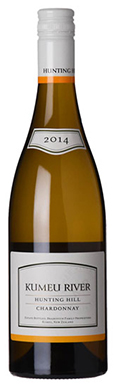
Kumeu River, Hunting Hill Chardonnay, Auckland, 2014
My wines
A bundle of deliciously nervous energy, driven by compelling juicy acidity. The toasty, nutty overlay is beautifully complex. Young, focused, tense and utterly winning.
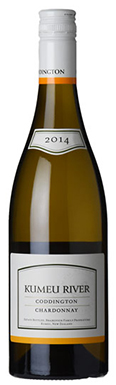
Kumeu River, Coddington Chardonnay, Auckland, 2014
My wines
One for the hedonists. Still well defined and fundamentally refreshing, this is brimming with nutty, savoury complexity with a buxom, buttery richness.
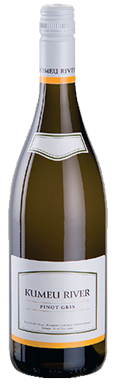
Kumeu River, Estate Pinot Gris, Auckland, New Zealand, 2013
My wines
Succulent and beautifully resonant, full of baked pear and honeyed quince flavours. Has a lovely freshness on the finish. Ideal for aromatic Asian dishes.
As a broadcaster, writer and Master of Wine, Peter Richards is a familiar face to many, known for his unique blend of enthusiasm and erudition. His credits include more than a decade on BBC1 plus Sky One, ESPN, Financial Times, The Guardian, ITV1, Radio 4, BBC2 and The Sunday Times.
He is a regular Decanter contributor as well as chairman of the Decanter Retailer Awards and regional chair at the Decanter World Wine Awards.
Together with his wife, Susie Barrie MW, he co-hosts the acclaimed Wine Blast podcast, a top-10 show in worldwide charts including the US and UK. The pair also host the annual Wine Festival Winchester, described as, ‘the finest wine festival in the country’.