
Talent for adventure: South American winemakers abroad
These intrepid South American winemakers have all looked beyond the horizons in their native lands, and have struck out into the world to forge maverick projects on other continents. Ines Salpico, Decanter’s Regional Editor for Spain, Portugal and South America, and Amanda Barnes MW, DWWA Regional Chair for Chile, shine a light on six of the best.


A land of freedom and possibility as much today as it has been in the past, South America has long lured winemakers from other continents.
Seduced by dramatic landscapes, unique terroirs, abandoned old vineyards and unexpected winemaking traditions, foreign talent has found in South America’s wine regions a setting for projects that offer equal amounts of challenge and opportunity.
But since the dawn of the new millennium, local talent has emerged as the real driver of development, innovation and creativity in the ever more vibrant South American wine scene.
Six special wines from South American winemakers plying their trade abroad listed below
Pastures new
Today, some of South America’s best – finding themselves with nothing left to prove at home – are reversing the tide.
Empowered by technical proficiency, entrepreneurial energy and international awareness, they have left their native countries to start exciting new projects in Europe, Australia and North America.
A combination of talent, serendipity and courage – with love and family as catalysts – is the common denominator of the stories of transcontinental success featured below…
Marcelo Retamal
Reta ES
From Chile to Spain
A trio of Spanish terroirs for Chile’s Reta

In 2015, Chilean winemaker Marcelo Retamal travelled to the Sierra de Francia in western Spain in search of roots – literally and figuratively.
‘I went to Spain with the idea of making wine where my family came from,’ explains Retamal, who goes by the name of Reta.
‘And when my wife and I visited in 2015, I thought the place was absolutely incredible – one of the most beautiful in the world, with wild vines growing amid native forest.’
That visit sparked the beginning of Reta ES, the European branch to Retamal’s eponymous Chilean wine label – now spanning three regions in Chile (Maule, Bío Bío and Limarí), and three in Spain (Sierra de Francia, Sanlúcar de Barrameda and Rioja Alta).
His first commercial vintage in Spain was 2021. Today he produces just over 12,000 bottles annually from old vines of Rufete (in Sierra de Francia), Palomino (in Sanlúcar) and Garnacha (in Rioja Alta), with plans for more labels and a trebling of overall volume.
Starting out wasn’t easy. As a foreigner without a winery, he had to navigate unfamiliar cultural dynamics and logistical hurdles. ‘In each region, the people are different. It isn’t easy as a foreigner to adapt to each local reality.’
Best of both worlds
He has now found his groove, though, and splits his time evenly between Spain and Chile, following not just the harvests, but the summer. ‘I don’t like the cold or winter, so I follow the sun!’
For Reta, Spain offers a sense of optimism and community that he finds missing at times in Chile. ‘In Spain, even if things aren’t going well, people are positive. There’s a great village life – in the bars, you find producers, friends and wise elders.’
Yet there are challenges. Spain’s stringent denominación de origen regulations have limited his ability to use terms such as ‘Jerez’ or ‘Sanlúcar’ on his labels – even when the grapes come from historic sites.
He contrasts this with Chile’s looser framework and the freedom it affords.
Despite the contrasts, Retamal’s philosophy has remained consistent: interpret the humanised landscape. In Sanlúcar, he makes flor-aged Palomino without fortification; in Sierra de Francia, a Rufete-based field blend from vineyards dotted with cherry and fig trees.
‘Technique is just a means to express a place,’ he says. ‘And Spain, with its human scale, has let me return to wine measured in bottles, not cases.’ @retadechile
Amanda Barnes MW
Rodrigo Soto & Mai Errazuriz
Far Mountain
From Valparaíso in Chile to Moon Mountain, Sonoma, California, USA
An exploration of terroir and community

There’s an intense sophistication to Far Mountain’s wines, labels and winemaker, and a clear intent and strong features that run through all of the project’s elements.
It was with just such intent that Rodrigo Soto and his wife Mai Errazuriz founded Far Mountain in 2018, releasing their first wines the following year.
Born and educated in Chile, Soto started his career at Matetic in the year 2000, in Rosario Valley near the coast west of Santiago, where he was tasked with the pioneering implementation of biodynamic practices.
American viticulturist Alan York was brought in as a consultant at what would become a turning point in Soto’s career.
York introduced Soto to contacts and opportunities in California; Soto and Errazuriz soon headed north for a first stint in the US.
In 2012, they returned to Chile to start a family. But, six years later, an irresistible opportunity for Soto to head operations at Quintessa winery in St Helena lured them back to California.
Upon their return, the couple identified a number of what Soto describes as ‘underestimated vineyards’ and growers with whom they built a close-knit network. ‘Going back and finding those connections was a moment of epiphany,’ he explains.
Thus started Far Mountain, a project sourcing Chardonnay and Cabernet Sauvignon fruit from selected partners and plots to produce wines that aim ‘to capture terroir and vintage more vividly’.
The particular focus for this project would be the unique salinity delivered by the vineyards of the Moon Mountain AVA in Sonoma.
Fresh perspective
Soon enough, Far Mountain became not just ‘a side, personal project but a matter of personal realisation’, according to Soto.
He highlights how, as an outsider, it is sometimes easier to identify the opportunities and potential of a place.
‘Every wine region and winemaking community can become very insular,’ the winemaker explains. ‘Moving around allows you to create openings, new connections and bring in new perspectives.’
Soto and Errazuriz indeed brought a fresh set of eyes, ‘unaware of the establishment and without preconceptions’, to Moon Mountain.
‘We don’t need to follow a script: we are writing our own. Creativity in wine is very important,’ he says, highlighting that it’s sometimes easier to be creative away from home.
While Errazuriz still retains her ‘day job’ at Paul Hobbs in Sebastopol, Soto is now solely dedicated to the family project.
Judging by the expressiveness and robust elegance of their wines, it won’t be too long before Errazuriz is able to take the plunge herself. farmountainwine.com
Ines Salpico
Gerardo Michelini & Andrea Mufatto
Michelini i Mufatto
From Mendoza in Argentina to Bierzo, Spain
Growing together in Spain’s rural northwest

‘We were looking for ways to grow and learn more about this marvellous world first-hand,’ explains Michelini. ‘We had always shared a dream to make wine in Europe – and specifically in Spain.’
That dream took shape in 2015 when they arrived – almost by coincidence – in Bierzo, a remote corner of northwestern Spain at the very edge of the Castilla y León region, bordering Galicia.
They were soon captivated by the region’s deep viticultural heritage and astonishing diversity of terroirs.
‘We found this culture with hundreds of years of history,’ says Michelini, ‘and were captivated by the incredible complexity you can achieve with just one single variety – from the changing orientation of the vineyard to the diverse soil types, ranging from slate and clays to calcareous soils.’
They began making wine alongside their son Manu Michelini, who was already active in their family winery in the Uco Valley in Mendoza.
The sensation of making wines in Spain felt immediately different to their experiences in Mendoza.
‘In Argentina we feel like conquerors – able to find new terroirs in higher lands and new places ideal for viticulture,’ Michelini explains. ‘But in Spain it is about discovering what already exists – what has already been done.’
Regional contrasts
The learning curve was not only technical but also cultural. The change in climate was also radical. ‘In Mendoza we have a desert and sunshine, in Bierzo we have shade and humidity,’ he says.
Since 2017, the family has maintained a second home and winery in Bierzo, where the emotional connection is familiar: the respect for old vines and the sense of community.
Living in Spain has also given them an unparalleled opportunity to taste widely, opening their palates and sharpening their perspective.
‘Spain has given us the chance to try so many different wines, an opportunity we didn’t have [with the restricted wine imports] in Argentina,’ adds Michelini, noting how important the experience has been to their personal and professional growth. ‘It gave us the chance to discover what we liked drinking and what wines we wanted to make.’
Their connection with Spain has grown so strong that Manu Michelini now lives there permanently.
In addition to working with the family in Bierzo, he has launched his own project in Rioja under the Dominio del Challao label.
While working at the family winery, in 2017 Manu took a trip east to Rioja Alavesa, where he was immediately captivated by the old vines and deep chalk soils – yet another corner of Spain with untapped potential, waiting to be rediscovered through fresh eyes. @michelini_i_mufatto
Amanda Barnes MW
See here for more wine recommendations from South American winemakers working overseas
Diego Alfredo Ribbert
Legado de Orniz
From Mendoza in Argentina to Toro, Spain
Exploring the untapped potential of Tinta de Toro

‘My trajectory from Mendoza to Toro has been a long, beautiful journey of personal and professional development and discovery,’ says Diego Ribbert. ‘And it’s still ongoing.’
Trained in agronomy with a specialisation in viticulture and oenology, Ribbert accumulated professional experience in Argentina and California before securing a job at Chandon Argentina.
He climbed the ranks at LVMH, the brand owner, eventually becoming estate manager at Terrazas de Los Andes.
Here he enjoyed what he describes as some of the most formative experiences of his career, adding business and commercial acumen to his technical background.
In 2008, when the luxury group bought Numanthia in Toro, in Spain’s northwestern Castilla y León region, Ribbert was sent to set the premium estate in motion under the new ownership.
There he met his now wife Enriqueta Celemín Amaro, who had been hired locally as an agronomist. Amaro had previously worked as an intern in Argentina, and the couple returned there for a spell, but the old vines of Toro had left an indelible mark on Ribbert.
The urge to explore the region’s heritage, and leverage Amaro’s status as the fourth generation of a family of growers, prompted their return and the launch of Legado de Orniz in 2010.
Continental shift
Years of intense work and ‘rock ’n’ roll’ – juggling consulting projects with the development of Legado de Orniz – followed.
In 2019, however, LVMH came calling again, with an offer Ribbert could not refuse, and the family headed back to Argentina where he took a chef de cave position at Chandon.
But the die had been cast and, two years ago, Ribbert and Amaro decided to return again to Toro to focus solely on Legado de Orniz.
It was a decision ‘to commit to our shared path of discovery,’ Ribbert explains, and to the development of a winemaking program that identifies an extraordinary untapped potential in Tinta de Toro – the local name for the Tempranillo variety.
Asked about the challenges of settling in Toro as an outsider (and one with an impressive CV), Ribbert says that it was important to come with an attitude of respect, attention – and wonder.
‘I spent four years living in the village [of San Román de Hornija], just getting to know the people, and understanding the history and traditions. And this is the essence of Legado de Orniz.’ legadodeorniz.com
Ines Salpico
Martin Moran
Mordrelle Wines
From Mendoza in Argentina to the Adelaide Hills, Australia
Science, tradition, courage – and family

Winemaker Martin Moran and Michelle Dreckow have salsa to thank for the existence of Mordrelle Wines – and of their three young sons. It was while dancing that Moran and his now wife met.
Moran – born in Mendoza, and educated as an agricultural engineer specialising in viticulture and oenology – had found himself drawn to Australia, where he worked vintages in Langhorne Creek, Adelaide Hills and McLaren Vale.
Meeting Dreckow prompted his decision to settle in the Adelaide Hills and set in motion the events that led to the creation of Mordrelle – the name being a portmanteau of Moran, Dreckow and Michelle, reflecting the partnership between the winemaker and his wife and parents-in-law.
For their wedding, Moran had produced a small batch of traditional-method sparkling wine in his garage. Moran’s enthusiasm – and the quality of the wedding fizz – persuaded Dreckow’s parents to make some land available at their livestock farm for Mordrelle’s winery.
A juggling act
For a few years, Moran juggled the development of his nascent project with a full-time job as a viticultural researcher.
‘My scientific background plays a big part in the way I work,’ he explains.‘Both in Argentina and Australia there are aspects [of winemaking] that I like and others that I don’t subscribe to.’
He incorporates ‘Argentinian traditions, Australia’s more innovative outlook and my personal philosophy’ to create an expressive range of wines that has gained a faithful local following as well as high praise from Australia’s leading wine critics and press.
To Australia he also brought a very Argentinian love of asado, the traditional open-fire barbecue cooking – of which he is, judging by the success of the weekly events he holds, an enthusiastic master – not just as a meal but as a moment of connection and sharing.
These events have played an important role in establishing Mordrelle as a local meeting place, showing – like his wines – a different side of the Adelaide Hills: more colourful and expressive but always technically accomplished. mordrellewines.com.au
Ines Salpico
Alejandro Vigil & Adrianna Catena
El Reventón
From Mendoza in Argentina to Gredos, Spain
Unearthing viticultural relics in Gredos

For Alejandro Vigil and Adrianna Catena, the Sierra de Gredos offered a journey to the past but with the dynamism of a modern movement.
The long-time head winemaker of Catena Zapata had already partnered with the fourth-generation winemaker and heiress of the influential Argentinian winery to launch their own venture, El Enemigo, in Mendoza in the late 2000s.
But a trip to Gredos inspired them to make wines beyond their native borders.
‘It felt like returning to the origins of viticulture,’ says Vigil, reflecting on that first trip that they took together into the mountainous region of central Spain, west of Madrid, where Garnacha vines often more than a century old are rooted in granitic soils and ancient viticultural tradition.
‘It was thanks to our friends at Comando G that the dream was born.’
Vigil and Catena partnered with winemaker Gearóid Lane, fondly known as el irlandes loco (‘the crazy Irishman’), and together – with the support of seasoned Gredos mavericks Dani Landi and Fer García of Comando G – they acquired a rare plot of old vines, of which 6.2ha are now planted and the oldest date back to 1920.
That vineyard, named La Reina, has since been complemented by a handful of other micro-parcels.
In 2022, they vinified their first vintage of Gredos Garnacha under the new label Bodega El Reventón.
A shared narrative
For Vigil, Gredos’ revival mirrors Mendoza’s own viticultural renaissance in sub-regions of the Uco Valley such as Gualtallary.
‘It has similarities in being an old region that’s being rediscovered by a new generation and under a new concept,’ he explains.
The wines, initially a series of five Garnachas, will soon be joined by a white wine made from Albillo, overseen by winemaker Lane.
Learning about the use of whole-bunch fermentation in the making of Garnacha has been the most impactful technical twist of the journey for Vigil – even influencing his approach to making Malbec back at home.
Though winemaking in Spain wasn’t inherently difficult, it demanded a return to basics.
‘The challenge was going back to “zero” – working in a new region, with very simple viticulture,’ reflects Vigil – the winery is fully off-grid, set up to use entirely renewable energy derived from 24 solar panels and battery storage, and the vineyards are managed organically and sustainably.
‘But it was always a beautiful challenge,’ Vigil adds. ‘There is no feeling quite like touching the grapes of those old vines with our own hands.’ bodegaelreventon.com
Amanda Barnes MW
Six wines from South American winemakers abroad
Related articles
- Expert’s Choice: South America’s premium red blends
- Argentina: A vinous powerhouse in South America
- South America newsletter: Sign up today
Mordrelle, Reserve Blanc de Blancs Zero Dosage, Adelaide Hills, South Australia, Australia, 2018
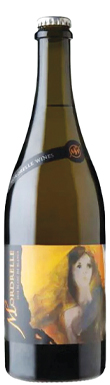

An alluring and characterful traditional-method fizz that, having spent six years on the lees, has an intense, moreish character. Frangipane and honeyed, roasted almonds jump...
2018
MordrelleAdelaide Hills

Far Mountain, Myrna, Sonoma County, Sonoma Valley, California, USA, 2020
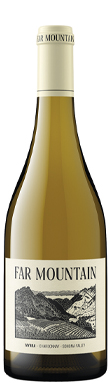
A tingling, electric vibrancy runs through this memorable Chardonnay, defined by mouthwatering salinity, fleshy citrus and herbal fragrance. These characters give depth of field to...
2020
Far MountainSonoma County
Reta, Ta/Mira, Jerez, Andalucia, Spain, 2023
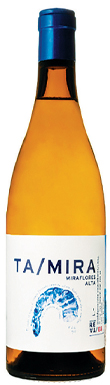
This Palomino is from the prized Miraflores vineyard in Sanlúcar de Barrameda, where the deep, chalky soils are credited with imparting greater finesse to the...
2023
RetaJerez
Michelini i Muffato, La Petra, Bierzo, Castilla y Léon, Spain, 2022
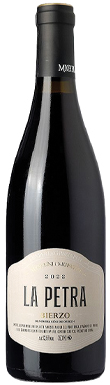
One of the newest ‘paraje’ wines in the family’s Bierzo portfolio, La Petra was formerly part of their ‘village’ cuvée but was elevated to single-vineyard...
2022
Michelini i MuffatoBierzo
Bodega El Reventón, El Reventón, Gredos, Spain, 2023
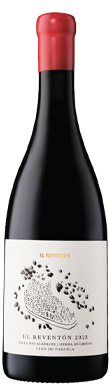
Sourced from 80-year-old vines that are rooted in slate and quartz, vinified with what winemaker Alejandro Vigil describes as an ‘infusion-like’ maceration, the result is...
2023
Bodega El Reventón
Legado de Orniz, Epitafio, Toro, Castilla y Léon, Spain, 2022
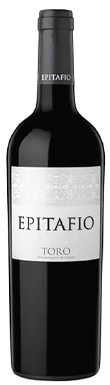
This vintage shows the trademark Legado de Orniz elegance of tannins and zesty freshness, underpinning the Tinta de Toro variety’s savoury intensity. There’s remarkable purity...
2022
Legado de OrnizToro
Mordrelle, Reserve Blanc de Blancs Zero Dosage, Adelaide Hills, South Australia, Australia, 2018
An alluring and characterful traditional-method fizz that, having spent six years on the lees, has an intense, moreish character. Frangipane and honeyed, roasted almonds jump...
2018
MordrelleAdelaide Hills
Far Mountain, Myrna, Sonoma County, Sonoma Valley, California, USA, 2020
A tingling, electric vibrancy runs through this memorable Chardonnay, defined by mouthwatering salinity, fleshy citrus and herbal fragrance. These characters give depth of field to...
2020
Far MountainSonoma County
Reta, Ta/Mira, Jerez, Andalucia, Spain, 2023
This Palomino is from the prized Miraflores vineyard in Sanlúcar de Barrameda, where the deep, chalky soils are credited with imparting greater finesse to the...
2023
RetaJerez
Michelini i Muffato, La Petra, Bierzo, Castilla y Léon, Spain, 2022
One of the newest ‘paraje’ wines in the family’s Bierzo portfolio, La Petra was formerly part of their ‘village’ cuvée but was elevated to single-vineyard...
2022
Michelini i MuffatoBierzo
Bodega El Reventón, El Reventón, Gredos, Spain, 2023
Sourced from 80-year-old vines that are rooted in slate and quartz, vinified with what winemaker Alejandro Vigil describes as an ‘infusion-like’ maceration, the result is...
2023
Bodega El Reventón
Legado de Orniz, Epitafio, Toro, Castilla y Léon, Spain, 2022
This vintage shows the trademark Legado de Orniz elegance of tannins and zesty freshness, underpinning the Tinta de Toro variety’s savoury intensity. There’s remarkable purity...
2022
Legado de OrnizToro
