Expert’s Choice: South America’s premium red blends
Varietally labelled wines have been at the forefront for decades, but South American producers put great efforts into their blends as wines of high quality and standing.
Get our daily fine wine reviews, latest wine ratings, news and travel guides delivered straight to your inbox.
You are now subscribed
Your newsletter sign-up was successful
The stellar reputation of South America’s premium red wines has been built on the region’s iconic varietal wines: Argentinian Malbec, Chilean Cabernet Sauvignon and Carmenère, and Uruguayan Tannat.
Yet these wines are a relatively recent phenomenon, only really gathering pace in the 1980s when South American wineries – their sights set on export – joined the wave of varietally labelled wines emerging from the New World.
Prior to this shift in focus, South American winemakers had been more interested in producing European-style blends – and Bordeaux blends in particular. This was a reflection of the early French and other European influences on the local wine industry.
Scroll down to see notes and scores for 18 premium South American red blends
Blending traditions
The first South American vineyards were planted by Spanish settlers and missionaries in the 1500s, but it was the wave of European immigration in the late 1800s and early 1900s that had the most significant impact on the development of the modern South American wine industry.
Many wineries were founded or advised by French vignerons, and mass immigration from wine-producing regions of Spain, Italy and France in particular ensured that European varieties and sensibilities took hold. European blends found a new home in South America.
Varietal Malbec, Cabernet, Carmenère and Tannat moved into starring roles on the world stage in the decades following the 1980s surge, and since then top winemakers have continued to evolve their premium blends behind the scenes.
The best Bordeaux-style blends are far from mere imitations of Bordeaux. South America’s winemakers are creative, blending in the local heroes Malbec, Carmenère and Tannat.
Get our daily fine wine reviews, latest wine ratings, news and travel guides delivered straight to your inbox.
Other European varieties such as Syrah and Cabernet Franc are also adding refinement, with winemakers seeking to balance tradition and innovation.
Meanwhile, the emergence of new geographical indications (or GIs – delimited areas indicating the origin of a wine, which may be stated on labels), such as the sub-regional GIs of the high-elevation Uco Valley, is encouraging experimentation with new grape varieties, such as Rhône-style blends based on Grenache, Syrah and Mourvèdre.
The character of local terroirs and individual vintages is being given increasing weight, too; good vintages such as 2018, 2019 and 2021 have seen quality elevated to new heights.
Greater finesse
The line-up of premium South American red blends from which I made this selection included some truly world-class wines. Perhaps the most revealing aspect of the tasting was an evident stylistic shift towards greater finesse – these will always be wines of body and opulence, but they are increasingly elegant and vibrant, too.
And although these are wines built to last another decade – or longer – in the cellar, you’ll find that many are drinking beautifully already.
It’s no surprise that many of these wines are earning recognition in prestigious markets, including La Place de Bordeaux (since the 17th century used as a central distribution network for Bordeaux wines, but which in recent years has developed into a platform to sell elite wines from around the world).
Cheval des Andes became the first Argentinian wine to be sold through La Place in 2003.
Premium red blends have played the role of understudy in South America for decades, but they are steadily now moving into the spotlight – it’s time to take a fresh look.
Notes and scores for 18 top South American red blends
Related articles
- Chile’s new wave white wines
- Great Cabernets of South America
- South America’s new flying winemakers plus 12 wines to try
Cheval des Andes, Mendoza, Argentina, 2021
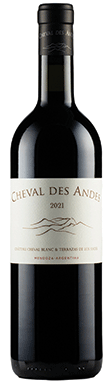
Since Gerald Gabillet's arrival in Mendoza in 2018, Cheval des Andes wines have gained in elegance and precision. In a great vintage like 2021, the results are spellbinding. Near-equal parts Cabernet Sauvignon and Malbec, with 3% Petit Verdot; the fruit comes from an old vineyard in Las Compuertas and a newer property in the Uco Valley. A fruity, floral wine, with minty hints and a subtle layer of oak that contributes spice and cedar notes. The palate is silky and energetic, with a vibrant freshness and polished, grippy tannins that channel it nicely into the long, perfumed finish.
2021
MendozaArgentina
Cheval des Andes
Almaviva, Almaviva, Puente Alto, Maipo Valley, Chile, 2021
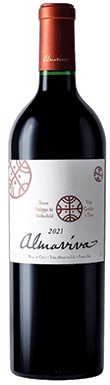
Crafted by Michel Friou from a legendary vineyard in Puente Alto, this is a precise red blend that balances opulence with elegance. The nose delivers blackcurrant, cherry, redcurrant and liquorice aromas with hints of violets, eucalyptus, spice, and pencil shavings. Fleshy, with a juicy, energetic core and polished tannins that promise ageing potential. A classy, harmonious wine. A blend of 71% Cabernet Sauvignon and 22% Carmenère, with dashes of Cabernet Franc and Petit Verdot, it was aged for 20 months in new French barrels.
2021
Maipo ValleyChile
AlmavivaPuente Alto
Seña, Seña, Aconcagua Valley, Aconcagua Valley, Chile, 2022
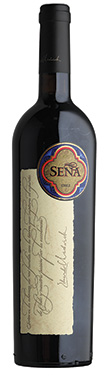
Finesse is Seña's trademark and the 2022 is no exception – this new vintage is intense, vibrant and persistent. A rich ruby red, with aromas of fresh red and black fruit combined with intense floral notes, hints of graphite, wild herbs and spice. It's full-bodied with a tense, refreshing character. The tannins are delicate and fine but provide enough grip, sustaining the palate at length before the fragrant finish. A standout addition to the cellar. A blend of Cabernet Sauvignon, Malbec, Carmenère and Petit Verdot; matured 18 months in barrels and foudres.
2022
Aconcagua ValleyChile
SeñaAconcagua Valley
Bodega Trapiche, Iscay, Uco Valley, Mendoza, Argentina, 2021
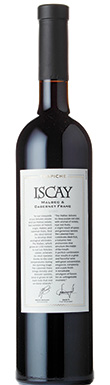
Trapiche’s blend of 70% Malbec and 30% Cabernet Franc never disappoints. Sergio Casé and Marcelo Belmonte painstakingly choose the best fruit, hand-harvesting selected bunches, then selecting the best berries from the destemmed fruit. Smooth and perfumed with aromas of blackcurrants, violets blackberry, and thyme. The palate is taut and velvety, with a chalky liveliness at the core. Sumptuous tannins bode well for an excellent future.
2021
MendozaArgentina
Bodega TrapicheUco Valley
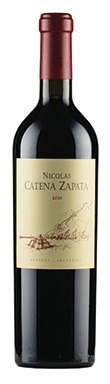
Catena Zapata, Nicolás Catena Zapata, Uco Valley, Mendoza, Argentina, 2020

Floral, perfumed, and beautifully balanced, this offers layers of red fruits with precise French oak spice. The palate is voluminous and tense, before the chalky freshness, fine-grained tannins, and mineral backbone come into play. A wine intended for bottle ageing. Made from massal selections of ungrafted, pre-phylloxera Cabernet Sauvignon and Malbec; with 25% Cabernet Franc. A nod to 18th-century Bordeaux, when Malbec was widely planted in the Médoc.
2020
MendozaArgentina
Catena ZapataUco Valley
VIK, VIK, Alto Cachapoal, Cachapoal Valley, Chile, 2020
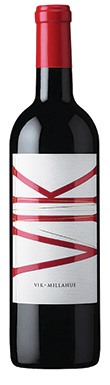
VIK is the grand vin crafted by Cristian Vallejo from specially selected grapes in the Millahue vineyard in Alto Cachapoal. The style has become more elegant over the years, this vintage particularly so. A blend of Cabernet Sauvignon and Cabernet Franc, this is an intense red with excellent ageing potential. The nose combines spicy hints from the ageing process with ripe red fruits, blackcurrant jam, eucalyptus, rosemary and thyme. There are also notes of graphite, sandalwood and rose pepper. An ideal choice for those who enjoy vigorous wines, with a solid palate of accomplished freshness and firm, chalky tannins. Juicy and long-lasting.
2020
Cachapoal ValleyChile
VIKAlto Cachapoal
Bodega Garzon, Balasto, Garzón, Maldonado, Uruguay, 2020
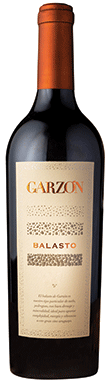
The 2020 vintage of Balasto is one of the most exciting since its inception in 2015. Original and complex, it’s a rich, vivid ruby red with purple flecks in the glass. The nose presents fresh berries, graphite, liquorice, cassis, and pencil shavings. The palate is savoury, with a velvety feel and fine tannins before the long, floral, balsamic finish. A summer of significant temperature variations provided Germán Bruzzone with high-quality fruit for this blend of 42% Tannat, 39% Cabernet Franc, and 19% Petit Verdot; matured 20 months in untoasted barrels.
2020
MaldonadoUruguay
Bodega GarzonGarzón
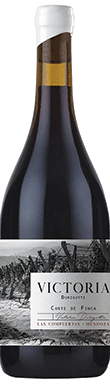
Durigutti Family Winemakers, Victoria Durigutti Corte de Finca, Luján de Cuyo, Mendoza, Argentina, 2019

A fruity, floral red with balsamic tones that fill the palate, it has a tense but fluid feel with rounded tannins and a fragrant finish. Crafted by Pablo and Héctor Durigutti with grapes from their vineyard in Las Compuertas, Luján de Cuyo, this is one of the new Mendozan red blends to look out for. A blend of 38% Cabernet Franc, 35% Malbec, 17% Petit Verdot, and 8% Charbono (Bonarda) and 2% Cordisco (Montepulciano), it is fermented with native yeasts in 600L barrels before ageing in concrete for almost two years.
2019
MendozaArgentina
Durigutti Family WinemakersLuján de Cuyo
Emiliana, Gê, Colchagua Valley, Chile, 2019
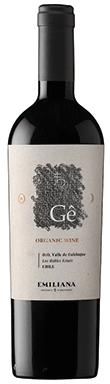
This is an exquisite blend of grapes grown in a stoney vineyard in Colchagua; 54% Syrah, 31% Carmenère and 15% Cabernet Sauvignon. A rich violet colour, with complex aromas of fresh red fruits, balsamic tones, spices, cedar, and cloves. It's savoury in the mouth, with a velvety texture and polished tannins. The flavours are peppery and persistent with a pleasant fruity finish. Gê is the flagship wine from Emiliana, Chile's leading biodynamic winery.
2019
Colchagua ValleyChile
Emiliana
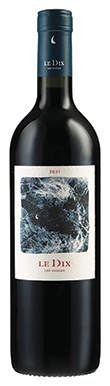
Los Vascos, Le Dix, Colchagua Valley, Colchagua Valley, Chile, 2021

Delivers cherry, redcurrant, and blueberry aromas, with delicate spice from the oak. The palate is harmonious, with a pleasant texture and the accomplished freshness of a cool vintage. The firm, fine-grained tannins will come to the fore as this ages. A great wine in an exquisite Bordeaux style. Cabernet Sauvignon with the classic touch of 3% Syrah and for the first time, also 3% Cabernet Franc, enhancing its Bordeaux character with finesse.
2021
Colchagua ValleyChile
Los VascosColchagua Valley
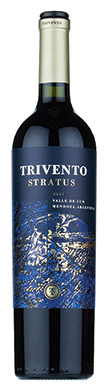
Trivento, Trivento Stratus, Uco Valley, Mendoza, Argentina, 2021

Mendoza winemaker Germán Di Cesare presents his first red blend from the Uco Valley. This is a transparent wine that expresses its sense of place with purity. It is perfumed and refined, with aromas of wild herbs and blackcurrant, framed by spicy oaky notes. The palate is energetic with good structure, balance and polished tannins that will suit bottle ageing. A blend of 70% Malbec, 20% Cabernet Franc and 10% Merlot, sourced from sites in Paraje Altamira, Gualtallary, and Los Chacayes. Matured 18 months, half in a mix of new and used oak barrels and half in foudres.
2021
MendozaArgentina
TriventoUco Valley
Viñedos de Alcohuaz, Rhu, Elqui Valley, Chile, 2018
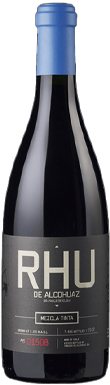
Coming from the highest-elevation vineyard in Chile, this is by all means an extreme Syrah. Deliciously ripe black-fruit notes reflect the intensity of the sun up high in the Andes, while the incredible brightness and freshness reflect the really cool nights at 2,206m elevation. Engaging, brooding and inky, with savoury aromas of bacon fat and black olives.
2018
Elqui ValleyChile
Viñedos de Alcohuaz
Bodega Bouza, Monte Vide Eu, Montevideo, Uruguay, 2020
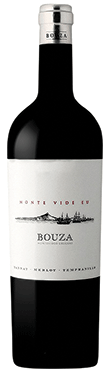
A flavourful wine, the aromas feature crisp red and black fruit with hints of liquorice, wild herbs and cassis. The palate is opulent, with firm but juicy tannins before the long, intense finish. Should age very well. This is a masterpiece of Uruguayan winemaking from Eduardo Boido. A blend of 45% Tannat, 30% Merlot, and 25% Tempranillo; fruit is sourced from Melilla in Montevideo as well as Las Violetas in neighbouring Canelones.
2020
MontevideoUruguay
Bodega Bouza
Bodegas Lopez, Montchenot 15 años, Mendoza, Argentina, 2007
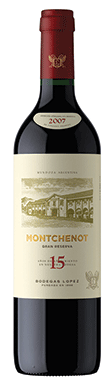
Montchenot is a long-established classic among Argentine red blends. Offers aromas of dried spice, herbal tones and hints of fig and raisin against a cedar backdrop. The palate is light and subtle, with gentle tannins and a perfumed, clove-inflected finish. A traditional Argentine wine that every wine lover should try. A blend of Cabernet Sauvignon, Merlot, and Malbec, aged Rioja-style for 36 months in oak barrels, plus another 6 years in the bottle.
2007
MendozaArgentina
Bodegas Lopez
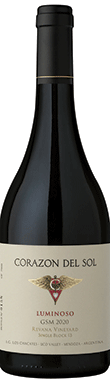
Corazon Del Sol, Luminoso, Uco Valley, Los Chacayes, Mendoza, Argentina, 2020

Corazón del Sol grows Rhône varieties in the stony, high-altitude terroir of Los Chacayes, producing distinctive Argentine wines. This co-fermentation of Grenache, Syrah, and Mourvèdre spent 12 months in neutral barrels, resulting in a bright, violet-red colour and complex aromas of ripe red fruits, wild herbs and thyme. Chewy in the mouth with an energetic core, juicy tannins and a chalky texture, this is a curiosity worthy of discovery.
2020
MendozaArgentina
Corazon Del SolUco Valley
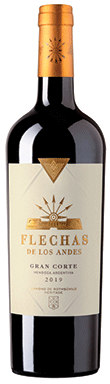
Flechas de los Andes, Gran Corte, Uco Valley, Mendoza, Argentina, 2019

Sober and elegant, this assemblage by Pablo Richardi has a graceful, Bordeaux-inflected essence. The nose presents aromas of blackcurrant, plum and blackberry, graphite, liquorice, anise, and clove. The sculpted tannins are delicate yet substantial, promising excellent ageing potential. A blend of 55% Malbec, 40% Cabernet Franc and 5% Syrah, matured 18 months in new French oak barrels.
2019
MendozaArgentina
Flechas de los AndesUco Valley
Morandé, Casatinta, Casablanca Valley, Chile, 2020
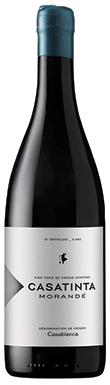
A new release from Morandé winemaker Ricardo Baetigg, Casatinta is a blend of 72% Malbec, 24% Syrah, and 4% Cabernet Franc. The fruit is sourced from cool-climate Casablanca, a region best known for white wines. The result is an avant-garde wine for those who appreciate tension and lightness. Super-fruity, with Malbec's floral notes and some minty touches, it is vibrant on the mid-palate, with firm tannins and a delightful taste of cherries and blackberries. The finish is fragrant with balsamic hints.
2020
Casablanca ValleyChile
Morandé
Viña San Pedro, Sideral, Cachapoal Valley, Chile, 2021
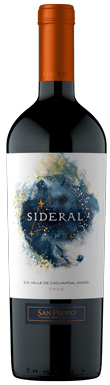
Inspired by the night skies above Cachapoal Valley – in Latin sideralis means constellation – this is a nicely balanced blend of Cabernet Sauvignon, Syrah and Carmenère, with dashes of Petit Verdot and Cabernet Franc. Lively, inviting aromas of spicy black berries and cherries. Vibrant red fruit attack gives way to a rich, concentrated palate with fine tannins, layered with plum, sour cherry, blackberries and dusty cassis notes on the finish. Will improve with age.
2021
Cachapoal ValleyChile
Viña San Pedro

Alejandro Iglesias was born in Buenos Aires, Argentina, to a family where gastronomy and wine always occupied leading roles. In 2004, he changed his career as a Financial Adviser to begin his studies at the Argentine School of Sommeliers. Since then, he has worked as a wine writer for several Argentine and international media publications, as well as being a Decanter contributor. As a wine educator, he teaches classes in Argentina, Uruguay, Panama and Costa Rica. Since 2010 he has been the Executive Sommelier at Bonvivir, the largest wine club in Argentina and in 2013 he launched Vinomanos.com, the first Argentine wine app. As a member of the Argentine Sommeliers Association (AAS), he participated in the organising committee of the Best Sommelier Competition in Mendoza, Argentina. Alejandro Iglesias was a judge at the 2019 Decanter World Wine Awards (DWWA).