
13 wines to help you understand Sangiovese from Romagna
Richard Baudains takes a closer look at Romagna's Sangiovese and its sub-zones, and picks out 13 examples to try.


Romagna has shared Sangiovese with Tuscany for centuries.
Which region cultivated it first is open to conjecture, but the most likely hypothesis is that it was first grown in the Appenine slopes of the Romagna Toscana, an area culturally and linguistically Romagnola but which was under the rule of Florence from the Middle Ages until the 1920s.
In Romagna the first written reference, dated to 1651, is to ‘Sanzuvesa’, subsequently Italianised into the modern day ‘Sangiovese’ [Quoted in Sangiorgi e Zinzani, Romagna Sangiovese, Storia e Identità di un Famoso Vino e di un Antico Vitigno (Valfrido ed. 2017) p.12].
In Tuscany, a certain Girolamo da Firenzuola made the first known reference to ‘Sangioveto’ in 1552, [idem, p.18] and it was by this name that the variety was most commonly known in the region until well into the 20th century – in his famous notes for the blend of Chianti, Baron Ricasoli refers specifically to Sangioveto and not Sangiovese.
Shared heritage
Whether the Sangiovese of Romagna and the Sangioveto of Tuscany were the same grape with different names, or different but related varieties, we will never know, but throughout the 19th century, it was common for authors on both sides of the Appenines to make a distinction between them [Ian d’Agata, Native Wine Grapes of Italy (University of California 2014) p.427].
The ambiguity was only finally resolved in 1970 by the Italian National Grape Variety Register, which established the name of the variety as Sangiovese, and Sangioveto as an official synonym.
Although Romagna can rightfully claim the origin of the name Sangiovese, its wines have always been considered the poor relative of those of neighbouring Tuscany.
One reason is certainly the scale of production. The 9 million bottles a year of Sangiovese di Romagna are dwarfed by the 35-38 million of Chianti Classico, according to the official data.
Another is that Romagna has been dogged by a reputation for quantity over quality – and it has to be said that the generous permitted yields for basic Sangiovese di Romagna DOC do not inspire confidence in that respect.
However, there is another side to Romagna and it is represented by the Sangiovese Superiore category, and above all by wines from the region’s MGA (menzione geografica aggiunta) sub-zones.
Romagna’s wine area
The Romagna viticultural area stretches along the hills to the south of the ancient Roman via Emilia which links Bologna to the Adriatic at Rimini. By long tradition, it is divided by administrative area into five macro-zones, corresponding to the provinces of Imola, Faenza, Forli, Cesena and Rimini, and within these boundaries into the 16 sub-zones.
Some, such as Bertinoro and Brisighella, are well known for their long history of winemaking. Others, like Coriano and San Clemente, are much less familiar. Brisighella is the largest of the sub-zones, with a surface area of 1,700 hectares, while the smallest, Mercato Saracena, has a mere 129ha.
The area is composed of a long series of valleys and ridges which run from the foothills of the Apennines northeast towards the plain of Emilia. The climate and soil variables are determined by the distance from the sea and altitude.
Moving inland, the climate becomes progressively more continental, while areas nearer the coast feel the moderating effects of the winds off the sea, which translates into differences in harvest times and in the structure of the wines.
Wines from the Rimini sub-zones are lighter and fruitier, while those from the hinterland are firmer, drier and more compact.
Soils change along the east-west axis, but also – importantly – moving up the valleys from the lower to the higher slopes.
A recent local government study describes Emilia Romagna as a region with one of the most complex geological structures in the world, and this shows in the soil maps.
Soils range from ferrous clay through fossil-rich limestone to chalky marl and sandstone marl, with innumerable variations depending on the bedrock.
In the latest of his splendid geo-viticultural maps, master cartographer Alessandro Masnaghetti gets the number of soil types down to 15 (with his apologies for the omissions).
The Romagna subzones

At the annual tasting of the Consorzio Vini Romagna in September 2025, I had the chance to taste current vintages from all but one of the 16 Sangiovese di Romagna Superiore sub-zones.
There were wines in nearly all of them which caught the eye. The standouts from the tiny Marzena MGA were the rich and silky Riservas made with the sensitive touch of Cristina Geminiani, whose Fattoria Zerbina has carried the flag for quality winemaking in Romagna for many decades.
At Bertinoro, another long-standing champion of quality winemaking, Giovanna Madonia produces wines of depth and substance which reflect the clay and limestone soils of the sub-zone.
At the much lesser known Castrocaro in the Province of Forli, Marta Valpiani showed vibrant fruit-focused wines with a tangy mineral quality.
But the two sub-zones which impressed me most, for the number of quality wines and their decisive terroir character, were Predappio and Modigliano.
Predappio
Predappio is one of the larger sub-zones, with a surface area of 1,200 ha. It stretches from low foothills up to around 400m, along two valleys with slightly different soils; clay on limestone in one case and a chalky marl in the other.
The wines are tightly structured with firm acidity, fine, dry tannins, and a grippy, earthy-mineral finish. In the younger 2023 vintage they were perhaps a little austere, but with the extra year in the bottle, the 2022s were more relaxed and were showing very attractive fruit.
These are wines with great personality and definite ageing potential. Top producers include Condé, Dei Donà, La Collina del Tesoro, Pandolfa-Noelia Ricci and Podere dal Nespoli.
Modigliana
Modigliana is one of the smallest of the sub-zones, with a surface area of just under 240ha. It is the most distant from the plain, tucked away between 300m and 600 metres above sea level in a densely wooded area at the foothills of the Apennines.
It consists of three steep valleys which converge at the village which gives its name to the sub-zone. The most planted is the valley of Ibola, which has the highest sites and which, due to its elevation, is often the latest picked in the region.
The sandstone soils vary in depth across the valleys, but are unusually homogeneous, giving a unity to the wines.
Modigliano Sangioveses are fresh, savoury and refined, medium to light bodied, with aromas which capture the herby-garrigue side of the variety. They are a masterclass in finesse, but they also have proven ageing ability.
Top producers include Ronchi di Castelluccio, La Casetta dei Frati, LU.VA, Menta & Rosmarino and Villa Pappiano.
Sangiovese Superiore
The Sangiovese Superiore sub-zones present all the nuances of the interaction between the terroir and the variety in its purest, mono-varietal form.
Production is much more limited – according to the Consorzio Vini Romagna, it amounted to a total of 518,933 bottles in 2024 – but these site-specific wines offer some of the most exciting Sangiovese to be found anywhere today.
Sangiovese in Romagna: 13 to try
If you are a fan of the variety, these are wines you will want to know about.
Italy newsletter: Sign up today
Get the best recommendations, vintage analysis, regional and cultural insights and more delivered to your inbox once a month, helping you to stay up-to-date with the latest in Italian wine.

Related articles
- Buyer’s guide to Romagna Sangiovese
- Romagna wine tour
- Terre di Pisa: Bridging the coastal and continental styles of Tuscany
Ronchi di Castelluccio, Ronco della Simia, Romagna, Sangiovese Modigliana, Emilia-Romagna, Italy, 2020
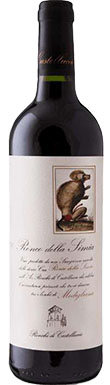

The very specific sour berry mix of sloes and myrtle on the nose, with a subtle spicy note in the background, leads into tight, firmly...
2020
Ronchi di CastelluccioRomagna

Fattoria Zerbina, Pietramora Riserva, Romagna, Sangiovese Marzeno, Emilia-Romagna, Italy, 2020
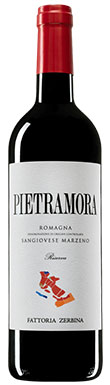
Intense, ripe fruit with a whiff of cherry liqueur, but not at all overstated on the nose. Good balance and the super-fine tannins on the...
2020
Fattoria ZerbinaRomagna
Drei Donà, Notturno, Romagna, Sangiovese Predappio, Emilia-Romagna, Italy, 2023
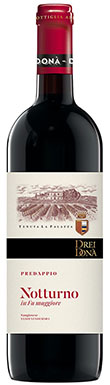
Great depth of colour and a nose still marked by the oak signals a wine which needs time – but the palate holds great promise....
2023
Drei DonàRomagna
Luva, Il Carbonaro, Romagna, Sangiovese Modigliana, Emilia-Romagna, Italy, 2023
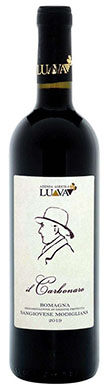
There is lovely pot pourri and red cherry on the nose, and very fine tannins woven into a palate which is long and dry, with...
2023
LuvaRomagna
Marta Valpiani, Crete Azzurre Riserva, Romagna, Sangiovese Castrocaro, Emilia-Romagna, Italy, 2021
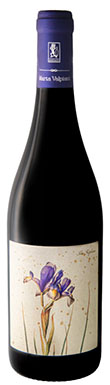
A very luminous, Sangiovese shade with equally classic violet and black cherry scents. It starts a little tough and dry, but opens out on the...
2021
Marta ValpianiRomagna
Pandolfa-Noelia Ricci, Godenza, Romagna, Sangiovese Predappio, Emilia-Romagna, Italy, 2023
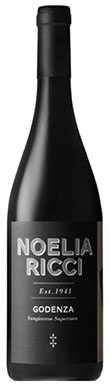
A nose of crushed bilberry, with hints of savoury herbs leads into a broad, textured palate, with great depth of soft ripe tannins, through which...
2023
Pandolfa-Noelia RicciRomagna
Villa Papiano, Vigna Beccaccia, Romagna, Sangiovese Modigliana, Emilia-Romagna, Italy, 2021
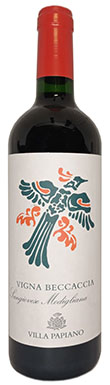
The very pale shade speaks of high altitude Sangiovese, as does the delicate nose of violets and juniper berry. The palate is light and dry...
2021
Villa PapianoRomagna
La Casetta dei Frati, Framonte, Romagna, Sangiovese Modigliana, Emilia-Romagna, Italy, 2022
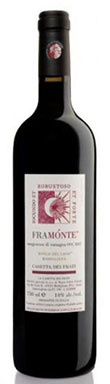
On the nose there is slightly sour fresh plum with notes of flint and wet stone at the back. The airy quality given by the...
2022
La Casetta dei FratiRomagna
Menta & Rosmarino, Area 8, Romagna, Sangiovese Modigliana, Emilia-Romagna, Italy, 2023
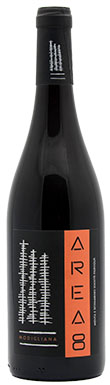
Fresh and open on the nose, with savoury wild berries and the hallmark Sangiovese earthiness in the background. The mid-weight, textured palate has a fluid...
2023
Menta & RosmarinoRomagna
Giovanna Madonia, Ombroso Riserva, Romagna, Sangiovese Bertinoro, Emilia-Romagna, Italy, 2022
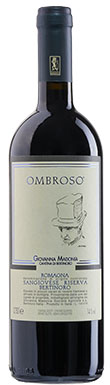
The violet and iris aromas here are pure Sangiovese, and in the background there is a very tangy, almost salty mineral quality to the nose....
2022
Giovanna MadoniaRomagna
Condé, Chiara Condello, Romagna, Sangiovese Predappio, Emilia-Romagna, Italy, 2023
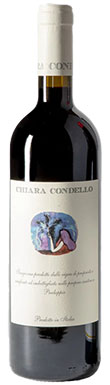
Black cherry conserve aromas and touches of sweet oak around the edges. The poised, mid-weight palate has juicy acidity, tannins smoothed out by the adept...
2023
CondéRomagna
La Collina del Tesoro, Colombara d'Ottobre, Romagna, Sangiovese Predappio, Emilia-Romagna, Italy, 2023
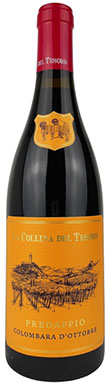
The engaging fresh red cherry aromas on the nose are contrasted by a touch of the typical stalkiness of the variety. The palate is silky...
2023
La Collina del TesoroRomagna
Sadivino, Sanjoves, Romagna, Sangiovese Predappio, Emilia-Romagna, Italy, 2022
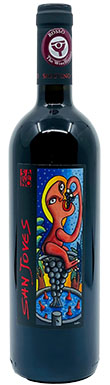
A herby tea leaf nose preludes a palate which is long, bone-dry and savoury, with sandy-textured tannins and a very compact grippy finish. The very...
2022
SadivinoRomagna
