Librandi: A Calabrian icon plus eight wines tasted
Calabria may remain in the shadows compared to more illustrious names to the north, yet Stephen Brook finds that perhaps its most famous producer remains steadfast in honouring and nurturing the region's winemaking heritage.
Get our daily fine wine reviews, latest wine ratings, news and travel guides delivered straight to your inbox.
You are now subscribed
Your newsletter sign-up was successful
If asked to name a wine producer from Calabria, I doubt that many of us could come up with more than one: Librandi.
The company was founded in the early 1950s and has remained in family ownership. The holdings are spread across six different estates, totalling around 230ha. The focus has long been on indigenous varieties, which is a brave stance given that Calabrian grape varieties are hardly household names, especially outside Italy.
Scroll down to see tasting notes and scores for eight Librandi wines
The region’s best known wine has always been Cirò, which has the added advantage of being easy to pronounce. It is made from the Gaglioppo grape (less easy to pronounce) which is the variety that accounts for 40% of plantings in Calabria.
It’s not an easy grape to vinify. Like Nerello Mascalese from Etna or Nebbiolo from Piedmont, it is low in pigmentation and does not produce deeply coloured wines. That in itself is no drawback, but it also has a tendency to acquire an orange hue as it ages, which is less appealing.
Many wineries tend to ferment Gaglioppo at too high a temperature, which both diminishes the aroma and extracts a good deal of excess tannins. That, combined with the variety’s naturally high acidity, can lead to wines with considerable astringency.
Having recently tasted a range of Cirò wines, it’s clear that many of them do have a rustic character. This is less true of the Librandi wines, but even so, robust tannins are often an integral part of the wine’s structure.
But these are not aperitif wines, they are intended to be consumed with Calabria’s hearty cuisine. (This is, after all, the birthplace of nduja, the fashionable soft pork sausage with chillies.)
Get our daily fine wine reviews, latest wine ratings, news and travel guides delivered straight to your inbox.
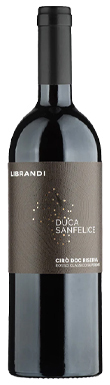
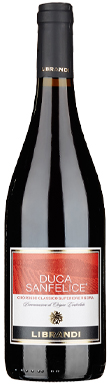
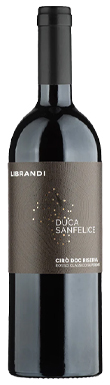
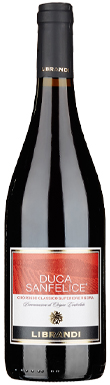
Librandi’s top Cirò, a Classico Superiore Riserva called Duca Sanfelice, is sourced from bush vines planted on clay and limestone soils. After fermentation in stainless steel tanks, the wine is aged for two years in steel and concrete tanks.
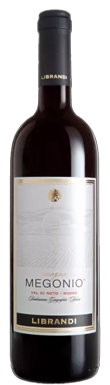
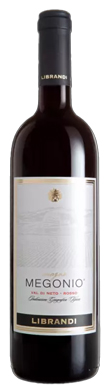
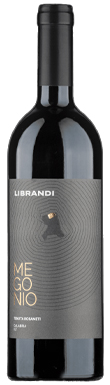
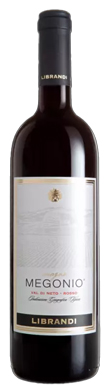
Librandi’s other outstanding wine, Megonio, comes from the even more obscure Magliocco grape, which is grown on similar soils and cropped at low yields.
It’s a vigorous variety with tight bunches that give deeply coloured juice. Like Gaglioppo, it needs to be picked late to ensure the tannins are ripe.
Megonio is made in a more international style, being aged for 12 months in barriques.
The aromas, enhanced by the oak ageing, can display leather and tobacco aromas as well as black fruits. In a way, Megonio is the polar opposite of the red-fruited Duca Sanfelice. Even more than Duca Sanfelice, it’s a fine match for rich, meaty dishes and sauces.
Gaglioppo is generally not a wine for long ageing, but Librandi has demonstrated that both these varieties deliver wines that can be confidently cellared for around 10 years, and can age for considerably longer, though it’s certainly not necessary or even advisable to do so.
These moderately priced wines perhaps suffer from the less than inspiring image of Calabrian wines as a whole, but they deserve to be better known.
Stephen Brook rates multiple vintages of two outstanding Librandi wines
Related content
Calabria travel guide: ‘Untapped wine potential’
Study reveals glimpse of ancient Roman winemaking
Valle d’Aosta for wine lovers
Librandi, Duca Sanfelice, Cirò, Rosso Classico Superiore, Calabria, Italy, 2017

Despite the heat of the summer in this year, the nose shows no baked character and has perfumed cherry aromas. Supple and juicy, this shows...
2017
CalabriaItaly
LibrandiCirò
Librandi, Duca Sanfelice, Cirò, Rosso Classico Superiore, Calabria, Italy, 2010

This vintage is definitely showing signs of maturity, with an evolved nose showing meaty, bacony aromas that are intense and complex. Sweet and silky, this...
2010
CalabriaItaly
LibrandiCirò
Librandi, Duca Sanfelice, Cirò, Rosso Classico Superiore, Calabria, Italy, 2019

The nose displays zesty red fruits of immediate charm. There is evident ripeness here, and a supple texture with no astringency. For Gaglioppo this is...
2019
CalabriaItaly
LibrandiCirò
Librandi, Duca Sanfelice, Cirò, Rosso Classico Superiore, Calabria, Italy, 2014

The aromatic red-fruits nose shows surprising purity. Supple and mature, this is enveloped in gentle tannins, and display finesse and some freshness. It may lack...
2014
CalabriaItaly
LibrandiCirò
Librandi, Megonio, Calabria, Italy, 2016

This was a fine vintage in Calabria, and shows the real potential of Magliocco. Very deep in colour, it has a sweet ripe nose with...
2016
CalabriaItaly
Librandi
Librandi, Megonio, Calabria, Italy, 2013

There is little sign of age from this wine, again from a very good vintage. The nose is wonderfully vibrant, with plum and black cherry...
2013
CalabriaItaly
Librandi
Librandi, Megonio, Calabria, Italy, 2019

The smoky leathery aromas suggest this wine suffers from some brett, which some may find hard to accept. Even so, this is a very concentrated,...
2019
CalabriaItaly
Librandi
Librandi, Megonio, Calabria, Italy, 2009

The nose, with its ripe plummy aromas, is elegant and raises expectations. Yet on the palate it is lighter than the younger vintages and lacks...
2009
CalabriaItaly
Librandi
Stephen Brook has been a contributing editor to Decanter since 1996 and has won a clutch of awards for his writing on wine. The author of more than 30 books, his works include Complete Bordeaux, now the definitive study of the region and in its third edition, and The Wines of California, which won three awards. His most recently published book is The Wines of Austria. Brook also fully revised the last two editions of Hugh Johnson’s Wine Companion, and he writes for magazines in many countries.