top Tempranillo wines
(Image credit: Credit Unknown)

Ull de Llebre, Tinta del País, Cencibel, Tinto Fino – even in Spain Tempranillo comes under a rainbow of names. The diversity of that country’s soils and terroirs mean that it also comes in an equal rainbow of styles. Juicy cherries; lightweight, unoaked fresh wines; laden with tarry oak; elegantly mature with tertiary aromas. It’s a chameleon, one that adapts itself to blend with Garnacha, Cariñena and Graciano, as well as Cabernet Sauvignon and Merlot.

Anyone who makes Tempranillo outside Spain is going to have to measure their wine up against the home version. Because of Spain’s diversity the international versions are nearly always going to fall short of one regional version or another. Like Rioja but not quite; like Toro, but not quite; like Valdepenas but not quite.

That hasn’t stopped people trying, making Tempranillo the fifth-most planted variety in the World (OIV, 2017). This was the premise behind a presentation at the 2019 Texsom Conference. Junior Vianna MW (batting for Portugal and Argentina) and Jessica Dupuy, author of the forthcoming book on The Wines of Texas and the South-West (batting for those regions), and I (with Spain) were asked to organise a taste-off between the varietal worldwide.

In the end the real difficulty was distribution. At relatively short notice it wasn’t possible to get our wish list into Texas. Today, revisiting the tasting under lockdown, it’s equally difficult to recommend wines with good distribution outside their production regions. But as that tasting showed it’s a very worthy exercise to track down Tempranillo.

Is it possible to make Tempranillo without thinking of Spain?

Argentina

Let’s be frank: who would make Tempranillo in Argentina when they could make Malbec? The statistics show it – in a country where 58% of the grapes are red, Tempranillo only accounts for 4.84% (5,561ha), and 95.22% of the plantings centred on Mendoza. Commercially, Malbec surely has to be the better option. The most established in reputation has to be the Zuccardi family with its dedicated approach to the Q Tempranillo. Zuccardi took the longer view – and still do – preferring to cellar wines for longer before release.

Elsewhere in South America, Chile and Uruguay also have much smaller plantings, and there are established vineyards in Mexico.

Australia

Australia’s plantings are growing. Between 2008 and 2015 plantings doubled to just under 800ha, and the crush increased from 4,300 to 6,000 tonnes between 2015 and 2018. At the 2018 IMW Symposium, David Le Mire MW noted that Tempranillo had a lucky arrival in Australia, in that it was not hindered by poor clonal material, unlike Sangiovese for example.

However, its low acidity and high pH are an issue for anyone trying to emulate Spain – and indeed for Spanish growers themselves. ‘One response already evident is to plant in more continental climates, with regions like Canberra District and Heathcote showing good potential,’ says Le Mire.

Tempranillo in Australia is a chameleon of sorts. It’s hard to be sure whether you will find a juicy youngster, a boldly oaked example, or indeed as at La Línea, where Le Mire is a partner, a rosé.

Historically ‘a lot of Tempranillo in Australia has been made like [traditional] Shiraz, with fruit picked at high ripeness, heavily extracted, and given plenty of new oak,’ he says. ‘Young Tempranillo vines are not old Shiraz vines, and as producers seek more drinkability and balance they are using less oak and at times no oak at all.’

Mark Davidson, head of education, Americas, for Wine Australia, agrees: ‘Careful oak handling is key. The best expressions are fragrant, medium-bodied and savoury, and rarely see more than 10-15% new oak – many not seeing any new oak at all.’ His favourite picks include La Linea (Adelaide Hills), Mount Majura (Canberra District), Tar & Roses (Heathcote). He adds: ‘Kalleske in the Barossa have just started working with the variety and I really like what they are doing with it.’

USA

It arrived in Central Valley, California in 1888, and is the 18th most planted variety today. Tempranillo stretches across Oregon, Washington, Texas, New Mexico and Arizona. California has some good varietal wines, but has not come near the attraction of Zinfandel. Of the US states, Washington and Oregon share top spot.

According to Bree Stock MW, the climate favours ‘the Walla Walla Valley and Southern Oregon – these are regions that both show huge potential for the variety, with their reliably warm growing seasons and large diurnal temperature shifts that keep acids bright and the fruit profiles fresh.’ That’s why the Walla Walla Valley has attracted the attention of Spanish producers. ‘The Valdemar Estate [of Rioja] is building a state-of-the-art winemaking facility in the region,’ adds Bree, who is industry and trade education manager for the Oregon Wine Board.

In her other life Bree is a director of Constant Crush Winery, where she makes a Garnacha and a Mencía from the Willamette Valley. Why no Tempranillo? ‘I’ve spent a good deal of time in Bierzo and Ribeira Sacra, working harvest and importing Mencía. In the early 2010s this variety really resonated with me and other sommeliers, who were attracted to the variety’s transparency and energy, when so much Tempranillo in Spain was being made in either a very traditional style or very modern style and both styles obfuscated the variety with oak,’ she says. Ah, the oak again…

With just under 90% of all plantings of Tempranillo in Spain, it’s definitely hard for any producer outside the country to change minds with a Tempranillo of a different identity. The Rhône Rangers achieved it with their own Grenache, Syrah, Mourvèdre versions. Grenache, as Garnacha in Spain, is managing to break out.

But perhaps, as Stock says, the monoliths of traditional Tempranillo have deadened its pleasures. It may take more than International Tempranillo Day on November 11 to convert the world beyond the Iberian Peninsula to plant that variety.


Sarah Jane Evans MW’s top Tempranillos from around the world


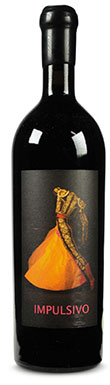
Cayuse Vineyards, Impulsivo, Columbia Valley, Walla Walla Valley, Washington, USA, 2016

My wines
Locked score

Cayuse is certainly out of the ordinary. It's a biodynamically-farmed Tempranillo by French-born Christophe Baron, who recognised the valley's Chateauneuf-du-Pape-like stones were ideal for vine...

2016

WashingtonUSA

Cayuse VineyardsColumbia Valley

Decanter Premium logo

Join Decanter Premium to unlock all our wines tastings and notes

Join Now

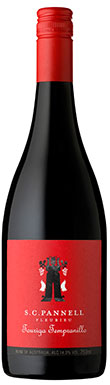
SC Pannell, Fleurieu Tempranillo/Touriga, McLaren Vale, South Australia, Australia, 2016

My wines
Locked score

I can't resist including this wine, even though as a blend it's not strictly eligible. But Tempranillo in Spain is often all about blending, and...

2016

South AustraliaAustralia

SC PannellMcLaren Vale

Decanter Premium logo

Join Decanter Premium to unlock all our wines tastings and notes

Join Now

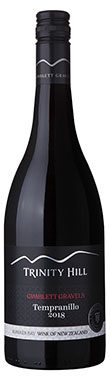
Trinity Hill, Tempranillo, Gimblett Gravels, Hawke's Bay, New Zealand, 2016

My wines
Locked score

Generalising from a very small set, it looks like Gimblett Gravels could be an ideal origin for Tempranillo in New Zealand, keeping it fresh, but...

2016

Hawke's BayNew Zealand

Trinity HillGimblett Gravels

Decanter Premium logo

Join Decanter Premium to unlock all our wines tastings and notes

Join Now

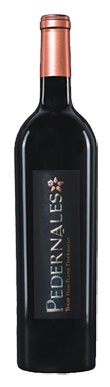
Pedernales Cellars, Tempranillo, High Plains, Texas, USA, 2016

My wines

90

Pedernales sits in the 'pan handle' of Texas, in the High Plains AVA between 900 and 1200m. Tempranillo is their main red variety in a portfolio of Mediterranean grapes. For a more Spanish feel the blend includes a little Graciano, a traditional device to enhance freshness and add a distinct savoury note. Bright, spicy and juicy.

2016

TexasUSA

Pedernales Cellars

Tar & Roses, Tempranillo, Heathcote, Victoria, Australia, 2018
My wines
Locked score

Tar & Roses have a fine Mediterranean portfolio. Tempranillo suits the Heathcote origin well, not just the climate but also the less vigorous soils which...

2018

VictoriaAustralia

Tar & RosesHeathcote

Decanter Premium logo

Join Decanter Premium to unlock all our wines tastings and notes

Join Now

Zuccardi, Q Tempranillo, Mendoza, Argentina, 2014
My wines
Locked score

The Zuccardi family are making glorious wines in the Andes foothills, but their role in Argentinan wine production is long established. This Tempranillo comes from...

2014

MendozaArgentina

Zuccardi

Decanter Premium logo

Join Decanter Premium to unlock all our wines tastings and notes

Join Now

SC Pannell, Dead End Tempranillo, McLaren Vale, South Australia, Australia, 2017

My wines
Locked score

Steve Pannell may be best known for his Grenache, but his Tempranillo deserves attention. There's oak, but it's carefully handled, aged in large vats and...

2017

South AustraliaAustralia

SC PannellMcLaren Vale

Decanter Premium logo

Join Decanter Premium to unlock all our wines tastings and notes

Join Now

Abacela, Fiesta, Oregon, USA, 2016

My wines
Locked score

Abacela earns its place here simply because Earl and Hilda Jones have done so much to drive Tempranillo in the USA, sharing clonal material and...

2016

OregonUSA

Abacela

Decanter Premium logo

Join Decanter Premium to unlock all our wines tastings and notes

Join Now
Sarah Jane Evans MW
Decanter Magazine, Wine Writer, DWWA 2019 Co-Chair

Sarah Jane Evans MW is an award-winning journalist who began writing about wine (and food, restaurants, and chocolate) in the 1980s. She started drinking Spanish wine - Sherry, to be specific - as a student of classics and social and political sciences at Cambridge University. This started her lifelong love affair with the country’s wines, food and culture, leading to her appointment as a member of the Gran Orden de Caballeros de Vino for services to Spanish wine. In 2006 she became a Master of Wine, writing her dissertation on Sherry and winning the Robert Mondavi Winery Award. Currently vice-chairman of the Institute of Masters of Wine, Evans divides her time between contributing to leading wine magazines and reference books, wine education and judging wines internationally.