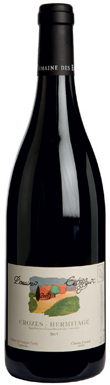
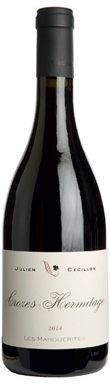
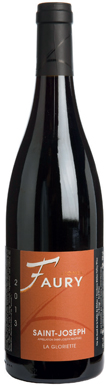
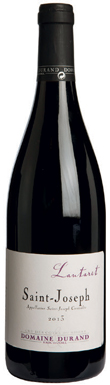
Entry criteria: Producers and UK agents were invited to submit their latest- release red wines from Crozes-Hermitage and St-Joseph. Two wines from each AC from each producer were permitted.
The verdict
By John Stimpfig.
This was an unusual tasting because it focused on two similar regions in the northern Rhône, three contrasting vintages and a single grape variety. It was also a tough tasting: 2012, ‘13 and ’14 were not great vintages and producers had to work hard to produce decent wine. ‘These are not a trio of vintages that will convert people to St-Joseph and Crozes-Hermitage,’ said Decanter’s Rhône expert John Livingstone-Learmonth.
St-Joseph performed best and the 2012s and ’13s largely outperformed the most recent vintage – though not exclusively so. ‘2014 was not a hot summer and some of the ’14s from both appellations are a bit light,’ said John Livingstone Learmonth. ‘2013 was a smaller vintage with a bit more depth and intensity. We didn’t taste many ’12s but i did have some concerns over oak which wasn’t necessary or desirable that year.’
Crozes certainly came in for most of the criticism. Simon Field MW thought ‘many of the wines we tasted from Crozes had a lot of aspiration in very difficult and challenging vintages, most notably 2014,’ he said. ‘The structure of some wines overwhelmed their inherent accessibility and fruit character. Good Crozes should be pure and exuberant – and those wines were lacking.’ Ben Llewellyn also felt that the most enjoyable wines were those where the fruit was the main performer and any oak was ‘more of a frame rather than a veneer’.
But St-Joseph also had problems, especially in 2014. Livingstone-Learmonth said it suffered from fruit fly attacks which meant that growers had to harvest quickly. ‘Some wines do lack substance, so buyers will need to select their 2014s carefully,’ he said. The greater depth and concentration of the 2013 St-Josephs, however, impressed him: ‘The wines have nicely woven tannins and good terroir expression. But I didn’t think the ‘12s we tasted were a particularly good collection.’
The three judges made the point that while both appellations are based on Syrah, they have totally different terroirs, styles and reputations. All agreed that St-Joseph was the ‘happening area’, whereas Crozes was ‘more prosaic and volume driven’. But regardless of which AC you looked at, Llewellyn said that the qualities that made the best stand out were freshness, purity and alcohol balance. ‘Certainly, I found alcohol balance, partly because in these vintages there wasn’t enough stuffing in the wines for it to be an issue.’
Field said it was hard to find many positives in this tasting, except for the fact that there were no poor or faulty wines. ‘In the Crozes, I missed its approachability and that tapenade note with a bit of black pepper on the finish. From the St-Josephs I was looking for more minerality and linear acidity, which I found in the 2013s – except where the oak dulled it.’ Llewellyn agreed: ‘I didn’t punch the air once in two days of tasting.’
Livingstone-Learmonth took a dissenting view from that of Field. ‘I felt the 2013s from St-Joseph were able to take on the oak well. I also think their acidity will enable them to make steady, if unspectacular progress. I’d envisage drinking windows of up to 2022 for the best 2013s and much less for those of Crozes-Hermitage.’
Expert summary: John Livingstone-Learmonth
Leading producers from both appellations were the stars of this tasting, along with a few newcomers, all making the most from a brace of challenging vintages
Had this tasting focused on the excellent 2010 or 2015 vintage, it would have been a triumph. So it’s testament to the improved skills of the appellations’ growers that wines from 2013 and ’14 were so creditable.
The leading names at Crozes-Hermitage pretty much came to the fore: the likes of François Tardy of Domaine des Entrefaux, his neighbours the brother and sister duo of Yann and Natacha Chave, Philippe and Vincent Jaboulet, Domaine Michelas-St-Jemms and Gilles Robin. These are domaines capable of turning out good wines pretty much every year. a new name, starting in 2011, is that of Julien Cécillon, nephew of Jean-Louis grippat, whose granite-based Crozes was charming and detailed.
Another good development at Crozes is the close partnership of big-name outsiders as merchants of the crop from local growers. Active intervention in the vineyards has raised standards, so we saw success from Jean-Louis Chave and Nicolas Perrin (the Jaboulet-Perrin family joint-venture, now owning vineyards as well).
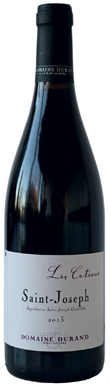
Crozes-Hermitage remains the only northern Rhône appellation that allows the use of wood chips, which is a big error. The classic ageing vessel at St-Joseph, by contrast, is a trusty 600-litre demi-muid, still to be found in the domaines of the southern (original) zone around Tournon. And it was these long-established granite hill vineyards that produced almost all the top St-Josephs in the tasting: Domaines Durand (with two top performers – always an address for racy fruit), Gripa and Courbis, and the Cave de Tain. Hence, it is all the more striking that young Lionel Faury from further north had the tasting’s top wine, La Gloriette, from old vines.
Around Faury, near Chavanay, is a vineyard area that is growing up after a big burst of expansion in the early 1990s, so expect the northern sector of St-Joseph to deliver wines of genuine depth and improved richness in the coming years. In 2013 it lagged some way behind, however, while the 2014s that I have tasted so far show greater parity with the southern sector – with names like Cuilleron, Perret (old vines Les grisières), Pichon, Vins de Vienne and, of course, Faury to the fore.
The scores
Crozes-Hermitage
67 wines tasted
Exceptional 0
Outstanding 0
Highly Recommended 2
Recommended 35
Commended 23
Fair 7
Poor 0
Faulty 0
Saint-Joseph
55 wines tasted
Exceptional 0
Outstanding 1
Highly Recommended 6
Recommended 33
Commended 14
Fair 1
Poor 0
Faulty 0
The judges
Simon Field MW
Field joined historic UK merchant Berry Bros & Rudd in 1998, having spent several years as a chartered accountant in London. He is responsible for purchasing Rhône wines among other regions and became a Master of Wine in 2002.
Field’s verdict
‘Too many variables can spoil the Syrah broth; and this tasting not only combined wines from both sides of the River Rhône, but also examples from different vintages, dominated by 2013 and 2014. ‘That said, there were no shortage of conclusions, with the consensus favouring the relative maturity of the 2013s over the precocious 2014s, and the wines of St-Joseph just edging it over those from Crozes. nothing especially contentious, but the overall impression was of slight disappointment, with very few wines scoring above 89 points.
‘For me, a good Crozes should exude ripe red and black fruit, with tapenade and spice to the fore. They should have great gastronomic potential and charming rusticity. here, too many examples were safe, angular and lacking generosity. St-Joseph, in contrast, is very modish, and its best wines should be aromatic, linear and cerebral, underwritten by granitic rigour and a potential to age.
‘Thankfully there were several examples fulfilling all of these criteria – excellent wines from so-so vintages. To really appreciate the full glory of these appellations, start approaching your 2010s, and then invest in the more than promising 2015s, which will be released next year.’
My top three
Lionel Faury, La Gloriette, St- Joseph 2013
Resembling an urbane surfer, and quite different in personality to his reticent father, Lionel has kept up the very high standards of this famous estate. This wine stood out because of its granitic rigour, generosity of fruit and its unassailable purity. 95/100 Drink 2016-2020
Pierre Gonon, St-Joseph 2013
Rating this much higher than my fellow tasters, I was relieved to learn it was made by the (bio)dynamic Gonon brothers, who, to me are stars of the region. The hint of imperfection on the perfection marks out beauty and interest. 93 Drink 2016-2020
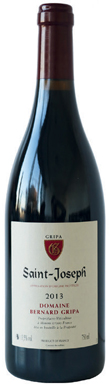
Domaine Bernard Gripa, St-Joseph 2013
Gripa’s range is impeccably made and excellent value; the 2013 is still young of course, but constructed with such loving care that I know it will evolve sweetly. 90 Drink 2016-2019
John Livingstone-Learmonth
Livingstone-Learmonth is the DWWA Regional Chair for Rhône. Since first visiting the region in 1973, he has dedicated most of his life to writing and talking about its wines. He is the author of four books on the Rhône, including The wines of the northern Rhône, and publishes www.drinkrhône.com
Livingstone-Learmonth’s verdict
‘This was a good tasting, although at times there was a workmanlike feel to the wines, rather than a series of unbridled pleasures or surprises. That was due to the two main vintages presented, 2013 and 2014, being tricky ones.
‘The Crozes-hermitage reds were in line with the general perception of them as quick-drinking, uncomplicated wines. This was in part due to 2014’s vintage dilution from bad weather and a lack of sustained sun during the summer. while the lesser 2014s are too simple to convince, the 2013s showed more nerve, density and food-friendliness. The use of new or young oak was better suited to 2013 than 2014, but was still apparent on some 2012s – indicating overuse in that vintage.
‘St-Joseph’s granite-based vineyards are an ideal home for Syrah, and any year without very hot sun allows the wines to show spark and grip. Hence there were floral flourishes and fine-grained tannins serving to enhance the character of the best. Fruit clarity in the best wines was also commendable. 2013 has superior depth and concentration than 2014 and will need a further winter or so to unlock its potential.’
My top three
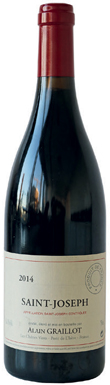
Alain Graillot, St-Joseph 2014
Hail, sheep and wild boar hit the crop here in 2014, but the surviving grapes, mainly planted in 1988 from St-Désirat, have turned out a winner in a tricky vintage. Has real kick and depth. 91/100 Drink 2016-2022
Domaine Eric & Joël Durand, Lautaret, St-Joseph 2013
Early 1980s Syrah off granite at 240m is the formula for this open-book wine. It captures the freshness of the year and dustiness of the sparse soils, enhanced by a shimmer of oak. 91 Drink 2016-2022
Les Vins de Vienne, Les Palignons, Crozes-Hermitage 2013
The carefree nature of this wine from 30-year Syrah vines is most appealing; both times I have (blind) tasted it, I’ve commented on it. It hits the spot for easy drinking – just what Crozes should be. 88 Drink 2016-2020
Ben Llewellyn
Llewellyn has worked in the UK wine trade since 1997. He moved his family to France in 2007 to experience the life of a winemaker and in 2008 set up wholesale wine agency and importer Carte Blanche. The company purchased independent wine retailer Caviste in 2011.
Llewellyn’s verdict
‘2013 and 2014 were two difficult (and different) vintages for both producer and drinker. The appellations are a minefield, but using our scores and
notes, Decanter readers will be able to find some good wines for both early drinking and laying down.
‘Crozes, unsurprisingly, gave the most open wines, ready now, but with a few worth putting away. St-Joseph produced the kind of wines you hope will resolve themselves, but in many cases were just too hard to envisage them a gaining a huge degree of pleasure at any point.
‘The wines I preferred from Crozes originated from the Chassis soils – I like the violet notes this terroir gives. St-Joseph is not quite as clear-cut, although the granite influence – when allowed to shine and when coupled with older vines – made for compelling, exciting tasting.
‘For me, Crozes is an exciting appellation, with new growers joining the party all the time, and plenty of wines to excite the drinker at still relatively low prices. St-Joseph is a little harder to penetrate, and it seems that old-school winemaking is still the rule rather than the exception, which will please some and frustrate others.’
My top three
Lionel Faury, La Gloriette, St- Joseph 2013
This traditional, mineral wine with refined tannins and luscious fruit speaks of its granitic soil and the old vines. Charming now but it will age so gracefully that it would be a shame not to put a case or two away. 96/100 Drink 2016-2020
Julien Cécillon, Les Marguerites, Crozes-Hermitage 2014
A super wine from a relatively new domaine. Julien is the nephew of Rhône legend Jean-Louis Grippat and has followed his winemaking style. This irony, mineral wine may best suit purists, but most will be impressed by its dynamics. This is a domaine to watch. 91 Drink 2016-2021
Natacha Chave, Aléofane, Crozes- Hermitage 2014
So elegant and perfumed! This wine stood out for me for its balance between vibrant aroma and appetising salinity, and the fact it is so beautifully crafted and therefore so enjoyable now. This is the Crozes to get yourself into Crozes! 89 Drink 2016-2020
NB: the tasters’ top wines are not necessarily their top-scoring, rather those which, on learning the wines’ identity, they feel are the most notable given their provenance, price or other factors
About Crozes-Hermitage & Saint-Joseph
These neighbouring northern Rhône appellations offer accessible, affordable Syrahs from granite soils, but with different taste profiles, says John Livingstone-Learmonth…
Crozes-Hermitage
For consumers and winegrowers, Crozes-Hermitage is the open door through which they can pass into the delights of the Northern Rhône. Because the area is much larger and flatter than other neighbouring appellations, the wines are cheaper to produce than those from the granite hills of places such as St-Joseph. consequently, land is available, and small start-ups can thrive. The wines are easy to drink and do not break the bank.
Crozes is wedged between the river Rhône to its west and the river Isère to its south. The vineyards in the northern and much smaller part are small and terraced, with rocky, often crumbled granite soils. This zone produces wines that are intricate and subtle – the Syrahs are red fruited with powdered tannins and an inner freshness. enchanting, pedigree wines.
The southern zone centres on an old fruit-growing plain – apricots have long been a regional speciality; its vineyards have expanded as the price of wine has risen, and the price of fruits has fallen. It is more sandy and alluvial than the northern area, and the wines slot into a different register: lip-smacking and exuberant, led by black fruit notes, liquorice and smoky black olives.
St-Joseph
Long and straggly, St-Joseph is the corridor of the west bank of the northern Rhône, its vineyards set into the valleys and alleys that feed the Rhône with its water supplies. There are nooks and crannies with small plots rather than any obvious display: 26 communes can produce St-Joseph over 65km running north to south.
There is unlocked potential in the best sites; one only has to walk over the granite terraces and inlets around Mauves, Tournon and St-Jean-Muzols – the original heart of the appellation – to appreciate just how hot it can get, and just how well nourished the vineyards are by both sun and wind. Syrahs from Guigal, Jean-Louis Chave and Gonon are outstanding examples.
In the northern reaches near Chavanay, progress has been made recently thanks to the vineyards maturing after an avalanche of planting in the early 1990s. The most serious growers such as Perret, Faury, Cuilleron and Georges Vernay have well-sited vineyards anyway, but at times quality in this part of the appellation can be uneven, due to lack of strict yields and vineyard care.
At its best, St-Joseph is a vivacious wine with serious structure from its smoky tannins. Southern Syrahs from around Tournon can be marked by red fruit, the northern area more by black fruit. But a raw St-Joseph off the granite is a gripping experience: the concentration of juice with hints of violet gives a crisp, tingling mouthful, and allows the wines to live for a decade or more.
Crozes-Hermitage & St- Joseph: know your vintages
2015 Exceptional. Full-bodied, impressive wines that will live well.
2014 Easy drinking wines, can be light in Crozes. Decent depth in the best St-Josephs.
2013 Fine density, buzzy Crozes; sparky St-Joseph reds, the southern sector best.
2012 Good, open wines that are drinking well now, showing clear fruit and flair.
2011 Good vintage with easy fruit, but 2012 is better.
2010 Wonderful vintage of freshness, depth and balance. can live for another 10 years.
2009 Hot vintage: very good, dense wines. drinking well now.
2008 Low ripeness, so edgy wines. The best should be drunk soon.
2007 Good, elegant vintage, drinking well.
2006 Lively wines, with expressive fruit.
2005 Very good. Tight-knit wines that have matured well.
The facts
Crozes-Hermitage
Vineyard area: 1,514 hectares (2015)
Annual production: 60,000 hectolitres (2015)
Number of growers: 70
Varieties planted: (92%) Syrah, (8%) Marsanne and Roussanne
Production exported: 35%
St-Joseph
Vineyard area: 1,215 hectares (2015)
Annual production: 40,000 hectolitres (2015)
Number of growers: 85
Varieties planted: (91%) Syrah, (9%) Marsanne, Roussanne (up to 10% of white is allowed in the red wines)
Export: 12%
Top Crozes-Hermitage & St-Joseph wines from the panel tasting:
You may also like