The best wines were terrific, but essentially it was a mixed bag for an evolving style, said our panel of expert tasters after putting around 70 Grenache-Shiraz-Mourvèdre wines through their paces. See the top scorers below...
Originally published in the April 2016 issue of Decanter and now re-published online, exclusively for Decanter Premium subscribers.
71 wines tasted, with 3 Outstanding chosen by our panel of Anthony Rose, Justin Knock MW and Vicky Stephens-Clarkson MW
The summary
The heartland regions of McLaren Vale and Barossa Valley both starred, with leading producers doing well, as expected, proving that the GSM category has great potential, says Anthony Rose…
It will come as no surprise to find that the two South Australian regions of Barossa Valley and McLaren Vale dominate the 23 wines awarded either Outstanding or Highly Recommended in this fascinating tasting.Both of these warm, dry regions have demonstrated that they are ideally suited to the late-ripening Grenache and Mourvedre grapes, even if extreme heat spikes or abnormal rainfall occasionally put a dent in the blends.
Of the top 23, 13 blends come from Barossa and five from McLaren Vale, with the remaining five wines split between Clare Valley, Yarra Valley, Central Ranges, Heathcote and generic South Australia.
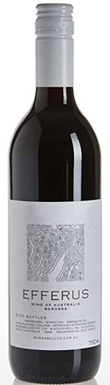
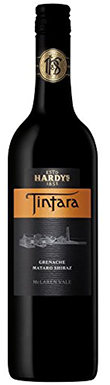
Almost all the wines had Grenache as the dominant partner, but Mourvedre was the main variety in four of the wines, one of them the top wine in the tasting, the 2013 Efferus from Abel and Emma Gibson’s Ruggabellus.
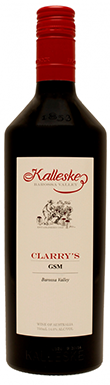
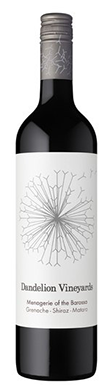
Names expected to do well, and which did so, included Kalleske, Penfolds, Elderton, Yangarra, Hardys, Teusner and Grant Burge, and Zar and Elena Brooks should pat themselves on the back for having both their 2014 Dandelion Vineyards and Sister’s Run in the top group.
Among others, McGuigan’s 2012 The Shortlist, Henschke’s 2014 Johann’s Garden, Rockford’s 2010 Moppa Springs GMS, Noon’s 2014 Eclipse and Charles Melton’s La Belle Mère GSRM all received some support, but might have been expected to do better.
Alcohol levels were within reasonable bounds for the balanced styles producers are looking for with GSM, and in many cases are (perhaps surprisingly) lower than in their southern Rhône counterparts. The use of oak was generally well done, with the best producers opting for older oak, and on occasion a small proportion of new oak, and larger-format vessels. Some whole bunches in the fermentation also added vibrancy and complexity.
Overall, this tasting demonstrated that while GSM is a category that can be challenging because of the many options and decisions required to produce a high-quality blend, it is a potentially exciting category that adds a new and distinctive string to Australia’s expanding bow of wine styles.
The scores
71 wines tasted
Entry criteria: producers and UK agent were invited to submit their latest-release Grenache, Shiraz and Mourvedre blends, where Shiraz is not the dominant variety.
Exceptional 0
Outstanding 3
Highly Recommended 20
Recommended 37
Commended 11
Fair 0
Poor 0
Faulty 0
About the results
This ‘evolving style’ excited our judges, who found lots to like in these mainly Grenache-based wines – especially when oak use was tempered and the best fruit was selected for the blend. Tina Gellie reports…
Our experts were optimistic at these results, which they felt showed the potential of Rhône-style blends in Australia – especially Barossa and McLaren Vale.
But it’s a work in progress, said Anthony Rose. ‘The best wines were terrific, but essentially it was a mixed bag – an evolving style – where it was clear there were a minority of producers who understood what they were doing and the majority who hadn’t quite got it right.’
There were a number of reasons for this, he said, one being how producers prioritised fruit for GSM blends over their varietal Grenache, Shiraz or Mourvedre wines, which are commercially very important. ‘Some wines seemed to be afterthoughts, the leftovers of each variety. Whereas in other wines you could really taste where the producer had said “Yes, I’m going to make a Rhône-style blend and use my best fruit for it”.’
For Vicky Stephens-Clarkson MW, the well-made GSM blends offered a more appealing option than varietal wines, particularly 100% Shiraz. ‘Australia is dominated by Shiraz or Shiraz-dominant blends. I love it as a variety for its structure and pepper notes. But GSMs have everything you could possibly want: the ripeness and fruit from Grenache, Shiraz’s structure and longevity and the dark depths of Mourvedre.’ She and the other tasters agreed that the Grenache-dominant blends were (apart from a few examples) more successful than those based on Mourvedre – a ‘much trickier’ variety.
Justin Knock MW agreed: ‘McLaren Vale GSMs still tend to be made in a sweeter, riper style, and those with a lot of Shiraz in them look a bit old-fashioned and heavy,’ he said. ‘It seemed to me that Mourvedre is a good brake on the accelerated alcohol. Shiraz drives it forward with lots of heat and power, and Mourvedre restrains it in a positive way.’
Apart from a few wines whose high alcohols masked the fruit, all three tasters were generally happy with the levels. ‘It was good to see some at 13.5% and 14%, but they were not necessarily better than other wines that were still harmonious at 14.5% or more,’ noted Knock. He found those wines where producers had used whole bunches displayed a freshness and purity that balanced high alcohols.
While some producers still adhered to more oak-affected styles, the judges were pleased to see ‘a rapid evolution’ on this front. ‘Oak is the great homogeniser,’ said Knock. ‘In a world where so many people are making great wines, why would you use something to make yours less distinct?’ Clarkson agreed: ‘Producers seemed to be using it very intelligently and moderately. There were only a few examples where it was excessive.’
Looking at vintages, Clarkson summed up: ‘2011 was very variable – you’ll need to choose carefully; 2013 and 2015 were warmer, drier vintages favouring Grenache-based wines and giving generous fruit; the 2014 wines were fresher, and pretty for a challenging year; and of the blockbusters in 2010 and 2012, the ’10s looked to be at a good stage of their evolution, while the ’12s seemed advanced for their age.’
In terms of longevity, the tasters didn’t see these wines improving beyond 10 years from vintage, often far less. ‘But I was impressed by their structure – particularly the young wines,’ said Rose. ‘The best will carry a balance of alcohol, tannin and acidity with their good weight of fruit, well into middle age.’
Our tasters each pick their top 3 wines from the tasting:
Justin Knock MW
Knock worked in wine retail before joining d’Arenberg in McLaren Vale. Moving to the Hunter Valley, he became research winemaker for Rosemount and then Southcorp, before a winemaking stint in Margaret River. After moving to London to work with Southcorp, he became wine-buying manager for Treasury Wine Estates. He is now director of The Purple Hand Wine Co consultancy. He also makes wine in Australia’s Yarra Valley.
‘GSMs are some of the most enjoyable wines coming out of Australia. Most in our tasting delivered this, yet a significant number were overly oaky, which seems perverse and unnecessarily oxidative on Grenache in particular. Alcohol levels were generally balanced – a positive trend.
‘Grenache and Mourvedre/Mataro thrived in the hot 2013 vintage, producing the most fragrant, complex and enjoyable wines. While a few rich 2012s were fantastic, others were dry and over-extracted. The 2014s were a little disappointing overall and slightly one-dimensional – perhaps reflecting the youthful styles currently in the market.
‘The Barossa stands out with the highest number of top wines that most frequently deliver the gamut of complexity one hopes for. There are some great wines too from McLaren Vale, though it’s less consistent as a region. Some cooler, spicier styles are emerging from Victoria and New South Wales that show promise with charm rather than power.’
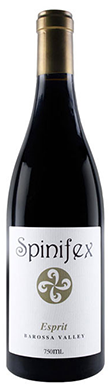
Spinifex, Esprit, Barossa Valley 2012
Pete Schell works the sandy soils of the eastern Barossa and gives an almost Pinot-like touch to his wines. Where others swaggered with muscularity, this Esprit was effortlessly charming and virile. A benchmark style that’s the future for the Barossa. 96/100 Drink 2016-2024
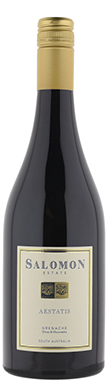
Salomon Estate, Aestatis, South Australia 2009
A left-field wine and one of the few that showed well with age. A luscious, opulent style that reminded me of my first whiff of a GSM in the mid-1990s – it immediately brought a smile to my face. Well made, with lots of berry and liquorice flavours. 95 Drink 2016-2020
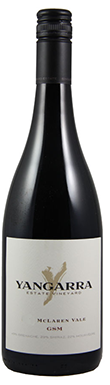
Yangarra, GSM, McLaren Vale 2013
A Grenache specialist that sets the highest standards – moderate alcohols and no confected, raisined notes. This is sapid, complex and lovely. 95 Drink 2016-2020
Anthony Rose
Rose is the DWWA Regional co-Chair for Australia, a regular contributor to Decanter and the wine correspondent of UK newspapers the Independent and i. He has won a number of awards for his wine writing, is a founding member of www.thewinegang.com and also has his own blog on www.anthonyrosewine.com
‘This was a tasting with as many ups and downs as the hills and valleys of the Barossa Valley and McLaren Vale. With three Outstanding and 20 Highly Recommended wines out of 71 tasted,our line-up showed that when the GSM category is good, it can be very, very good in a style that can hold its own with the best of the southern Rhône. Equally, when it is bad, it can be horrid indeed.
‘There was an unsurprising predominance of Barossa and McLaren Vale wines, whose warm climates are clearly suited to Mediterranean varieties. It’s almost certainly a cliché to say that the best of the blends showed fine perfumes and a complexity, texture and freshness that the lesser wines lacked, but it would also be true to say that, in general, the alcohol levels were reasonably well balanced with relatively few wines over 14.5%. Equally, producers were generally sensitive to the oak handling, with few examples showing excessive use of oak.
‘GSM is an unlovely acronym, not least for its potential confusion with MSG, M&S, S&M, not to mention Graduate School of Management or Grams per Square Metre. But in this case it was Game, Set and Match.’
Ruggabellus, Efferus, Barossa 2013
The main reason I enjoyed this super-peppery, blackberry and damson-savoury red so much was because of its high proportion, at 73%, of Mourvedre in the blend. 95/100 Drink 2016-2021
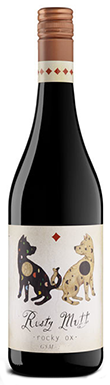
Dog Day Wines, Rusty Mutt, Rocky Ox GSM, McLaren Vale 2014
This intriguingly spicy, faintly iodiney blend muscled its way into my top three for its bright, supple-textured fruit, because I’ve never heard of it, and because I have a suspicion that it’s one of the best-value wines in the tasting. 95 Drink 2016-2019.
Spinifex, Esprit Barossa Valley 2012
Technically a GMC (Grenache, Mourvedre, Cinsault), this was an obvious choice for me, not least because of its camphor-spicy aromatics and clarity of sweet dark berry fruits in muscular frame. Real finesse and balance. 95 Drink 2016-2024
Vicky Stephens-Clarkson MW
Stephens-Clarkson joined the wine trade in 2000, working for a grande marque Champagne house in Epernay. She has also worked as a buyer and winemaker for UK merchants Liberty Wines, Direct Wines/Laithwaite’s and Lay & Wheeler. She is now head of buying for Atlas Fine Wines, becoming a Master of Wine in 2015.
‘GSM is a proven combination that works in the southern Rhône but has travelled extremely well to Australia. Grenache bears the heat well and that is a key benefit of this variety. While not downplaying the contribution that Mourvedre, Cinsault or other minority varieties make, the key to these wines is the interplay between Grenache and Shiraz, where the Grenache provides a core of red fruits that can fill out the structure provided by Shiraz, and balance its peppery spice.
‘I preferred the denser (albeit headier in alcohol) 2013s over the 2012s. The 2014s are a different style, without the intense heat of ’12 and ’13. The slightly fresher feel to the 2014s will please many.
‘Alcohol is often a concern in warm-climate areas, but I didn’t feel it was an issue here. The only criticism was the use of new oak: if it’s too heavy it can dominate, adding harder tannins that stick out and distract from the natural fruit character. What was noticeable, however, was the excellent depth and breadth in our line-up. The quality is always improving and I’ll certainly be stocking up myself!’
Ruggabellus, Efferus, Barossa 2013
While this Mourvedre-dominant wine was my top-scorer, I wouldn’t advocate a large-scale shift to producing Mourvedre-dominant blends, as they can be rather angular. But from this producer it brims with fruit and fine structure. I’ll be buying a bottle myself! 98/100 Drink 2016-2021
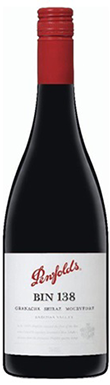
Penfolds, Bin 138, Barossa Valley 2010
Reassuringly familiar quality from Penfolds. Generous fruit and alcohol and a hearty palate – perfect winter wine. While not cheap, it’s still good value within the context of many other high scorers. 96 Drink 2016-2025
Pimpernel Vineyards, GSM2, Yarra Valley 2012
Off the beaten track, from a region usually associated with Pinot Noir and Chardonnay. It was a perfect foil to some of the heavyweights from South Australia’s warmer climes, without compromising either character or flavour. Goes on and on! 95 Drink 2016-2019
About Australian GSM
Consumers may not have caught on to the GSM wine category, but the time-honoured southern Rhône blend of Grenache, Syrah and Mourvedre is a spiritual beacon for Australian producers of the style.
Grenache, the Mediterranean alter ego of Shiraz, tends to be the dominant variety, and while it was once the backbone for Australia’s fortified wines, it became a prophet without honour, or profit, when still wines turned the tables on fortified wines in the 1950s.
It wasn’t so long ago, says Kym Teusner (Teusner Wines), that Grenache ‘wasn’t even a category but listed in the emerging varieties section of the second biggest retailer in the country’. By the time of the resurgence of the Barossa and return of southern Rhône varieties, much of the best old-vine material had been uprooted.
Despite, or perhaps because of, this resurrection, there’s been a spike in demand for GSM blends over the past five years. Teusner believes there are a number of reasons for this – first, that consumers are looking for wines that are not just all heft and oak, but that offer enjoyment, complexity and balance. He also wonders whether, now European wines are more readily available in Australia, that consumers are more tempted to try styles that may once have been off their radar.
Sites and styles
The development of Australia’s regional focus has had an impact on identifying the best sites for GSMs. It’s no surprise that the Barossa Valley and McLaren Vale are the two most significant. These are the hot, dry regions with Mediterranean climates that most closely resemble their counterparts in the southern Rhône. And, as climate change becomes increasingly significant, it seems likely that GSM blends, with their capacity to resist drought, will grow in importance in these regions.
Some sympathise with the view that GSM blends can be a catch-all category for wines made from leftover fruit that didn’t make the top grade. Unsurprisingly however, this view is not widely shared by its producers. Most agree the selection of vineyards and fruit for the blended styles is the critical factor and that what they are looking for is vibrant, fresh fruit capable of making balanced, approachable wines, while the blending options allow for greater texture and complexity.
The use of whole bunches is a trend, as are natural fermentation, field blends, extended maceration, lees contact, use of other varieties and co-fermentation of the later-ripening Grenache and Mourvedre. Organic, biodynamic and sustainable viticulture, plus soft and slow maturation are also in the mix. Producers are aware of potentially high alcohols but don’t see this as an issue if they can achieve freshness, fruit purity and balance.
Aussie GSM blends: the facts
Grenache 519 hectares are planted in the Barossa Valley, producing 3,254 tonnes of grapes; McLaren Vale (385ha, 2,469t); Riverland (252ha, 4,590t).
Shiraz Barossa Valley (5,748ha, 26,959t); McLaren Vale (3,412ha, 18,979t); Riverland (5,370ha, 109,038t).
Mourvedre/Mataro Barossa Valley (220ha, 1,434t); McLaren Vale (89ha, 654t); Riverland (169ha, 2,862t).
Aussie GSM blends: know your vintages
2015 Despite wind, frost and rain, a warmer than average summer, with ripe, often pale Grenache and Mourvedre for pure, mid-bodied wines.
2014 Challenging vintage of variable temperatures and above-average rainfall with medium-bodied, savoury wines for good easy drinking.
2013 Drier and warmer than average with low yields. Similar to 2010 but more forward and fruit driven with solid tannins and a warm finish.
2012 Perfect ripening season, with low yields in areas. A much-touted vintage along 2010 lines with opulence, structure and firm acid backbone.
2011 Abnormally cold and wet year with botrytis problems producing light, herbal wines that are either forgettable or at best lean and European in style.
2010 A classic year with a hot spring and warm summer, producing wines of full-bodied, ripe rich fruit with good structure and balance.
2009 A warm, dry year with below-average yields in Shiraz and Grenache and a mild summer producing fine Grenache and Mourvedre.
The top wines