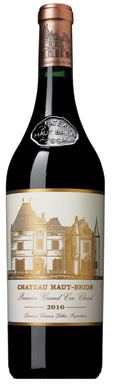
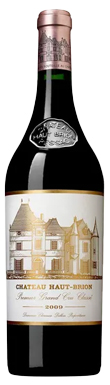
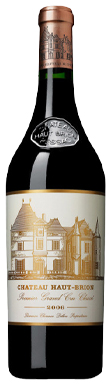
Château Haut-Brion stands apart from its peers in many ways. Some of these differences are historical: it is the only first growth of 1855 that is not located on the Médoc peninsula. Although the area around the city of Bordeaux was the birthplace of winemaking in the region, by the time of the 1855 classification, Haut-Brion was the only château here deemed worthy of the honour.
It is also the oldest of Bordeaux first growths. It is a venerable property indeed – it is thought that vines were cultivated in Roman times, although the first recorded mention of the estate under its present name (as Aubrion or Haulbrion) was in 1521.
Scroll down to see Charles Curtis MW’s notes and scores for 12 vintages of Château Haut-Brion
In 1533 it was acquired by Jean de Pontac through the dowry of his wife, Jeanne de Bellon, daughter of the mayor of Libourne. De Pontac began building the current château in 1549 and lived to be 101, dying in 1589.
Ownership passed to his son Arnaud, and then to his nephew Geoffroy before passing to Geoffroy’s son, Arnaud III, the first president of the Parlement of Bordeaux. During the time of Arnaud III, the wine of Haut-Brion was famous in English literary circles and he sent his son François-Auguste to London to found a tavern called The Sign of Pontac’s Head, whose customers included Swift and Dryden; the wine was also mentioned by name in the diaries of Samuel Pepys in 1663.
François-Auguste fell on hard times, however, and ownership passed to his sister, Thérèse d’Aulède, and his nephew, and the two split the estate in half. The d’Aulède family also owned Château Margaux and for a time maintained both properties.
Post-Revolution revival
The estate was confiscated during the Revolution but later restored to the family. However, they sold their interest to Talleyrand, and from there the domaine changed hands several times in the early 19th century.
In 1836 it was purchased by Eugène Larrieu, who ultimately reunited the two parts of the vineyard before passing it on to his son. His grandson (another Eugène) died without issue, and the estate once again knew several proprietors before being bought by New York banker Clarence Dillon in 1935, and his family has been the proprietors since then.
Decanter newsletter
Get our daily fine wine reviews, latest wine ratings, news and travel guides delivered straight to your inbox.
New York banker Clarence Dillon, who acquired Haut-Brion in 1935.
(Image credit: Château Haut-Brion)
In 1953, Haut-Brion was classified a second time (for red wine) in the classification of the Graves, making it the only château classified twice. This classification (amended in 1959) included 16 châteaux. Some were classified for their red wine only (like Haut-Brion), some for their dry white wine only (like Laville Haut-Brion), and others were classified for both.
All of these châteaux were part of the northern section of the Graves. This area, once known as the Hautes Graves, has long been considered superior and in 1987 it was given the separate appellation of Pessac-Léognan, named for two of the eight villages included in the classification, which also includes Mérignac, Talence, Gradignan, Villenave-d’Ornon, Cadaujac and Martillac.
Clarence Dillon’s granddaughter Joan married Prince Charles of Luxembourg. After the death of her husband, she married Philippe de Noailles, the Duc de Mouchy. She was the president of Domaines Clarence Dillon from 1975 until 2008; her husband was the managing director.
Present-day Haut-Brion
Today, Prince Robert de Luxembourg (her son from her first marriage) is the company’s president. The managing director is Jean-Philippe Delmas, whose father and grandfather also served in this role. Pascal Baratié directs the work in the vineyards; the cellar master is Florence Forgas, and the technical director is Jean-Philippe Masclef.
Domaines Clarence Dillon purchased its sometime-rival Château La Mission Haut-Brion (located across the street) from the Woltner family in 1983. Included in this purchase were the nearby Château Laville Haut-Brion (making white wine) and Château La Tour Haut-Brion. La Tour Haut-Brion had its own vineyards but historically the wine had been made at La Mission Haut-Brion.
These have now been discontinued: Laville Haut-Brion has been bottled as La Mission Haut-Brion Blanc, beginning with the 2009 vintage, and La Tour Haut-Brion was discontinued after the 2005 vintage, the grapes now being blended into the second wine of La Mission, which is called La Chapelle de La Mission Haut-Brion.
The Cru Classé de Graves estate, Château La Mission Haut-Brion.
(Image credit: Château La Mission Haut-Brion)
Château Haut-Brion also has a second wine called Le Clarence de Haut-Brion. It had been sold as Château Bahans Haut-Brion since the early 20th century, but this was discontinued after the 2006 vintage. Similarly, the second white wine was also rebaptised – it had once been Les Plantiers du Haut-Brion but has been sold as La Clarté de Haut-Brion since the 2008 vintage.
The most recent chapter in the saga of the Haut-Brion vineyards has been the integration of Allary Haut-Brion with the 2012 vintage, this 1.31ha vineyard laying within the confines of Château Haut-Brion.
Originally it had been called Château Loup-Blanc Haut-Brion, according to Clive Coates MW. It was renamed La Passion Haut-Brion in the 20th century, and from 1948 the wines were made by Georges Delmas, the manager and winemaker of Haut-Brion (and grandfather of the present managing director).
The vintages from 1955-1978 were sold as La Passion Haut-Brion, and after this the grapes were purchased by Haut-Brion on a sharecropping basis for the grand vin.
The heirs of the original owners of La Passion Haut-Brion decided to resurrect the label briefly as Allary Haut-Brion, but after a few vintages inheritance laws induced them to sell the vines to Domaines Clarence Dillon, and from the 2012 vintage these grapes were added to the rest of Château Haut-Brion.
Prince Robert of Luxembourg.
(Image credit: Château Haut-Brion)
Including this recent acquisition, Château Haut-Brion owns 51ha of vineyards; 48ha are planted to black grapes. The proportions in the vineyard are 45% Cabernet Sauvignon, 40% Merlot and 15% Cabernet Franc, illustrating another essential point of difference with the other first growths – Haut-Brion has by far the most significant proportion of Merlot in the vineyards.
There are many examples where there is more Merlot in the final blend of Haut-Brion’s grand vin than Cabernet Sauvignon – and sometimes more than the Cabernet Sauvignon and Cabernet Franc combined.
A unique spot in Graves
The vines are located at the highest point in Bordeaux, 30m above sea level, planted in gravel with sand over clay at a density of 10,000 vines per hectare. These privileged sites ripen grapes easily and quickly because of the elevation, and because the proximity of the city helps warm the vineyard slightly. There are also nearly 3ha of white grapes, including Sémillon, Sauvignon Blanc and Sauvignon Gris.
After harvesting by hand, the grapes are sorted in the vineyard. A strict selection is made: in modern times, the grand vin represents 35%-45% of the estate’s production. The fermentation tanks are stainless steel. For the red wine, there are two levels with a slanted floor for the upper tank where the alcoholic fermentation occurs.
The finished wine is then run by gravity into the lower tank for malolactic conversion. No cultured yeast is used for the fermentation, and the total time on the skins can be anywhere from 20-30 days depending on the vintage and the grape variety.
(Image credit: Château Haut-Brion)
Up to 8% of the grand vin can be press wine which is aged in barrel, racked once per quarter, for 18-24 months, before fining with egg whites and bottling. Again, atypically for a first growth, the use of new oak has departed from the 100% that was once the standard, now it can vary from 70%-90%.
And what of the taste? Pepys famously remarked that he had drunk ‘a sort of French wine called Ho Bryan, that hath a good and most particular taste that I never met with’. Few, however, have narrowed it down more specifically than that.
Clive Coates MW in The Wines of Bordeaux says that the wine of Graves tastes of ‘warm bricks’. For me, the essential difference comes from the relatively high proportion of Merlot, not only at Haut-Brion but generally throughout the Graves.
This dominance gives the wines less of the pointed blackcurrant aromas that Cabernet-heavy wines will show and a softer, plummy character to the fruit that gives a bit more earthiness. The tannins will have less tendency to astringency, and the acidity will often be softer.
It is a subtle, elegant wine whose regal refinement at Haut-Brion has been renowned for centuries, and this vertical tasting demonstrates the ability of the property to scale the ultimate heights of quality in Bordeaux.
How this vertical tasting was organised
One of the great pleasures in life is enjoying top wines with friends. Over the years, I have been fortunate to have received generous invitations from a keen wine collector in Atlanta, Georgia, named Mark Taylor. Taylor is the inventor of The Durand® corkscrew that combines the ‘Ah-So’ and traditional wine openers, guaranteed to remove even the trickiest corks from the necks of venerable bottles. Each spring, he generously hosts a weekend event featuring the wines of Bordeaux from his collection. This year’s themes were first-growth verticals from châteaux Haut-Brion and Margaux – truly a rare treat.
The Durand was named in honour of the late and much-loved local wine legend Yves Durand, who ably led Atlanta-area tastings for many years, assisted by Master Sommelier Michael McNeill. Since Yves’ passing, I have helped Michael organise the event. Although everyone knows the theme, the wines are poured blind. The twenty or so participants take turns commenting on the wines and make an effort to guess the vintages. Although the audience includes some professionals, it primarily comprises wine lovers and collectors, many based locally. The atmosphere is collegial and friendly as we work our way through a dozen glorious wines each day. This year, we began with a selection of vintages of Haut-Brion from 1982 – 2010.
On the day, the wines showed well indeed. Considered in chronological order, the ‘bookends’ of 2010 and 1982 stood out to me. I had the 1982 vintage as the wine of the tasting just in front of the much-heralded (and highly-priced) 1989.
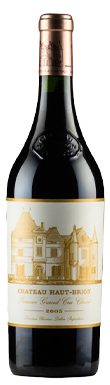
The ‘usual suspects’ for greatness also came through, with delicious showings for the 2000, 2005, and 2009 vintages. I found the 2002 and 2004 vintages relatively disappointing in this context but was agreeably surprised by how much I enjoyed the 2006.
Regarding drinkability, my general view was that all were delicious now (even the 2010 and 2009), but those younger than the 2000 vintage would benefit significantly from more cellaring. The pre-millennial wines can be considered mature but not overly so, and all (even the 1982) can be aged for decades to come without concern.
See Charles Curtis MW’s notes and scores for 12 vintages of Château Haut-Brion
Château Haut-Brion, Pessac-Léognan, 1er Cru Classé, Bordeaux, France 2009
My wines
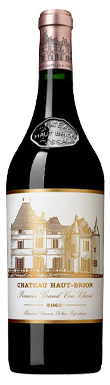
There's exceptional purity to the dark, sombre fruit that spills out of the glass, pristine and glistening. Despite the intense ripeness, it's peppered with freshness...
Château Haut-Brion, Pessac-Léognan, 1er Cru Classé, Bordeaux, France 2004
My wines
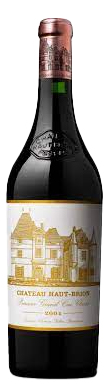
The Haut-Brion 2004 exceeded even my high expectations, and I scored it higher than I did at last year’s vertical. In the context of the vintage it was...
Château Haut-Brion, Pessac-Léognan, 1er Cru Classé, Bordeaux, France 2000
My wines
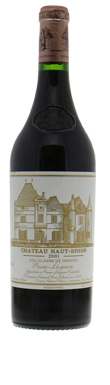
Superb and already immensely delicious, yet decidedly youthful and only beginning its evolution. The colour is dark, and the ripe plummy fruit resounds with notes...
Château Haut-Brion, Pessac-Léognan, 1er Cru Classé, Bordeaux, France 1998
My wines
Agreeably approachable, with plump, plummy fruit aromas and accents of blackberry, spice and smoke. The texture is rich and round, with a supple, fleshy feel...