Château Pédesclaux
(Image credit: Credit Unknown)

In Clive Coates MW’s seminal work ‘The Wines and Domaines of France’, Château Pédesclaux is referred to as an ‘under-achieving classed growth’.

Stephen Brook, in ‘The Complete Bordeaux’ notes that this Pauillac fifth growth had a ‘dreary reputation’, with the wines of the 1980s and 1990s lacking interest.

However, following the purchase of Pédesclaux by French-Swiss real-estate investor Jacky Lorenzetti in 2009, there has been dramatic investment in both vineyard and production facilities.


Scroll down to see tasting notes and scores from the Château Pédesclaux vertical tasting


The aims of the new ownership were illustrated at a vertical tasting of nine recent vintages, held in London last month (January 2024). The vintages: 2014-2022 showed significant improvements in quality, although there is still more work to be done.

History

Chateau Pédesclaux was established in 1810 by a wine-broker of the same name, before being sold in 1891 to Gabriel de Gastebois, under the management of Lucien Jungla.

The latter purchased the estate in 1951 and began to restore the property. Over several decades significant financial issues impeded efforts to rejuvenate Pédesclaux – in 1996 the property faced bankruptcy – yet the Jungla family weathered the storm before finally selling the property to Lorenzetti in 2009.

Lorenzetti sold his hugely-successful property empire – at the time the largest real-estate company in France in 2007, before focusing on some of his other passions – wine, food and Rugby Union (he is also president of top 14 Rugby club Racing 92).

Lorenzetti initially purchased the 75 hectare (ha) St-Estèphe Cru Bourgeois Exceptionnel estate Château Lillian-Ladouys in 2008, before acquiring Pédesclaux in 2009. Emmanuel-Cruse, co-owner of Château d’Issan joined the team in 2010 and in 2013 Lorenzetti purchased 50% of the Margaux third growth.

Finally, in 2021, St-Estèphe fourth growth Château Lafon-Rochet completed the headline acquisitions. Cruse is now general manager for the wider group, while highly-respected oenologist Eric Boissenot has been Pédesclaux’s consultant since 2013.

Ground work

Pedesclaux-4-of-13.jpg

(Image credit: Credit Unknown)

The focus at Pédesclaux was initially on the vineyards with the estate always having a very diverse portfolio of plots in Pauillac.

The main concentration of vineyards is centred around the château, with additional vineyards to the north neighbouring Château Lafite Rothschild and Château Clerc Milon, to the south adjoining Château Lynch-Bages and to the far-west of the appellation (around the village of Artigues) adjacent to vineyards belonging to Château Latour.

The vineyard at Pédesclaux – initially 26ha – has now grown to 53ha with the purchase of plots belonging to Pauillac’s Châteaux Béheré and Haut-Milan. A key focus has been a drive towards organic viticulture, encouraging microbiological diversity and deeper root-networks through a combination of mineral fertilisation and grass cover crops, together with the elimination of chemical treatments.

In 2014, a completely new, gravity-fed, production facility became operational, together with dramatic changes to the original château building. But is all this investment delivering results in terms of wine quality? The initial impression is that Pédesclaux is moving in the right direction.

Clear progression

The wines were introduced by communications director Augustin Lacaille and property director Vincent Bache-Gabrielsen, who termed the estate’s overall plan as ‘cabernisation’. Bache-Gabrielsen highlighted the extensive soil studies across Pédesclaux’s plots, identifying 19 differing soil types.

Since then, the focus has been to get the right varieties in the right location, with Cabernet Sauvignon and Franc accounting for 70% of the total varietal mix for the first time in 2016. Merlot is reducing in influence while Petit Verdot (introduced after the purchase of Château Béheré) is playing a wider role.

Since 2015 biodynamic viticulture has been introduced, with the use of five and 10 hectolitre micro-vinification tanks allowing separation of parcels. In 2018, 50% of the total vineyard (49ha) was organically farmed. In 2019 official conversion to organic farming commenced, with certification achieved from 2022.

The wines in the vertical tasting showed a clear progression, with highlights being the trio of 2018, 2019 and 2020, along with the expected high-quality vintage of 2016.

Tannin quality is improving with extra finesse and ripeness evident in the later vintages. One surprising feature is the relatively high pH in several vintages (2019: 3.8, 2020: 3.88 and 2022: 3.86).

Bache-Gabrielsen was not unduly worried about the higher levels of pHs but it may be a factor when considering longer-term ageability.

No more doubt

image0-1.jpeg

(Image credit: Credit Unknown)

Château Pédesclaux is benefitting from the investments made under the Lorenzetti family ownership and, from the wines tasted, the estate is delivering in its quest for ‘freshness and balance’.

Twenty years ago there were several commentators questioning whether Pédesclaux’s fifth growth status could be justified. Based on the wines produced in recent years this is certainly no longer in doubt.

Quite how far the estate can progress is for future debate and this remains a ‘work in progress’. But the signs are positive and this is one Pauillac classed growth which is well-worth considering, both for quality and value.


Château Pédesclaux vertical: 2014-2022 (plus 2009)

The wines are listed youngest to oldest


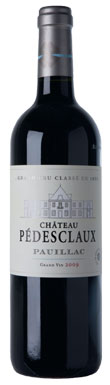
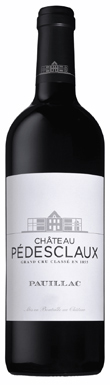
Château Pédesclaux, Pauillac, 5ème Cru Classé, Bordeaux, France, 2022

My wines
Locked score

Strong and dark aromatics, blackcurrant, liquorice and salty stones. Juicy and lively on the palate, excellent acidity and freshness. There's something very precise and detailed...

2022

BordeauxFrance

Château PédesclauxPauillac

Decanter Premium logo

Join Decanter Premium to unlock all our wines tastings and notes

Join Now

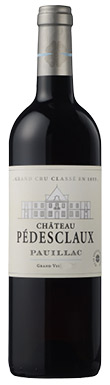
Château Pédesclaux, Pauillac, 5ème Cru Classé, Bordeaux, France, 2021

My wines
Locked score

Cool blue fruits and liquorice and salty stones on the nose. High acidity makes its mark straight away - a combination of crisp green apple,...

2021

BordeauxFrance

Château PédesclauxPauillac

Decanter Premium logo

Join Decanter Premium to unlock all our wines tastings and notes

Join Now

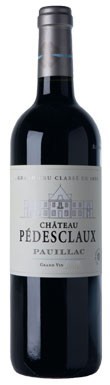
Château Pédesclaux, Pauillac, 5ème Cru Classé, Bordeaux, France, 2020

My wines
Locked score

Still very youthful with firm tannin and, seemingly, more evident acidity. Plump fruit notes but with a distinct mineral thread and some leafy tannin. Needs...

2020

BordeauxFrance

Château PédesclauxPauillac

Decanter Premium logo

Join Decanter Premium to unlock all our wines tastings and notes

Join Now

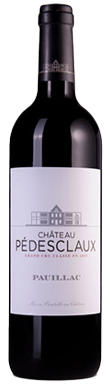
Château Pédesclaux, Pauillac, 5ème Cru Classé, Bordeaux, France, 2019

My wines
Locked score

Very complex and focused on the nose with a powerful Cabernet Sauvignon component. Textured, dark plum and blackberry fruit. Despite a 3.8pH there seems to...

2019

BordeauxFrance

Château PédesclauxPauillac

Decanter Premium logo

Join Decanter Premium to unlock all our wines tastings and notes

Join Now

Château Pédesclaux, Pauillac, 5ème Cru Classé, Bordeaux, France, 2018

My wines
Locked score

Still closed and brooding but with great potential. Weighty and chunky on the palate, the tannins are firm but show no harsh edges. Dusky fruit...

2018

BordeauxFrance

Château PédesclauxPauillac

Decanter Premium logo

Join Decanter Premium to unlock all our wines tastings and notes

Join Now

Château Pédesclaux, Pauillac, 5ème Cru Classé, Bordeaux, France, 2017

My wines
Locked score

Not so showy on the nose - quite restrained. Appealing, subtle floral aromatics of violet/rose petal. Soft and pleasing on the palate with similar concentration...

2017

BordeauxFrance

Château PédesclauxPauillac

Decanter Premium logo

Join Decanter Premium to unlock all our wines tastings and notes

Join Now

Château Pédesclaux, Pauillac, 5ème Cru Classé, Bordeaux, France, 2016

My wines
Locked score

Deep colour, almost opaque, with a lower pH than in 2014/2015. The grapes were crushed with no extended skin-maceration to increase purity. Concentrated, elegant, long...

2016

BordeauxFrance

Château PédesclauxPauillac

Decanter Premium logo

Join Decanter Premium to unlock all our wines tastings and notes

Join Now

Château Pédesclaux, Pauillac, 5ème Cru Classé, Bordeaux, France, 2015

My wines
Locked score

Much more restrained and tighter on the nose than 2014, with concentration and leafy blackcurrant/blueberry fruit. Decidedly more Pauillac in character with fine tannin and...

2015

BordeauxFrance

Château PédesclauxPauillac

Decanter Premium logo

Join Decanter Premium to unlock all our wines tastings and notes

Join Now

Château Pédesclaux, Pauillac, 5ème Cru Classé, Bordeaux, France, 2014

My wines
Locked score

Very good balance between Cabernet and Merlot with violets on the nose. Quite warming and savoury on the palate. Dark berry fruit, weighty in alcohol...

2014

BordeauxFrance

Château PédesclauxPauillac

Decanter Premium logo

Join Decanter Premium to unlock all our wines tastings and notes

Join Now

Château Pédesclaux, Pauillac, 5ème Cru Classé, Bordeaux, France, 2009

My wines

0

Served from magnum at lunch. This shows the ripeness of 2009 together with some distinct notes of maturation in terms of colour and a drying character on the finish. An appealing Pauillac now but not one for extended ageing as the fruit slowly declines, bringing the tannins more to the fore.

2009

BordeauxFrance

Château PédesclauxPauillac

Andy Howard MW
Decanter Magazine, Italian Expert and DWWA Regional Chair for Central Italy

Andy Howard MW became a Master of Wine in 2011 and runs his own consultancy business, Vinetrades Ltd, which focuses on education, judging, investment and sourcing.

He previously worked for Marks & Spencer as a buyer for over 30 years and was responsible as wine buyer for Burgundy, Bordeaux, Loire, Champagne, Italy, North and South America, South Africa, England, Port and Sherry.

Although his key areas of expertise are Burgundy and Italy, he also has great respect for the wines of South America and South Africa, as well as a keen interest in the wines from South West France

He is a Decanter contributing editor and is the DWWA Regional Chair for Central Italy. Andy also writes a regular column on the UK wine retail trade for JancisRobinson.com.