First taste: Dom Pérignon 2015
Tom Hewson tastes and rates the latest Dom Pérignon releases, the newest cuvée from the hot, dry 2015 vintage and re-release of the 2006 in its Plénitude 2 form.
Get our daily fine wine reviews, latest wine ratings, news and travel guides delivered straight to your inbox.
You are now subscribed
Your newsletter sign-up was successful
‘Everybody that’s tasted the Dom Pérignon 2015 has said to me so far, “wow, this fruit Vincent!”’ says Dom Pérignon cellar master Vincent Chaperon. ‘The generosity, the natural sucrosity…it has evolved very quickly, and for the better.’
Chaperon and I are sitting in the Abbey of Hautvillers, where Champagne’s famous monk perfected his (still) wines in the late 17th century.
Today, the wine made in his name remains the region’s most prominent prestige cuvée, made predominantly from a vineyard stretching to over 900 hectares of almost entirely grand cru land owned by Moët Henessy in the heart of Champagne. Chaperon believes it could be, ‘the largest qualitative vineyard in the world.’
Scroll down to see tasting notes and scores for the new Dom Pérignon 2015
There may be few Champagnes as associated with glitz and glamour as Dom Pérignon, but there’s a good reason why it remains a collector’s wine, too.
Unlike some, this consistent cuvée is made largely from estate fruit, and with the core vineyard supply managed mostly by the maison itself, the entire operation is impressively joined up, from vineyard to cellar.
What’s more, it’s a wine made by cellar masters, like Chaperon’s predecessor Richard Geoffroy, who develop almost mythical reputations over long stretches at the helm.
The new vintage
With such a large vineyard area to play with, Chaperon has the luxury of choice and flexibility, which perhaps goes some way in explaining the wine’s consistency, even in a vintage like 2015.
Get our daily fine wine reviews, latest wine ratings, news and travel guides delivered straight to your inbox.
‘2015’s drought created lots of diversity within Champagne, because there were places that suffered blocked maturation and vegetal flavours, and places – with more rainfall, different soils, different exposures – that didn’t,’ says Chaperon.
He points out, though, that the wines in 2015 have more freshness than people give them credit for: ‘Everybody compared 2015 to 2003,’ he says, ‘however when we look at the analysis in the wines it was closer to 2002, 2005, 2006. When we started to taste near disgorgement it reminded me of 1995.’
Dom Pérignon 2015 looks like joining the ranks of prestige cuvées that have somewhat turned the tide on the vintage’s reputation. That being said, it remains an outlier after the more classical 2013 and 2012, likely to join the 2010 and 2005 as more singular expressions.
Dom Pérignon’s trademark signature of reduction – a smoky, gunflint-like aromatic quality – is toned down in this vintage. Similarly to the 2009 Rosé released in 2023, the 2015 emerges with a sense of maturity already evident.
Plénitude 2
Released alongside the 2015 is the 2006 P2 – or Plénitude 2 – a late release held on lees until 2023 when Chaperon considered it to have reached its second peak. ‘2015 is straight, but 2006 is curvy,’ he says.
Chaperon highlights the difference in the 2015 and 2006 growing seasons, where the former was sunny and ripe while the latter saw rain and less hydric stress. ‘At first, the 2006 wasn’t tense, it was heavy,’ he says, ‘now the structure and tension have appeared – it isn’t hidden by the unctuosity.’
Indeed this is an unabashedly decadent, aromatic and joyous P2, making its case for the vintage at a time when many 2006s are tiring.
Notes and scores for Dom Pérignon’s latest releases
Wines are listed in score order.
Related articles
- First taste: Dom Ruinart Blanc de Blancs 2013
- First taste: Billecart-Salmon’s 2012 releases
- Regional profile: Champagne’s Marne Valley
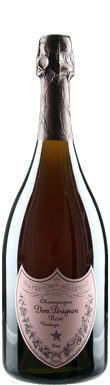
Dom Pérignon, Rosé, Champagne, France, 2006

2006, with its 20% addition of red wine, has always been one of the most boomingly intense renditions of Dom Pérignon Rosé, and today the...
2006
ChampagneFrance
Dom Pérignon
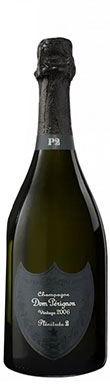
Dom Pérignon, P2, Champagne, France, 2006

The P2 late-release concept does seem to work wonders with riper, heavier vintages, and 2006 is no exception. The sheer fruitiness of orange confit, juicy...
2006
ChampagneFrance
Dom Pérignon
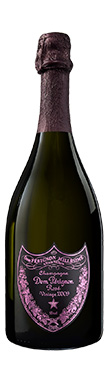
Dom Pérignon, Rosé, Champagne, France, 2009

With a 13% red wine addition, this is slightly less vinous than the 2006 (which saw 20%), yet still lays closer to this bold, sunny...
2009
ChampagneFrance
Dom Pérignon
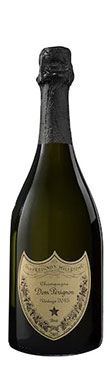
Dom Pérignon, Champagne, France, 2015

2015 is unusually giving and luscious at this early stage, full of apricot pastry, bittersweet orange citrus and bitter almond, brightened by some pithy herbal...
2015
ChampagneFrance
Dom Pérignon
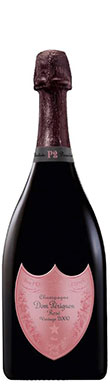
Dom Pérignon, P2 Rosé, Champagne, France, 2000

24 years after harvest, this P2 Rosé 2000 is an aromatic treat, heavily Pinot Noir-dominant for this cuvée (at 70%, including a beefy 20% red...
2000
ChampagneFrance
Dom Pérignon