
Frontier Spirit: The pioneer winemakers of northern Italy
Italy's four northernmost wine regions share more than just a mountainous border with neighbouring countries. Meet some of the key winemakers in each region – some of whom own vines on both sides of the border – and discover the results of an ongoing exchange of ideas and wine heritage.


As wine lovers increasingly seek freshness, finesse and authenticity, northern Italy is stepping into the spotlight.
From the alpine extremes of Valle d’Aosta in the far northwest to the terraced slopes of Valtellina, and around to the northeast for the German-speaking vineyards of Alto Adige and the Slavic-leaning cellars of Collio, these frontier regions expand the idea of what ‘Italian wine’ can be.
Notes and scores for eight singular wines from Italy’s northern edges below
The rugged collar of Italy’s boot, spanning some 1,800km, is shaped by rivers, forests and above all the Alps.
Some of these zones are autonomous Italian regions with distinct cultural heritages. Some have vineyards so steep that they require heroic viticulture.
What do these culturally distinct regions have in common?
Cross-cultural fluency
They have well-draining mineral soils and great southern exposure. They have cooling winds and large day and night temperature shifts. They have resilient grape varieties that express the best version of themselves in the local conditions.
And innovative winemakers who defy political lines.
Wines that emerge in these frontiers embody both tradition and transformation. They speak fluently across cultures.

French & Swiss borders
Valle d’Aosta

Tucked high in the Alps where Italy meets France and Switzerland, Valle d’Aosta is Italy’s smallest and most alpine wine region.
Though part of Italy since the country’s unification in 1861, Valle d’Aosta’s true borders have always been defined by mountains.
Italian and French are both official languages, while the local Franco-Provençal dialect, Valdôtain, is another way this valley has held onto its roots.
The region’s heart is a glacial valley running west to east, from Morgex to Donnas, north of Turin on the Piedmont border.
Not far from Morgex, Mont Blanc marks the French frontier, while the Swiss border to the valley’s north runs through Matterhorn and Monte Rosa peaks. Viticulture here is highly fragmented, spread across steep, terraced plots.
Following World War II, Swiss-born priest Joseph Vaudan, who was involved in the founding of the region’s Institut Agricole Régional in the early 1950s, encouraged the planting of varieties such as Petit Rouge and Petite Arvine.
These were well adapted to the alpine conditions in Valle d’Aosta, as well as the Valais region just across the border, and Petite Arvine found a home here as a signature high-elevation variety, producing wines with vibrant acidity. It thrived on sunny, south-facing terraces that had originally been planted with Nebbiolo.
High profile
One estate that helped raise Petite Arvine’s profile is Les Crêtes, run by the Charrère family, originally from the Savoie area of France.
Based in Aymavilles, in central Valle d’Aosta, since the 1750s, their vineyards stretch along the left bank of the Dora Baltea river at 600m-1,000m.
This elevation lends freshness and finesse to their Petite Arvine, Chardonnay and Fumin wines. Valle d’Aosta DOC’s appellation rules are being revised to permit vineyards at higher elevations, to help combat the effects of climate change.
Les Crêtes general manager Giulio Corti says: ‘We are defined by peaks above 4,000m to the north and the south. Strong dry winds that descend from the Alps bring drought and large diurnal shifts. Harvest has become more complex now.’
In the upper valley, close to the French border, Cave Mont Blanc stands out. Founded in 1983, this cooperative unites small growers to preserve viticulture at 900m-1,200m on glacial soils untouched by phylloxera.
Its star grape is Prié Blanc, used in the Valle d’Aosta DOC white still and sparkling versions from the Morgex et La Salle sub-zone.
Company president Nicolas Bovard explains: ‘Our members farm parcels as small as 8m². Thanks to regional autonomy, we were able to invest in viticulture. We’re now experimenting with sparkling wine production at 2,173m, at [cable car hub] Skyway Monte Bianco’s Pavillon du Mont Fréty.’
Underscoring the pioneering spirit of these mountain frontiers, some wines in magnum are being aged even higher, in ice caves at 3,462m
Swiss border
Valtellina, Lombardy

After three centuries of Swiss rule, Valtellina passed to Austrian control in 1815, and then to France, before becoming part of the Kingdom of Sardinia in 1859 and subsequently part of Italy upon unification two years later.
Valtellina continued supplying a large part of its wines to Switzerland, over the border just to the north, until a tax treaty ended around 50 years ago.
Its signature grape Nebbiolo – known locally as Chiavennasca – gives lighter and more mineral wines in these low-pH granite soils compared to Piedmont’s Barolo or Barbaresco.
Terraced vineyards are planted along the south-facing Rhaetian Alp slopes above the Adda river at up to 800m, entirely hand-tended.
These 2,500km of dry-stone terraces are a marvel of human ingenuity, and the art of creating them was recognised as an Intangible Cultural Heritage of Humanity by UNESCO in 2018.
Valtellina gained international attention with its Sforzato di Valtellina, made from partially dried Nebbiolo grapes (Amarone-style, let’s say), after it became a separate DOCG in 2003 – but lately, the lighter and fresher Valtellina Superiore DOCG is gaining popularity over Sforzato.
Once mighty
In Roman times, Pliny the Elder wrote about a much larger Valtellina that extended from Como to Bormio. Today, however, the area is more compact, running roughly from Ardenno to Tirano.
At producer Ar Pe Pe, fifth-generation Isabella Pelizzatti Perego explains: ‘Our territory has always been an important vineyard area, but due to wars and immigration it shrunk to a fraction of its size.
‘No longer having direct access to the Swiss market has created an opportunity to look abroad. The terrain is so diverse and fragmented that we could make a different wine from each terrace.’
A handful of wineries, such as Marcel Zanolari’s near Tirano, operate across the Italy-Switzerland border between Val Poschiavo and Valtellina.
Thanks to a trade provision from the 1990s, producers with vineyards near the border can export up to a certain quota into Switzerland duty-free, benefiting those estates which primarily market to Swiss consumers.
Zanolari was named ‘Winemaker without Borders’ by the Idée-Suisse institution in 2020 for his pioneering alpine viticulture. With his father Giuliano, he introduced organic and biodynamic practices to Valtellina in the 1980s.
Today, he is studying disease resistance at higher elevations, with about 20 grape varieties planted at 1,170m in Poschiavo.
His answer to climate change? Not moving uphill, but using old, ungrafted vines.
Austrian border
Alto Adige/Südtirol

Italy’s jagged northeastern edge, defined by the Dolomites range, marks the border with Austria.
This is Alto Adige/Südtirol, where Germanic, Italian and Ladin cultures converge, and mountainous terroir shapes some of Italy’s most refined wines.
Once part of the Austro-Hungarian Empire, Südtirol (South Tyrol) was annexed by Italy in 1919 after World War I. Under fascism, it endured forced Italianisation but it gained semi-autonomous status post-World War II.
More than 70% of the wines produced here are still made in cooperative wineries: a nod to Austrian agricultural tradition.
Despite accounting for less than 1% of Italy’s total vineyard area, Alto Adige produces some of its most acclaimed whites, as well as elegant reds.
This is classic white wine country (accounting for more than 60% of production, according to the consorzio), where linear, mineral Sylvaner and vibrant, aromatic Kerner thrive.
We also find Grüner Veltliner, Müller-Thurgau, Gewürztraminer, Riesling and Sauvignon Blanc, all with alpine freshness and finesse.
Kerner, a German crossing of Riesling and Schiava, found a home in the high Isarco Valley of Südtirol, especially at Abbazia di Novacella (Kloster Neustift) – an Augustinian monastery and winery at Bressanone that has been active since the 12th century.
Its steep, 600m-900m terraced vineyards off the main route up to the Brenner Pass, surrounded by forest, produce refined, aromatic wines rooted in glacial moraine, granite and schist – nutrient-poor and mineral-rich soils.
Multi-layered identity
Walking the Sylvaner vineyards behind the abbey, Elias Holzer, marketing director for Italy, reflects: ‘I first feel Tirolese, then Italian, then European.’
The Kerner wine, shaped over decades by oenologist Celestino Lucin, mirrors this layered identity.
Further south in Bassa Atesina, near the gorge of Salorno, lies another frontier: the German-Italian language line close to Trentino province.
Although Pinot Nero (Pinot Noir) arrived in Alto Adige under Austrian rule, it wasn’t until the 1980s that producers such as Franz Haas, Hans Terzer, Luis Raifer and Alois Lageder began elevating its reputation.
Haas took Pinot Nero literally to new heights – up to 1,000m – on terrain ranging from porphyritic sand to limestone-rich clay.
The Haas family has passed down the name Franz for eight winemaking generations, interrupted only under fascist Italianisation, which meant Franz VI became Francesco.
Franz Haas VII believed in Pinot Nero and, reflecting his drive for precision, was one of the producers who pioneered the implementation of screwcap closures for premium wines in Alto Adige, first permitted in DOC wines bottled in 2008.
His collaboration with artist Riccardo Schweizer gave the wines a bold visual identity, appearing for the first time on the labels of a 1987 Pinot Nero bottling released in 1990.
At Eggerhof, the site of one of the family’s vineyards at 1,150m, managing director Andi Punter echoes this experimental spirit: ‘Each year, the ripening season shortens. We’re pushing higher into cooler, forest-backed sites to ensure freshness and longevity.’
Slovenian border
Collio, Friuli Venezia Giulia

Italy’s border with Slovenia, in the far northeast, unfolds like a stunning tapestry of hills beneath the Julian Alps, but the frontier is shaped by geopolitics rather than geology.
After World War I, these lands passed from Austria to Italy. Post-World War II, the north Adriatic was split between Yugoslavia and Italy; Slovenia finally gained independence in 1991.
On these hills, viticulture thrived thanks to the unique ponca soil – a well-draining mix of marl and sandstone locally known as flysch – and the fierce Bora wind.
Ponca enables the vines’ roots to drive deep into the soil in search of water. It also retains daytime heat but cools quickly at night, which concentrates flavours, preserves acidity and gives bright, mineral-driven white wines.
Friulano – formerly Tocai Friulano until a 2006 EU ruling enforced the name change – is a cornerstone grape in Friuli Venezia Giulia.
When the Collio DOC was established in the late 1960s, it focused on Friulano but, since 2007, the DOC permits multiple white varieties.
Likening the wine to the locals, Paolo Corso (pictured, below), long-time oenologist at Borgo Conventi, near Farra d’Isonzo, and vice-president of the Collio consorzio, states: ‘In Friuli we drink Friulano. It is quiet, reserved and very well balanced.’
Ribolla Gialla (Rebula over in Slovenia) is shedding its skin in Collio. Historical producers such as Primosic champion the variety with textured, amber-hued macerated wines.
Nicola, one of the new Primosic generation, thinks of himself as Mittel-European and Julian (as in, of the mountains), saying: ‘Ribolla Gialla was our farmer ancestors’ wine. They would leave the grapes to macerate until they finished other agricultural work.’
Scarred landscape
The Primosic winery sits on a ridge overlooking the Isonzo (Soča in Slovenia) river valley, where the Austro-Hungarian and Italian armies once clashed.
Co-owner Marko Primosic says: ‘The scars of the war run deep. We still find unexploded ammunition in fields that have been cultivated for the last 70 years from a war that happened 100 years ago.’
Based just 15km to the west, the Edi Keber winery is now run by Edi’s son and daughter Kristian and Veronika Keber.
As well as this Collio winery, Kristian also runs a second winery across the border in the Brda region, where he makes a single blended white.
Kristian recalls running through the fields to his grandmother’s house as a child, in what was then Yugoslavia and is now Slovenia.
‘The border is not between people,’ he says. ‘We were all families.’ Kristian makes just one wine in Italy, a biodynamic white Collio blend of native varieties (see recommendations, below).
He believes that knowledge ferments at frontiers and is experimenting with permaculture, planting vines next to fruit trees, along with legumes and grains, as was done by farming families in the past.
‘It’s difficult to function at the border because of un-unified European bureaucracy,’ he asserts. ‘I prefer a Europe that removes the concept of nations but keeps the concept of cultures.’

Eight fabulous, Italian white wines shaped by the Alps
Italy newsletter: Sign up today
Get the best recommendations, vintage analysis, regional and cultural insights and more delivered to your inbox once a month, helping you to stay up-to-date with the latest in Italian wine.

Italy newsletter: Sign up today
Get the best recommendations, vintage analysis, regional and cultural insights and more delivered to your inbox once a month, helping you to stay up-to-date with the latest in Italian wine.
Related articles
- Discover 10 must-visit wineries for an unforgettable Tuscany experience
- Why Gioia del Colle is Italy’s best region for Primitivo you need to know about
- Italy newsletter: Sign up today
Cave Mont Blanc, XT Vini Estremi Extra Brut, Morgex et de La Salle, Valle d’Aosta, Italy, 2021
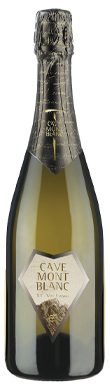

This sparkling Prié Blanc from vines grown at 1,100m-1,200m captures the purity of high-elevation viticulture. Light-bodied and vibrant, it opens with alpine herbs, apple, pear,...
2021
Cave Mont BlancMorgex et de La Salle

Abbazia di Novacella, Praepositus Kerner, Alto Adige/Südtirol, Valle Isarco, Südtirol, Trentino-Alto Adige, Italy, 2023
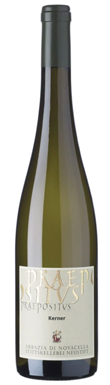
This Kerner’s golden-yellow hue hints at the sunny altitudes in Bressanone, northeast of Bolzano. From vines grown at 650m-750m, it balances power with alpine freshness,...
2023
Abbazia di NovacellaAlto Adige/Südtirol
Les Crêtes, Vigna Devin Ros Petite Arvine Fleur, Valle d’Aosta, Italy, 2023
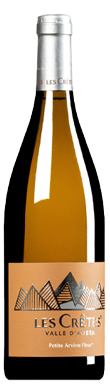
This single-vineyard Petite Arvine bursts with alpine character. Bracing acidity and grapefruit zest leap from the glass, and salty minerality evokes crushed seashells. Medium body...
2023
Les Crêtes
Edi Keber, Collio, Friuli Venezia Giulia, Italy, 2022
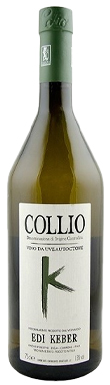
This natural but non-macerated white is a field blend of native varieties grown on Collio’s ponca-rich slopes (alternating layers of marls and sandstone) – Friulano,...
2022
Edi KeberCollio
Primosic, Ribolla Gialla Riserva, Collio, Friuli Venezia Giulia, Italy, 2019
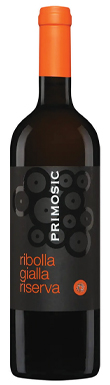
Late-harvest grapes from old vines fermented with native yeasts; four weeks on the skins in open vats without temperature control or added sulphites. Lightly oaked...
2019
PrimosicCollio
Ar Pe Pe, Rocce Rosse Riserva, Valtellina, Superiore Sassella, Lombardy, Italy, 2018
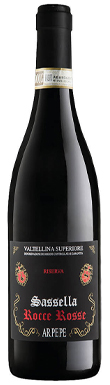
This wine has risen to become the estate’s flagship, a pure expression of the rocky and windy Sassella sub-zone, known for its wines’ structure, minerality...
2018
Ar Pe PeValtellina
Franz Haas, Pònkler Pinot Nero, Alto Adige/Südtirol, Südtirol, Trentino-Alto Adige, Italy, 2019
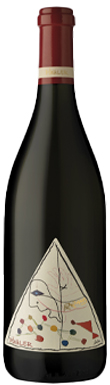
This cru captures the essence of alpine extremes, powerful yet refined. Red fruits, spice and a mineral backbone stretch into a long, satisfying finish. If...
2019
Franz HaasAlto Adige/Südtirol
Marcel Zanolari, Indisciplinato Le Anfore, Rosso di Valtellina, Lombardy, Italy, 2018
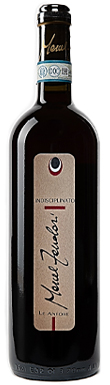
This ‘undisciplined’ Nebbiolo is aged in amphorae and therefore does not qualify as a Sforzato di Valtellina DOCG, which requires ageing in oak. The use...
2018
Marcel ZanolariRosso di Valtellina
