
Italy’s future greats: 10 wineries from Piedmont to Campania nominated by their peers
If you want to know about rising-star winemakers, who better to ask than producers in the same region who have been at the vanguard for decades? We invited 10 major names in Italian wine to highlight their pick of the top up-and-coming producers in their respective regions.


Italian wine is in full swing. While the leaders of the quality revolution of the 1980s and 1990s are progressively passing the baton to the next generation, new faces are also rising to prominence.
Whether they are modernising family businesses or starting from scratch; whether they have studied oenology or have a different background – for all of them, the challenge today is the market, unstable and moody, marked by a radical change in eating habits and by a young public disaffected with wine.
Scroll down for tasting notes and scores from 10 future Italian greats
Not even the climate offers certainty to those whose ceiling is the sky. A possible solution could be provided by biodiversity: olive groves and cereal plantations often grow next to vineyards. Wine is no longer the undisputed protagonist, and even the role of the oenologist consultant is reduced: new winemakers often create their own wines, taking on the risk of their own choices.
The trend of the new generation is towards fresh and pleasant wines, without compromising complexity and elegance; a result achieved thanks in part to refinement in materials more neutral than wood, such as concrete and clay amphorae, which better preserve the pure expression of the terroir.
Below, 10 major names in Italian wine point to the rising star in their respective region – for once, the arduous task of predicting the future is left to the interpreters themselves, not to journalists! This article is also another sign of the times: even the world of wine, once egocentric and competitive, seems increasingly open to dialogue and comparison; an encouragement to the new guard. And the winery is…

Piedmont
La Briccolina di Tiziano Grasso Serralunga d’Alba
Nominated by Massolino
Winemakers in Piedmont have passionately experienced the changes and developments in the world of viticulture over the last 40 years, attributing a strong cultural value to wine. In the Langhe region of the 1990s, the intense confrontation that arose between ‘traditionalists’ and ‘modernists’ led to the well-known ‘Barolo wars’, which are now the stuff of novels and screenplays.
Today, the waters are calmer, but Roberto Massolino, co-owner of the successful Massolino winery in Serralunga, which established itself in those years of turmoil, weighs his words carefully when he talks about the future: ‘I still focus on Barolo wine, especially on its sub-zones to be rediscovered. La Briccolina winery, founded by Tiziano Grasso with the 2012 vintage and currently run by his widow Simona Stralla together with son Daniele Grasso, insists on the Briccolina MGA area, a historic plot in Serralunga, and helps to make it known to enthusiasts.’ Although the family owns 6ha of vines, the one wine produced is sourced from 0.4ha of old-vine Nebbiolo in the Briccolina MGA. +39 0173 380231
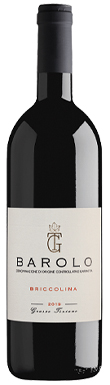
La Briccolina di Tiziano Grasso, Briccolina, Serralunga d’Alba, Barolo, Piedmont 2019 95 points
For many years, the Grasso family has nurtured the Briccolina vineyard, at 330m-390m with excellent exposure, but only started bottling wine made from its grapes in 2012. This Barolo – aged for two years in 25hl oak barrels – offers aromas of violets, red plum, chinotto and sweet spices. It is velvety in the mouth, with compact tannins and a long finish. Classy.
Drink 2024-2035 Alc 14.5%


Veneto
Gentili Caprino Veronese
Nominated by Allegrini
‘The generational transition in wineries usually happens quite late, with the risk of losing precious energy,’ believes Francesco Allegrini, who runs the family company in Fumane, Veneto. A representative of Valpolicella around the world, he is well placed to discuss generational change, having recently inherited a share of the winery from his father Franco, who died in April 2022.
Franco, along with his father Giovanni, certainly didn’t lack the energy to build the Allegrini brand since the 1960s. For Francesco, born in 1987, the biggest challenge is to do with climate change. He says: ‘The cool area of Bardolino, between Lake Garda and Monte Baldo [on the eastern side of the lake], has an advantage. Local wineries are working on the idea of a refined and enthralling wine. I particularly appreciate the interpretation of Bardolino by Gentili winery.’
Bardolino is a misunderstood red, despite being produced with the same grapes as Amarone. Siblings Enrico and Elisa Gentili began their winemaking adventure in 2017 – their father Carlo used to sell wine in bulk – and their Bardolinos recall the most elegant expressions of Valpolicella. cantinagentili.com
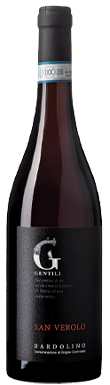
Gentili, San Verolo Bardolino, Montebaldo, Veneto 2021 93 points
Aromas of black cherry, small black fruits, aromatic herbs and cinnamon chase each other and then mingle. Vibrant, succulent, correctly acidic and graceful. This 80% Corvina, 20% Rondinella blend comes from the Valpozzo vineyard in Costermano sul Garda, which rests on morainic, sandy-loamy soils typical of the eastern shoreside of Lake Garda. After fermentation in steel, the wine ages for 12 months in terracotta and ceramic containers. Drink 2024-2028 Alc 12.2%


Friuli-Venezia Giulia
Le Due Terre Prepotto
Nominated by Livio Felluga
Livio Felluga himself, who passed away in 2016 at the age of 102, personified Friulian viticulture. Beginning after World War II with the restoration of the vineyards on Rosazzo hill, today, his heirs cultivate about 160ha of vines on a 228ha estate in the Collio and Colli Orientali areas, close to the Slovenian border in Italy’s far northeast.
The Livio Felluga winery – also famous for the Carta Geografica (an ancient map of the Friulian hills) on its labels – paves the way for a new map of Friulian wines. ‘Truly more than a new zone, I’m thinking of a new face’, says Andrea Felluga, Livio’s son. ‘Cora Basilicata is giving a decisive turning point to Le Due Terre winery, founded by her parents Flavio and Silvana. Being an oenologist, she focuses on increasingly refined wines – a pure expression of the gifted terroir of origin, Prepotto.’ Le Due Terre owns 5ha of vineyards and has risen to prominence for its role in the re-evaluation of skin-macerated white wines. It also produces excellent reds. +39 0432 713189
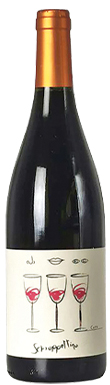
Le Due Terre, Schioppettino, Friuli Colli Orientali 2019 93 points
Made from the native Colli Orientali variety Schioppettino, this is a juicy red with overwhelming energy (Schioppettino means ‘crackling’ in the local dialect). It offers notes of Morello cherries, blackberries, currants and white pepper, flowing with agility and fragrance across the palate, and finishes incisively. After fermentation in concrete and resting in contact with the skins for 30 days, it ages for 30 months in barriques. Drink 2024-2028 Alc 13.5%


Tuscany
Tenuta Cafaggiolo Scarperia and San Piero
Nominated by Marchesi Frescobaldi
How does it feel to have 700 years of family history behind you? ‘It might be even more, according to the latest research!’ says 30th-generation Lamberto Frescobaldi, proud bearer of one of the most illustrious surnames in Italian wine, synonymous with Tuscany and winemaking excellence.
With his family, he heads eight estates in the main terroirs of the region – plus a small winery on the penitentiary island of Gorgona: nothing escapes his radar in Tuscany. ‘An area still to be discovered is Mugello, just north of Florence,’ Lamberto explains. ‘A green valley at the foot of the Apennines, crossed by the Sieve river, its cool climate is congenial to Pinot Noir, as shown by the excellent work done by [former] Podere Fortuna winery.’
The owners of the Podere Fortuna farm, the Lowenstein family, decided recently to rebrand under the name of the historic estate, ‘Tenuta Cafaggiolo’. It was among the first wineries in the region to believe in Pinot Noir and has been bottling delicious examples since the early 2000s. tenuta-cafaggiolo.com
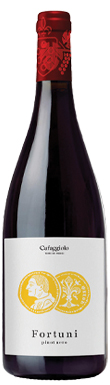
Tenuta Cafaggiolo, Fortuni Pinot Nero, Tuscany 2018 95 points
Clear aromas of wild blackberry and cranberries, with ferrous and spicy notes in the background. The mouthfeel is sapid, with an acidic vein that gives verticality and elegance, and a long finish is marked by a refreshing balsamic hint. Comes from the estate’s oldest vineyard, fermented for about 20 days in oak vats and aged for 12 months in French oak barrels (50% new). Drink 2024-2032 Alc 13%


Marche
Campanelli San Paolo di Jesi
Nominated by Pievalta
At the helm of Pievalta, Alessandro Fenino has clear ideas. The respected producer has been central in driving the rise in quality and success of Verdicchio dei Castelli di Jesi in the last 20 years, and was one of the earliest adopters of biodynamics in the Marche region, receiving certification in 2008. ‘Verdicchio must focus on zoning to enhance the terroir, and Francesco Campanelli is working in this direction,’ says Fenino. ‘His idea of vinifying different plots of Verdicchio grapes with the same procedures, in order to capture the slightest nuances given by different soils and microclimates, opens up interesting scenarios.’
Remarkably, Campanelli only started making wine in 2021. He produces three Verdicchios from three vineyards, respectively located in San Paolo di Jesi (nearest of the three to the Adriatic coast), Cupramontana (on the central hills of the region), and Serra San Quirico (furthest inland, and subject to Apennine influences). The results are surprising, thanks to the many facets that each of his wines manages to express. They are a further confirmation that vineyard mapping would guarantee a definitive leap in quality for Verdicchio in the region. campanellivini.it
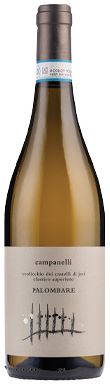
Campanelli, Palombare, Verdicchio dei Castelli di Jesi Classico Superiore, Marche 2021 94 points
Notes of wild flowers, white peach and citrus fruits. Juicy and broad, it hits the palate with lively acidity, leading to a long and harmonious finish with a pleasant almond aftertaste. The first vintage of this Verdicchio comes from an estate vineyard where the average vine age is more than 30 years. Aged in steel and concrete. Drink 2024-2028 Alc 13.5%


Umbria
Argillae Allerona
Nominated by Lungarotti
Umbria is known to wine enthusiasts largely thanks to the far-sighted work of the Lungarotti family. When it was released, the 1964 vintage of its Vigna Monticchio Rubesco Riserva was one of the first single-vineyard wines in Italy. The family was instrumental in the creation, in 1968, of Torgiano Rosso, the region’s first DOC. In 1974, Giorgio and Maria Grazia Lungarotti also created the pioneering MUVIT wine museum.
Today, Teresa Severini Lungarotti, who manages the family winery with her sister Chiara, reflects on the future of Umbrian wines: ‘We need to give space to young people, who grasp the spirit of the time. I think of Giulia Di Cosimo and her dynamic management of Argillae, which is dedicated to the production of wine and oil, among woods and gullies, close to Orvieto.’ Born in 1988, Di Cosimo is exploring the potential of Umbrian white grapes – Grechetto, Procanico, Drupeggio – with vinification in amphorae, and sparkling wine production. With the Signorelli 500 label, Argillae is supporting the restoration of Orvieto cathedral, which is decorated with Renaissance frescoes by Luca Signorelli. argillae.eu
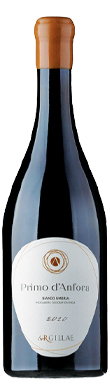
Argillae, Primo d’Anfora, Umbria 2020 94 points
Notes of elderberry, hawthorn flowers and musk prelude a tannic, rich and rounded palate. On the finish, an acid-savoury vein gives freshness and balance. A blend of 60% Grechetto, 20% Drupeggio and 20% Malvasia from the oldest estate vineyard (45 years), this is an intriguing white wine, at once archaic and futuristic. Complex and refined. The clay that gives the winery its name and nourishes the vines is also the material in which Giulia Di Cosimo’s most ambitious wine matures. Drink 2024-2028 Alc 13%


Campania
Aroma Winery Montefalcione
Nominated by Mastroberardino
Founded in the 1750s, during Bourbon times and well before the unification of Italy, Mastroberardino, based in Atripalda, Avellino, has experienced eras of great splendour for Campanian wines, as well as difficult moments – especially in the aftermath of the devastating earthquake of 1980, when the company represented the last bastion against the abandonment of the land as most activity ceased or moved towards the coast. An authoritative voice, therefore, with respect to the future of winemaking in the region. ‘Today, many young people produce quality wine, fortunately,’ says winemaker and owner Professor Piero Mastroberardino. ‘However, the challenge is to sell it.
Aroma Winery, owned by Raffaele Noviello, has been able to make its way in increasingly competitive markets.’ Born in Irpinia in 1980, Noviello founded Mont’Antico winery at the age of 24, renaming it Aroma Winery in 2014. A follower, although not rigidly, of tradition, it produces classic local wines (Taurasi, Greco di Tufo, Fiano di Avellino), as well as ancestral-method sparkling wine, late-harvest wine and grappa. aromaiw.com
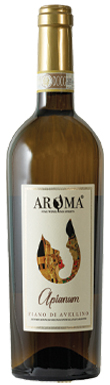
Aroma Winery, Apianum, Fiano di Avellino, Campania 2021 93 points
Notes of peach, magnolia and hazelnut lead to a smooth, richly structured palate with freshening acidity and a savoury character, and then a persistent finish. Fully expresses the nature of the territory. Apianum was the ancient Roman name for wine made from Fiano (a reference to the bees drawn to the intensely sweet flesh). Drink 2024-2028 Alc 14%


Puglia
I Parieti Gioia del Colle
Nominated by Gianfranco Fino
‘The ancient name of our land, expressed in the plural, Le Puglie, helps to capture the enormous differences of a 400km-long region where even wine cannot be expressed in the singular,’ says Gianfranco Fino, the winemaker at his eponymous estate in Manduria. With his provocative charisma, Fino has revolutionised the image of Puglian viticulture over the past 20 years, offering up an interpretation of Primitivo that combines austerity and opulence. After careful reflection, Fino nominates I Parieti, Matteo Santoiemma’s winery near Gioia del Colle.
After a career in wine sales and marketing, Santoiemma returned to his homeland on the enchanting karst plateau of the Murge to give new impetus to the family farm. ‘His commitment to viti ad alberello [head-trained bush vines, a style of cultivation in which sapling vines are planted in shallow holes] surrounded by dry stone walls – parieti, in the local dialect – is commendable, and his wines, whether Primitivo or whites based on Verdeca and Minutolo grapes, all combine tradition and contemporary elegance.’ I Parieti also produces olives and cereals. iparieti.com
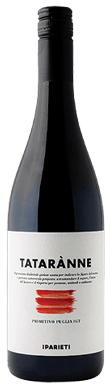
I Parieti, Tatarànne Primitivo, Puglia 2022 94 points
This Primitivo is a triumph, offering aromas of Morello cherries, plums, wild herbs and spices, including pepper and liquorice. In the mouth, it’s irresistible and energetic, with a dynamic acid-savoury tension leading to a crisp red-fruit finish. Dedicated to winemaker Matteo Santoiemma’s grandfather (tatarànne in the local dialect), who inspired his return to the vineyard. Drink 2024-2030 Alc 14%


Sicily
Graci Castiglione di Sicilia
Nominated by Donnafugata
Sicily never ceases to fascinate: a Mediterranean microcosm with a long history of invasion and occupation, today effectively a large vineyard and trendy wine laboratory. Since 1983, Donnafugata has contributed, with its wines and cultural initiatives, to carving out the image of this fiercely independent island. From its headquarters in Marsala, at the island’s western end, owner Antonio Rallo looks far ahead and focuses on Etna (on the eastern side) as the terroir of the present and future.
‘The best energies of our island come from the volcano,’ he says. ‘I think of Alberto Graci’s work – a young producer already representative of this area that’s so important for Sicily. His vineyards are among the most beautiful, his wines increasingly good. The new investments in the cellar testify to his determination.’
Rallo also highlights Graci’s attentive abilities in communication and involvement in the Di-Vino (Digital Innovation Wine Experiential Marketing) project, aimed at enhancing knowledge of and conserving Sicily’s dry stone walls, an inimitable part of the island’s winemaking history.
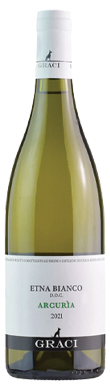
Graci, Arcurìa, Etna Bianco, Sicily 2021 95 points
£51 Berry Bros & Rudd; $70 AOC Selections
Citrus fruit, lemon peel, orange blossom and broom aromas anticipate a tense, juicy and thirst-quenching palate with exciting minerality. From the Arcurìa contrada in Passopisciaro, on the northern slope of Mount Etna at 600m, where the soil is made up of dark sand studded with lava rocks, this 100% Carricante is aged partly in large oak barrels and partly in concrete. Organic. Drink 2024-2030 Alc 12.5%


Sardinia
Olianas Gergei
Nominated by Argiolas
Antonio Argiolas (1906-2009) was the undisputed patriarch of Sardinian viticulture. With the collaboration of the legendary oenologist Giacomo Tachis, he created iconic labels known throughout the world. Today, the new Argiolas generation is focused on quality across the board. Valentina Argiolas, Antonio’s granddaughter, is in no doubt about the future of viticulture: ‘The game is played on the environment and its defence. The excellence of a wine begins with the health of the vineyard and continues with good cellar practices. On our island, Olianas is carrying out admirable work in this direction.’
Founded by oenologist Stefano Casadei and the Olianas family in 2002, the winery has its headquarters in Gergei, the agricultural-pastoral heart of Sardinia. Olianas produces wines exclusively from native varieties – including Cannonau, Bovale, Vermentino and Semidano – having developed a overarching management protocol that’s in line with biodynamic practices and includes the use of horse-drawn ploughs, fermentation using indigenous yeasts and ageing wines in amphorae. olianas.it
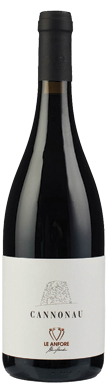
Olianas, Le Anfore, Cannonau di Sardegna, Sardinia 2021 95 points
A riot of myrtle, juniper liquorice and laurel anticipates a vertical and energetic palate. Acidity and minerality soften the structure, giving an elegance that’s underlined by velvety tannins and a persistence on the finish. Classy. Long fermentation on the skins (30-40 days) helps to enhance the wine’s wealth of aromas, the work completed by maturation in terracotta amphorae for six months. Organic. Drink 2024-2032 Alc 14%

See notes and scores for wines from 10 Italian producers lauded by their peers
Wines are ordered by colour and score
Related articles
- Groundbreaking Gaja: A lifetime’s work
- Discover Campania: 12 wines worth seeking out from this exciting region
- Piedmont’s up-and-comers plus the 10 bottles to seek out
Graci, Arcurìa, Etna, Sicily, Italy, 2021

Citrus fruit, lemon peel, orange blossom and broom aromas anticipate a tense, juicy and thirst-quenching palate with exciting minerality. From the Arcurìa contrada in Passopisciaro,...
2021
GraciEtna

Argillae, Primo d'Anfora, Umbria, Italy, 2020
Notes of elderberry, hawthorn flowers and musk prelude a tannic, rich and rounded palate. On the finish, an acid-savoury vein gives freshness and balance. A...
2020
Argillae
Campanelli, Palombare, Verdicchio dei Castelli di Jesi, Classico Superiore, Le Marche, Italy, 2021
Notes of wild flowers, white peach and citrus fruits. Juicy and broad, it hits the palate with lively acidity, leading to a long and harmonious...
2021
CampanelliVerdicchio dei Castelli di Jesi
Aroma Winery, Apianum, Fiano di Avellino, Campania, Italy, 2021
Notes of peach, magnolia and hazelnut lead to a smooth, richly structured palate with freshening acidity and a savoury character, and then a persistent finish....
2021
Aroma WineryFiano di Avellino
La Briccolina di Tiziano Grasso, Briccolina, Barolo, Serralunga d’Alba, Piedmont, Italy, 2019
This Barolo offers aromas of violets, red plum, chinotto and sweet spices. It is velvety in the mouth, with compact tannins and a long finish....
2019
La Briccolina di Tiziano GrassoBarolo
Olianas, Le Anfore, Cannonau di Sardegna, Sardinia, Italy, 2021
A riot of myrtle, juniper liquorice and laurel anticipates a vertical and energetic palate. Acidity and minerality soften the structure, giving an elegance that’s underlined...
2021
OlianasCannonau di Sardegna
Tenuta Cafaggiolo, Fortuni Pinot Nero, Toscana, Tuscany, Italy, 2018
Clear aromas of wild blackberry and cranberries, with ferrous and spicy notes in the background. The mouthfeel is sapid, with an acidic vein that gives...
2018
Tenuta CafaggioloToscana
I Parieti, Tatarànne Primitivo, Puglia, Italy, 2022
This Primitivo is a triumph, offering aromas of Morello cherries, plums, wild herbs and spices, including pepper and liquorice. In the mouth, it's irresistible and...
2022
I Parieti
Gentili, San Verolo, Montebaldo, Bardolino, Veneto, Italy, 2021
Aromas of black cherry, small black fruits, aromatic herbs and cinnamon chase each other and then mingle. Vibrant, succulent, correctly acidic and graceful. This 80%...
2021
GentiliBardolino
Le Due Terre, Schioppettino, Colli Orientali del Friuli, Friuli-Venezia Giulia, Italy, 2019
Made from the native Colli Orientali variety Schioppettino, this is a juicy red with overwhelming energy (Schioppettino means ‘crackling’ in the local dialect). It offers...
2019
Le Due TerreColli Orientali del Friuli
