Producer profile: Esporão & 13 top wines to try
Founded in 1973, Alentejo producer Esporão has emerged as a leading light in the region's modern premium wine scene. Sarah Ahmed looks at its history, meets the names behind the wines and recommends bottles to try.
Get our daily fine wine reviews, latest wine ratings, news and travel guides delivered straight to your inbox.
You are now subscribed
Your newsletter sign-up was successful
Esporão is one of the best known wine brands from Portugal. Highlighting its position and status at home and abroad, the company celebrated its 50th anniversary in July with 1,100 guests from 20 countries. They included Portugal’s Ministers of Agriculture & Food and Economy & Maritime Affairs, whose speeches fêted the company’s achievements.
Scroll down to see tasting notes and scores for 12 top Esporão wines to try
In his forceful keynote speech, co-founder José Roquette exhibited the vision and tenacity that enabled Esporão to survive a turbulent watershed in Portugal’s history. And then to thrive. ‘The story of Esporão is the story of the country itself,’ said 87-year-old José, who retired last year. He has handed the chairmanship to his youngest son, João Roquette (below).
Arrested development
It all began promisingly in 1973, when Roquette (a banker) and Joaquim Bandeira (an agronomist) acquired Herdade do Esporão in Reguengos de Monsaraz, a sizeable estate in Portugal’s southerly Alentejo. Since the 1950s, the region had been dominated by cooperatives focused on bulk wine production. Bandeira believed in taking control of planting, production and marketing to build a quality brand. Roquette was immediately taken with this vision. ‘My father, a natural entrepreneur, invested all his money in this dream project,’ explains João.
However, the dream turned into a nightmare following Portugal’s ‘Carnation Revolution’ on 25 April 1974. This successful left-leaning military coup led to the nationalisation of companies (including Esporão) in March 1975. ‘The first thing the communists did was to arrest business owners, people working in finance and some landowners,’ says João. José as Esporão’s CEO, was targeted and jailed for four months.
Following his release, the family fled to Brazil, only returning home at the end of 1979. By this time the democratically elected government had returned Herdade do Esporão to José and Bandeira. The pair were initially required to sell the estate’s grapes to the local co-op but, as soon as they were able, they made their first wine, Herdade do Esporão Reserva Tinto 1985. It marked the launch of a brand that last year turned over €52m and, now listed in 58 markets, accounts for a sizeable chunk of Alentejo’s sales.
Continuous innovation
With quality in mind, the partners had already started constructing a winery and bottling lines to control the entire process in-house. In the first of many talent hires, winemaker Luís Duarte (who became a leading consultant in Alentejo) and the company’s current head of viticulture, Amandio Rodrigues, were recruited from the University of Trás-os-Montes e Alto Douro.
The duo teamed up with Professor Colaço do Rosário of Évora University, the so-called ‘father of Alentejo wine’ – a key player in identifying the foundation varieties for Alentejo’s modern, quality-focused wines. Esporão provided the experimental ampelographic field and financed a laboratory that – together with Bandeira’s insistence on tasting the resulting wines – helped to identify the cuttings and varieties that were to shape the region’s modern premium wines. They included Aragonez, Trincadeira and Alicante Bouschet (reds) and Antão Vaz and Roupeiro (whites), which became mainstays of Esporão’s range.
Get our daily fine wine reviews, latest wine ratings, news and travel guides delivered straight to your inbox.
Following Duarte’s departure, Australian winemaker David Baverstock was recruited in 1991, beginning a 30-year career for the winery. ‘Some of his work, especially in the 1990s, shaped modern winemaking in Portugal – and Esporão was at the forefront of that,’ explains João.
In Alentejo’s sunny, warm climate, temperature-controlled stainless steel tanks revolutionised white winemaking. They contributed to Monte Velho, Esporão’s unoaked, fruity entry-level red, becoming a best-seller in Portugal. American and French oak barrels were deployed for a smoother, less rustic mouthfeel than traditional Portuguese oak. As Baverstock liked to say, he brought ‘a New World way, using Old World grapes’. Although under his watch, Esporão was also at the vanguard of bottling traditional DOC Vinho de Talha (clay pot) wines.
Baverstock introduced French ‘helper varieties’ into blends, such as Cabernet Sauvignon for backbone and Syrah for richness. Semillon was one of several innovative single-varietal labels he introduced. The tweaks and changes kept coming, not least because Esporão planted its own ampelographic field in 2010 to some 190 grapes (37 of which are now in full production) and acquired three more Alentejo vineyards.
Looking ahead
So it’s no surprise that the Esporão name has become synonymous with quality and consistency, accessibility and innovation, from Monte Velho to Torre do Esporão, the flagship red which has only been made four times since 2004. Since 2022, winemaker José Luís Moreira da Silva (who joined the company in 2015), has been responsible for overseeing all Esporão’s production. ‘We have a new cycle of winemaking and someone who will definitely continue to push barriers like David,’ says João.
‘Innovation is part of our DNA,’ states Moreira da Silva. It’s part of the legacy that he fully intends to respect, continuing the direction of travel towards more precise, detailed wines. Initiatives include focusing on balanced maturation, not concentration. ‘It’s all too easy to obtain concentration in the south,’ he remarks.
Moreira da Silva’s team is using more used oak and bigger format oak, as well as concrete tanks for ageing. They are also ageing wines more reductively on lees (an antioxidant). Still, adds the Porto-born winemaker who cut his teeth in the north: ‘There is always a comfort side in Alentejo wines compared with Douro, and I am beginning to appreciate it.’
Beyond Alentejo, beyond wine
Esporão’s winemakers have been prominent ambassadors which, for João, reflects ‘a balance between management and passion and product and vision’. Both Roquettes – father and son – started out in banking, and have built the brand with considerable business acumen. José bought out Bandeira in 1994. In 1997, Esporão was among the first wine (as opposed to Port) companies to invest in wine tourism and launched its popular olive oil, pioneering single-varietal labels for its products.
José explains that this century the company has invested around €100m in new projects. Esporão has acquired estates in the Douro (Quinta das Murças) and Vinho Verde (Quinta do Ameal). In 2018, it bought Sovina, a craft beer business. This has already resulted in cutting-edge cross-fertilisation projects, such as substituting hops (an antioxidant) for sulphur in wines, and ageing beer in wine barrels.
Perhaps the most ambitious project of all has been to secure organic certification for 111ha of olive groves and all 635ha of Esporão’s Alentejo and Douro vineyards. This figure represents 18% of Portugal’s total certified organic vineyards. The change to organic viticulture has contributed to more balanced maturations (and, it follows wines), according to Moreira da Silva. Sustainability, an overarching strategy, is also exemplified by Restaurant Herdade do Esporao, a no/low waste eatery, which has held a Michelin star and Michelin Green star since 2021.
Popularity and respect
The move into the family business in 2005 was intimidating for João. ‘The scale overwhelmed me,’ admits the man who had already left banking for music, before succumbing to wine. ‘But when I thought about incredibly respected musicians like Stevie Wonder and Prince, who are also very popular, I thought “This is possible!”’
The 49-year-old is keen to emphasise that respect for Esporão among both consumers and the wine trade stems not only from its product-oriented approach. By that João means: ‘Being full of ideas about how we can improve and best serve people with a product we are proud of and excited about.’ He adds: ‘More than just work, it’s about contributing to society and improving people’s lives and protecting the environment.’
This values-oriented approach has been the key to attracting and keeping talent. As he observes: ‘People want to be part of it. Once you take care of the cultural side, it’s just a matter of organising ourselves and having good ideas.’ Smiling broadly, João remembers it prompted this question from the former Niepoort winemaker, Luís Seabra, who has won acclaim for his eponymous label. How do you do the scale, but with attention to detail, and the emotion is there? Esporão is like a giant with a big heart.’
Top Esporão wines to try
Related articles
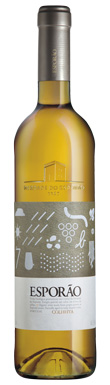
Herdade do Esporão, Colheita Branco, Reguengos, Alentejo, Portugal, 2022

A pale yellow, with saline, white pepper and anise nuances to the succulent yellow plum and star fruit. Pithy, soft citrus notes lend texture...
2022
AlentejoPortugal
Herdade do EsporãoReguengos
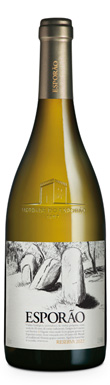
Herdade do Esporão, Reserva Branco, Reguengos, Alentejo, Portugal, 2022

This classic, modern white blend, born in 1985, has slimmed down over the years and, with just 25% oak (all of which is new), shows...
2022
AlentejoPortugal
Herdade do EsporãoReguengos
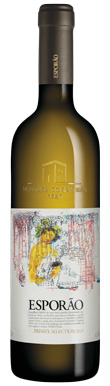
Herdade do Esporão, Private Selection Branco, Reguengos, Alentejo, Portugal, 2021

David Baverstock left his mark in more ways than one, including this Semillon from a north-east-facing vineyard planted in 1996 on deep, well-drained clay. In...
2021
AlentejoPortugal
Herdade do EsporãoReguengos
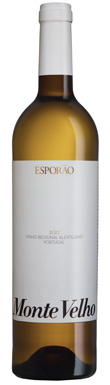
Herdade do Esporão, Monte Velho Branco, Alentejo, Portugal, 2022

Hugely drinkable, without being simple, with juicy pear, succulent prickly pear, a lick of aniseed and gentle phenolic texture, this is a characterful, dry volume...
2022
AlentejoPortugal
Herdade do Esporão
Quinta do Ameal, Bico Amarelo, Vinho Verde, Portugal, 2022
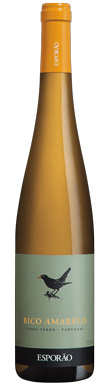
This dry, fruity, still Vinho Verde shows off the varieties well, with its gentle fruit salad flavours, pineapple, floral and saline accents. It is sourced...
2022
Vinho VerdePortugal
Quinta do Ameal
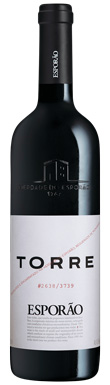
Herdade do Esporão, Torre do Esporão, Alentejo, Portugal, 2017

With sleek, animated fruit and seamless tannins, the fourth flagship release since 2004 turns down the power another notch. A (10%) blend component from...
2017
AlentejoPortugal
Herdade do Esporão
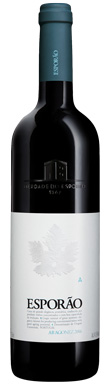
Herdade do Esporão, Aragonez, Reguengos, Alentejo, Portugal, 2016

Velvety, with black tea notes to the fleshy, concentrated plum fruit, this sumptuous Aragonez (akaTempranillo) came from one of Herdade do Esporão’s oldest parcels. Smooth-grained...
2016
AlentejoPortugal
Herdade do EsporãoReguengos
Herdade do Esporão, Touriga Nacional, Reguengos, Alentejo, Portugal, 2017

Ticks all the Touriga Nacional boxes with its fruit power and bergamot florals, but this single vineyard example from schist soils planted in 1988 has...
2017
AlentejoPortugal
Herdade do EsporãoReguengos
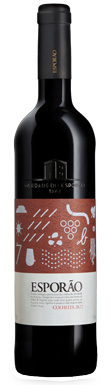
Herdade do Esporão, Colheita Tinto, Reguengos, Alentejo, Portugal, 2022

Unoaked, with lovely nuance and levity to its juicy, sluiced blackberry and cherry fruit, plus subtle chalk and cherrystone texture. This certified organic blend of...
2022
AlentejoPortugal
Herdade do EsporãoReguengos
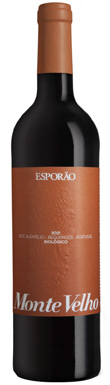
Herdade do Esporão, Monte Velho Tinto Bio, Reguengos, Alentejo, Portugal, 2021

Now certified organic, the quality and vivacity of the estate fruit shines, distinguishing Monte Velho Bio from the regular, best-selling entry-level brand. Mild vintage...
2021
AlentejoPortugal
Herdade do EsporãoReguengos
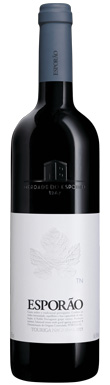
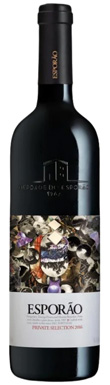
Herdade do Esporão, Private Selection Tinto, Reguengos, Alentejo, Portugal, 2016

A rich, full-bodied Alicante Bouschet-led red from three Reguengos parcels of vines and one elevated (400m) Portalegre parcel. Round and ripe, with tertiary, savoury undertones...
2016
AlentejoPortugal
Herdade do EsporãoReguengos
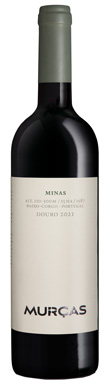
Quinta do Murças, Murças Minas, Cima Corgo, Douro Valley, Portugal, 2021

Soft and gluggable, with juicily persistent blackberry, plum skins, lifted violets and low alcohol, this unaturally fermented, foot-trodden Douro red slips down all too easily....
2021
Douro ValleyPortugal
Quinta do MurçasCima Corgo
Herdade do Esporão, Colheita Branco, Reguengos, Alentejo, Portugal, 2022

A pale yellow, with saline, white pepper and anise nuances to the succulent yellow plum and star fruit. Pithy, soft citrus notes lend texture...
2022
AlentejoPortugal
Herdade do EsporãoReguengos
Herdade do Esporão, Reserva Branco, Reguengos, Alentejo, Portugal, 2022

This classic, modern white blend, born in 1985, has slimmed down over the years and, with just 25% oak (all of which is new), shows...
2022
AlentejoPortugal
Herdade do EsporãoReguengos
Herdade do Esporão, Private Selection Branco, Reguengos, Alentejo, Portugal, 2021

David Baverstock left his mark in more ways than one, including this Semillon from a north-east-facing vineyard planted in 1996 on deep, well-drained clay. In...
2021
AlentejoPortugal
Herdade do EsporãoReguengos
Herdade do Esporão, Monte Velho Branco, Alentejo, Portugal, 2022

Hugely drinkable, without being simple, with juicy pear, succulent prickly pear, a lick of aniseed and gentle phenolic texture, this is a characterful, dry volume...
2022
AlentejoPortugal
Herdade do Esporão
Quinta do Ameal, Bico Amarelo, Vinho Verde, Portugal, 2022

This dry, fruity, still Vinho Verde shows off the varieties well, with its gentle fruit salad flavours, pineapple, floral and saline accents. It is sourced...
2022
Vinho VerdePortugal
Quinta do Ameal
Herdade do Esporão, Torre do Esporão, Alentejo, Portugal, 2017

With sleek, animated fruit and seamless tannins, the fourth flagship release since 2004 turns down the power another notch. A (10%) blend component from...
2017
AlentejoPortugal
Herdade do Esporão
Herdade do Esporão, Aragonez, Reguengos, Alentejo, Portugal, 2016

Velvety, with black tea notes to the fleshy, concentrated plum fruit, this sumptuous Aragonez (akaTempranillo) came from one of Herdade do Esporão’s oldest parcels. Smooth-grained...
2016
AlentejoPortugal
Herdade do EsporãoReguengos
Herdade do Esporão, Touriga Nacional, Reguengos, Alentejo, Portugal, 2017

Ticks all the Touriga Nacional boxes with its fruit power and bergamot florals, but this single vineyard example from schist soils planted in 1988 has...
2017
AlentejoPortugal
Herdade do EsporãoReguengos
Herdade do Esporão, Colheita Tinto, Reguengos, Alentejo, Portugal, 2022

Unoaked, with lovely nuance and levity to its juicy, sluiced blackberry and cherry fruit, plus subtle chalk and cherrystone texture. This certified organic blend of...
2022
AlentejoPortugal
Herdade do EsporãoReguengos
Herdade do Esporão, Monte Velho Tinto Bio, Reguengos, Alentejo, Portugal, 2021

Now certified organic, the quality and vivacity of the estate fruit shines, distinguishing Monte Velho Bio from the regular, best-selling entry-level brand. Mild vintage...
2021
AlentejoPortugal
Herdade do EsporãoReguengos
Herdade do Esporão, Private Selection Tinto, Reguengos, Alentejo, Portugal, 2016

A rich, full-bodied Alicante Bouschet-led red from three Reguengos parcels of vines and one elevated (400m) Portalegre parcel. Round and ripe, with tertiary, savoury undertones...
2016
AlentejoPortugal
Herdade do EsporãoReguengos
Quinta do Murças, Murças Minas, Cima Corgo, Douro Valley, Portugal, 2021

Soft and gluggable, with juicily persistent blackberry, plum skins, lifted violets and low alcohol, this unaturally fermented, foot-trodden Douro red slips down all too easily....
2021
Douro ValleyPortugal
Quinta do MurçasCima Corgo