Get our daily fine wine reviews, latest wine ratings, news and travel guides delivered straight to your inbox.
You are now subscribed
Your newsletter sign-up was successful
An account already exists for this email address, please log in.
Regional profile: Abruzzo plus 10 wines to seek out
Nestled between the azure Adriatic sea and snow-topped Apennine mountains, this verdant eastern-central region is an area of climatic opposites, and a varied treasure trove of indigenous vines. It deserves to be better known, says our expert.
Abruzzo is often described as a ‘miniature Italy’: in just a few square kilometres it encapsulates a world of bucolic landscapes, nature, parks, pristine villages, waterfalls, castles and historic cities, offering a blend of tradition and modernity, and is still largely undiscovered by international tourists. The region boasts 130km of coastline; to the north, the beaches are flat and sandy, while the southern area known as the Costa dei Trabocchi (trabocchi are traditional fishing platforms) has long stretches of rocky cliffs.
Scroll down to see tasting notes and scores for 10 Abruzzo wines in a range of styles
Geographically, this is central Italy. The regional capital, L’Aquila, is an hour and a half by car from Rome (120km) and one hour (100km) from Pescara’s international airport on the Adriatic coast. It’s a region of incredible variety and contrasts, with a vast range of soil composition and climate conditions, and striking biodiversity.
The natural landscape is mostly untouched and, with three national parks, one regional park and numerous other protected nature reserves, Abruzzo has earned itself a well-deserved reputation as ‘the green region of Europe’.
Main Denomination: Montepulciano d’Abruzzo DOC, planted across 19,000ha and typically producing 100m bottles annually (70% of which is exported)
Decanter newsletter
Get our daily fine wine reviews, latest wine ratings, news and travel guides delivered straight to your inbox.
Source: Consorzio Tutela Vini D’Abruzzo, 2022
(Image credit: Maggie Nelson)
All this is reflected in the wines: there’s not one style of Trebbiano d’Abruzzo or Pecorino whites, Cerasuolo d’Abruzzo rosato or Montepulciano d’Abruzzo red – these wines often showcase very different styles, methods and organoleptic properties, and their finest examples are strongly rooted in the homegrown tradition which has remained impervious to external influences.
The terroir
Hillside vineyards in Abruzzo, bordered by the mountains to the west and the coast to the east, account for 96% of the region’s vineyard plantings, according to the Assovini association. They feel almost suspended between the sea and the imposing Maiella and Gran Sasso peaks, the two giants of the Apennines which provide shelter from the humid air masses rolling across from the Tyrrhenian sea. These create dramatic temperature shifts which, combined with the bright light, caressing breezes from both the Apennines and the Adriatic, and well-suited limestone-clay soil, create the perfect habitat for vines.
This terroir is ideal for producing structured wines and allows the region’s main variety, Montepulciano d’Abruzzo, the chance to express its full potential. Vineyards can be found, too, in areas defined as mountainous, at altitudes of 600m-800m. Although currently just 4% of the region’s plantings are in the mountains, the high-altitude sites are bound to attract more interest in the future with climate change threatening warmer growing seasons. Meanwhile, the sandy-clay soil in the hilly coastal strip, which enjoys a Mediterranean climate, is particularly suitable for white grapes.
Substance and nuance
Research in the region has shown that the Italic peoples began growing grapes in Abruzzo around 1,000 BC. The Greek historian Polybius wrote in his Histories that Abruzzo wines helped Hannibal and his troops regain their strength after their victory at Cannae [in Puglia]. Major archaeological finds have provided evidence of winemaking in Roman times. And the Roman poet Ovid, who was born in Abruzzo, described his native region as fertile ground for grapes.
The first historical written record of Montepulciano d’Abruzzo dates from 1792. The grape originated in the Valle Peligna (near L’Aquila) at the foot of the Maiella and Sirente-Velino mountains; it later migrated to the hills inland around Pescara. It has been grown throughout the coastal hills since about 1950 and accounts for more than 80% of Abruzzo’s denomination wines, and it is among the top three DOC wines produced in Italy (by quantity).
Generous, versatile and malleable, Montepulciano d’Abruzzo can be interpreted as a wine that is concentrated, structured, muscular and potent, often bearing strong signs of oak ageing. Alternative styles, meanwhile, accentuate freshness, elegance, easy drinking and intensity, without compromising on the grape’s typical grit and character: these wines are aged in steel or concrete vats, or even terracotta amphorae. In northern Abruzzo, the Colline Teramane have been a DOCG zone for 20 years; the hills benefit from their specific elevation and geology which, combined with the silty-clayey soil and temperature swings, give the Montepulciano grown here substance and sheer energy.
Abruzzo winemaker Giula Cataldi Madonna
(Image credit: Credit Unknown)
Abruzzo’s other emblematic variety is Trebbiano d’Abruzzo. For years, it has been giving wine lovers immensely rewarding results with complex, long-lived, subtly nuanced wines, gaining a reputation as a prestige Italian white. And while credit for this breakthrough should be given to some pioneering producers, today there’s a whole new generation producing fresh interpretations of Trebbiano d’Abruzzo that are focused on – and respectful of – the terroir, and differ according to the growing areas. The Loreto Aprutino commune is renowned for its special soil and climatic qualities, and Trebbiano d’Abruzzo from here has an international reputation for being among the world’s best whites.
Varietal calling cards
Today’s trendiest variety in Abruzzo is Pecorino, which is increasingly widespread in the region. Conscious of its unfulfilled potential, Abruzzo producers are now focusing on this white grape, the qualities of which were rediscovered in the 1990s. To achieve excellent results, early-ripening Pecorino prefers fresh areas with extreme temperature swings, producing well-structured wines with marked acidity. In terms of taste, Pecorino displays differing levels of sapidity depending on the soil, making it a very versatile white. Other indigenous varieties grown in Abruzzo include Passerina, which produces a fresh, fragrant, not overly structured wine; Cococciola, which has pronounced citrus notes; and Montonico, which gives a wine of bright acidity and floral aromas.
The region’s traditional ‘peasant’ wine has always been Cerasuolo d’Abruzzo, a fruit-forward wine which combines the easy-drinking nature of rosé with the punch of a red. Made from the region’s quintessential grape Montepulciano, Cerasuolo d’Abruzzo is pleasingly multi-faceted and highly complex in its own way, with a strong identity and possessing everything it takes to become one of Abruzzo’s flagship wines. Indeed, this characterful wine would be impossible to reproduce in any other region of Italy: a rosé capable of delivering lively freshness, generous fruit and remarkable structure all at once is a rare feat, even in the diverse panorama of rosé wines.
Pace of change
Metodo classico sparkling wines from Abruzzo have been around since the 1980s, the regional consorzio says, while some local producers have been making Charmat method wines since the late 2000s. To meet the growing demand for bubbly, the Abruzzo consorzio decided to establish a collective regional brand, Trabocco, to spotlight all the Charmat method sparkling wines – white or rosé – produced there using Trebbiano d’Abruzzo, Pecorino, Passerina, Montonico, Cococciola and Montepulciano d’Abruzzo grapes.
Abruzzo winemaker Francesco Paolo Valentini
(Image credit: Credit Unknown)
This fast-evolving, dynamic region is a hive of activity: new estates are springing up, and older producers are stepping back or working alongside the youngbloods. A new ‘Abruzzo model’ will come into force this year, leading to a reorganisation of the region’s wine production, simplifying the different denominations at an administrative level, and aiming to highlight the distinctive identities of local zones.
Abruzzo: The names to know
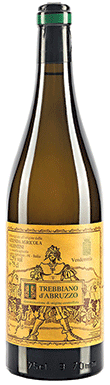
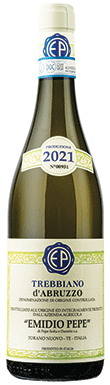
Some key figures have shaped Abruzzo’s winemaking history. Edoardo Valentini set out to champion Trebbiano d’Abruzzo and highlight its worth in the 1950s. He died in 2006, and today, his son Francesco Paolo Valentini’s Trebbiano d’Abruzzo offerings are world class, reflecting his vision of an authentic, true-to-type wine: one can literally taste the sense of place and tradition (+39 085 829 1138). Since the late 1960s, Emidio Pepe has introduced the world to the potential of Trebbiano d’Abruzzo and Montepulciano d’Abruzzo. His wines have the power to move with their quirky character, vibrating with disarming inner energy. Sadly no longer with us, Gianni Masciarelli (who died in 2008) and Giovanni Faraone (2019) were two other pioneering titans of winemaking in Abruzzo whose influence should not be overlooked.
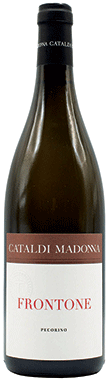
Today’s Abruzzo wine scene is abuzz with innovation. In 2019, 30-year-old oenologist Giulia Cataldi Madonna took over the family business from her father Luigi, yet another of the region’s innovators who is reputed as the first in Abruzzo to plant Pecorino. Giulia is the young, determined face of the generational shift. She has an aura of pure energy, which she pours into her wines, infusing them with vitality and tension on the palate.
Siblings Valentina and Luigi Di Camillo, with their winery I Fauri, are young oenologists born into a family of winemakers. As keen experimenters and researchers, they produce wines that are light, fresh, juicy, characterful and immensely quaffable.
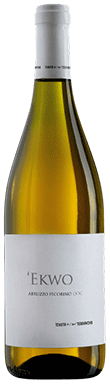
Fausto Albanesi and his wife Adriana founded Torre dei Beati in Loreto Aprutino about 25 years ago. Fausto is a tireless ambassador for the terroir of the region, and their wines underline an expressive, local identity born out of an ethical, minimalist approach.
Young oenologist Fabio Di Donato founded his winery Cingilia 10 years ago. His wines show an increasingly lively, strong identity, showcasing the fruits of a well-suited terroir and the gentle hand that has drawn out their powerful expressiveness.
Emilio Rapino took over his father’s winery in 2014. His wines have a big personality and are remarkably true to type, with a clear expression of the terroir and respect for the variety.
Pick and mix: Piubello’s 10 Abruzzo wines to showcase the region’s styles
The Valentini family have been winemakers since 1650, committed to the rustic artisanal tradition rooted in the land. They follow nature, not fashion: their Trebbiano...
This certified-organic estate covers 30 hectares divided into three vineyards, the main one close to the winery in a broad valley at around 400 metres...
Emidio Pepe, born in 1932, lives by his motto ‘in wine, life’. His respect for his 18 hectares of vineyards, Abruzzo’s traditional winegrowing values, and...
These 22 hectares are a pristine corner of paradise: a gently sloping windswept plot on clayey soil. The Topi family chose a certified organic approach,...
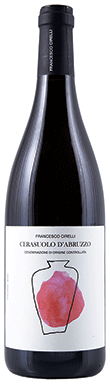
Francesco Cirelli founded his certified-organic farm around 20 years ago, dedicating 6.5 hectares to vineyards. His amphora wines are quite staggering for their intensity, expressivity...
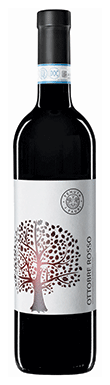
Tenuta I Fauri, Ottobre Rosso, Montepulciano d’Abruzzo, Abruzzo 2021
My wines
Siblings Luigi and Valentina di Camillo are at the head of this estate based in the province of Chieti. Pianists turned oenologists, since 2008 they...
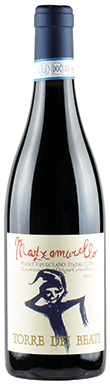
Torre dei Beati, Mazzamurello Riserva, Montepulciano d’Abruzzo. Abruzzo 2020
My wines
Fausto Albanesi is the pillar of this winery, founded with his wife Adriana Galasso around 25 years ago. A two-hectare vineyard planted with vines over...
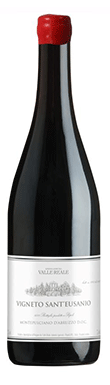
Valle Reale, Vigneto Sant'Eusanio , Montepulciano d’Abruzzo. Abruzzo 2021
My wines
Valle Reale is nestled in an unspoilt valley with woods all around. In 1999, Leonardo Pizzolo chose this spot to focus on high-altitude winegrowing. This...
Alessandra Piubello, journalist, writer, editor, and expert wine-taster from Verona, has an innate passion for wine. Born in Italy's famous Valpolicella wine area, as a child she helped her father tend vines and make the family wine. She began wine-tasting at the age of eight and her love for her land and its produce encouraged a career in journalism reporting on many aspects of Italian culture, principally wine and food. She is co-editor of the Veronelli Guida Oro - the only Italian woman to hold a role of this seniority - and she is also the editor-in-Chief for Queen International and Prince magazines.