
South Africa’s next generation: Six brilliant winemakers forging a new scene
A new wave of talented young winemakers is pushing the agenda in South Africa’s dynamic wine scene. Here are six names that should be on your radar.

An embarrassment of riches is an apt way to describe South Africa’s winemaking talent. The last couple of decades have seen the rise and rise of the country’s wine – in both quality and international visibility.
South Africans have a way of capturing the imagination. They seem to understand that in order to sell their wines, they have to hook you in first.
The biggest fishing expedition of recent history was the now-famous inaugural New Wave South Africa tasting in 2015, held in the basement of a record shop in London’s Soho.
The South Africans won hearts and palates that day and have continued to do so ever since. A decade later, the new wave isn’t so new anymore.
So, what does the next generation of talent look like?
Scroll down to see notes and scores for six fabulous wines from South Africa’s trailblazing winemakers
Better than ever is the answer. In fact, South African wine is in its most exciting era yet. For the purposes of this feature, I’ve chosen six producers who embody South Africa’s spirit of genius.
There are, of course, many more: think of talents such as Banele Vakele of Tembela Wines, Jolandie Fouche of Wolf & Woman, Nongcebo Langa at Delheim, Natasha Jacka of Alinea, Nathan Valentine at Villiera, Charla Haasbroek at Sijnn, Wade Sander of Brunia, Pieter Coetzee at Quoin Rock, Sakkie Mouton and more…
Seek them out, you won’t be sorry.
Mvuselelo ‘Vusi’ Dalicuba
Vergenoegd Löw

Vines have long played a pivotal role in Mvuselelo ‘Vusi’ Dalicuba’s life. ‘My father worked for Distell in Stellenbosch and would often bring wine home,’ he says. ‘That, and the vineyards next to Kayamandi, where I grew up, inspired me to pursue this career.’
With the Atlantic less than 5km away, Dalicuba says they call Vergenoegd Löw ‘Stellenbosch by the sea’.
Established in 1696, Vergenoegd is a national monument with a long legacy of owners. In 2015, it was acquired and restored by German entrepreneur Peter Löw. He just needed a star winemaker to complete the picture. And Dalicuba was the one.
After achieving a BTech in agriculture, he was awarded a scholarship to Elsenburg Agricultural Training Institute, where he became assistant winemaker to head lecturer and chief winemaker Lorraine Geldenhuys.
‘Lorraine set the foundation for my winemaking,’ he says. Gaining experience, Dalicuba worked harvests for both Rupert & Rothschild Vignerons and Kanonkop. At the latter, Abrie Beeslaar set him up to meet with Corius Visser, MD of Vergenoegd.
‘One day Corius showed me around the cellar, and then handed me the reins for the day. I had to run the show! I guess I didn’t do too badly, as I got the job.
Since becoming winemaker in 2021, Dalicuba has continued to impress. The 31-year-old is making increasingly fine Cabernet Sauvignon, aided, he says, by the distinctive terroir.
‘The winds off the ocean create a cooler environment than in the Stellenbosch area in general,’ he explains. ‘Also, unusually for the region, our soils are rich in lime, thanks to our low-lying, ancient-seabed location.
Vines grown in these calcareous soils make for graceful, harmonious wines. ‘I’m still learning – and learning from the best,’ he continues. ‘We have a saying in isiXhosa: The elders have set a path for us – we just have to follow in their steps.’
Nuschka de Vos
Vulpes Wines

Nuschka de Vos has played on her Dutch surname for her label Vulpes Wines, launched in 2022. De Vos means ‘the fox’ and Vulpes is the scientific name of the genus to which all foxes belong.
She’s making just three wines: two Chenin Blancs from divergent terroirs – Swartland and Citrusdal Mountain – plus a Cabernet Sauvignon from the Polkadraai Hills.
‘I’m lucky to count Rosa Kruger as both a mentor and a friend. I never stop learning from, or being inspired by her,’ says the 36-year-old.
Inspiring indeed, Kruger is not only one of South Africa’s leading viticulturists, but was also the 2022 Decanter Hall of Fame recipient. ‘Fresh out of high school, I was working harvests with Rosa.’
After graduating with a BSc in viticulture and oenology from Stellenbosch University, de Vos worked seasons across the globe, from Bordeaux and the Mosel all the way to New Zealand.
Once she had returned home, she became the winemaker at biodynamic concern Reyneke in Stellenbosch.
This tenure lasted six years before she went out on her own. ‘I was involved in all facets of production, from harvesting to bottling, marketing and sales,’ she says.
‘I developed a sincere commitment to the principles of organic and sustainable farming, and realised the inextricable link between terroir and wine expression.’
This path isn’t surprising, considering she grew up on an organic farm in the Western Cape.
‘Good food, good wine and good company were both appreciated and regularly indulged in,’ which had the effect, she says, of piquing her curiosity about winemaking, with its combination of ‘physical, scientific and creative aspects’.
She describes her winemaking style as ‘vineyard- and site-focused. The fruit needs to express itself. I try not to force the wine to be something it’s not.’
Daniel Colombo
Colombo Wines

Self-taught winemaker Daniel Colombo admits that he has always followed the beat of his own drum.
His eponymous label, which he launched in 2021, celebrates South African heritage varieties such as Chenin Blanc, Colombard and Muscat d’Alexandrie.
He describes his wines as being texture-driven, employing varying amounts of skin-contact and minimal-intervention winemaking techniques.
‘While these cultivars are significant in a historical context, the majority aren’t exactly popular on the shelves,’ he says. ‘I’ve taken it as my responsibility to reveal the beauty of these old workhorses.’
As for how he first got into wine, Colombo says: ‘I’ve had a love affair with wine since as early as I was allowed to drink it.’ This makes sense, considering the fact that his father used to own the Paarl property that is now Brookdale (see recommendations, below); he has fond memories of helping with the harvest.
After completing a BA at Stellenbosch University, Colombo headed to Europe for five years. During his travels through the famous capitals, he became intrigued by the natural wine bar culture.
When he got back to Cape Town, this burgeoning interest saw him working at hidey-hole Leo’s, a bagel shop that becomes a natural wine bar at night. Making friends with winemakers while filling their glasses, an opportunity eventually arose to assist at Kaapzicht in Stellenbosch.
‘After a few days of long hours, heavy lifting, getting sticky, tasting… I found myself the happiest I’ve ever been,’ he says. ‘Something about the whole process resonated with me, and I just never stopped.’
A stint at producer Matassa in Roussillon, southwest France, further augmented his lean towards natural winemaking. Since then, the 32-year-old has stuck to his guns – and has earned a legion of fans for his authentic, somewhat mind-bending wines.
These days, he shares cellar space with Catherine Marshall and Miles Mossop in Stellenbosch, while living with his young family in Fish Hoek on the Cape Peninsula. ‘I’m unapologetically determined to make beautiful wine.’
Alexandra McFarlane
McFarlane Wines

‘The varieties I choose to work with have all played a role in shaping the South African wine industry,’ says Alexandra McFarlane. McFarlane Wines, first vintage 2019, harvests small batches from multiple growing areas throughout the Western Cape.
‘I strive to make wines that are clean, pure and expressive of their terroir,’ she says. ‘Pinotage, in particular, excites me – it’s tricky to handle but incredibly rewarding. It’s so expressive of its site, and unique.’
Born in Johannesburg, for McFarlane the wine flame was lit early on with childhood road trips to the Cape, where her parents would load up the car with cases of wine. ‘Wine was always a part of our family meals, often sparking debates.’
After gaining a BSc in viticulture and oenology from Stellenbosch University, her career got an enviable kickstart with a scholarship from Dombeya Wines, which saw her jetting off to Margaret River and the Barossa in Australia, and Napa Valley in the US.
‘The experience opened my eyes to the vast world of wine and fuelled my desire to explore,’ she says.
‘Each experience shaped my approach – precision from Napa, practicality from Australia, and large-scale excellence from Spier, where I worked when I returned to South Africa.’
After that, she swapped the cellar for the vineyard and took up the position of viticulturist at De Toren, later combining all of this experience when she joined Druk My Niet in Paarl as both winemaker and viticulturist in 2016.
McFarlane describes her winemaking style as ‘light to the touch, but with plenty of fruit concentration – doing as little as possible, but without being dogmatic’.
When not making wine, the 35-year-old can be found at home in the Overberg with her husband, two Jack Russells and a cat.
‘I’m aiming to leave a legacy of championing South African wine and shifting perceptions of Pinotage worldwide.’
Kiara Scott
Hazendal Wine Estate

‘I hope to inspire the next generation to see themselves in this industry,’ says Kiara Scott. ‘I want to be part of shaping a more inclusive future for South African wine.’
And Scott is well on her way. At just 32 years of age, she has had a career that can rightly be considered stratospheric. In 2024, she made history as the first female winemaker of colour to win South Africa’s prestigious Diners Club Winemaker of the Year award.
A life in wine wasn’t the obvious choice for Scott. She grew up in a township in Mitchells Plain in the Western Cape, an impoverished area with socio-economic ills such as gangs, drugs and alcohol abuse.
It was her grandmother who showed her that a different path was possible.
‘She enjoyed drinking wine,’ Scott says. ‘She taught me you can have respect for it.’ With her grandmother’s blessing, Scott decided to pursue a career in winemaking.
‘I was drawn to the balance of science, creativity and storytelling, as well as the ability to create something that reflects a sense of place and culture,’ she says.
In her final year at Elsenburg Agricultural Training Institute, she was offered a bursary from the Cape Winemakers Guild Protégé Programme, working harvests in the Rhône and Sancerre, as well as the Russian River Valley in Sonoma County, California.
When she completed the program, Duncan Savage offered her a job at his urban winery in Salt River in Cape Town. Savage was then consulting at Brookdale and was instrumental in securing her the position as winemaker of the Paarl estate.
In December 2024, Scott became head winemaker at Hazendal in Stellenbosch. Coming full circle, she says: ‘Ronel Wiid, who represented Hazendal and won Diners Club Winemaker of the Year in 1999, is a great example of breaking barriers.
‘She was the first woman to take this title. I’m the second to win in the competition’s 44-year tenure. The future is bright.’
Sam Lambson
Minimalist Wines

‘Oh, Syrah! What’s not to love? Chenin may be South Africa’s best vessel for exploring terroir when it comes to whites, but Syrah is undoubtedly our strongest red and I just find it enthralling,’ enthuses Sam Lambson, who makes only Syrah for his Minimalist Wines label, albeit with three bottlings, comprising parcels from Elim and Elgin, as well as a blend from a variety of sites in the Western Cape.
Growing up in Johannesburg, Lambson was inspired to become a winemaker by a bottle of Jamet, Côte-Rôtie 1998. Heading to the Cape, he studied viticulture and oenology at Stellenbosch University while working at a boutique wine store.
In his final year, he worked harvests with Lukas van Loggerenberg, Chris Alheit and Carl van der Merwe.
‘Some of the best things in life emerge from tough times and dark places,’ he says, referring to an episode of depression that saw him take refuge in the cellar.
‘I called my inaugural wine Stars in the Dark in honour of that [period].’ He bottled his first vintage, the 2018, on his 21st birthday; it immediately garnered critical acclaim.
‘We’re all about spontaneous fermentation and 100% whole bunch, only intervening when necessary and letting maturation take place in neutral vessels to allow the site to be the star,’ Lambson continues.
‘While all our wines are kept separate during maturation, everything we bottle is a blend of different picks – even when the wine is from the same vineyard.
‘Fusing the best elements from every vineyard is the fun part and where the magic happens.’
Always the trailblazer, Lambson, now 27, has just launched an urban winery in the heart of Cape Town.
He has plans to develop the surrounding area into a ‘wine district’ in order to create a platform for independent producers to market and sell their wines.
Malu Lambert’s pick of South Africa’s best new talent
Related articles
- South Africa’s winemakers seek out new signature varieties
- 100 years of Pinotage: South Africa’s homegrown grape comes good
- Malu Lambert’s favourite South African white blends
Vulpes, Velox, Citrusdal Mountain, South Africa, 2023
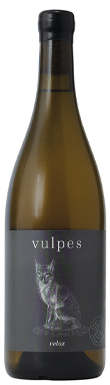

Named after the swift fox, this delicate Chenin Blanc offers aromas of petrichor, white pear, honeyed oranges and flower stems. Textural and bright from the...
2023
Vulpes

Brookdale Estate, Bradbourne White Blend, Paarl, South Africa, 2023
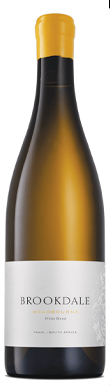
Fantastic balance between weighty fruit and vivid acidity achieved through grapes being picked at different stages of ripeness. Stone fruit vivacity on the mid-palate, with...
2023
Brookdale Estate
Colombo, Can't do without you, Paarl, South Africa, 2024
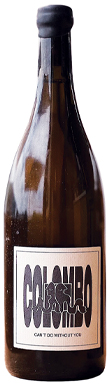
Romantics strap in – the titles for Colombo’s wines all form a part of a continuous love letter to his wife. He reasons it’s the...
2024
Colombo
Minimalist, Stars in the Dark, Elim, Cape Agulhas, South Africa, 2023
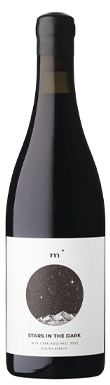
Syrah from Cape Agulhas, the southernmost point of viticulture on the African continent. Cool, limpid tones of iced black cherries, blackcurrant confit, violets and white...
2023
MinimalistElim
Vergenoegd Löw, Lara Cabernet Sauvignon, Helderberg, Stellenbosch, South Africa, 2022
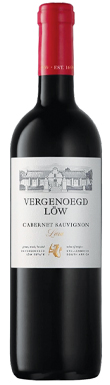
Lifted, modern aromatics entice with a pleasing soupçon of red and black berries, violets and a thread of spicy fynbos. The palate is sleek, bursting...
2022
Vergenoegd LöwHelderberg
McFarlane, Saturday's Child Pinotage, Western Cape, South Africa, 2023
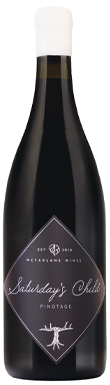
Hauntingly perfumed, more Pinot than Pinotage, scented with dark flora, blackberries and vibrant redcurrants. Some whole bunches add stemmy spice, freshening and lengthening the tangy...
2023
McFarlane
