Chianti Classico Riserva 2018
Credit: Consorzio Vino Chianti Classico
(Image credit: Consorzio Vino Chianti Classico)

Sitting between high-calibre annata and ambitious Gran Selezione, Riserva runs the risk of being Chianti Classico’s middle child. And, in some respects, the category does have a bit of an identity crisis.

Riserva represents 32% of Chianti Classico’s production. According to Francesco Mazzei at Castello di Fonterutoli, sales are booming thanks in part to the success of the Gran Selezione category. ‘Gran Selezione is the magnet that attracts people to try the quality of Chianti Classico, and the Riserva are more affordable,’ he declares.


Scroll down for Michaela’s top Chianti Classico Riserva 2018 wines – plus late releases from 2017


How do the categories compare?

On the one hand, over-performing annata from 2018 and 2019 eclipse the handful of underperforming Riserva. This may be due in part to the fact that some producers don’t even make a Riserva, instead crafting an annata that essentially meets the former’s production standards.

Marco Ricasoli-Firidolfi at Rocca di Montegrossi is among those who skip the Riserva level. ‘I find that there is little difference between Riserva and Gran Selezione,’ he explains, referring to ageing requirements of 24 versus 30 months respectively.

Conversely, the Riserva category also includes many of the denomination’s finest wines. Among these are wines from producers who eschew the Gran Selezione classification, declaring their top Chianti Classico as a Riserva.

Chianti Classico Riserva 2018

The 2018 Chianti Classico Riserva wines mirrored the heterogeneous nature of the vintage found in the annata.

There are lithe examples – illustrated by Castellina di Castellare and Bibbiano – as well as plump, warm expressions offered by Castagnoli and Riecine. A couple felt like they had the edges knocked off, leaving me thirsting for a bit more drama, but overall they are an affable and beguiling bunch.

Once again, careful vineyard selection and picking dates were key in areas affected by rain.

In Radda, Poggerino’s Piero Lanza had to bring in fruit from more humid plots early – in mid-September – due to the threat of botrytis and acid rot. However, less prone parcels including his Riserva vineyard were harvested later – between 25 September and 11 October. ‘I obtained a wine with more structure, higher alcohol and aromas of mature red fruit,’ he maintains.

In Gaiole, Riecine’s Alessandro Campatelli reported less rain in August than Radda (76 mm compared to 200mm) as well as high diurnal temperature ranges leading up to harvest in October. ‘2018 will likely be highly regarded in the future thanks to its acidity levels that will give it much life ahead,’ he asserts.

Ageability is certainly a desired trait in a Riserva. Of the 2018s I’ve tried so far, they are already accessible with seven to ten years of cellaring potential.

Chianti Classico Riserva 2017

In my tastings this year, the most delightful surprises came from the 2017 Riserva. In general, the wines served to highlight the skill of the region’s winemakers. The characteristics of the hot, dry vintage were certainly on display with an inevitable concentration of all elements. Some demonstrated unresolved tannins, but few were lacking acidity.

The top performers, like San Giusto a Rentennano and Monte Bernardi, captured the arid warmth while achieving striking balance. Others that stood out hail from cooler zones, such as Erta di Radda and Val delle Corti, both in Radda.

While I don’t feel that Riserva always guarantees a step up from annata, I do believe that many approach the level of Gran Selezione. Above all, amongst both the 2017 and 2018 vintages there are plenty of Riserva wines with a well-defined and singular identity.


Top Chianti Classico Riserva 2018 and late releases:

View all 24 Chianti Classico Riserva wines tasted


View all 24 wines tasted


You may also like:

Brunello di Montalcino Riserva 2015: vintage report and top wines

Vino Nobile di Montepulciano 2018 and Riserva 2017: vintage report and top wines

Best Italian wines: A selection of the greatest

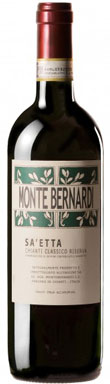
Monte Bernardi, Sa'etta Riserva, Chianti Classico, Tuscany, Italy, 2017

My wines
Locked score

<p>Michael Schmelzer’s Sa’etta is a single-vineyard bottling from 50-plus-year-old vines planted on Panzano’s pietraforte, a quartz-rich sandstone with hardened limestone. It plumbs Tuscany’s landscape unearthing baked clay, sundried fruit and fragrant garden herbs. It reaches earthy tea depths and cherry-scented heights. Terracotta-textured tannins wrap around the palate and a savoury, umami tang leaves you salivating. It displays exquisite Sangiovese purity and is so light on its feet. And it just keeps getting better in the glass.</p>

2017

TuscanyItaly

Monte BernardiChianti Classico

Decanter Premium logo

Join Decanter Premium to unlock all our wines tastings and notes

Join Now

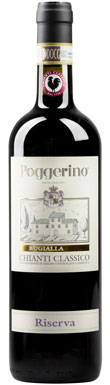
Poggerino, Riserva, Chianti Classico, Tuscany, Italy, 2018
My wines
Locked score

<p>A selection of the smallest bunches from the estate’s oldest plot, Poggerino’s Riserva sees a long 50-day maceration and ageing in large Slavonian oak casks. It emerges from its shell with beguiling aromas of cedar, sandalwood, iron, smoke and wet stone, evoking the rocky, forest-encircled estate high up in Radda. The palate packs ample concentration with a sweet ripeness to the fruit and silky suppleness to the layered tannins. Youthful exuberance is currently masking its more subtle charms, but it shouldn’t take long to mellow into its groove.</p>

2018

TuscanyItaly

PoggerinoChianti Classico

Decanter Premium logo

Join Decanter Premium to unlock all our wines tastings and notes

Join Now

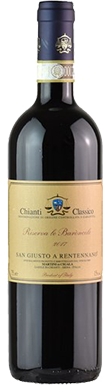
San Giusto a Rentennano, Le Baròncole Riserva, Chianti Classico, Tuscany, Italy, 2017

My wines
Locked score

<p>San Giusto’s Riserva is a selection of grapes based on ripeness as well as bunch and berry dimensions. In 2017, the estate managed to hold off harvesting until after the desperately needed, refreshing early-September rains. This has a lot of everything: intense aromas, ripe flavours, a weighty mouthfeel, rich fruit, dense chalky tannins, heady alcohol, and even concentrated acidity. Somehow, these are all gracefully aligned but it makes for a powerful package. Open according to your preference - I would prefer to wait another year, giving time for all the elements to mellow and meld further.</p>

2017

TuscanyItaly

San Giusto a RentennanoChianti Classico

Decanter Premium logo

Join Decanter Premium to unlock all our wines tastings and notes

Join Now

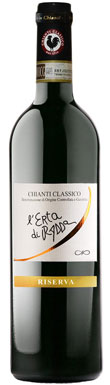
L'Erta di Radda, Riserva, Chianti Classico, Tuscany, Italy, 2017

My wines
Locked score

<p>From a single-vineyard atop a hill in the middle of a valley, this windy site sees significant day and nighttime temperature differences and boasts an iron-rich soil. An understated wine with a savoury mineral character, this somewhat defies the vintage. Accents of forest brush, wild sage and sunbaked dusty earth are subtle. Midweight yet tight and firm, the palate offers inner-mouth perfume of pomegranate and orange. It's rather sneaky and energetic, with a mouthful of crushed stones on the finish.</p>

2017

TuscanyItaly

L'Erta di RaddaChianti Classico

Decanter Premium logo

Join Decanter Premium to unlock all our wines tastings and notes

Join Now

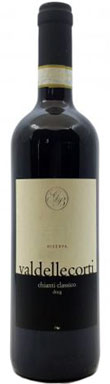
Val delle Corti, Riserva, Chianti Classico, Tuscany, Italy, 2017

My wines
Locked score

<p>Roberto Bianchi has produced a splendid 2017 Riserva, crafted from 40- to 45-year-old vines facing north to northeast at 450 metres above sea level in the cool reaches of Radda. Heather, truffles, red currants and iron waft attractively from the glass. It is slightly fleshier than usual but remains its lovely tactile self with long, sandy tannins. The core is juicy and saline, and ferrous notes repeat on the long finish, along with lingering peppery juniper.</p>

2017

TuscanyItaly

Val delle CortiChianti Classico

Decanter Premium logo

Join Decanter Premium to unlock all our wines tastings and notes

Join Now

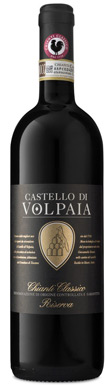
Castello di Volpaia, Riserva, Chianti Classico, Tuscany, Italy, 2018

My wines
Locked score

<p>Produced since 1967, Volpaia’s Riserva is a selection of bunches from throughout the estate’s 43 hectares in the township of Radda. Due to the slow start in 2018, harvest began a few days later than average, taking place during the first two weeks of October. With purity and precision, strawberry, tobacco, vanilla and forest earth emerge from the glass. This is well-proportioned and balanced in ripeness with a core of concentrated red cherry. Fresh acidity props it up and smooth, rounded tannins frame the whole.</p>

2018

TuscanyItaly

Castello di VolpaiaChianti Classico

Decanter Premium logo

Join Decanter Premium to unlock all our wines tastings and notes

Join Now

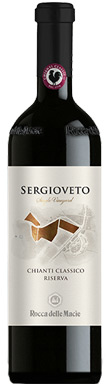
Rocca delle Macie, Sergioveto Riserva, Chianti Classico, Tuscany, Italy, 2018

My wines
Locked score

<p>Sergioveto is a reinvention of sorts. While it used to be an IGT blend of international grapes with Sangiovese, as of 2015 it is a single-vineyard Chianti Classico Riserva crafted exclusively from Sangiovese and aged in large French oak barrels. I applaud the new direction here: assertive and characterful, the 2018 exhibits pepper and rosemary with compelling notes of lavender and iris poking though. It is unpretentious, balanced and speaks of the vintage. Dusty, clayey tannins frame the palate and inner-mouth perfume of fennel, anise and orange give lovely lift. Alas, just 6,600 bottles made.</p>

2018

TuscanyItaly

Rocca delle MacieChianti Classico

Decanter Premium logo

Join Decanter Premium to unlock all our wines tastings and notes

Join Now

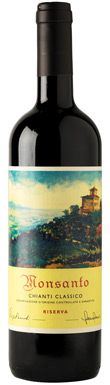
Castello di Monsanto, Riserva, Chianti Classico, Tuscany, Italy, 2017

My wines
Locked score

<p>Monsanto’s 72 hectares of vineyards are divided into distinct parcels, each vinified and aged separately. The Riserva is the result of a collaborative tasting and blending conducted by owner Laura Bianchi, her father Fabrizio, and Andrea Giovannini, the estate’s oenologist since 2001. Striking and penetrating in its aromas, the 2017 flaunts juniper, spiced strawberry, currant, cedar and iron. While these echo in the mouth, the palate is still a bit austere and angular, with sinewy tannins - all the better for ageing. There is plenty of freshness here as well, and it finishes with loads of clove and star anise.</p>

2017

TuscanyItaly

Castello di MonsantoChianti Classico

Decanter Premium logo

Join Decanter Premium to unlock all our wines tastings and notes

Join Now
Michaela Morris
Italian Expert, Decanter Premium, Decanter Magazine and DWWA Judge 2019
Michaela Morris is an international wine writer and educator. Based in Vancouver, she teaches about Italian wine across Canada and abroad. Michaela is a regular contributor to Decanter Magazine and Meininger’s Wine Business International as well as Canadian publications Taste and Quench. She is a panel chair for Vinitaly’s 5StarWines competition and was international guest judge at the Australian Alternative Varieties Wine Show in 2019.