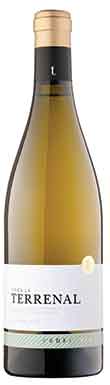
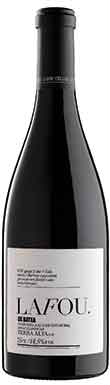
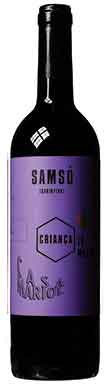
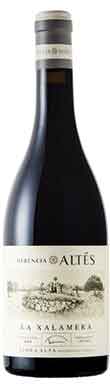
With its high vineyards and limestone soils, this large Catalonian DO makes distinctive whites from the Garnatxa Blanca grape. Miquel Hudin takes us on a tour of the region and introduces the top producers and wines to look out for…
Only a foolish Catalan politician would mention how Catalonia ends at the Ebro river – and only the most foolish among them would say such a thing while standing south of said river. Blustery populism aside, Catalonia does not end at the Ebro; instead it actually rises sharply from it. These distant hinterlands – some 175km inland to the west and a nod to the south from hip, touristic Barcelona – represent a very different side of Catalonia compared to the sunny, selfie-prone beaches that are familiar to most.
This ‘high land’ or terra alta forms the geographic base for DO Terra Alta, where winemaking has been documented since medieval times. However, it’s only in the last decade that the region has resoundingly come of age, making white Grenache (Garnatxa Blanca as it’s known in Catalan, or Garnacha Blanca) its signature grape in the process, while also recuperating ancient red grape varieties such as Morenillo.
Collective history
Wine production in Terra Alta was documented and regulated by the Knights Templar from the 13th century onwards, but phylloxera and the brutal Battle of the Ebro in the Spanish Civil War very nearly wrote the region’s final chapter in viticulture. Sparsely populated, many people left after these bleak times to seek out a better life in the cities. Thus, the village cooperatives were formed to stabilise agricultural work for those who didn’t migrate. With a normalisation of wine production, this in turn eventually led to the formation of the Terra Alta DO in 1972.
Was the wine these cooperatives were making a fine product? Often not, but it gave an economic engine to those who wouldn’t have otherwise had one. It also allowed the owners of scores of old vineyards in the region to maintain them, rather than tearing them out for some other crop that might have been less back-breaking and more profitable at the time. Thus, the winemaking co-ops formed a bridge across troubled waters that spanned the entire 20th century, and to a large degree still continues to function well today.
DO Terra Alta at a glance
Founded: 1972
Cellars: 49
Vineyard area: 5,800ha
Climate: Continental- Mediterranean
Main grapes: White White Grenache, Macabeu
Red Grenache, Syrah, Carignan, Tempranillo, Morenillo (experimental)
Annual production: 40m kg/7m bottles
Plantings: 27% white Grenache, 24% red Grenache (including ‘hairy’ Garnacha Peluda), 18% Macabeu, 8% Syrah, 5% Carignan, 5% Tempranillo, 3% Muscat d’Alexandria, 3% Parellada, 2.5% Cabernet Sauvignon, 4.5% others
Small voices, big ideas
For the second half of the 20th century, and indeed still today, DO Terra Alta has been something of a ‘bread basket’ in terms of grape production, with its not-insignificant 5,800ha of vineyards. By way of comparison, France’s world-famous, also primarily Grenache region, Châteauneuf-du-Pape, is about half that.
While the Terra Alta viticulturists are able to grow 40 million kg of grapes annually, the cellars only produce about seven million bottles of wine. A quick bit of cellar maths shows that there’s a rather large imbalance there. The reason for this is that, historically, wineries from other regions (such as Torres in Penedès) create cross-regional blends outside Terra Alta under the Catalunya DO.
Since the turn of the century, many boutique cellars have opened, and in 2015 a huge change followed the election of Joan Arrufí of Altavins as DO president. This has marked the beginning of a new era for the region as it develops a profile beyond being simply a growing region. The DO is also striving to be a popular destination for wine tourism, with the hope of being known as more than ‘that place where Pablo Picasso spent a couple of summers’.
Two regions in one
Many of the region’s old-vine vineyards that were thankfully maintained throughout the 20th century are white Grenache. In general, the further south you go in Spain, the less favourable it is to grow white grapes, so finding all these white vineyards nearly at the bottom of Catalonia is quite a curiousity; even more so as due west are the DOs of Campo de Borja and Cariñena, which are known for producing powerful reds.
The secret of the wines in Terra Alta, especially the whites, lies very much in the almighty concept of terroir. As Arrufí states: ‘We have vineyards from 300m up to 800m in altitude as well as a unique continental- Mediterranean climate.’ The region sees hot, albeit not torrid days in the summer followed by exceedingly cool nights with drops of 10°C or even 20°C. These temperature drops preserve acidity in grapes and reduce sugar production during ripening, which leads to more nuanced, crisp wines.
It may not be apparent when visiting the small, depopulated villages of the region, but if you turn off onto almost any dusty trail, you’ll quickly find yourself in the middle of vineyards with chalky soil, especially around Batea. Vineyards are randomly punctured by the towers of massive windmills for electricity that pockmark the region, but the grapes pay no heed and these soils work to soften the structure of white Grenache and preserve its acidity as well.
But it’s not just beneficial to the white wines, as both the traditional red grapes of Grenache and Carignan (Cariñena) are able to achieve a delicate profile thanks to the climate and the soils. Joan Angel Llibreria, the owner of Edetària, has performed extensive soil analysis, and he found that: ‘While chalky and limestone soils form the base for much of the territory, we have pockets of sandy, gravelly and other decomposing, poor soils that will produce fine wines both in terms of whites as well as reds in Terra Alta.’
The white way
It was eight years ago when Terra Alta started its ‘Sóc Garnatxa Blanca’ or ‘I am white Grenache’ promotional campaign. Admittedly, the first wines I tasted from this grape were pleasing, with nice, fresh acidity and good potential for food pairings, but they didn’t achieve a level beyond that. Accounting for one-third of all white Grenache plantings globally, Terra Alta has proved in recent vintages that its wineries now deeply understand and can excel with this grape. Various wines, especially those from older, more concentrated vines, are offering untold complexity that deepens with each harvest and the arrival of freshly trained oenologists to the area.
In this southern part of Catalonia, beyond the Ebro, it’s important to note that, alongside white Grenache, there is also a place for the red Grenache, plus a smattering of Carignan, the native light red Morenillo, and even French varieties such as Syrah. These grapes will help to carve out a future for the Terra Alta region in making fresh, delicate yet luscious wines. If the bottles available now had been around 100 years ago, Picasso would undoubtedly have stayed on a bit longer.
Terra Alta: 10 names to know
Altavins
Started in 2001, this cellar has been at the vanguard of the boutique movement, and its owner Joan Arrufí is now the DO president. His focus on vinifying certain vineyards and old plots into single wines has worked to show the strength of the Terra Alta terroir.
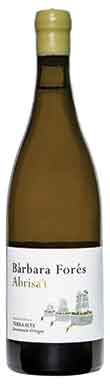
Bàrbara Forés
With a family history in winemaking, Carme Ferrer and husband Manuel Sanmartín restarted quality winemaking in the region by renovating Ferrer’s old family cellars in the heart of Gandesa. Bàrbara Forés is Ferrer’s ancestor, born in 1828, who was responsible for starting the family on its winemaking path.
Celler Batea
One of the local cooperatives, formed in the 1950s, that continues to make quality wines within its village of the same name. Batea readily shows that big cellars can indeed produce pure expressions of their territory, just as nuanced and engaging as the small producers.
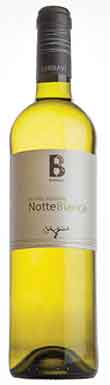
Bernaví
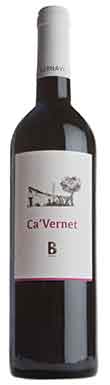
Often it’s expatriates who see the value of up-and-coming wine regions. In this case it’s two Italian brothers, Marco and Gino Bernava, along with Marco’s Catalan wife Ruth Fullat Sisteré, who created this project on an old 17th-century farmstead named Mas Vernet. The wines, while very much showing the character of the region, also have a character of Italian fusion to them that gives a unique lift.
Casa Mariol
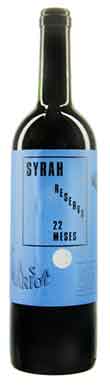
Created in 1945, this is one of the older private producers in the region. In 2000, siblings Josep María and Marta Vaquer Llop took over running the winery, making a generational change. Through modernisation and expansion of the cellar, as well as a redesign of the wines, they’ve become known locally as much for their varietal wines, including a lovely Syrah, as for their excellent vermouth.
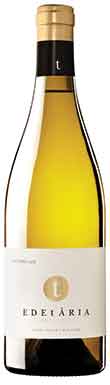
Edetària
Started as a personal project of owner Joan Angel Lliberia, the winery has grown in leaps and bounds to become one of the strongest proponents of the unique and varied soil types found in the region, and is also focused on promoting fine white as well as red wines.
Frisach
Created in 2009, this is one of the newest additions to the DO, but is from a family in Corbera d’Ebre with over two centuries’ experience of growing grapes. Known for its lively wines and organic farming, its Sang de Corb (‘crow’s blood’) has been a popular blend locally based upon old vines of Grenache and Carignan.
Herència Altés
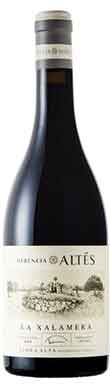
Started on a small scale in 2010 when Núria Altés and her husband, Englishman Rafael de Haan, produced a small quantity of wines. Initial results were strong enough to merit further investment in 2013 and the duo greatly expanded the winery with a striking, modern installation that sits by the ruins of an Iberic village. The facilities have allowed them to experiment a great deal in terms of various vinification methods.
LaFou
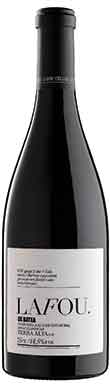
Founder Ramon Roqueta Segalés is Catalan, but not from Terra Alta – his family actually comes from the central DO Pla de Bages (north of Penedès) where it has its winery, Abadal. What attracted him to Terra Alta was the unique profile of Grenache in both red and white, and he has been producing lovely expressions from the region since 2007 at an 18th-century house called Casa Figueras.
Vins del Tros
One of the newer cellars in the DO, founded in 2009 by Joan Ramon Bada and Josep Arrufat, this is also one of the more experimental in the region. While mainly producing varietal white Grenache wines, it has also done a great deal of work to recuperate the ancient native grape Morenillo.
Based in Catalonia, wine writer Miquel Hudin publishes www.hudin.com. He was the Fortnum & Mason Best Drinks Writer of 2017 and is a DWWA judge
See Miquel Hudin’s top 12 Terra Alta wines
You may also like