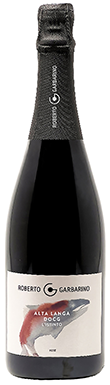
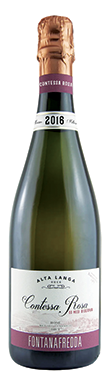
Until at least the 1990s Piedmont was, perhaps surprisingly, best known for its sparkling wines. Nowadays, of course, thanks to the meteoric rise of Barolo, Barbaresco, Barberaet al, the region is widely viewed as red wine country.
Scroll down to see tasting notes and scores for six Alta Langa sparkling wines to try
This, however, ignores a strong history of producing bubbles that dates back to long before the middle of the 19th century, when Carlo Gancia began using the Champagne method (‘metodo classico’) to ferment Moscato grapes from vineyards near Asti. This practice in turn built on the local tradition going back to the 16th century of making ‘filtrato dolce’, a low-alcohol, bubbly and sweet white wine filtered through hessian sacks to block fermentation, which subsequently morphed into today’s Asti/Moscato d’Asti DOCGs.
Though relatively new compared to other Italian denominations based on the metodo classico process, Alta Langa – granted DOC in 2002 and quickly promoted to DOCG in 2011 – is now making serious waves. It’s worth bearing in mind Piedmont’s strong historic and cultural links with France.
The Alta Langa project began in 1990 with the aim of producing premium quality sparkling wines of good ageing potential from Pinot Nero (Pinot Noir) and Chardonnay grapes grown in the hills to the south and east of Alba across the provinces of Asti, Alessandria and Cuneo; previously the main varieties planted here were Moscato and Dolcetto.
The wines are pretty much exclusively made from the two classic Champagne varieties despite an optional 10% of other permitted grapes. Wines must be aged on the lees in bottle for a minimum of 30 months, or 36 months for the Riserva version, although the Alta Langa consorzio is considering raising the latter to 60 months to mirror most of its members’ current practices – up to 100 months’ ageing in some instances. Both white and rosé versions come in four styles: non dosato (up to 3g/L residual sugar), extra brut (up to 6g/L), brut (12g/L), and extra dry (12-17g/L), and all the wines must bear a vintage statement.
For now, the non dosato wines account for 22% of a total production of about 2.3 million bottles (based on 2021 vintage: Regione Piemonte, February 2023) with the rest divided mainly between the extra brut and brut styles. Some 90% of production is white, including the frequently seen ‘blanc de noirs’, although interest in the rosé style is growing. Pinot Nero accounts for some two-thirds of the 378ha currently under vine but the area is expanding rapidly, with a further 220ha of vineyard expected to be registered between 2023 and 2025.
Tenuta Il Cascinone vineyards in Alta Langa
(Image credit: Credit Unknown)
High achiever
Such exponential growth can only mean one thing, and the consorzio reported an increase of 40% in sales over the course of 2022. Put simply, the best examples more than live up to Piedmont’s exalted reputation as one of the country’s leading lights for the production of premium quality wines.
Decanter newsletter
Get our daily fine wine reviews, latest wine ratings, news and travel guides delivered straight to your inbox.
It’s not difficult to see what all the fuss is about – much of the wine produced on a larger scale achieves a remarkably consistent standard, though the true peaks of excellence are unsurprisingly to be found in wines of much more limited quantities, and these can easily rival premium Champagne. So what makes them stand out?
The answer is a combination of impressive winemaking expertise and superb raw materials. Vineyards must be located above 250m altitude and can be found at up to about 800m, planted on chalk and clay-rich marl soils, often steeply sloping. Vineyard yields are low, rarely reaching the 65 tonnes per hectare that legislation permits.
The winemakers, of course, are some of the country’s most highly regarded, from venerated Barolo producers to specialist sparkling wine houses with generations of valuable experience behind them.
Wineries range from the tiny ‘azienda agricola’, making just a couple of thousand bottles, via Barolo houses such as Fontanafredda, Germano, Josetta Saffirio and Principiano, various local cooperatives (Araldica, Terre del Barolo, Vallebelbo and Vinchio Vaglio), to the classic spumante houses such as Cocchi, Contratto, Gancia and Tosti.
In terms of style, the wines lie somewhere between the often thrilling, acidity-driven Trentodoc of the northeast and the more substantial Franciacorta of Lombardy. It follows that those Alta Langa examples from fruit grown at higher altitudes often show greater lift and vitality than some of the riper and fuller-bodied versions from lower down the slopes.
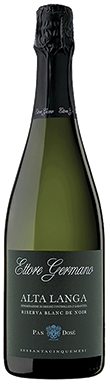
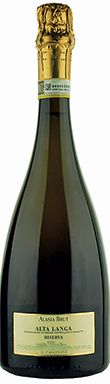
The finest examples come at a price that reflects their restricted numbers, but at around £40 for the extra brut from the excellent Ettore Germano (2020 at Libiamo; 2019 at AG Wines), value for money is still there – and some of the less ambitiously priced wines, such as the Il Cascinone, Alasia Riserva, are a real snip.
Keep an eye out, too, for the pink style: the future for Alta Langa looks increasingly ‘rosy’!
Ettore Germano, Pas dosé Blanc de Noirs Riserva, Alta Langa, Piedmont 2015
My wines
Grown on south-facing chalky soils at around 550m, this zero-dosage Blanc de Noirs spends some 65 months on its lees before disgorgement. Impressively well-balanced and...
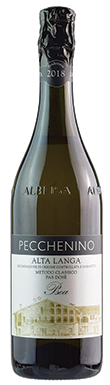
Pechenino, Psea, Alta Langa, Piedmont, Italy, 2018
My wines
Grown on chalky soils at around 700m at Pezzea near Bossolasco, this two–thirds Pinot Nero, one–third Chardonnay blend illustrates how beautifully the two varieties work...
Decanter Magazine, Italian Expert & DWWA Regional Chair for Northern Italy
Michael Garner has worked in the wine business for 40 years, mostly specialising in the wines of Italy. He is the co-author of Barolo: Tar and Roses, taught for the WSET for many years and is a regular contributor to Decanter. He is also co-owner of Italian Wine Specialists Tria Wines with business partner Paul Merritt. His second book: Amarone and The Fine Wines of Verona was published in 2017, and a third is on its way. Garner was first a DWWA judge in 2007. Having judged on the Italian panels at the DWWA for a number of years, Michael Garner joined the team of Regional Chairs in 2019, heading up the Northern Italy panel.