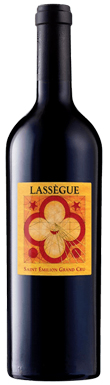
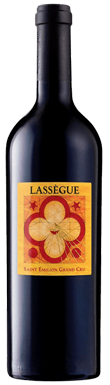
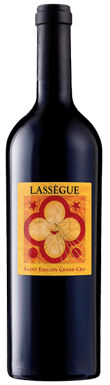
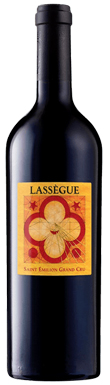
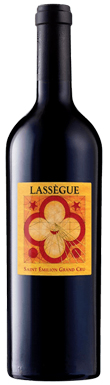
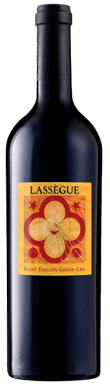
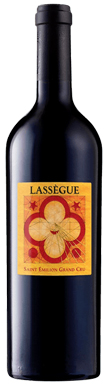
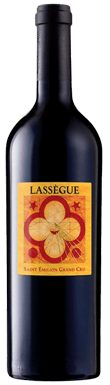
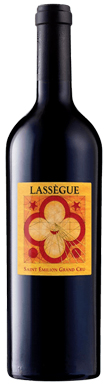
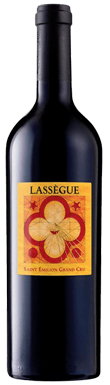
Anson: Château Lassegue vertical 2009-2018
Jane Anson shines a spotlight on this St-Emilion estate, tasting a vertical of 10 wines and looking at the upgrade potential when the the next classification happens in 2022.
Get our daily fine wine reviews, latest wine ratings, news and travel guides delivered straight to your inbox.
You are now subscribed
Your newsletter sign-up was successful
Somehow Château Lassegue can get overlooked in the starry firmament of St-Emilion, despite being owned by the legendary Barbara Bankes of Jackson Family Wines, and being made by iconic winemaker Pierre Seillan.
Scroll down to see Jane Anson’s Château Lassegue vertical tasting notes and scores
Perhaps it’s because the attention is so often focused on Seillan’s cult La Verité wines in Sonoma, or because its location is just a little off the main drag.
It’s situated past Châteaux Bellefont-Belcier and Tertre Rotebouef as you head into the commune of Saint-Hippolyte, planted on the steep sides of a slope that leads up to Château de Ferrand and Château Destieux, and that are made up of a mix of hard Asteries limestone and the sofer clay-studded Molasses de Fronsadais.
The 2022 classification – with the results coming in September of next year – might be the moment that it receives the recognition that it undoubtedly deserves.
History
Lassegue was bought from the Freylon family in 2003 by Jess and Barbara Jackson-Bankes, with the location chosen in partnership with Seillan.
Its purchase is the story of the friendship between Jess Jackson and Pierre Seillan.
The two men had already created a groundbreaking project when Seillan moved to Sonoma county in 1997 to create a range of terroir-driven wines that became La Verité.
Get our daily fine wine reviews, latest wine ratings, news and travel guides delivered straight to your inbox.
They had since collaborated at Tenuta di Arceno Arcanum in Tuscany, but this was the first time they worked together in France, just a few hours from Seillan’s hometown of Montresuc-sur-Gers, and even after Jackson’s death in 2011, the two families continued to work together.
See the Château Lassegue 2020 en primeur tasting note and score
I always enjoy tasting with Seillan, whether in Bordeaux or Sonoma, as he is both extremely down to earth and extremely outspoken.
I knew, for example, that he would have an opinion on the 2020 vintage that would not be the same as everyone else’s (‘it reminds me of 1975 in the Médoc, when there were very low yields and the wines were stubborn and difficult as they aged’), and that he would give an unusual account of the vintages we were here to taste (‘I don’t always like great vintages because they hide the terroir with their sunshine’).
Tasting
This vertical saw us taste through the same 10 vintages that the St-Emilion classification board will be assessing, and you’ve got to think that Seillan and Bankes must be feeling pretty confident.
Last time around, they had only been at the property for a decade, and the classification isn’t known for rewarding newcomers too quickly (Jean-Luc Thunevin just might be the exception here, as it took his Château Valandraud 21 years from its first vintage in 1991 to be parachuted in as Premier Grand Cru Classé B).
But another decade on, and they have created a wine that combines true vintage character with its own distinct and unchanging personality – touches of saffron and turmeric that come up again and again in my tasting notes are not things that I find in many St-Emilion properties.
Its barrels come entirely from its own cooperage, Tonnellerie Quintessence, using oak from 18 different forests, bought at auctions that their own team attend, and today the next generation has taken over, with Pierre’s son Nicolas taking a leading role from the 2015 vintage.
Whether all this will be rewarded next year remains to be seen. But it’s a reminder that, for all the issues and frustrations of the St-Emilion classification, it was set up to allow a reward system for hard work and investment, and to draw attention to clever winemaking at all levels.
Let’s hope that decent aim doesn’t get overshadowed this time around.
See Jane Anson’s Château Lassegue vertical tasting notes and scores
You may also like
Bordeaux 2020 wines: our en primeur verdictAnson: How the Bordeaux 2008 first growths taste nowMeet the new guard at St-Emilion’s Beauséjour Duffau-Lagarrosse
Château Lassègue, St-Émilion, Grand Cru, Bordeaux, France, 2018

This is a young wine that is knitted down in flavour but it is not tight or difficult to navigate. You feel the breadth and complexity to the fruit, along with juicy powerful freshness, and the gourmet packing of liquorice and chocolate. These are big wines that are big but expertly balanced by slate and crushed stone minerality, giving balance and succulence. 60% new oak. 3.75pH. Harvested 24 September to 13 October. A yield of 49hl/ha.
2018
BordeauxFrance
Château LassègueSt-Émilion
Château Lassègue, St-Émilion, Grand Cru, Bordeaux, France, 2017

A floral touch from the first nose, smoky but delicate, with a powerful and surprisingly supple touch to the tannins. This must be one of the best 2017s in St-Emilion. So much smoke and grilled chocolate add layers of interest to the berry fruits. This was the year of the frost, where production dropped from 7,000 to 4,500 cases and left this unusual blend.
2017
BordeauxFrance
Château LassègueSt-Émilion
Château Lassègue, St-Émilion, Grand Cru, Bordeaux, France, 2016

A brilliant wine, with poise and a sense of stillness and deep raspberry fruits that are centred. Even on the nose you can feel the texture - this is built, muscular and powerful - it is profound, with evident time ahead of it. Pierre's son Nicolas began taking a bigger hand in the winemaking as of this vintage.
2016
BordeauxFrance
Château LassègueSt-Émilion
Château Lassègue, St-Émilion, Grand Cru, Bordeaux, France, 2015

Inky in colour and the feel of the wine remains extremely young, suggesting you need a little more patience. Saffron and earthy smoked turmeric spices layer the fruit, adding depth and complexity. This has richness and power but also lift, with gourmet notes of liquorice and chocolate giving appellation signature.
2015
BordeauxFrance
Château LassègueSt-Émilion
Château Lassègue, St-Émilion, Grand Cru, Bordeaux, France, 2014

Explosion of rich turmeric, crushed stone and subtle smoked saffron with touches of grilled almond, and a rich, powerful bramble berry fruit. Lovely chewy tannins also, shot through with pulses of electricity and minerality. You can enjoy this now because the aromatics are already giving so much, but it is sure to age brilliantly for another few decades.
2014
BordeauxFrance
Château LassègueSt-Émilion
Château Lassègue, St-Émilion, Grand Cru, Bordeaux, France, 2013

It is in the most difficult vintages that you see the winemaker's hand; the length on this wine comes not from the depth of the fruit but from the gentle spicy notes of nutmeg and white pepper. Raspberry leaf and smoked earth comes through as things open. Helped in this vintage by the fact that the Seillans live on site at Serilhan, making it easier to treat at weekends, and this was a vintage when you certainly needed to do that.
2013
BordeauxFrance
Château LassègueSt-Émilion
Château Lassègue, St-Émilion, Grand Cru, Bordeaux, France, 2012

A little less evolution in the aromatics here than the 2011, emphasis instead on toasty grilled oak and turmeric spice, set amid dark berry fruits. A lot is hidden right now, the texture is charming and fleshy, but these are big tannins and it has plenty to give over the next decade.
2012
BordeauxFrance
Château LassègueSt-Émilion
Château Lassègue, St-Émilion, Grand Cru, Bordeaux, France, 2011

This is a little more ready to drink than the 2010 vintage at this point, but still delivers plenty of rich, fleshy black fruits through the mid palate. A little tight at first, but as it settles in the glass, a sweetness to the fruit becomes clearer, with blackberry puree and vanilla bean, along with a juicy hawthorn savoury finish. An early harvest in this vintage, but doesn't feel like an overly hot vintage in terms of its fruit character.
2011
BordeauxFrance
Château LassègueSt-Émilion
Château Lassègue, St-Émilion, Grand Cru, Bordeaux, France, 2010

Deep inky colour with ruby reflections. This is extremely successful, with a feeling of everything being in its place - softly textured black cherry and blackberry fruits, riven through with cloves, cracked pepper spices, smoked earth and saffron. Savoury and juicy on the finish as the slate texture kicks in.
2010
BordeauxFrance
Château LassègueSt-Émilion
Château Lassègue, St-Émilion, Grand Cru, Bordeaux, France, 2009

Cassis and blackberry laced with cumin, turmeric and saffron - these are plenty of tannins here even at 11 years old, but they are melted into the body of the wine. As it opens, a slate minerality tugs underneath, adding texture to the close of play and suggesting there is plenty of life ahead. An unusual blend, with higher Cabernet Sauvignon than usual, thanks to a hail storm in May that took out a sizeable section of Merlot grapes, and left a yield of around 22hl/ha.
2009
BordeauxFrance
Château LassègueSt-Émilion
Jane Anson was Decanter’s Bordeaux correspondent until 2021 and has lived in the region since 2003. She writes a monthly wine column for Hong Kong’s South China Morning Post, and is the author of Bordeaux Legends: The 1855 First Growth Wines (also published in French as Elixirs). In addition, she has contributed to the Michelin guide to the Wine Regions of France and was the Bordeaux and Southwest France author of The Wine Opus and 1000 Great Wines That Won’t Cost a Fortune. An accredited wine teacher at the Bordeaux École du Vin, Anson holds a masters in publishing from University College London, and a tasting diploma from the Bordeaux faculty of oenology.
Roederer awards 2016: International Feature Writer of the Year