Anson: Tasting top La Conseillante and Figeac vintages
Jane Anson tastes La Conseillante wines back to 2005 plus several vintages of Château Figeac, and reports on recent developments at two Right Bank powerhouses that share a director.
Get our daily fine wine reviews, latest wine ratings, news and travel guides delivered straight to your inbox.
You are now subscribed
Your newsletter sign-up was successful
Back in February 2013, Marie-France Manoncourt named Jean-Valmy Nicolas as co-director of Château Figeac, Premier Grand Cru Classé B in St-Emilion, alongside Frédéric Faye.
Figeac had been in the Manoncourt family since 1892, and the news caused a minor earthquake at the time because Nicolas was already co-director, and owner, of Château La Conseillante, just over the border from Figeac in the neighbouring appellation of Pomerol.
Scroll down to see Jane Anson’s tasting notes and scores for La Conseillante and Figeac wines
It’s not exactly a usual occurrence in Bordeaux to ask a neighbouring château to help out in running things – although there is precedent; Jean-Michel Cazes of Lynch Bages headed up Pichon Baron in Pauillac for many years.
But there are parallels between La Conseillante and Figeac that made this decision make sense, and it is a situation that remains in place today, eight years later.
For a start, the Nicolas family has been at La Conseillante for even longer than the Manoncourts, with Louis Nicolas buying the property in 1871.
Commenting on the move at the time, Challenges magazine in France suggested that the reason to pull together was to form a ‘defensive union’, with the intention of ‘resisting the assaults of big companies and international investors’.
This seems to have been a sensible move, certainly when you look at the price of land in both Pomerol and St-Emilion over the past decade.
Get our daily fine wine reviews, latest wine ratings, news and travel guides delivered straight to your inbox.
A single hectare of the best quality vines in both appellations has shot skywards since 2013, coming in at anything from €2m to €5m, putting ever greater pressure on families hoping to pass on their estates to the next generation.
And we have seen the arrival of several big companies over the same timescale – most notably SCORE Insurance at Château Troplong Mondot in 2017.
Jean-Valmy Nicolas
Regarding La Conseillante and Figeac, ‘there is no intention to exchange ownership of either property,’ Jean-Valmy Nicolas underlined at the time of the new arrangement. ‘But the Manoncourts contacted me at a moment that Figeac is looking for a new injection of energy, just as we were doing at La Conseillante a decade ago.’
This was no doubt true, after Figeac missed out on promotion during the 2012 St-Emilion classification, and it’s interesting to note that 2013 was the time Michel Rolland came on as consultant at both properties.
But another clear reason was that Nicolas had particular skills that came from his experience in estate planning.
He is a graduate of France’s prestigious HEC business school, a popular diploma among wine glitterati, with Frédéric Engerer at Latour and Aurélian Valence at Margaux among the other notable graduates.
Nicolas also works in private equity at Vespa Capital, with a specialty in management of privately-owned businesses. He no doubt helped ensure a smooth transition to today’s structure, where both Hortense-Idoine Manoncourt and Blandine de Brier-Manoncourt represent the next generation of the family, working alongside their mother Marie-France.
La Conseillante and Figeac share similar terroir
Figeac is one of the biggest estates in St-Emilion at 41 hectares (Fombrauge has overtaken it at 58ha), with La Conseillante a mid-sized Pomerol property at 11.79 hectares.
Both share a similar terroir of gravel and clay, and both shared a reputation of being classical, understated examples of their respective appellations.
This is a reputation that again both have worked to shed – or rather to hold on to while subtly expanding the mid-palate expression and depth of concentration in their fruit expression.
I last did an in-depth vertical of the two estates a few years ago, and it was fascinating to revisit them here, at a time that they are marking key events; 150 years of ownership for the Nicolas family at La Conseillante and the unveiling of a new €15m winery at Château Figeac that has been three years in construction.
New cellars at Figeac
The new cellars at Figeac have put the focus on the use of recycled materials.
Stone walls and oak beams from the existing 19th century cellar have been taken down and reused wherever possible, for example, and 220 cubic metres of extra limestone stone brought in from other sites rather than newly mined.
Local and regional firms were employed throughout, with the overall footprint of the building reduced by 20% by setting it out across three floors, set into the hill (okay, slope) of the Figeac vineyard.
Around 63% of the building is underground down to 12 metres, allowing for energy savings and natural air temperature control.
It’s an impressive result, and one that suggests that Figeac may well be hoping that the next round of the classification, in 2022, ends rather differently than the last one.
See Jane Anson’s tasting notes and scores for La Conseillante wines back to 2005, and also Figeac 1970, 1989 and 2009
More recent articles by Jane Anson:
Tasting upcoming releases: From Latour 2013 to Ornellaia 2018
How the 1990 first growths taste now
Lafleur 2018 and the battle against climate change
Château La Conseillante, Pomerol, Bordeaux, France, 2005
As Pomerol in ripe vintages so often can be, this is very 'heady', and undoubtedly a wine for the hedonist. The overt swathes of violet and geranium hint at a more new world style. There is freshness on the palate that just about holds the opulence in check with a deft balance and refreshing finish.
2005
BordeauxFrance
Château La ConseillantePomerol
Château La Conseillante, Pomerol, Bordeaux, France, 2006
Truffle and black fruits, a lovely wine that is offering a ton of pleasure right now. It has more density and tannic frame to its black fruits than the 2005, with an emphasis on dried herbs and dark chocolate, and clear fresh acidities that give it a more austere feel than in many vintages. 80% new oak. A yield of 42hl/ha.
2006
BordeauxFrance
Château La ConseillantePomerol
Château La Conseillante, Pomerol, Bordeaux, France, 2008
This vintage is sometimes forgotten but is tasting open and ready right now; a sculpted, elegant style of La Conseillante. There is a higher acidity than in some, a result of a complicated growing season particularly during harvest, but the fruit is very much in evidence, and the wine has savoury raspberry leaf notes along with crushed mint on the finish. A yield of 34hl/ha. 80% new oak.
2008
BordeauxFrance
Château La ConseillantePomerol
Château La Conseillante, Pomerol, Bordeaux, France, 2009
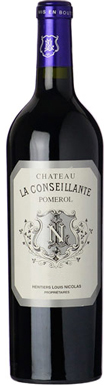
Beautifully ripe plum colour here, this has an opulent texture with creamy fruit and cigar box, with a confident interplay between ripe generous fruits, soft-spoken tannins and teasing acidity that allows for a mint-infused mouthwatering finish. Clear mid palate expansion here also, filling the mouth with seductive Pomerol flesh. A yield of 39.5hl/ha, 100% new oak.
2009
BordeauxFrance
Château La ConseillantePomerol
Château La Conseillante, Pomerol, Bordeaux, France, 2010
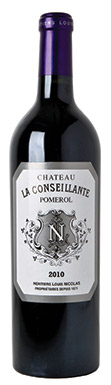
A little darker and deeper in colour than the 2009 at this stage, but both remain young, fresh and full of promise. The depth to the fruit is evident, black cherry, chocolate shavings and black truffles with great shots of acidity through the entire body of the wine. Just dripping with succulent fruit and seduction, this is the most Pomerol of the lineup, surprisingly, perhaps, taking that crown from the 2009. Still young even at 11 years old, will settle in and open further over the next few years. Violet aromatics curl out of the glass as it opens. 85% new oak. A yield of 39hl/ha.
2010
BordeauxFrance
Château La ConseillantePomerol
Château La Conseillante, Pomerol, Bordeaux, France, 2012

This has always been one of my favourite vintages of La Conseillante. Here a little Cabernet Franc (11%) goes a long way. Ethereal and utterly beautiful on the nose. Soft, delicate, elegant and subtle. Intensely floral, with violets and little hedgerow spring flowers, freshly cut. Has an exquisite balance and harmony, even if it might be said to lack some of the density of ostensibly greater vintages. I can live happily with that; though I’d drink this sooner. Very attractive and the very essence of plateau Pomerol for me. Soft and seductive, with those little truffle notes, blueberries and raspberries; tender and lithe, nicely compact and juicy on the finish.
2012
BordeauxFrance
Château La ConseillantePomerol
Château La Conseillante, Pomerol, Bordeaux, France, 2015
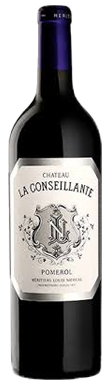
The nose here is incredibly concentrated but slightly inexpressive. Loaded with dark fruit, violets and dark chocolate. Incredibly silky on the palate, almost voluptuous with lots of padding and power. Incredible balance and length. A very serious wine. Uber-fine tannin which is perfectly integrated. Flawless and seamless. Although this is sensational now, I would be inclined to leave it a few years.
2015
BordeauxFrance
Château La ConseillantePomerol
Château La Conseillante, Pomerol, Bordeaux, France, 2016

I love the depth and character to the fruits on this wine. Still extremely young, in a closed phase with plenty of tannic grip, but there are layers upon layers of blueberry, cassis, raspberry, mint, saffron, slate and liquorice. Clear acidity also, ensuring this succulent, juicy character to the fruits. A brilliant example of an excellent vintage in Pomerol. 70% new oak. A yield of 39.5hl/ha.
2016
BordeauxFrance
Château La ConseillantePomerol
Château La Conseillante, Pomerol, Bordeaux, France, 2017

A lighter vintage overall, with delicacy and finely-spun tannins. The fruit is sculpted raspberry and red cherry, clearly will be ready to drink before the 2015 and 2016, lots to enjoy with delicate tomato leaf, grilled oak, chocolate shavings and liquorice root. Not too much frost here at La Conseillante, just one small plot at the bottom of the vineyard, so yields were 34hl/ha. 70% new oak.
2017
BordeauxFrance
Château La ConseillantePomerol
Château La Conseillante, Pomerol, Bordeaux, France, 2018
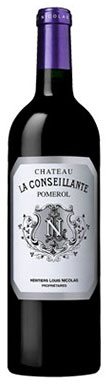
This is beautiful and powers through the palate showing depth and concentration to the brambled fruit. It has an excellent mid palate, the truffle of Pomerol comes through at this young stage in a way that was not evident in the 2015 even, but here has a lovely seductive kick. Spicy vanilla bean and black pepper alongside touches of cinnamon, this is very good quality. A yield of 32hl/ha. 70% new oak, 3% in amphora for the first time.
2018
BordeauxFrance
Château La ConseillantePomerol
Château La Conseillante, Pomerol, Bordeaux, France, 2019
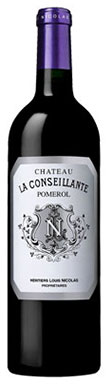
This is opulent, round, packed full of blueberry and blackberry fruits and definitely living up to the promise of en primeur. High floral aromatics also, with peony and iris set against smoky-edged charcoal and flint flavours as it opens in the glass. Unfiltered and unfined at this point. 70% new oak, 3% in amphora. A yield of 34hl/ha.
2019
BordeauxFrance
Château La ConseillantePomerol
Château Figeac, St-Émilion, 1er Grand Cru Classé B, Bordeaux, France, 2009

This is an excellent vintage to drink now, with huge amounts of liquorice, cedar, crème caramel, bilberry and black cherry, with a fleshy texture to the fruit but just starting to show more tertiary notes of earth, crushed stone and soft mint on the finish. Feels like the pefect Right Bank take on a Left Bank, generous and open but with a steely core and tannins that remain sure to take this wine forward over many decades to come. This was Thierry Manoncourt's last full vintage, as he died in 2010 (his first had been 1947).
2009
BordeauxFrance
Château FigeacSt-Émilion
Château Figeac, St-Émilion, 1er Grand Cru Classé B, Bordeaux, France, 1989

Saffron, cigar box and gentle white pepper spice - beautiful secondary aromatics that come in waves inside the mouth. Gently whispering tannins, white truffles and a drench of salinity on the finish. Hard not to smile when drinking this. Drought conditions, with 25% less rain than average, meant that 1989 was the second earliest harvest at Figeac since 1893, with picking running from 11 to 29 September. This was reconditioned in 2016, something the estate does every 20 years or so. Last tasted two years ago and still absolutely delivering.
1989
BordeauxFrance
Château FigeacSt-Émilion
Château Figeac, St-Émilion, 1er Grand Cru Classé B, Bordeaux, France, 1970
Clear truffles, tobacco, cold ash, earth and gentle raspberry fruits, finishing up with saffron and a mouthwatering salinity on the finish. Easy to drink, savoury and gentle and unquestionably on its tertiary phase, but full of cheer and life still, a totally gorgeous wine that begs for a good book.
1970
BordeauxFrance
Château FigeacSt-Émilion
Jane Anson was Decanter’s Bordeaux correspondent until 2021 and has lived in the region since 2003. She writes a monthly wine column for Hong Kong’s South China Morning Post, and is the author of Bordeaux Legends: The 1855 First Growth Wines (also published in French as Elixirs). In addition, she has contributed to the Michelin guide to the Wine Regions of France and was the Bordeaux and Southwest France author of The Wine Opus and 1000 Great Wines That Won’t Cost a Fortune. An accredited wine teacher at the Bordeaux École du Vin, Anson holds a masters in publishing from University College London, and a tasting diploma from the Bordeaux faculty of oenology.
Roederer awards 2016: International Feature Writer of the Year