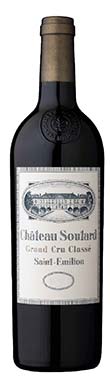
Château Soutard: Patience rewarded
The picture-perfect views from atop the limestone plateau belie a serious player in St-Emilion, famous for its ageworthy wines.
Get our daily fine wine reviews, latest wine ratings, news and travel guides delivered straight to your inbox.
You are now subscribed
Your newsletter sign-up was successful
The limestone plateau at Château Soutard may not be the highest point of this hallowed St-Emilion terroir, but the skyline view it affords – Les Grandes Murailles (the aesthetic remnant of a 13th century Dominican convent), the early 12th century church spire, and Premier Grands Crus estates like Châteaux Canon and Clos Fourtet – is postcard perfect.
‘You get a unique perspective from here,’ says Château Soutard cellar master Véronique Corporandy, who has been with the estate for 18 years.
Having maintained its Grand Cru Classé since the revisable St-Emilion ranking was introduced in June 1955, Château Soutard has forged a reputation for ageworthy wines.
As legendary American critic Robert Parker wrote at the turn of this century: ‘This is a serious, traditionally made wine that usually repays one’s patience.’
Notes and scores for recent vintages of Château Soutard below
This notion was proved beyond any doubt when Corporandy opened a bottle of the 1964 vintage over dinner in October this year.
The wine, both vibrant and deep, seemed far more youthful on the palate than its 60 years suggested.
Long lineage
Unlike other estates that have changed ownership frequently, Château Soutard was owned by the des Ligneris family for nearly a century, between 1919 and 2006.
Get our daily fine wine reviews, latest wine ratings, news and travel guides delivered straight to your inbox.
But by the time the French insurance company AG2R La Mondiale acquired Château Soutard in 2006, reforms were needed, such as vineyard work and an outdated vat room.
Walking along the vines earlier this year with Corporandy, she described an important replanting programme.
Since 2008, all re-plantings have been conducted at 8,000 vines-per-hectare. This has led to a higher-than-average planting density, which allows each vine to produce fewer grapes of better quality for the same yield per hectare.
As a result, the wine has gained in focus, even if the estate needs another decade to reach its goals.
‘Look at this part of the limestone plateau, which is magnificent, where we still have vines not yet used for production,’ remarked Corporandy. ‘But in 10 years, it will be top notch.’
In addition to its vineyard work, AG2R La Mondiale also constructed a new vat room, which was used for the first time in 2010.
Winemaking has remained rather classical, with the use of 60-hectolitre stainless steel fermentation vats.
Corporandy does not see a need for different sized vats, which has become a common element in recent years at other estates.
She explains: ‘We have a rather homogenous style of parcels, divided essentially between the limestone plateau and the northern-facing slope.’
Grapes from smaller parcels of a similar soil are added into one vat, and those from larger, similar parcels are divided into separate vats.
‘The important thing is to have a global view of the vineyard,’ she says.
Finding a style
But the estate has seen a shift in gear not only in vineyard work but also in style. During a five-year period from 2012-2017, Corporandy and her team worked with two celebrated wine consultants known for their opposing styles: Michel Rolland and Thomas Duclos.
‘At that time, there was enormous work to remove and then replant vines,’ recalls Duclos.
‘When I arrived, in 2012, there were many young vines, and my work was to complement Michel Rolland for more precision.’
Increasingly, the estate has moved to pick earlier and craft wines with greater freshness and less oak extraction.
Another important change from the 2019 vintage onwards, Duclos says, was to blend the vats earlier, ‘which lends more cohesion to the wines,’ he explains.
While barrel aging time has not changed too much, around 15 months, the level of new oak has been reduced from 60% to 50%.
The estate also has increased the percentage of larger format oak barrels, known in French as foudres, to reduce contact with oak as it ages, so that the current format is 50% new oak, 25% larger oak barrels and 25% one-year-old oak barrels.
Corporandy says that she wants to increase the percentage of the larger oak barrels.
Variety is the spice of life
When AG2R La Mondiale purchased Château Soutard, the estate counted 23 hectares – planted with 70% Merlot and 30% Cabernet Franc.
But vineyard acquisitions over the last 15 years also have changed the estate profile.
Today it now covers 35 hectares: with 33ha under vine, although only 21ha are used to make the wine today as younger vines do not contribute to the estate labels.
A major change came with the St-Emilion classification of 2012, when Château Soutard incorporated seven hectares – all on the limestone plateau – of what had been Château Cadet Piola, another Grand Cru Classé, which the insurance group acquired in 2009.
Important soil work and vineyard replanting were needed, Corporandy explains. For example, the use of chemical weeding at Cadet Piola in the decades prior to the acquisition had harmed microorganisms, reduced biodiversity, and fertility.
‘As a result, many vines were in poor shape, so we immediately stopped that,’ Corporandy said.
This incorporation required approval from the St-Emilion Classification Commission and the French national appellation authority, the INAO.
But, as a result, since 2012, the Château Soutard blend now includes Cabernet Sauvignon and Malbec grapes which lend more spice and backbone to the wine.
Both entities at the time of the 2022 ranking furthermore approved an additional 1.5 hectares of vines adjacent to Château Soutard that the estate had purchased in 2017.
Wine tourism pioneer
A recent factor for St-Emilion rankings is wine tourism, an area in which Château Soutard was an early pioneer.
It has offered an array of à la carte programmes since 2011, which have earned wine tourism awards.
Between 2014-2015, the owners restored the 18th century estate. In 2015 three magnificent guest rooms were opened, created from 18th century interior design plans.
The underground tasting room, reached by passing through the barrel ageing rooms, immerses guests (literally) in the estate’s limestone terroir.
The estate offers various tasting experiences, such as a tasting of the three Grands Crus Classés properties belonging to the insurance group (Château Soutard, along with Château Larmande and Château Petit Faurie de Soutard), accompanied on request by mature cheeses.
Vintages dating back to the 1960s are available from the boutique.
The combination of enlightened wine tourism and competitively priced wines at Château Soutard is, without doubt, a winning one.
Château Soutard: 2020-2011
Wines are listed youngest to oldest
Related articles
- Five Bordeaux vintages to drink now
- The problem with Bordeaux – and how to fix it
- Left and Right Bank Bordeaux – what’s the difference?
Château Soutard, St-Émilion, Grand Cru Classé, Bordeaux, France, 2020

<p>Robust, ripe and poised, with black fruit, brownie cake and an intriguing smoky aspect, all very engaging. Given the stress on less extraction three years...
2020
BordeauxFrance
Château SoutardSt-Émilion
Château Soutard, St-Émilion, Grand Cru Classé, Bordeaux, France, 2019
<p>Engaging spicy, minty, blackberry and plum aromas and flavours, ending with a cool blueberry fruit aspect. Every bit as good as the 2018, and potentially...
2019
BordeauxFrance
Château SoutardSt-Émilion
Château Soutard, St-Émilion, Grand Cru Classé, Bordeaux, France, 2018
<p>From aromas to palate, this vintage exudes brightness and sparkle that is missing in the 2015. Ripe red and black fruits (plenty of juicy plum),...
2018
BordeauxFrance
Château SoutardSt-Émilion
Château Soutard, St-Émilion, Grand Cru Classé, Bordeaux, France, 2017
<p>Pleasingly ripe fruit aromas and flavours lead to an easy-going wine, but it lacks the vigour of the 2016. The oak tannins also are more...
2017
BordeauxFrance
Château SoutardSt-Émilion
Château Soutard, St-Émilion, Grand Cru Classé, Bordeaux, France, 2016
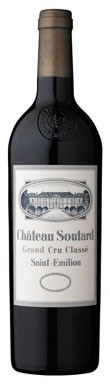
<p>Among the wines tasted for this article, this is the first vintage where things fall into place, with greater fruit purity – autumnal red berry...
2016
BordeauxFrance
Château SoutardSt-Émilion
Château Soutard, St-Émilion, Grand Cru Classé, Bordeaux, France, 2015
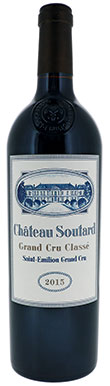
This 30ha, 16th-century estate is located mostly on the clay-limestone soils of the plateau, the quality of this historic terroir shining through in 2015. The...
2015
BordeauxFrance
Château SoutardSt-Émilion
Château Soutard, St-Émilion, Grand Cru Classé, Bordeaux, France, 2014
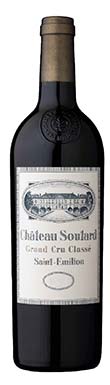
<p>A ruby red colour with violet aspects, clearly better than 2013, tasted just beforehand, with more body, and comparatively vivid expressions of ripe plum, cherry,...
2014
BordeauxFrance
Château SoutardSt-Émilion
Château Soutard, St-Émilion, Grand Cru Classé, Bordeaux, France, 2013
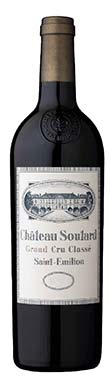
<p>A reticent nose leads to a fleeting palate, very light bodied – a veritable picnic wine. I like the almost citrus like finish, so there...
2013
BordeauxFrance
Château SoutardSt-Émilion
Château Soutard, St-Émilion, Grand Cru Classé, Bordeaux, France, 2012
92
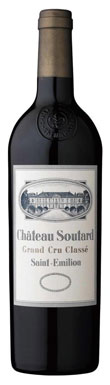
<p>The wine shows nuanced, refined and floral (peony) aromatics, and the palate reflects a more successfully ripe vintage than in 2011, with vivacity, spice, superior balance and an autumnal aspect, conjuring girolle mushrooms. The first vintage to include grapes (including 2% Malbec) from Château Cadet Piola in the blend. And the first vintage with consultant Thomas Duclos working with Michel Rolland. While you cannot escape a certain rusticity to the tannins, especially on the finish (botrytis pressure led to a hurried harvest, from 6-12 October), this is fun to drink: on its own or with mushroom risotto. Medium finish.</p>
2012
BordeauxFrance
Château SoutardSt-Émilion
Château Soutard, St-Émilion, Grand Cru Classé, Bordeaux, France, 2011
<p>High-toned red and black fruit aromas complemented by 'mineral' wet stone. The tannins however show rusticity and – yes – the acidity (the pH a...
2011
BordeauxFrance
Château SoutardSt-Émilion