Chianti Classico Gran Selezione: New releases in 2023
‘Developments and controversies aside, Chianti Classico’s new releases of Gran Selezione are a testament to the top-notch quality in the region,’ says Michaela Morris on Chianti Classico's top category.
Get our daily fine wine reviews, latest wine ratings, news and travel guides delivered straight to your inbox.
You are now subscribed
Your newsletter sign-up was successful
At the apex of Chianti Classico’s quality pyramid, Gran Selezione continues to garner most of the denomination’s attention, disproportionate to its 6% share of the region’s total production.
Scroll down to see tasting notes and scores for the top-scoring new Chianti Classico Gran Selezione releases
Yet it’s difficult not to be transfixed, as the number of new Gran Selezione bottlings has increased considerably in the last couple of years. There are a host of reasons for this, exemplified by several of my recommended wines such as Brancaia, Arillo’s Terrabianca, Riecine’s Vigna Gittori, and Le Cinciole’s Aluigi. Conversations with many other producers promise even more new Gran Selezione to come.
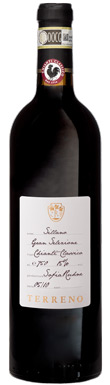
‘I believe that the tasting panel of the Gran Selezione had to find its way and now there is a different mindset behind the profile,’ says Sofia Ruhne at Terreno. Though her A Sofia bottling – an elegant wine that faithfully interprets its terroir – was rejected in earlier vintages due lack of structure and colour, she decided to submit it again in 2019 and was accepted.
UGAs
The other carrot is the pending launch of the region’s Unità Geografiche Aggiuntive (UGA), which translates as ‘Additional Geographical Units’. Chianti Classico has divided its vast territory of 70,000 hectares into 11 subzones. During February’s Chianti Classico anteprime tastings in Florence, the Minister of Agriculture signalled a green light for the UGA project, and all that is missing now is for the bill to be legally published.
The forecast is that by July 2023, producers will be permitted to name one of Chianti Classico’s 11 subzones – Castellina, Castelnuovo Berardenga, Gaiole, Greve, Lamole, Montefioralle, Panzano, Radda, San Casciano, San Donato in Poggio, and Vagliagli – on corresponding labels of Gran Selezione wines.
In tandem with this is the timely release of Alessandro Masnaghetti’s new Chianti Classico atlas in which he maps out each UGA in painstaking detail. It’s an invaluable tool for Chianti Classico afficionados as well as producers – on more than one estate visit, owners corrected how they described the soils of their sites based on Masnaghetti’s work. Hopefully this will bring a common language to one of Italy’s most complex territories.
Approval of the UGA has been met with palpable excitement, especially since it was a long time coming. However, it doesn’t come without some criticism. ‘The UGA should be for all Chianti Classico wines because Gran Selezione represents just a small portion of its production,’ declares Stefano Capurso at Dievole. He is not alone in his sentiment, and there’s a collective belief that the UGA will eventually be extended to qualifying Riserva and annata bottlings. But first things first…
Get our daily fine wine reviews, latest wine ratings, news and travel guides delivered straight to your inbox.
Emphasis on Sangiovese
The other update to the Gran Selezione category is the exclusion of international grape varieties and an increased minimum percentage of Sangiovese from 80% to 90%. Producers will be given a few years to fall in line with the new regulations and some, such as San Felice, have adjusted the blend in anticipation: the estate’s newly released 2019 Il Grigio Gran Selezione will be the last with 80% Sangiovese, increasing to 90% with the 2020 vintage.
See all 135 wines from Michaela’s Chianti Classico new releases report
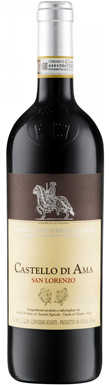
Other producers do not intend to change the composition of their wines. A pioneering estate of single-vineyard bottlings in 1978, Castello di Ama has long included a healthy dose of Merlot and/or Malvasia Nera. ‘If we are forced to no longer call them Gran Selezione, we will adapt with some regret,’ says Lorenza Sebasti. In the meantime, the estate’s 2019 San Lorenzo, still a Gran Selezione for now, is an excellent representation of the vintage and this top category.
Gran Selezione new releases
Developments and controversies aside, Chianti Classico’s new releases of Gran Selezione are a testament to the top-notch quality in the region. And, with the addition of many new wines championing varied styles and speaking to Chianti Classico’s diversity, this category has become more dynamic.
A small sampling of less than a dozen from 2020 was just a preview of what the vintage will offer at this level. Castello di Fonterutoli and Famiglia Zingarelli produced their best ever bottlings of Badiòla and Tenuta Fizzano respectively, while both Fontodi’s Vigna del Sorbo and Riecine’s Vigna Gittori shone, as they did in 2019. In general, gracious structures and expressive flavours suggest the 2020 Gran Selezione will offer loads of enjoyment over next 10 years.
A couple of dozen 2019s provided a deeper dive into this fresher vintage. As with their Riserva counterparts, not all the Gran Selezione manage to balance the slender fruit with their oak and tannin frames, however, the most successful are succulent, detailed and tightly structured. Capraia’s Effe 55, Terreno’s Sillano, and Castello di Meleto’s Vigna Poggiarso stand alongside the top 2019s released last year. Conte Caponi’s trio also deserves a tip of the hat.
Late-release Gran Selezione this year harked back even further than 2019, with worthy entries including Querciabella’s second ever Gran Selezione from 2018, and Castello di Radda’s Vigna Il Corno from the challenging 2017 vintage. Last but not least is Il Palazzino’s 2016 Grosso Sanese, which started out as a Vino da Tavola in the 1980s and now sits in the top category of Chianti Classico’s pyramid; a symbol of this ever-evolving denomination.
New Chianti Classico releases 2023: Top scoring Gran Selezione
Read Michaela’s other Chianti Classico 2023 reports:
Chianti Classico Annata: New releases in 2023
Chianti Classico Riserva: New releases in 2023
Related articles
- Isole e Olena’s Cepparello: the Paolo de Marchi effect
- Ipsus: The making of a modern Italian cru
- A taste of Italy in London
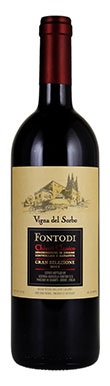
Fontodi, Vigna del Sorbo, Chianti Classico, Gran Selezione, Tuscany, Italy, 2020

First produced in 1985, Vigna del Sorbo sits alongside Flaccianello at the apex of Fontodi’s range. It was elevated from Riserva to Gran Selezione with the introduction of the category in 2014. The vineyard extends over eight hectares with the oldest plantings now well over 50 years old. The 2020 is slow to reveal itself – even with coaxing, aromas aren’t completely forthcoming. Eventually, subtle hints of sundried tomato and grilled herbs evolve to darker tones of violet and liquorice. True to its western Panzano origins, the framework is firm and sturdy. Tight with a concentrated core but not overly dense, there's a richness to the tannins. Finishes with savoury black plum and toast.
2020
TuscanyItaly
FontodiChianti Classico
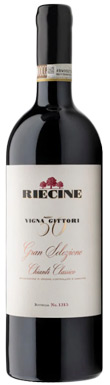
Riecine, Vigna Gittori, Chianti Classico, Gran Selezione, Tuscany, Italy, 2020

The second vintage released as a Gran Selezione, this hails from a one-hectare parcel at the top of the estate’s Gittori vineyard in Gaiole. Picked on 3 October, the 2020 is evocatively scented, offering a captivating array of cherry, dusty earth, alpine flowers and pine. The palate is tangy, with concentrated, zesty acidity emphasising orange and cranberry. The tannins have a fine, powdered quality and become quite dense on the finish. While it needs a bit more time to come together, this just-bottled wine shows plenty of promise.
2020
TuscanyItaly
RiecineChianti Classico
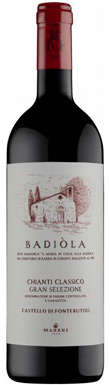
Castello di Fonterutoli, Badiòla, Chianti Classico, Gran Selezione, Tuscany, Italy, 2020

My top pick from Mazzei’s 2020 Gran Selezione lineup, Badiòla seems to have benefited from the generous warmth of the vintage. It still unequivocally expresses its cool 570-metre climes in the UGA of Radda with its lightweight, sinewy flow. But there's sneaky stuffing and concentration to cushion the steely backbone. Mocha inflections allude to refining in small French oak tonneaux, but there's a lighter touch with the wood here. Very pretty, pure raspberry, blood orange and floral notes ring out. Positively crisp in acidity.
2020
TuscanyItaly
Castello di FonterutoliChianti Classico
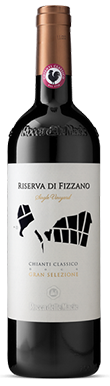
Rocca delle Macie, Tenuta Fizzano, Chianti Classico, Gran Selezione, Tuscany, Italy, 2020

Purchased in 1984, the Fizzano estate is comprised of 35 hectares of vines with an expansive southwestern exposure on gentle slopes. The 2020 is already showing its charms with strawberry, plum and pepper making way for hints of hyacinth and anise. Well-weighted, it's ample and generous though not heavy, packed with youthful fruit and a real juiciness. The tannins are chalky and restrained, and there's lovely balance. This is refined predominantly in 35hl oak barrels with just a small percentage in barriques.
2020
TuscanyItaly
Rocca delle MacieChianti Classico
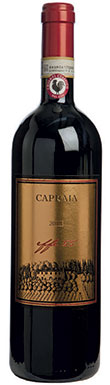
Capraia, Effe 55, Chianti Classico, Gran Selezione, Tuscany, Italy, 2019

Effe 55 comes from a two-hectare northeast-facing plot at 550 metres above sea level and includes the estate's oldest vines, which were planted in 1970 to Sangiovese clones from Montalcino. A mellow yet promising nose exhibits red currants laced with stony mineral and seductive truffles. Attractively textured with wood that frames rather than imposes, the tannins are firm and the acidity crisp. Blood orange lingers on the finish. Elegant and understated, this promises to express more with time.
2019
TuscanyItaly
CapraiaChianti Classico
Castello di Ama, San Lorenzo, Chianti Classico, Gran Selezione, Tuscany, Italy, 2019

A blend of the estate’s four historic vineyards – Bellavista, Casuccia, San Lorenzo and Montebuoni – from plantings that are at least 25 years old, this bottling is, for now, Castello di Ama’s flagship Gran Selezione. There's plenty to unpack here. A top note of vanilla complements red cherry, tobacco and thyme. Diving into the palate, the juicy red plum core is nuanced by freshly turned earth and rose. Assertive in personality but equally gracious, it's hard to resist at the moment. Those well-formed tannins of polished wood, and charming grapey scratchiness should keep this in nick for the next eight to 10 years.
2019
TuscanyItaly
Castello di AmaChianti Classico
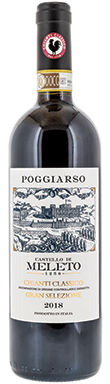
Castello di Meleto, Vigna Poggiarso, Chianti Classico, Gran Selezione, Tuscany, Italy, 2019

Under new direction, Castello di Meleto now offers four Gran Selezione, three of which come from single plots. Poggiarso is the estate’s highest site at 550 metres, and while it's mostly west facing, the Gran Selezione is crafted from a warmer south-facing pocket called Poggio Vipere. Attractively restrained, it shows subtle fragrances of cinnamon, alpine flowers and sweet garden herbs. The palate is unforced and elegant, bringing in red raspberry with a touch of cocoa and porcini. Crisp acidity meets fine, taut tannins that are silky in texture.
2019
TuscanyItaly
Castello di MeletoChianti Classico
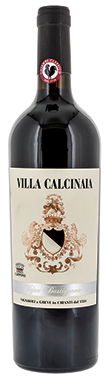
Villa Calcinaia, Vigna Bastignano, Chianti Classico, Gran Selezione, Tuscany, Italy, 2019

The highest of Villa Calcinaia’s single vineyards, Bastignano rises from 270 to 300 metres on terraces supported by stone walls. While east facing, it's an open, luminous site. The bedrock is Montefioralle’s classic Alberese – white calcareous stony soil rich in limestone. Open and expressive, the nose offers sweet spice and leafy tobacco, while there's a wild woodland berry character throughout. The palate is round and smooth but with its signature inner firmness. Salty minerality and chalky tannins provide complex contrast.
2019
TuscanyItaly
Villa CalcinaiaChianti Classico
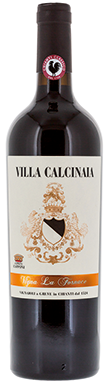
Villa Calcinaia, Vigna La Fornace, Chianti Classico, Gran Selezione, Tuscany, Italy, 2019

Villa Calcinaia has come out with a very solid set of Gran Selezione in 2019. All three single vineyards are within the Montefioralle UGA, demonstrating the diversity within a single sub-area. La Fornace is a south-facing vineyard at 230 metres on predominantly sandy soil with some grey clay. Redolent of terracotta bricks, dry, dusty earth and baked stone, its aromas evoke the territory on a hot summer day. Full, with brambly red berries, this is an accessible wine with loose, powdery tannins that caress rather than grip. Mediterranean herbs, particularly sage, meet minerally iron notes as this lingers on the finish.
2019
TuscanyItaly
Villa CalcinaiaChianti Classico
Terreno, Sillano, Chianti Classico, Gran Selezione, Tuscany, Italy, 2019

Sofia Ruhne purchased the five-hectare San Piero a Sillano plot in 2015 to make a fresh style of Sangiovese. With an east-facing aspect at 500 metres, it's a unique parcel in the Montefioralle UGA as it is characterised by Pietraforte rather than Alberese soil. It starts with striking aromas of iron and savoury, stony mineral notes, then floods the mouth with liquorice, currants and black cherry. Vertical and direct, the structure matches the clear fruit with steely tannins and positively crunchy acidity. The finish reverberates with its intrinsic tanginess. Energetic, balanced and characterful.
2019
TuscanyItaly
TerrenoChianti Classico
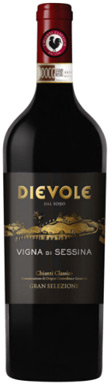
Dievole, Vigna Sessina, Chianti Classico, Gran Selezione, Tuscany, Italy, 2019

Sessina is a south-facing 5.5-hectare vineyard on Macigno (sandstone soil) but with a vein of limestone running through it. It shines in the fresh 2019 vintage – it's the best bottling of this wine that I have tried. Vibrantly scented with mint, sage and a hint of chocolate. The dark plum core is ripe yet crunchy, with tannins which are smoothly textured and tug in the right places. Refined and elegant but not lacking in depth, this boasts an enticing interplay of warm Mediterranean balsamic notes with cooler forest tones. Delicious.
2019
TuscanyItaly
DievoleChianti Classico
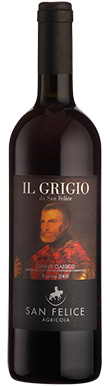
San Felice, Il Grigio, Chianti Classico, Gran Selezione, Tuscany, Italy, 2019

As with the estate’s annata, this Gran Selezione sees a healthy dollop of the rather obscure Pugnitello and Abrusco varieties – both lending a dark purple hue. As of 2020, their inclusion will be reduced from the current 20% to just 10% of the blend. Discreet scents of undergrowth and moist earth meld with tea, tobacco and thyme. Round and flattering, the wine envelops the palate. As it expands, it demonstrates its vigour. Dry tannins around the edges should soften further with time, yet this is nevertheless immediately inviting.
2019
TuscanyItaly
San FeliceChianti Classico
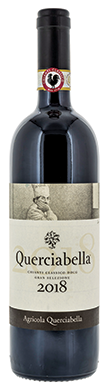
Querciabella, Chianti Classico, Gran Selezione, Tuscany, Italy, 2018

Querciabella’s second Gran Selezione release is the realisation of a decade-long vineyard study to create a single vineyard Chianti Classico. It hails from a 500-metre site in the hamlet of Ruffoli, within the UGA of Greve. Intense aromas of coffee, grilled fennel and eucalyptus are followed by a refreshing blood orange flavour which invigorates the dense dark cherry core, finishing with lingering incense. There's a charming accessibility here as skillfully extracted tannins are chewy yet supple. While I don’t suspect this will be the longest-lived offering from Querciabella, this delicious wine interprets the vintage well and deserves a place in the cellar.
2018
TuscanyItaly
QuerciabellaChianti Classico
Podere Il Palazzino, Argenina, Chianti Classico, Gran Selezione, Tuscany, Italy, 2018

Previously bottled as an annata, Palazzino’s Argenina has now been elevated to Gran Selezione, meaning the estate’s entire Chianti Classico production now falls into this category. It comes from a vineyard in the southern reaches of Gaiole on limestone-rich, fluvial terraces. An autumnal whiff of chestnut is followed by fetching heather and cinnamon stick. Elegant and fine framed, it presents as midweight and linear at first, then fleshes out across the palate. Tangy acidity persists throughout, and there's a subtle yet confident grip of tannins on the finish.
2018
TuscanyItaly
Podere Il PalazzinoChianti Classico
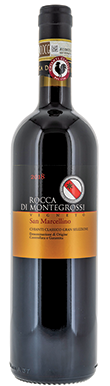
Rocca di Montegrossi, Vigneto San Marcellino, Chianti Classico, Gran Selezione, Tuscany, Italy, 2018

The San Marcellino vineyard takes its name from the neighbouring Romanesque church. In 2018, owner Marco Ricasoli picked Sangiovese from this site early to avoid botrytis and blended it with a slightly higher percentage of Pugnitello than usual to make up for any lack of ripeness. Vibrantly fruited and exuberant, it's bursting with dark cherry and plum, countered by brisk acidity and cinched in by chalky tannins, while the polished oak is starting to integrate. Hints of green herbs and brushwood show up on the finale.
2018
TuscanyItaly
Rocca di MontegrossiChianti Classico
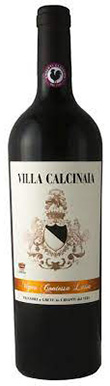
Villa Calcinaia, Vigna Contessa Luisa, Chianti Classico, Gran Selezione, Tuscany, Italy, 2019

The only west-facing hill on Villa Calcinaia’s property, the Contessa Luisa vineyard is bathed in the afternoon sun. With a predominantly clay soil and less limestone than Bastignano, it's the densest and most concentrated of the three Gran Selezione, yet balanced in its proportions. Vanilla, mint and thyme permeate sundried plum and dark cherry. Broad, well adjusted tannins expand across the palate, while sappy acidity makes the mouth water.
2019
TuscanyItaly
Villa CalcinaiaChianti Classico
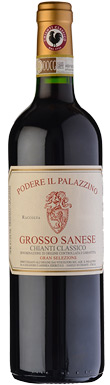
Podere Il Palazzino, Grosso Sanese, Chianti Classico, Gran Selezione, Tuscany, Italy, 2016

Visiting Il Palazzino’s rustic, cluttered tasting room is like walking back in time. As for the wines, they are non-conformist and a bit edgy, but full of soul – above all, the Grosso Sanese bottling. This 100% Sangiovese began life as a Vino da Tavola in the 1980s before joining the ranks of the DOCG in 1996, and finally became a Gran Selezione with the 2015 vintage. The current release, 2016, features a bouquet of leather, incense, mint tea and wild game; decidedly tertiary but by no means tired. The palate is equally savoury and earthy, as forest undergrowth and bitter roots permeate dark black currants. Fully charged with waves of firm tannins, this demands a rare steak.
2016
TuscanyItaly
Podere Il PalazzinoChianti Classico