Twenty years ago, few people would have been able to envisage just how Malbec would evolve. The variety, which had been neglected for decades in its homeland, and only rarely used in red blends in other countries – such as Vega Sicilia in Spain and California’s Opus One – is today grown successfully not only in Argentina, but also in Chile, Australia, South Africa and the US. And in its native territory in Cahors, southwest France, Malbec wines are regaining the spotlight after spending centuries in the shadows.
Take a closer look, and this phenomenon could have multiple explanations. On the one hand, its expansion can be explained from a commercial point of view: Argentinian Malbec has enjoyed sustained success during the last decade, embraced by wine lovers across the globe and at different price levels, with the grape increasingly being positioned at the higher end. Meanwhile, from a winemaking perspective, Malbec has successfully adapted to different climates and soils.
Scroll down for Iglesias’ top 15 Malbecs from Argentina and Chile
It is no news that the wineries primarily responsible for this phenomenon are those in Argentina. And we can find many varied expressions of Malbec across its wine-growing regions. But Chile is also emerging as an exciting source of Malbec – the grape has strong roots in the country and has now become the focus of several producers. It can only be positive for consumers that the market offers a growing range of styles and places of origin for this variety, once on the brink of extinction.
Argentinian extremes
Malbec’s chief producing country has 40,250ha (hectares) dedicated to the flagship variety, close to 90% up on what was planted only a decade ago. And when it seemed that there was nothing new under the sun, a handful of small and extreme vineyards started producing wines that are breaking new ground for this icon of the Argentinian wine industry. And, admittedly, to a model that is being closely followed by all the players in the world of Malbec.
Fresh plantings at Zuccardi’s high San Pablo vineyard in the Uco Valley, Mendoza
(Image credit: Credit Unknown)
You could say that the new styles of Malbec in Argentina have been pioneered in the cold mountain vineyards of Mendoza and San Juan. Over the last few years, both provinces have increased their vineyard area, especially with plantings located at 1,000m above sea level and higher, consequently establishing a new baseline for growing vines above even 2,000m.
In the past, very few people would have imagined these areas to be viable for wine- growing. At this greater altitude, the temperature drops, the ripening cycle slows, and the weather risks increase – a challenge that some oenologists are willing to meet head-on in order to produce lighter and more refreshing styles of Malbec. Whenever he is asked why he chooses to work in such extreme conditions, Alejandro Sejanovich explains: ‘These vineyards help us rethink viticultural and winemaking methods, and we can then apply that knowledge in other areas. It is about ongoing learning.’ Let’s not forget, too, that these are regions with virgin soils, which also contributes new knowledge and experience.
Volume-wise, the output of these marginal regions is tiny when compared to that of more traditional areas, but each one of them opens a door to a new sensory dimension.
Decanter newsletter
Get our daily fine wine reviews, latest wine ratings, news and travel guides delivered straight to your inbox.
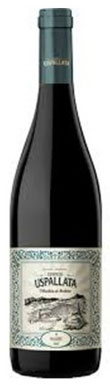
Sejanovich, the creator of Manos Negras, a project exploring different regional styles, has recently unveiled the first wines produced with grapes from the vineyard he developed in Uspallata in 2009, a new winemaking region in Mendoza located 2,000m above sea level. ‘In these extreme and cold conditions, on clay and bedrock soils, Malbec develops an exotic character, typical of high-altitude wines, but with spiced notes, a delicate texture, and a marked freshness,’ says the winemaker about the Estancia Uspallata Malbec 2015.
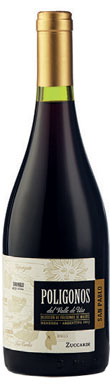
Sebastián Zuccardi is similarly animated about his new vineyard in Uco Valley, 1,400m above sea level. ‘When we planted here in San Pablo, we got to a point where we thought we had made a mistake,’ Zuccardi explains. ‘It is very cold, very close to the Andes and has a high average rainfall. For instance, we did not need any irrigation in 2015.’ But, he says: ‘Now we’re so excited to work with those grapes because they allow us to produce a Malbec like no other.’ The wine he refers to is the Polígonos del Valle de Uco San Pablo 2015, an austere and refreshing Malbec with only 13% alcohol – rare for an Argentinian red.
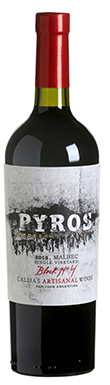
Mendoza is not the only region adding new profiles to the Malbec variety. In San Juan, the Pedernal Valley area is also becoming a pioneer. With vineyards established in 2008 on flint soils at 1,300m to 1,600m above sea level, this area is protected by hills and high mountain fronts in the middle of the precordillera, which provides a moderate temperature and good light intensity. ‘This terroir allows us to produce an exotic Malbec, with a lively feeling in the mouth and complex aromas,’ explains José Morales, winemaker at Pyros Wines, and the person in charge of one of the projects in the region.
Chilean diversity
Across the Andes, Chile has 2,300ha of Malbec, in third position as a producer of this grape, behind France, which features an area, chiefly in Cahors, of a little over 4,000ha.
Chile’s Malbec vineyards are concentrated mainly in the Central Valley, but can also be found in Limarí and Elqui, while Bío Bío boasts a handful of old pre-phylloxera vineyards that seem to resist the passing of time. This distribution exposes Malbec to varied soils, climates and heights, resulting in wines different from those produced in Argentina, the world’s largest producer of the grape.
However, despite the differences in volume and area, Chile already has close to 50 labels of this variety that are now becoming available in wine stores worldwide.
At this point, you may wonder why these wines have such a low profile when Chile possesses such vine-growing wealth. Aurelio Montes expresses it very clearly: ‘In Chile we have been focused on other varieties for years – Cabernet Sauvignon in particular – and so we were not able to realise sooner the huge potential of Malbec.’
There is also a commercial reason: ‘Fifteen years ago, Malbec had no history in the markets,’ Montes continues. ‘These wines were rustic at best, until Argentina dressed them in a tuxedo. From then on, it was not easy to offer a Chilean Malbec when, to wine lovers worldwide, Malbec was known as an Argentinian wine.’
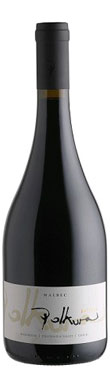
However, Malbec found a way to get attention on its own, recalls Sven Bruchfeld, winemaker at Polkura. ‘In our case, we used to produce Malbec just so we could blend it with our Syrah, only about 5%, and we sold the surplus. But then in 2008, we started paying more attention to our Malbec and realised it was too good to sell, so we started bottling it.’
Faced with the need to innovate and experiment, several winemakers joined this movement to vindicate the Malbec variety, and change the course of history.
While 90% of the Malbec vineyards in Chile are located in the Central Valley, it is important to understand that this does not imply a homogenous style of wines. As Ricardo Grellet, president of the National Association of Sommeliers of Chile explains: ‘What is unique about the Chilean geography is that you can find very different plots of land within all the valleys, ensuring diversity even within the same variety. Today, the new vineyards are designed with the characteristics of each of these terroirs in mind.’ Following this premise, it’s possible to find several different expressions in a single valley.
In more technical terms, Pedro Parra, a renowned expert on soils and terroir studies, explains that ‘there are two types of Malbec in the world: the ones grown in geological soils (very old rock soils), and the ones grown in alluvial soils or colluvium’ (ie, newer soils).
‘In Chile,’ he says, ‘we find both expressions. The younger soils are in the Central Valley, while the older, granitic soils are located to the south.’ According to Parra, these soils produce two different profiles. The wines from the alluvial soils have a moderate acidity, are fruity and full-bodied, while wines from the older soils are more austere in character, have a higher acidity and a lower pH.
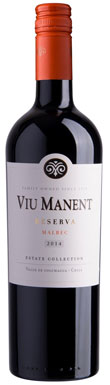
In Chile’s Colchagua Valley, Malbec has a long history. The Viu Manent winery, Malbec experts since 1993 when they bottled Chile’s first 100% varietal version, has pre-phylloxera vines that enabled it to work in new vineyards and expand its own plantings to 80ha. As a result it produces six different versions of Malbec with grapes from San Carlos and Peralillo. Also well-regarded are other wines in which Malbec forms a key component, grown in Apalta, Cachapoal, Lolol, Marchigüe, Rapel, Requínoa and Santa Cruz, in vineyards propagated through clonal selections or others through massal selection from older vines.
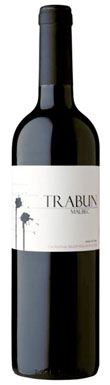
Sergio Avendaño of Trabun Wines says: ‘Malbec proved to be a versatile variety, which expresses the characteristics of its location. That convinced us to start growing it in 2010 in Requínoa, with results that allowed us to convey the essence of that region.’
Old-vine expressions
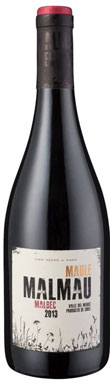
Maule also has a long-standing tradition with this variety. It’s not difficult to find 50-year-old vines, like the ones Matías Michelini uses to make MalMau, a varietal Malbec he produces for House of Morandé. ‘What sets Maule apart from other regions is that the rainfall regime allows for dry farming of the vines, and that gives additional authenticity to the place. This results in wines that seem mature, but are vertical and have a light mouthfeel.’
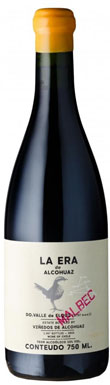
Outside the Central Valley, there are also extreme Malbec wines, like the ones from the Elqui Valley and the Limarí Valley, where vines are grown at more than 1,600m above sea level in very cold mountain areas featuring bedrock and granite soils, which produce wines with impressive tension and complex aromas. Among the producers in this region are Tabalí, with its Roca Madre Malbec, and Viñedos de Alcohuaz.
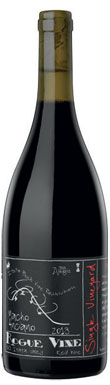
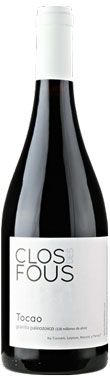
Meanwhile, in the south, the Malbec bush vines in Bío Bío are the oldest of this variety in Chile, resisting the passing of time and grown on slopes in a dry habitat, with no irrigation. This results in austere wines ‘very similar to the European Malbec’, explains Leo Erazo, winemaker at Altos Las Hormigas, which on the other side of the Andes runs Rogue Vine, where it makes Macho Anciano – a very singular and restrained Malbec. In the same area, Pedro Parra and his colleagues at Clos des Fous offer an expression with a little more body and volume, but without straying from the Bío Bío profile, with their Tocao, which is 80% Malbec and 20% Carignan.
It is worth mentioning that the Chilean Malbec does not share so many similarities with that of Argentina, as regards style and expression. Therefore, Chilean Malbecs become an interesting alternative for those who have fallen under the spell of this variety, which always guarantees a fruity intensity and a juicy mouthfeel. ‘In Chile, Malbec wines are austere, featuring black fruit and spiced aromas, as opposed to red fruit, and have a rather salty mouthfeel. It is a colder version,’ explains Leo Erazo.
In turn, Marcelo Pino, Chile’s Best Sommelier, says: ‘While Chilean Malbec is still little-known in our country, the truth is that Chilean consumers are becoming increasingly aware of it, and the number of vineyards that produce and market it is growing.’
He ends by adding: ‘This is a great time to develop this variety, which offers a style and character of its own, with good virtues and outstanding qualities.’
A certified sommelier working across Latin America, Alejandro Iglesias is also a widely published wine writer and educator
See Iglesias’ top 15 Malbecs from Argentina and Chile
Uspallata is a new viticultural area in Mendoza. At 2,000m, it offers a complex and original Malbec with pronounced black fruit and herbal character, earthy aromas, high acidity, fine tannins and a long finish.
Rogue Vine, Macho Anciano, Itata Valley, Chile, 2013
My wines
94
Leo Erazo, winemaker for Altos Las Hormigas in both Mendoza and Cahors, obtains this original Malbec from a centennial vineyard he recovered in Bío Bío. Black fruit, wet stones, floral rounded palate.
Viñedos de Alcohuaz, La Era de Alcohuaz Malbec, 2013
My wines
94
Organic Malbec from the Elqui Valley planted on granite soils at 1,700m above sea level. Made in a natural way, this is one of the most original Malbecs from Chile, showing black fruit aromas, spice and floral notes with vibrancy and freshness.
Zuccardi, Polígonos San Pablo, Mendoza, Argentina, 2015
My wines
94
One of the most curious Malbecs of Mendoza is produced with grapes from San Pablo at 1,400m. In this cold zone, Malbecs are complex with red fruits, Mediterranean herbs, balsamic hints and earthy aromas. Relatively low in alcohol, yet vibrant.
Clos des Fous, Tocao, San Rosendo, Bío Bío Valley, 2013
My wines
92
Coming from centennial vineyards in Bío Bío, Tocao is one of the most extreme versions of Chilean Malbec (with 20% Carignan). Intense, ripe black fruits and prunes with high tannins and freshness.
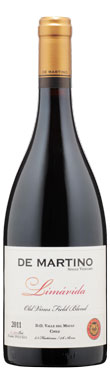
Marcelo Retamal uses dry-farmed grapes in this field blend, with a litlle Cabernet Sauvignon and Carmenere. It’s fragrant, with pronounced fruity aromas, Mediterranean herbs. Velvety and fresh.
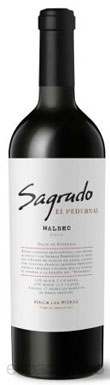
Finca Las Moras, El Sagrado Malbec, San Juan, 2013
My wines
92
Another fine exponent in the Pedernal Valley. Complex aromas of black fruit, candied plums and cranberry, wet stones and raisins. Full-bodied, velvety and vibrant.
Produced by prolific Argentinian winemaker Matías Michelini with grapes from Maule’s old vines, rescued by House of Morandé. Ripe red and black fruits, meaty and leathery with a vibrant palate.
Polkura, Malbec, Marchigüe, Colchagua Valley, Chile, 2013
My wines
92
Recognised for his Syrah, Sven Bruchfeld first released this Marchigüe Malbec in 2008. It’s spicy with black fruit character and a long finish. Its 8% Petit Verdot adds structure and complexity.
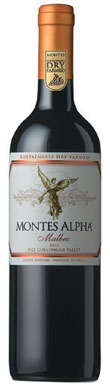
Montes, Alpha Malbec, Colchagua Valley, Chile, 2013
My wines
91
Grapes from Apalta and Marchigüe. Intense and fruity, bearing a certain similarity to the classic Mendoza style: plums, blueberries, violets and cedar. Medium-bodied and very fresh.
Sourced from a vineyard in Requínoa planted in 2010, which partly explains its intensity and character. Ripe black fruits, plums, forest floor and firm tannins.
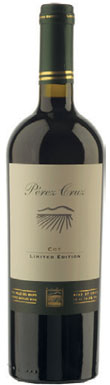
Perez Cruz, Limited Edition Cot, Maipo Valley, Chile, 2014
My wines
90
Cot is one of the synonyms for Malbec. Grown in Maipo, the grape develops a herbal profile. This exhibits black fruit aromas, balsamic and Provençal herb notes on a full-bodied, juicy palate.
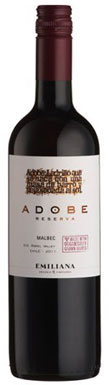
Emiliana, Adobe Reserva Malbec, Rapel Valley, Chile, 2015
My wines
89
Emiliana produces its grapes under organic and biodynamic certification in Colchagua Valley, part of the greater Rapel Valley. This easy-drinking wine has light oak ageing and achieves an intense fruit expression of plum, blackcurrant, cherry and a very pleasant texture on the palate.
Decanter Magazine, South America Expert & DWWA Judge
Alejandro Iglesias was born in Buenos Aires, Argentina. In 2004, he changed his career as a Financial Adviser to begin his studies at the Argentine School of Sommeliers. Since then, he has worked as a wine writer for several Argentine and international media publications, as well as being a Decanter contributor. As a wine educator, he teaches classes in Argentina, Uruguay, Panama and Costa Rica. Since 2010 he has been the Executive Sommelier at Bonvivir, the largest wine club in Argentina and in 2013 he launched Vinomanos.com, the first Argentine wine app. As a member of the Argentine Sommeliers Association (AAS), he participated in the organising committee of the Best Sommelier Competition in Mendoza, Argentina. Alejandro Iglesias was a judge at the 2019 Decanter World Wine Awards (DWWA).