Get our daily fine wine reviews, latest wine ratings, news and travel guides delivered straight to your inbox.
You are now subscribed
Your newsletter sign-up was successful
An account already exists for this email address, please log in.
Matthew Luczy: introductions and reflections
In his first column for Decanter, our California correspondent Matthew Luczy reflects on how he came to be bitten by the wine bug, his time as a sommelier at renowned LA restaurant Mélisse, and how three days and three concepts are his secrets to evaluating wine
My journey in the wine world began at age 18. I grew up in Mariposa, a small town in California’s Sierra Foothills, 30 minutes’ drive outside Yosemite National Park.
My first love was music, and I spent my formative years studying clarinet, tenor saxophone, drums, guitar and piano. Soon after graduating high school, I moved to Los Angeles with La La Land visions of becoming a professional musician.
As is de rigueur among Angeleno transplants, I worked in restaurants to supplement my income while chasing ‘the dream’. Through tastings with coworkers and friends who became mentors, I slowly but surely immersed myself in the world of wine.
Scroll down for Matthew Luczy’s California and French wine tasting notes
Its complexity enamoured me. The intersection of history, geology, weather, chemistry and the artistry of winemaking checked many boxes simultaneously. It stunned me how the aromas and flavours of the most compelling wines confounded my senses: how could this elixir be solely the product of fermented grapes?
My life goal soon pivoted from ‘making it’ as a musician to becoming a sommelier. I studied for the Introductory and Certified Sommelier exams through the Court of Master Sommeliers, completing both just after my 22nd birthday.
Matthew Luczy during the Covid-19 lockdown, keeping up with his love of music
(Image credit: Credit Unknown)
A group of friends and I would regularly gather after procuring wine for the evening – usually far too much. They’d drill me on blind tasting, theoretical questions and the proper steps of service.
My lifelong love of music is still very much with me. It now takes the form of a serious hobby, as well as providing me with an additional layer in how I think about wine: composition, pitch, frequency, arrangement, mixing…
Decanter newsletter
Get our daily fine wine reviews, latest wine ratings, news and travel guides delivered straight to your inbox.
Making it to Mélisse
Around this time, I found myself at an impromptu dinner at Mélisse Restaurant, a Michelin two-star LA fine-dining staple rooted in French gastronomy. This white-tablecloth, tasting-menu dinner was a first for me – and it changed everything. I’d already decided I wanted to be a sommelier, but now I knew that it had to be at Mélisse.
Thus began what would become two years of repeated applications and multiple attempts at convincing management to take me on. I wanted to work in a place where wine would surround and overwhelm me.
I once offered to buff the wine glasses for free just to get a foot in the door. Finally, the general manager caved in and hired me as a part-time captain (the head waiter for a group of tables).
Wine director Brian Kalliel took me under his wing, and I quickly became an assistant sommelier. Eventually I assumed the role of wine director myself.
The dining room at Mélisse Restaurant in LA
(Image credit: Credit Unknown)
Mélisse has been a destination for wine as well as food since its opening in 1999. In addition to its award-winning wine list, many well-heeled collectors in southern California bring bottles from their extensive cellars to be properly served and savoured.
The restaurant has ongoing relationships with several wine-tasting groups, which provided countless opportunities to regularly try otherwise-unattainable wines.
This gave me great perspective regarding the preparation and serving of wines young, old, entry-level and priceless. Several of these take-aways have provided structure to my work for Decanter.
Evaluating wine: three days and three concepts
To take one example: we vastly underestimate the amount of oxygen that well-made and cellared wine can withstand. It was common for me to arrive at the restaurant at noon to open and taste bottles for an event that evening – even older vintages. These would often still be opening up well after dinner had finished and the guests were on their way home.
In my critical evaluations for Decanter, I make it a point to taste a wine over a minimum of three days whenever possible. I stopper the bottle with the same cork and refrigerate it between tastings, intentionally putting the wine through its paces.
This offers a sneak-peek of what its evolution curve might look like after cellaring. Even still, it surprises me how many wines are substantially more giving and complex on the second day – and even the third, depending on the style and vintage.
Core, clarity and context
I evaluate wine using three concepts: core, clarity and context. The core of a wine contains its structure, comprised of acidity, tannin, alcohol and overall balance. How accurately these interlocking components translate the wine’s origins make up clarity.
And where the wine falls in the grand scheme of things is context. Is this a simple wine for immediate consumption, or one that needs two decades to unwind and reveal itself fully? My experience as a sommelier greatly informed me of what to look for in any wine, regardless of its origin.
While the Mélisse wine program centred around France, I always maintained an extensive selection from California. An overall sense of authenticity and honesty are of paramount importance to me – qualities that transcend any one region or continent.
Coming full circle
The New World vs Old World fork-in-the-road is a nearly constant conversation among wine circles. I find it an increasingly unhelpful one, truly akin to apples and oranges. It effectively stacks the deck unfairly against the New World, not taking into account the massive chasm of experience, trial-and-error and time.
California’s corollary to Richebourg or Montrachet may in fact already be planted, but making a realistic comparison might prove to be the job of the current generation’s great-grandchildren.
But the gap is closing every year. We have exponentially more knowledge about what makes a wine great than the Cistercian monks of the 14th century.
Concurrently and paradoxically, we know very little about the many x-factors of terroir that they themselves seem to have gotten right. We are still in the initial phases of wine production in California, making the progress made thus far impressive and inspiring.
For this introductory column, I’ve selected a mix of both Californian and French wines I enjoyed during my tenure at Mélisse. Spanning a wide range of vintages, styles and price points, they aren’t meant to go head-to-head with each other, but are rather classic, thought-provoking examples of their respective origins.
The opportunity for me to review and write about California wines for Decanter is a full-circle one. As a born-and-bred Californian, my early path in wine consisted of tasting almost exclusively local wines. This eventually led to a greater understanding of their context next to some of the greatest wines ever made – increasingly more of which hail from the Golden State.
That I now get to take that perspective back to where it all started is an honour and privilege.
If there is an aspect of California wine you’d like to know more about, email editor@decanter.com
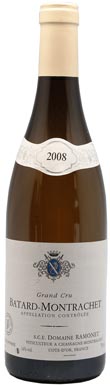
Ramonet, Bâtard-Montrachet Grand Cru, Burgundy, France 2008
My wines
The nose opens with toffee, honey, white peach, yellow apple and Ramonet's signature spearmint aroma. Resinous, waxy and punchy on the palate, with flavours of...
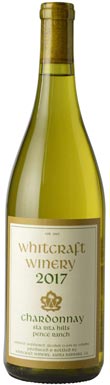
Whitcraft, Pence Ranch Chardonnay, Santa Barbara County, California, USA 2013
My wines
Drake Whitcraft consistently turns out some of the most defined, transparent and compelling Chardonnays in Santa Barbara County. Pence Ranch tends to be the most...
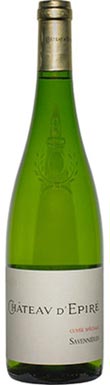
Château d'Epire, Cuvée Speciale, Savennières, Loire, France 2005
My wines
Sourced from d'Epiré's most-prized parcel, aged in barrels of chestnut, acacia and neutral oak. Bottled specifically for noted US wine merchant Kermit Lynch. Creamy, exotic...
Araujo Estate, Eisele Vineyard Vieilles Vignes, Napa Valley, California, USA 1994
My wines
From 1991 to 1997, Araujo produced a single-barrel cuvée of Eisele vines planted in 1964 on St George rootstocks, common in older Napa Valley vineyards...
Château Palmer, Margaux, Médoc 3CC, Bordeaux, France 1966
My wines
A wonderfully complex, nimble and mature showing of Palmer that perfectly encapsulates its consistently seductive style. The depth and power of the nose relative to...
Williams Selyem, Allen Vineyard Pinot Noir, Russian River Valley, Sonoma County, California, USA 1990
My wines
Tasted from a magnum brought by Williams Selyem co-founder and winemaker Burt Williams. Incredibly spice-driven, exotic and poised on the nose, showing aromas of dried...