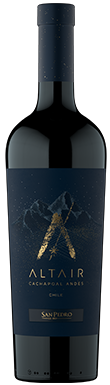
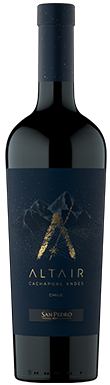
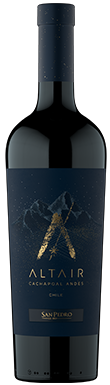
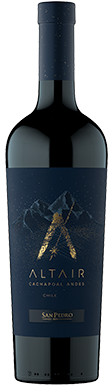
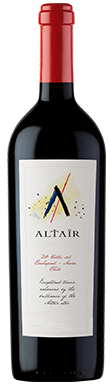
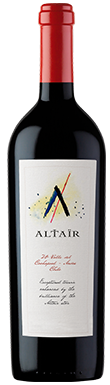
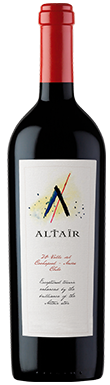
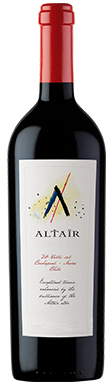
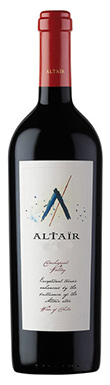
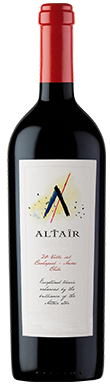
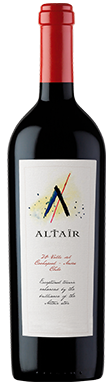
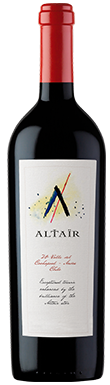
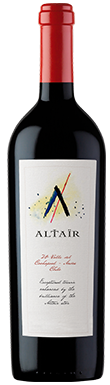
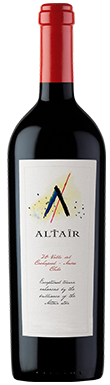
Viña San Pedro’s Altair: Two decades of an ongoing journey
Two decades on, Viña San Pedro's flagship Altair has undergone a gradual but significant evolution, shaping its Chilean character after shedding its French-inspired skin. A complete vertical allowed Decanter's Ines Salpico to trace the wine's journey so far.
Get our daily fine wine reviews, latest wine ratings, news and travel guides delivered straight to your inbox.
You are now subscribed
Your newsletter sign-up was successful
Vertical tastings are often a self-indulgent exercise through which producers try to assert the superiority, longevity and consistent quality of their wines.
However, sometimes an invitation to taste all produced vintages of a given label comes with the enticing challenging of revisiting its evolution, consider the missteps and give feedback on the direction and goals of the current winemaking team.
The latter was the case when the San Pedro team traveled from Chile to London for a tasting of all but one of the vintages of Altair so far released. A brave proposition, that showed the evolution of the wine, with the many questions, hesitations and changes of priorities along the way.
To a large extent, Altair’s journey mirrors that of Chilean fine wine as a whole: from a fascination with classical foreign paradigms to the recognition of a potential for difference and local identity – all backed by robust technical ability.
Scroll down for tasting notes and scores for all released vintages of Altair
From French love affair…
Altair started as a partnership between Cachapoal Valley’s Viña San Pedro and St-Émilion’s Château Dassault, with Pascal Chatonnet as consultant and Ana María Cumsille as on-site winemaker. The joint venture planted 70 hectares of Bordeaux varieties, as well as Syrah and Carménère, at the foot of the Andes hoping to craft a premium blend to complement both of the estate’s ranges.
Until then, San Pedro had focused on more marketable brands – not least the popular Gato Negro label – with all production based at the historical winery in Molina. It was there, in the heart of the Central Valley, that the company, founded in 1865 and now part of the prominent VSPT Wine Group, had had its sole home for the previous 150 years.
The joint venture, and the new plantings, crystallised the aim to expand and focus on premiumisation.
Get our daily fine wine reviews, latest wine ratings, news and travel guides delivered straight to your inbox.
Since 2002, Viña San Pedro has had a dedicated facility for the production of its fine wine range – which, in addition to Altair, includes the Cabo de Hornos, Kankana de Elqui, Sideral and Tierras Moradas labels.
The first wines produced at the Cachapoal Andes winery hail from the 2003 vintage, which explains the decision not to include the first vintage of Altair (2002) in the vertical overview. The Altair brand has been fully owned by San Pedro since 2007, when Château Dassault abandoned the partnership, though with Chatonnet and Cumsille retained on the winemaking team.
… to Chilean self-awareness
Brand ownership and winemaking lineage are important to understand the evolution of Altair and were reflected in the proposed – and helpful – grouping of vintages that structured the tasting: ‘classical beginnings’, from 2002 to 2006; ‘forging identity’ (2007-2011); after skipping a vintage due to unfavourable growing conditions, the period between 2013 and 2017 was defined as one of ‘deepening the roots’; 2018 marked the beginning of the ‘evolution toward purity’ while the latest release (2021) was the dawn of a ‘consolidation era’.
This first stage is clearly informed by a Bordelais stylistic framework and Pascal Chatonnet’s background. The prolific consultant – who counts names such as Vega Sicilia, Château Cos d’Estournel, Château d’Issan and Numanthia as both current and former consulting engagements – shaped an elegant but unapologetic use of wood.
This has resulted in wines that are classical and, if old fashioned, have certainly withstood the test of time.
The phase that followed the dissolution of the partnership with Dassault, was pivotal. It marked the beginning of the pursuit of an identity unique to Altair and a true understanding of the local terroir. Deliberately reducing the use of oak allowed Chatonnet and Cumsille to more vividly explore the character of the fruit and vintage variation.
A different kind – and level – of nuance emerges as the duo experimented with different blends. The promise and potential of a truly Chilean fine wine emerges.
Missteps and regaining focus
With Gonzalo Castro and Marco Puyo at the helm as, respectively, head winemaker and technical director, Altair entered a new stage in 2013. During this period, San Pedro expanded its Cachapoal plantings and did extensive soil mapping. Greater knowledge of terroir was met, puzzlingly, with heavier-handed wood in the cellar – with uneven results.
But the careful study of soil and vineyard behaviour provided a good launchpad for the next winemaking leading duo. 2018, the first vintage of Altair with Gabriel Mustakis as head winemaker and Ignacio Diaz overseeing cellar operations, marked the beginning of the search for a new style, with more detail, better oak integration and a clear commitment to Cabernet Sauvignon.
There’s a clear intention to inscribe Altair among the great Cabernet’s of South America – an ambitious goal, considering the quality and history highlighted in Amanda Barne’s comprehensive overview.
Structural fine-tuning
Mustakis’ approach has clearly focused on improving wood integration and the enhancement of the tannic framework. For this, he deployed a variety of fermenting and ageing vessels and developed a more precise approach, with each plot vinified separately.
‘Concrete eggs, amphorae, foudres – vessels of different sizes, shapes, and materials for ageing allow us to adapt to the unique characteristics of the grapes at each vintage,’ he explains.
Although perhaps not yet at its full potential, the vertical showed a clear evolution, remarkable consistency and increasing technical precision. This translates into a particularly well-presented structure that supports the character of each vintage and the contribution of all the blending components ever more successfully.
Somehow, the story of Altair is also the story of how South American Cabernet Sauvignon – and Chilean in particular – carved its place on the international stage by asserting its uniqueness, rather than trying to emulate Bordeaux or North American role models.
‘It’s an opportunity to push the boundaries of what we can do with Chile’s unique terroirs,’ says Mustakis. ‘With over 20 vintages behind me, I feel a deep sense of responsibility not only to the [San Pedro] but also to the legacy of Chilean winemaking.’
San Pedro Altair – vintages 2003 to 2021 tasted and scored:
Wines in order of release, with latest release shown first.
Related articles
- Great Cabernets of South America
- South American Cabernet Sauvignon: Setting the standard
- Eduardo Chadwick on Chile’s fine wine legacy and evolution
San Pedro, Altair, Cachapoal Valley, Chile, 2021

Notable purity and elegance in this Cabernet Sauvignon with 10% Cabernet Franc. The fruit is round and well defined; red cherry, plum, mulberry and cassis...
2021
Cachapoal ValleyChile
San Pedro
San Pedro, Altair, Cachapoal Valley, Chile, 2020

Good aromatic and flavour definition in this balanced blend, a Cabernet Sauvignon (88%) to which Cabernet Franc (8%) and Carmenere (4%) contribute herbaceous nuance and...
2020
Cachapoal ValleyChile
San Pedro
San Pedro, Altair, Cachapoal Valley, Chile, 2019

The second vintage overseen by head winemaker Gabriel Mustakis, this reflects his effort to increase varietal expressiveness and refine wood integration. He is on the...
2019
Cachapoal ValleyChile
San Pedro
San Pedro, Altair, Cachapoal Valley, Chile, 2018

From the first vintage of Altair with Gabriel Mustakis as head winemaker and Ignacio Diaz overseeing cellar operations. A balanced, unassumingly complex wine, with great...
2018
Cachapoal ValleyChile
San Pedro
San Pedro, Altair, Cachapoal Valley, Chile, 2017

This warm vintage yielded, perhaps counterintuitively, wines with balanced alcohol, high acid and intense aromatic expression due to halted photosynthesis during the unusually hot summer....
2017
Cachapoal ValleyChile
San Pedro
San Pedro, Altair, Cachapoal Valley, Chile, 2016

This was a challenging, unusual vintage, with abundant rainfall that resulted in significant disease pressure and therefore, the need for careful berry selection. The result...
2016
Cachapoal ValleyChile
San Pedro
San Pedro, Altair, Cachapoal Valley, Chile, 2015

Lovely vibrancy and energy with expressive capsicum leading the nose, followed by fragrant rose and blueberry leaf. The juicy palate echoes the aromatic vibrancy: plum,...
2015
Cachapoal ValleyChile
San Pedro
San Pedro, Altair, Cachapoal Valley, Chile, 2014

Seductive, nuanced nose with deep fruitiness cloaked in Earl Grey, bergamot and roasted pepper. Juicy cherry and red plum fill the mid palate with ripe...
2014
Cachapoal ValleyChile
San Pedro
San Pedro, Altaïr, Cachapoal Valley, Chile, 2013

92
Intense, fleshy fruit framed by assertive, drying smoky tannins. Cassis, blackberry, mulberry and prune are cloaked in blueberry leaf and sweet spice. Fragrant top notes of dried mountain herbs and rose petals add alluring nuance. Offsetting the broody depth, zesty blood orange and dried red-apple peel contribute welcome freshness and crunch. Lingering toast and dried thyme.
2013
Cachapoal ValleyChile
San Pedro
San Pedro, Altair, Cachapoal Valley, Chile, 2011

Flora top notes add refined nuance to this child of a vintage with a long if uneven growing season. The dominance of Cabernet Sauvignon is...
2011
Cachapoal ValleyChile
San Pedro
San Pedro, Altair, Cachapoal Valley, Chile, 2010

There's a remarkable counterpoint here between concentration and freshness, complexity and drinkability. Juicy prune, dried cherries and blackcurrant are sprinkled with cardamom, black pepper and...
2010
Cachapoal ValleyChile
San Pedro
San Pedro, Altair, Cachapoal Valley, Chile, 2009

Plenty of freshness and vibrancy on show. Dried rose petals and potpourri hover over prune, mulberry, blackberry, fig and dried cranberries. White pepper, nutmeg and...
2009
Cachapoal ValleyChile
San Pedro
San Pedro, Altair, Cachapoal Valley, Chile, 2008

Great spicy edge and flavour definition shape the structure of this dry and cool vintage (the coolest in 10 years), that resulted in assertive flavours...
2008
Cachapoal ValleyChile
San Pedro
San Pedro, Altair, Cachapoal Valley, Chile, 2007

A cool, slow-paced growing season, along with the make up of this vintage's blend (65% Cabernet Sauvignon, 22% Syrah, 7% Carmenere, 5% Cabernet Franc and...
2007
Cachapoal ValleyChile
San Pedro
San Pedro, Altair, Cachapoal Valley, Chile, 2006

Grapes ripened slowly in this vintage, and the nuanced phenolic maturity is still percipible in the elegant layering of dried rose petals, dried blackcurrant, dried...
2006
Cachapoal ValleyChile
San Pedro
San Pedro, Altair, Cachapoal Valley, Chile, 2005

A particularly muscular, broad-shouldered vintage – with assertive, intense tannins, evocative of old-school Bordeaux – that would benefit from better alcohol and wood integration. There is...
2005
Cachapoal ValleyChile
San Pedro
San Pedro, Altair, Cachapoal Valley, Chile, 2004

Alluring vegetal freshness with spicy capsicum and cool mint to the fore. Underneath, a dense yet crunchy layer of cassis, mulberry, poached plum, black olive...
2004
Cachapoal ValleyChile
San Pedro
San Pedro, Altair, Cachapoal Valley, Chile, 2003

Classical and characterful, with unapologetic savouriness – very expressive of consultant winemaker Pascal Chatonnet's style. Even with smoky herbaceousness in the foreground, this retains an...
2003
Cachapoal ValleyChile
San Pedro

Ines is Decanter’s regional editor for Spain, Portugal and South America. Born and raised in Lisbon, Portugal, she grew up chasing her grandfather among his vines in Ribatejo and thus her love for all things wine began. After completing her Masters Degree in Architecture, Ines worked as a project manager while writing about wine and doing cellar consulting on the side. After moving to London in 2015, she decided to dedicate herself fully to the wine industry and joined the sommelier team at Michelin-starred Spring, Somerset House. Stints at Noble Rot and The Laughing Heart followed, while completing her WSET Diploma in Wines and Spirits. Her work as a judge and writer eventually became her full time commitment and she joined Decanter in 2019 as wine database editor.