Get our daily fine wine reviews, latest wine ratings, news and travel guides delivered straight to your inbox.
You are now subscribed
Your newsletter sign-up was successful
An account already exists for this email address, please log in.
Straight to the source: The rise of India’s Sula Vineyards
In just a quarter of a century, Sula Vineyards in Nashik, in tropical central west India, has risen from being just the germ of an idea to selling more than a million cases every year – educating a generation of Indians about wine in the process.
Picture the late-afternoon scene: a glass of pale rosé in hand, I’m relaxing outdoors on an elegant terrace at a world-class vineyard resort.
Bob Dylan is playing on the sound system as cosmopolitan visitors are having fun, taking selfies and tasting the estate’s wines. Below are rows of just-harvested Sauvignon Blanc vines, their leaves fluttering in the warm breeze.
Beyond, on the distant horizon, I can glimpse a lake fringed by steep, jagged mountains. So where might I be? The Cape, California, New Zealand, maybe Canada?
The answer is none of the above. In fact, I’m at Sula Vineyards’ The Source resort in India’s premier wine region of Nashik – about 180km and four hours’ drive east of the bustling megacity that is Mumbai.
The resort is aptly named because this is where Sula Vineyards began its dramatic ascent as a wine company, and also where it has just marked its 25th anniversary.
Scroll down for a taste of Sula’s wines
Certainly, there’s a lot for its pioneering founder and CEO Rajeev Samant to celebrate. Today, Sula is India’s biggest and best-known producer, with annual sales of one million cases and a 60%-plus share of all domestic wine sold above £5.
How Sula has risen to dwarf the competition in India in just a quarter of a century is a remarkable story.
Decanter newsletter
Get our daily fine wine reviews, latest wine ratings, news and travel guides delivered straight to your inbox.
‘This is not an easy place to make and sell wine, with many producers only lasting three to five years,’ says Peter Csizmadia-Honigh, author of The Wines of India, a Concise Guide (The Press Publishing, 2015) and Senior Judge for Asia at this year’s Decanter World Wine Awards. ‘When Sula first started, not even Samant would have predicted such extraordinary and long-term success.’
Lightbulb moment
Brought up in Mumbai, Samant moved to California in the 1980s to study engineering and economics at Stanford University. On graduating, he headed straight to Silicon Valley to work for tech enterprise Oracle, while living in San Francisco. For several years, he lived and loved the West Coast lifestyle, which included frequent wine country visits up to the Napa and Sonoma valleys.
By the mid-1990s, though, he had become disenchanted with the IT world and began to feel the pull of India. The country had also become more economically liberal and opportunities to make a mark were opening up. Still not yet 30, he backpacked his way home to Mumbai.
‘A couple of years later, I was in Nashik, where my dad was born and where he owned some land that he wanted to sell,’ Samant recalls. ‘Instead, I persuaded him to let me do something with the land on a small scale.’ Samant tried various options, including organic mangoes, tomatoes and flowers. Then he had a go at growing table grapes, which Nashik is famous for. Finally, a friend in Mumbai suggested making wine. That was the lightbulb moment.
Although Samant had a love for wine from his California days, he knew nothing about how to go about growing and vinifying it. Being too impatient to spend a year learning, he flew back to California to make some contacts. When he called his Stanford friends, one recommended he talk to Sonoma winemaker Kerry Damskey.
By a remarkable coincidence, Damskey had just returned from a trip to India, where he had also been to Nashik to look at vineyards. The next day, the two men met and the germ of a brilliant idea was born.
Kerry Damskey
(Image credit: Credit Unknown)
White then red
Back in India, Samant raised enough cash to set up the region’s first commercial winery, calling it Sula after his mother’s name, Sulabha. Damskey became his consultant and the two planted the first Sauvignon Blanc and Chenin Blanc vines in 1997, because Kerry told him that white wine was easier than red.
Their first tiny harvest was crushed in 1999, before the winery’s roof had been completed.
‘At that point, all I wanted to do was make a nice, drinkable Indian wine,’ says Samant. ‘I honestly had no ambitions beyond that.’
The vines, always harvested in winter, immediately performed well in Nashik’s free- draining soils and temperate climate, especially in the nearby area of Dindori, where many of its best vineyards are situated.
‘It helps that Nashik’s rolling hills are about 600m above sea level,’ says Sula’s talented and experienced senior winemaker Gorakh Gaikwad. Another critical factor in the freshness of the wines is the diurnal temperature swings at harvest time. In February, average daytime highs of 30°C drop to 12°C at night, locking in the grapes’ natural acidity.
Red grapes followed, beginning with Zinfandel and then Syrah and Grenache. Some varieties were more of a struggle to get right, including Chardonnay, Merlot and Cabernet.
‘At first, we only had Chardonnay clones for sparkling wine,’ says Gaikwad. ‘So it was difficult to get the texture and ripeness that we’re now able to achieve in our Dindori Reserve Chardonnay.
‘Better clonal material and drip irrigation, with lower trellising, have also helped enormously. Most of our best Cabernet is now grown in southern Maharashtra, which is warmer and lower in altitude. So we’ve learned a lot in the last 20 years about our different terroirs and what grows well where.’
The Sula style has always been made to suit Samant’s and Damskey’s Californian palates. Even more important, though, were the requirements of the home market, where 97% of Sula’s wines are sold. Heavily spiced Indian food demands a fruit-forward New World style, often with a touch of oak and some residual sugar. However, these are no longer high-alcohol wines.
According to Csizmadia-Honigh: ‘There has been a stylistic transformation in recent years to more elegant varietal expressions with clear fruit flavours and good acidity. And the wines are all the better for it.’
Sula at a glance
First vines planted: 1997
Vineyards: 91ha of estate-owned vineyards and a further 930ha under contract from nearly 700 farmers. All grapes are handpicked.
Wineries: Sula has five extremely well-equipped wineries: four in Maharashtra and one in Karnataka state. This year, it set a new record, harvesting more than 14,400 tonnes of wine grapes across all of its sites.
Sustainability: Plans to have 70% of its wineries’ energy coming from renewable sources by 2025. This year, it became one of only nine Gold members of the International Wineries for Climate Action group, founded by Familia Torres and Jackson Family Wines.
Financial details: In late 2022, Sula was listed on the National Stock Exchange of India, valuing the business at about £300 million; since then, according to Rajeev Samant, its value has risen to a peak of £525 million.
Location: Producing 80% of India’s wine, Nashik regards itself as the country’s wine capital.
Free of rules
Sadly, just 3% of production is exported. ‘It’s expensive for us to sell and promote our wines overseas. So we have a lot to do in places like the UK – and that will take time,’ Samant acknowledges. Currently only a handful of entry-level Sula wines can be bought in the UK and the US.
Its most interesting and exciting wines (under labels such as The Source, Dindori and Rāsā) are only available in India. Made in limited quantities, these more premium wines have also improved exponentially in recent years and frequently sell out on release.
So how on earth has the engaging and hard- working Samant managed to persuade his fellow countrymen to buy into wine with such enthusiasm? After all, when he started Sula at the beginning of the century, there were no rules or blueprint to follow. Indeed, the entire concept of wine was culturally alien. Most Indians literally had no idea what wine was.
Samant took his cue from California. ‘I saw what was going on in terms of wine education and tourism on Route 29 [which runs through California’s Napa Valley wine heartlands] and tried to replicate that in Nashik.
The problem was that this was completely forbidden in the state of Maharashtra in the early 2000s, where wine was also taxed to the hilt.’ First, he persuaded the authorities to slash state taxes on wine to zero. Then he lobbied to change the rules on wine tourism. ‘Without those two things, we could never have survived.’
Tourism, hospitality and wine education have been Sula’s not-so-secret marketing weapons ever since. Having built the Nashik winery, he added a wine bar and tasting room.
Then came restaurants and an 80-room boutique hotel with pool and spa, followed most recently by another resort, Beyond by Sula, for Mumbai’s high rollers. While all this was going on, Samant organised a hugely successful live music festival, called SulaFest, that brought in more crowds, converting yet more Indians to the Sula lifestyle.
Record numbers
Today, The Source at Sula, with its range of hospitality and dining options, its wine tastings and tours, is so popular that, since Covid, Samant no longer runs Sula Fest. ‘It was seriously hard work and now we have so many wine lovers here that we no longer need to do it.’
For instance, a single weekend in January saw more than 8,000 visitors. Samant believes Sula is now the most visited winery in the world and points to more than 350,000 paying customers last year. ‘We don’t have accreditation from Guinness World Records. But seriously, who else has an average of nearly 1,000 tourists every day of the year?’
Without question, the growing Indian wine industry has also benefited enormously from Sula’s success – and continues to do so. Even today, more than half of Sula’s visitors have never tasted wine before.
So it’s no idle boast for Samant to suggest that Sula has taught an entire generation of Indians to drink wine. It also explains why Reva K Singh, editor of Sommelier India magazine, accurately compares Samant to another Stanford alumni vintner – none other than Bob Mondavi.
Of course, it hasn’t all been plain sailing. Covid was an ‘existential moment’, with no tourists or money coming in. But Samant kept his head and steered the business through while managing to pay all his staff and his contract farmers in full.
Post-Covid, there has been a strong bounce back in ‘revenge tourism’ at The Source and wine sales have continued to accelerate in a burgeoning Indian economy. ‘This is a golden moment and we have to keep innovating and pushing forward – there is so much potential and opportunity for us in India right now,’ says Samant.
Still thinking ahead
Recent innovations have seen Sula’s first Pinot Noir and a brilliant sparkling Moscato made under its The Source label, as well as a range of canned varietal wines. Meanwhile, its vineyard nursery in Dindori is experimenting with a number of grapes, including Mourvèdre, Tempranillo and Semillon. Samant says that any fine wine ambitions remain a longer-term goal.
‘Right now, our best and most expensive wines are in our Rāsā range, costing between £15 and £20 in India.’ The problem is that, even with its huge population, there still aren’t enough Indians willing to spend more than £40 on a bottle of wine.
‘So, for now, our sweet spot will remain in the £8-£15 range. But things are changing fast. One day, I’ve no doubt whatsoever that we’ll also produce fine Indian wines here in Nashik.’
After everything that Samant has achieved in 25 years, I for one won’t be betting against him.
Sula Vineyards, The Source Moscato, Nashik, Maharashtra, India, 2023
My wines
Richly aromatic, gently fizzy and semi-sweet with sublime palate notes of orange blossom, grape juice, lychee and honey. And like all good Asti Spumantes (on...
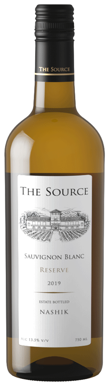
Sula Vineyards, The Source Reserve Sauvignon Blanc, Nashik, Maharashtra, India, 2023
My wines
Battonage gives it a pleasing creamy note and texture alongside, pronounced flavours of citrus, tropical guava and pear. Nice ripeness, good acidity and length. Made...
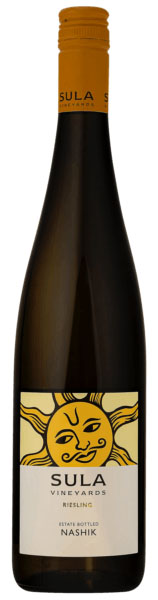
Sula Vineyards, Sula Riesling, Nashik, Maharashtra, India, 2023
My wines
India’s first ever Riesling shows classic lime and grapefruit on the nose and palate. Nice purity, crisp acidity and good balance throughout with a honeyed...
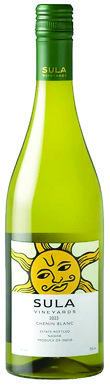
Sula Vineyards, Sula Chenin Blanc, Nashik, Maharashtra, India, 2023
My wines
One of Sula’s biggest selling wines, offering apple, melon and greengage fruit with a hint of pleasing bitterness on the finish. Not super complex, but...
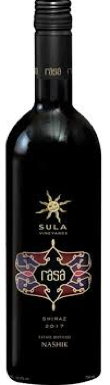
Sula Vineyards, RASA, Nashik, Maharashtra, India, 2022
My wines
Made in small quantities, this elegant Northern Rhône styled Syrah includes 7% co-fermented Viognier. It offers intense, spicy dark fruit aromas with a hint of...
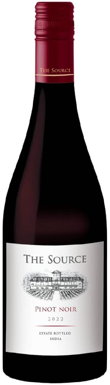
Sula Vineyards, The Source Pinot Noir, Nashik, Maharashtra, India, 2023
My wines
A new addition in 2023, this un-oaked, approachable wine is surely set for stardom in India with its delicious, fruit-forward flavours of raspberry and delicate...
John Stimpfig is an award-winning wine writer who served as Decanter’s content director from 2014 to 2019. He previously worked as a contributing editor for Decanter.
He has been writing about wine since 1993 and his work has appeared in the Financial Times, The Observer, The Sunday Times, Food&Wine and How To Spend It Magazine - to name a few.
His wine writing has won numerous accolades, including three Louis Roederer Feature Writer of the Year Awards.