Get our daily fine wine reviews, latest wine ratings, news and travel guides delivered straight to your inbox.
You are now subscribed
Your newsletter sign-up was successful
An account already exists for this email address, please log in.
T-Oinos: A winemaking renewal in the Cyclades
Mykonos is among the best-known Cyclades islands, famed for its nightlife and windmills. For wine lovers, its more tranquil neighbour Tinos is the more enticing destination, home to the ambitious T-Oinos winery.
Mykonos is among the best-known islands in the Cyclades archipelago, famed for its nightlife and windmills. It’s only when you land in Mykonos in midsummer that you realise just why there are so many white-sailed windmills: in the summer, the wind blows fiercely in the Cyclades.
For wine lovers, its more tranquil neighbour Tinos is the more enticing destination, one which has been undergoing a renaissance in wine. It is home to the ambitious project, T-Oinos, the brand name being a play on Tinos and on the Greek word for ‘wine’ (οἶνος / ‘oinos’).
Tinos is a welcome hideaway for the non-nightclub set to escape the crowds and traffic of Mykonos. It is developing prestige hotels, and there is plenty of local produce to enjoy.
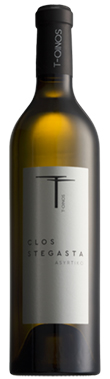
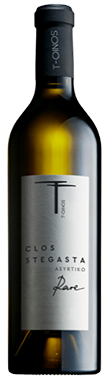
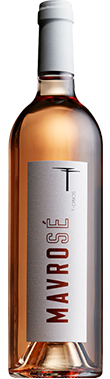
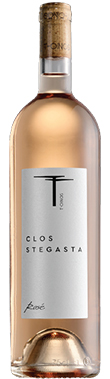
Scroll down for notes on six wines from T-Oinos
Wind-swept isle
(Image credit: T-Oinos)
Tinos is a Holy Island, its cathedral an important destination for Greek Orthodox pilgrims who visit the icon of the Virgin on her feast day, on 15 August. It is also renowned for its sculptors and its artistic community, and has a resident population of around 10,000.
Tinos has some windmills, but the key feature are the dovecotes, with angular decorations. Mykonos, I’m told, needed windmills for bread making; Tinos with a larger population wanted the doves for meat. Today, though, the dovecotes simply add to the artistic charm of many villages.
The brief catamaran crossing to the island of Tinos is choppy. The winds – known as the Meltemi – blow strongly in the afternoons from May to September. While the wind is wearing for a human, it’s a healthy blast of freshness for the vines, cooling the vineyards in summer by as much as 3 to 4°C.
At 470 metres above sea level, the Stegasta plateau at the top of the island is striking, with trees bent forward in the wind, and volakes, enormous outcrops of granite boulders, bursting out amid the vines.
Decanter newsletter
Get our daily fine wine reviews, latest wine ratings, news and travel guides delivered straight to your inbox.
I could imagine myself in Scotland with its granite, only the sky is blue, the climate is hot and dry, and the sea is distinctly more azure. Over time the wind and humidity have worn the boulders into their distinct rounded shapes; symbolic, almost, of the energy and purity of the vineyard the team find there.
Simply making the vineyard was a feat of (suitably) epic labour. Some were simply too massive to be removed and the neat lines of today’s high-density vineyard are regularly interrupted by these immovable titans.
Restoring what was lost
(Image credit: T-Oinos)
One of the objectives of T-Oinos was to restore the vines and the wine culture that had once existed on the island. There are remains of ancient presses to be found dating back to 4,000 BC.
These were placed in sheltered sites in the vineyards. Hence the name of the Stegasta range that T-Oinos produces, ‘stegasta’ meaning ‘covered’ in Greek.
In 1768 there were 20 different wines made on the island, and up until 1909, 30,000 barrels of wine were produced a year. Today, though, the hillsides are covered with abandoned terraces, formerly used for figs and cereals, as well as vines.
In contrast with Santorini, there are very few old vineyards. When T-Oinos started in 2002, therefore, it was necessary to plant from scratch.
Francophile owner Alexander Avatangelos is a businessman who had experience in wine in Santorini, with former investments in the Sigalas winery there. He founded T-Oinos in 1999 with Gérard Margeon, Executive Head Sommelier at Alain Ducasse. Their first wine was made in 2008.
A key moment came in 2016 when French consultant Stéphane Derenoncourt joined the team. He has now retired from most of his international consulting businesses, but has remained with T-Oinos.
The arrival of Derenoncourt helped steer the winery’s course, which continues to the present day. An early criticism of the T-Oinos wines was that they were too oaky, but tasting back over the last five vintages, that is no longer the case.
In addition, the wines generally come in between 13% and 14% alcohol and show controlled, elegant characters.
Varietal focus
There are four Greek varieties currently planted by the estate, two white and two red. The main two are Assyrtiko (white) and Mavrotragano (red), with some additional Avgoustiatis (red) and Malagousia (white).
The winery makes two rosés which are perfect for enjoying in Tinos’ waterside restaurants. However, one gets the impression that the winemaking team aren’t particularly enthusiastic about rosé wines.
The chief commitment is to make white and red wines that channel the island’s particular terroir. And with Assyrtiko, they believe they have the magic bullet.
Assyrtiko from not-too-distant Santorini to the south has rightly won international acclaim, and plantings have sprung up from California to Australia and South Africa, as well as across mainland Greece and its islands.
There are many good wines, often richer in style, but few quite match the volcanic character of Santorini. On Tinos, though, they come close.
Being from the same island chain, conditions are similar – but there are differences. The soil on Tinos is granite to Santorini’s aspa – a mix of basalt, pumice and volcanic ash.
In the vineyard, Santorini is famed for the ‘kouloura‘, basket-trained vines to protect the plant and its crop from the winds, while at T-Oinos they support the bush vines by training them individually up poles, which gives them adequate support against the gusty Cycladic currents.
(Image credit: T-Oinos)
A red less ordinary
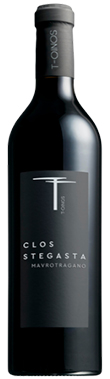
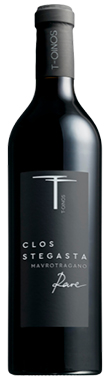
When it comes to red wines, the money is on Mavrotragano. Meaning ‘black’ and ‘crispy’ in Greek, it grows on dramatically steep terraces, and giving fruit imbued with natural concentration.
Konstantinos Lazarakis MW writes in his book The Wines of Greece that Mavrotragano ‘may be Greece’s answer to Mourvèdre’, rich and deeply coloured. He adds that ‘so far, it seems almost impossible to make an ordinary Mavrotragano’.
T-Oinos still has a relatively short history with the variety, but from my tasting, it looks as if Lazarakis’s comparison is correct.
Prestige project
Without doubt, T-Oinos is a prestige project, with prices to match. Up until very recently, all the investment has been in the vineyard. It is only now that a prestige winery is being built, which will be worth a visit when complete.
As such, winemaker Thanos Georgilas welcomed me instead to the small homestead which currently serves as the tasting room, lab and winery. Georgilas is a safe pair of hands with an impressive pedigree, having previously worked at Opus One and Chateau Latour.
There is nothing particularly glamorous in the winery amid the stainless steel and the wooden foudres – except the shiny bulbous glass amphoras, which are very impressive pieces of kit.
‘They are neutral vessels to preserve the freshness,’ explains Georgilas, who also explains that they work with just two coopers for their oak barrels and the ethos is very clearly ‘not Bordeaux’.
I asked Georgilas the textbook question about the viticultural challenges on Tinos. If the wind is a problem that causes the vine to use up precious water, it is also a bonus, keeping the vineyard healthy, and the sun and wind together dries the humidity blown in from the sea. Nor is there any esca (wood disease) on the island.
While the summers are very hot, the bonus in July and August is the fog and cloud that settle on the top of the island and protect the grapes from sunburn.
But, perhaps amusingly, the real pests are the island’s wild goats; not only are they often found nibbling away in the vineyards, but also wandering across the roads ready to stand in the way of a winemaker driving between plots.
To kalon!
Greece’s ancient winemaking star is back in the ascendent. Nonetheless, it’s still not widely recognised as a producer of ‘fine wine’.
At Opus, Georgilas recalls he had to put up with good natured ribbing about this fact. His response was to point out that the name of one of the most famous vineyards in California is To Kalon, named after the Greek for ‘the best’.
The best is what Georgilas and the T-Oinos team are striving for on their Cycladean island. One feels they deserve the blessings of one of Greece’s ancient divinities to speed them on their way. Winged Nike, goddess of victory, would be an appropriate one.
The wines certainly get a tick from me.
T-Oinos at a glance
Founded in 1999 by Alexander Avatangelos and Gérard Margeon; joined in 2016 by partner Stéphane Derenoncourt.
Varieties: Mainly Assyrtiko for whites, Mavrotragano for reds
Vineyard area: 13ha planted by 2021; forecast to grow to 17ha by the end of 2025.
Total investment by 2025: €14 million
Planting density: 10,000 vines per hectare. ‘Organically farmed with biodynamic practices’.
Production: 25,000 bottles, forecast to grow to 45,000 bottles
Three sites:
Stegasta plateau: 8ha, 470m, sandy soil in granite. Grapes: Assyrtiko and Mavrotragano.
Aromatically floral, with hints of strawberry. In the mouth it reveals a punchy acidity lifted by notes of orange. The finish is long, penetrating, juicy,...
This was the first vintage. It uses the 4 varieties on the property, mainly the younger vines, to deliver a pale-coloured, floral, delicate rosé, saline...
Sarah Jane Evans MW is an award-winning journalist who began writing about wine (and food, restaurants, and chocolate) in the 1980s. She started drinking Spanish wine - Sherry, to be specific - as a student of classics and social and political sciences at Cambridge University. This started her lifelong love affair with the country’s wines, food and culture, leading to her appointment as a member of the Gran Orden de Caballeros de Vino for services to Spanish wine. In 2006 she became a Master of Wine, writing her dissertation on Sherry and winning the Robert Mondavi Winery Award. Currently vice-chairman of the Institute of Masters of Wine, Evans divides her time between contributing to leading wine magazines and reference books, wine education and judging wines internationally.